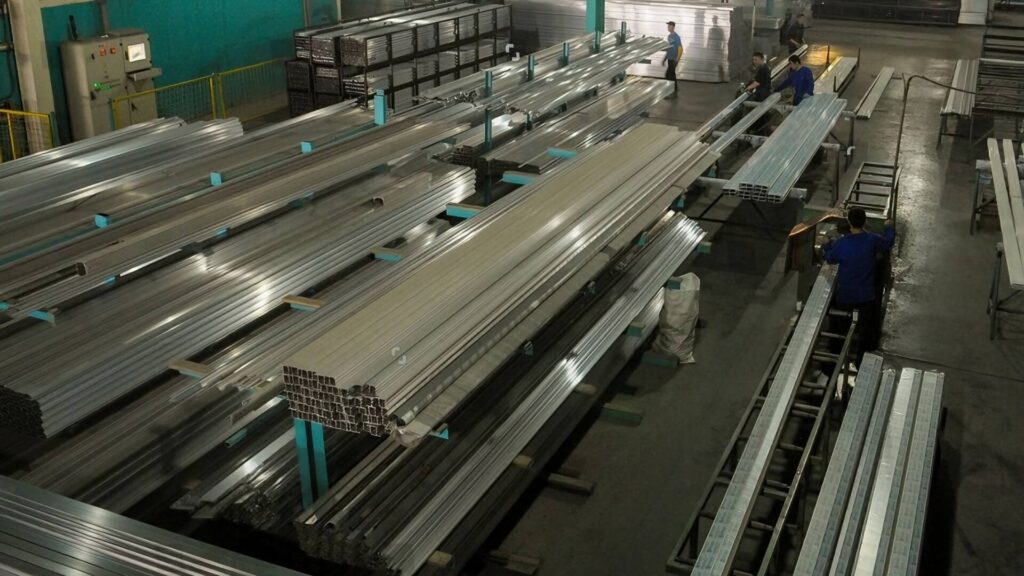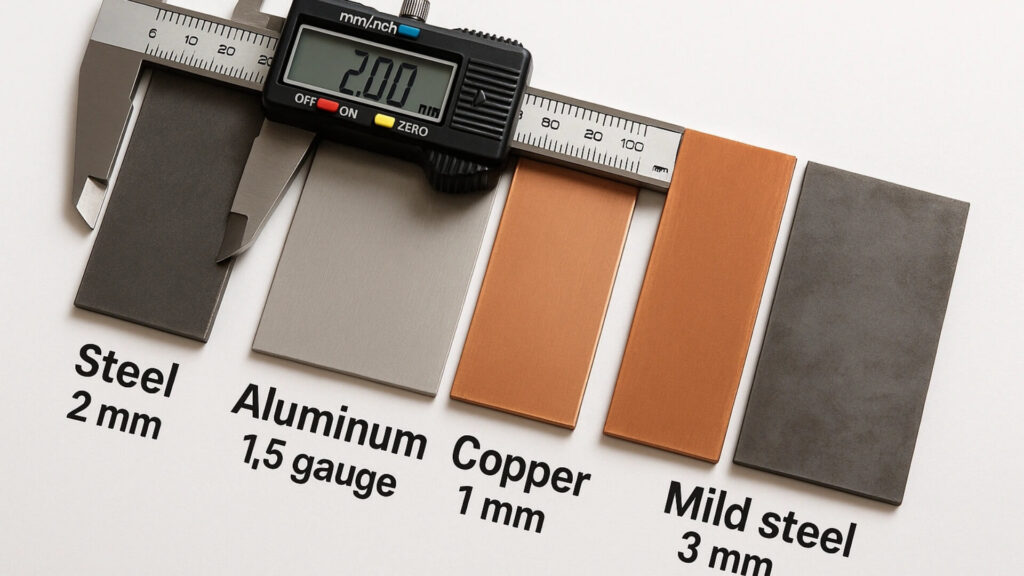
At our ShincoFab sheet metal facility, our laser cutters and press brakes run all day shaping metal enclosures. Over the years, I have had desperate engineers walk onto our shop floor carrying completely disintegrated, rusted-out boxes they bought just a year prior.
Real-world failure: A customer brought this standard carbon steel enclosure to our ShincoFab facility after just one year outdoors. The internal electronics were completely destroyed by water ingress.
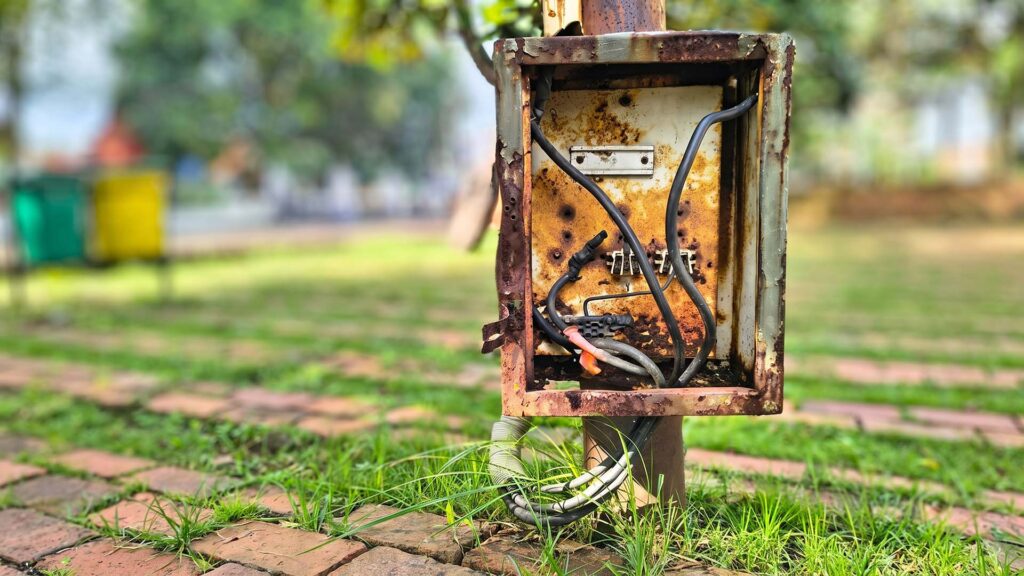
They bought cheap metal, mounted it outside, and watched their expensive electronics die from rust and water damage.
You do not want to make that mistake. To choose the right electrical enclosure material, you must match the substrate to your environment: use carbon steel for climate-controlled indoors, stainless steel for harsh washdowns, aluminum for heat dissipation, and fiberglass for chemical resistance.
In this guide, I will show you exactly how to execute this. No dense engineering jargon. No fluffy sales pitches. I will give you the real-world facts we see from manufacturing these units every single day. You will learn how to match materials to your exact environment, avoid the hidden traps that destroy enclosures, and figure out which materials you can actually drill safely on-site.
By the end, you will know exactly what to buy. You will be able to install it once, protect your gear, significantly reduce your maintenance worries.
TL;DR: Key Takeaways
- Environment Dictates Material: Use carbon steel strictly for climate-controlled indoors. Default to stainless steel or fiberglass for outdoor, washdown, or harsh chemical environments.
- Consider Wireless Signals: Metal enclosures block Wi-Fi and cellular signals. Use polycarbonate or fiberglass if you are housing smart sensors or antennas.
- Plan for Field Drilling: If your installation team must cut holes on-site, choose aluminum or polycarbonate. Standard stainless steel melts drill bits, and cheap ABS plastic shatters easily.
- Never Mix Metals: Always match your mounting hardware to your enclosure material (e.g., stainless screws with stainless boxes) to prevent rapid galvanic corrosion.
- Look Past Upfront Price: A cheap indoor enclosure placed outside will quickly fail, costing thousands of dollars in emergency repairs and factory downtime.
Why Does Your Electrical Enclosure Material Choice Actually Matter?
Stop buying electrical enclosures based on the upfront price tag. It is the most common and costly mistake in manufacturing.
People buy a cheap carbon steel box for an outdoor project to save a few bucks. But here is the hard truth: Carbon steel belongs in climate-controlled indoors. If your equipment is going outdoors, into a factory washdown zone, or anywhere near chemicals, you should heavily rely on Stainless Steel or Fiberglass. Period.
What happens when you pick the wrong box? It is never just about a little rust on the outside. When a cheap enclosure fails, water and dust get inside. Then, the real nightmare starts:
- Your expensive internal electronics short out.
- Your production line can grind to a halt.
- You pay premium rates for emergency labor to fix it in the middle of the night.
Let’s look at a typical scenario over a 10-year period.
Say you buy a budget painted carbon steel box for $150 and put it outside. It rusts and fails in three years. Over a decade, you have to replace it twice. That is $300 in new boxes. Now add $1,000 for emergency electrician labor. Then add just one hour of factory downtime, which can easily cost $5,000 (and often much more, depending on your industry).
Ultimately, your initial $150 bargain could easily end up costing you upwards of $6,000.
Now, look at the alternative. You spend $500 upfront on a premium 316 Stainless Steel box. You install it once. It protects your gear for 10 years with virtually no maintenance.
While exact labor and downtime costs vary wildly from facility to facility, the underlying math remains the same: The cost of a failed enclosure is almost always higher than buying the right material the first time.
What is the Best Electrical Enclosure Material for Your Environment?
Before you even look at a material catalog, look at where the box is going. The environment will constantly try to destroy your enclosure. You need to identify the specific threats first.
- Indoor vs. Outdoor: This is the biggest dividing line. A climate-controlled indoor room is easy on your equipment. But the second you move a box outside, everything changes. The sun will bake it. Ice will freeze it. You need a material that won’t warp or crack under the open sky.
- Water and Weather: Water is tricky. You have to ask yourself: how is the water actually hitting the box? Occasional rain is one thing. But if your box is in a food processing plant, someone might blast it with a 1,000-PSI pressure washer every single night. Those two situations require completely different materials.
- Chemicals and Salt: These are the invisible enclosure killers. You might not see them, but they are working fast. If you install a box near the ocean, the salty air will eat standard steel in months. The exact same thing happens in wastewater plants or factories that use harsh cleaning chemicals.
What Do NEMA and IP Ratings Mean for Materials?
You have probably seen labels like NEMA 4X or IP66. These ratings tell you how well a box keeps out dust and water.
But here is a massive trap. A high rating does not guarantee the material will survive your actual environment.
For example, you can buy a cheap plastic box with a high waterproof IP67 rating. But if you put it outside, the baking sun might crack that plastic in a year. Once the material breaks, your perfect rating drops to zero. Water gets in, and your equipment dies.
A rating is just a test score on day one. You still must pick a material that keeps that score high for years.
The most common NEMA and IP ratings for electrical enclosures, as strictly defined by the National Electrical Manufacturers Association (NEMA), dictate dust and water resistance levels:
- NEMA 12 or IP54: Great for keeping out basic indoor dust and dirt.
- NEMA 3R or IP24: The industry standard for basic outdoor use, protecting against falling rain, sleet, and external ice formation.
- NEMA 4 or IP66: Built to stop heavy rain and direct hose-downs.
- NEMA 4X: Adds serious protection against rust and chemical corrosion.
Which Metal Enclosure Material is Best?
Metal enclosures are tough. They handle heavy impacts and naturally block electrical interference. As a sheet metal fabricator, this is our bread and butter. Let’s look at your three main choices.
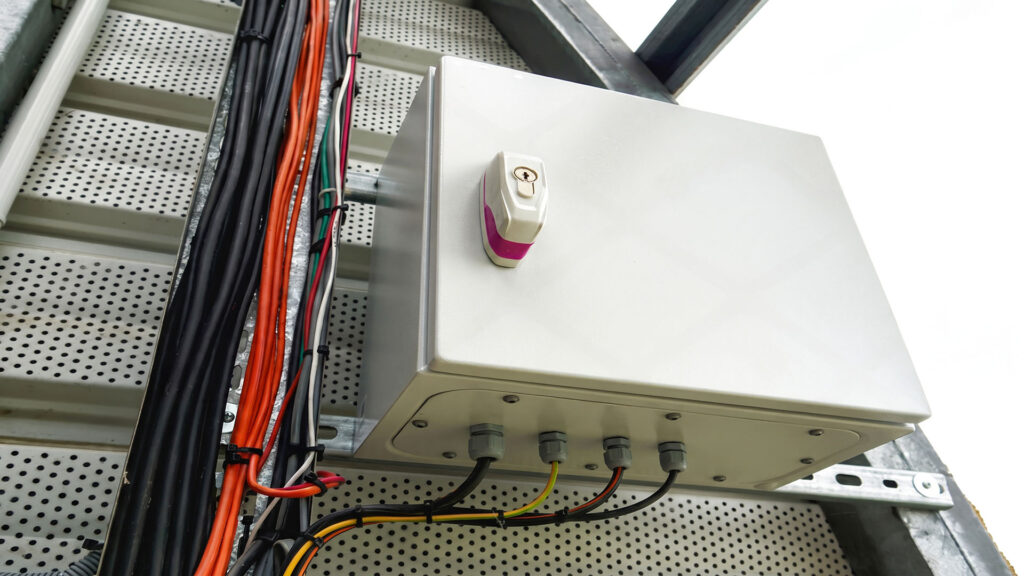
Carbon Steel (The Budget Workhorse)
Carbon steel is cheap and incredibly strong. If you are putting a box inside a clean, climate-controlled room, this is your best bet. When we cut and weld carbon steel on our shop floor, it is fast and efficient, which keeps your costs down.
But keep it away from water. Standard carbon steel relies entirely on its paint or powder coating to stop rust. The second that coating scratches, the rust starts. Under rigorous ASTM B117 neutral salt spray test conditions, coated steel is commonly evaluated for relative corrosion resistance, and plain carbon steel still needs reliable coating protection to resist corrosion in salty or coastal environments.
Stainless Steel 304 & 316 (The Heavyweight Champions)
If you need a box that refuses to die, buy stainless steel. Yes, it is heavy. Yes, it is expensive. I can tell you exactly why it costs more: when our welders work with 316 stainless, it requires specialized shielding gases, slower feed rates, and it wears down our cutting tooling much faster than regular steel. But it is worth every penny in harsh zones.
Grade 304 is perfect for general outdoor use and factory washdown areas. Grade 316 is the upgraded version. It handles heavy ocean salt and aggressive industrial chemicals. If you work in food processing, marine environments, or wastewater, 316 is your ultimate champion.
Aluminum (The Cool & Light Choice)
Aluminum gives you a great middle ground. It is much lighter than steel, making it very easy to hang on a wall or a pole. We love fabricating aluminum because it bends beautifully on our press brakes, and it forms a natural barrier against rust without needing any paint.
But its real superpower is heat control.
If you have hot electronics running inside a box, aluminum acts like a giant heatsink. In a 100°F room with a heavy electrical load, an aluminum enclosure will stay 15 to 20 degrees cooler inside than a fiberglass box.
Why Do Mixed Metals Destroy Enclosures? (The Accessory Trap)
You bought a premium metal box and feel great about the investment. But you can still ruin it with a 50-cent screw. This happens because of a silent killer known as galvanic corrosion. Galvanic corrosion is an electrochemical process that occurs when dissimilar metals are in electrical contact in the presence of an electrolyte such as moisture or rainwater.
Galvanic corrosion is an electrochemical process where one metal corrodes preferentially when in electrical contact with a different metal in the presence of an electrolyte (like rainwater). One metal literally starts eating the other.
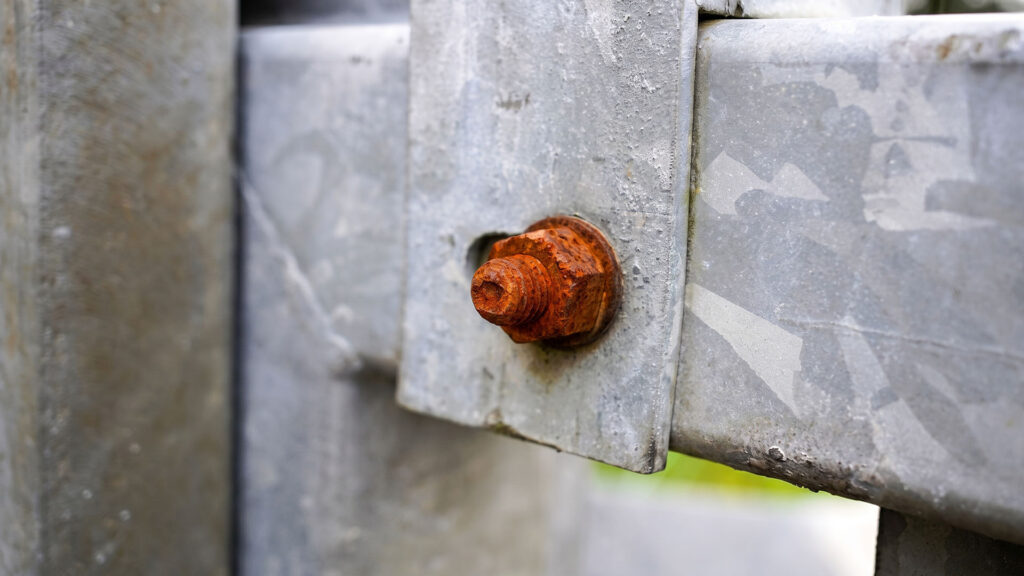
We once saw a client bring in an expensive aluminum enclosure that had completely crumbled around the mounting holes. Why? They bolted it to an outdoor wall using heavy-duty stainless steel screws. When rain hit those mixed metals, the stainless steel attacked the aluminum.
The opposite is also true. If you use cheap zinc bolts on a $500 stainless steel box, the zinc will quickly rust. It will bleed ugly orange streaks all over your expensive enclosure and ruin the waterproof seal.
The rule is simple. Always match your metals. Use stainless hardware with stainless boxes, and aluminum with aluminum.
When Should You Choose Plastic or Fiberglass Enclosures?
While metals provide superior impact resistance, they introduce a major flaw for modern technology: signal blocking. This is where plastics and fiberglass become necessary.
Although ShincoFab specializes in metal, we frequently replace failed plastic and fiberglass boxes for our clients. Plastics and fiberglass will never rust. But they fail in their own sneaky ways. If you choose a non-metal box, you need to watch out for three specific failure modes:
- UV Yellowing: UV rays break down cheap plastic. The plastic turns yellow and brittle. Brittle plastic cracks under minor impacts.
- Chemical Crazing: Industrial solvents attack the plastic surface. The chemical reaction creates microscopic cracks. These cracks destroy the enclosure’s structural integrity.
- Gasket Compression Loss: Weak plastics warp under constant pressure. The warped plastic pulls away from the rubber gasket. This gap ruins the tight waterproof seal around the door.
Polycarbonate & ABS (The Lightweight Plastics)
These materials are cheap, lightweight, and perfect for indoor electronics. But there is a huge catch. ABS plastic shatters easily.
Here is the hard data from the field. When installation teams drill cable holes on-site, ABS boxes have a shatter rate of 15% to 20%. They crack easily and go straight in the trash. Meanwhile, Polycarbonate boxes handle that exact same drilling with less than a 1% reject rate. If you must use plastic, spend a few extra dollars on Polycarbonate.
Fiberglass / FRP (The Chemical Blocker)
Fiberglass is incredibly durable. It laughs at salt water, wastewater, and harsh industrial chemicals. If you need maximum corrosion protection but want to avoid the high cost of stainless steel, fiberglass is your answer.
The downside? It is very rigid and hard to modify.
Will Your Enclosure Material Block Wi-Fi and Cell Signals?
Are you putting smart sensors, routers, or antennas inside your enclosure? If so, you have to to run a signal-blocking test. Will this box block your cell or Wi-Fi signal?
If you choose a metal box, the answer is almost always yes. Carbon steel, stainless steel, and aluminum can act as a shield against radio waves, often creating an unintentional Faraday cage effect. Metal enclosures can significantly attenuate wireless signals inside, so a smart device placed in a fully enclosed box may lose connectivity unless you add external antennas or other RF pass-through features.
Non-metal boxes solve this problem effectively. Plastics and fiberglass are practically invisible to radio waves. Your Wi-Fi, Bluetooth, and cellular signals will pass right through a polycarbonate or fiberglass box without dropping a single bar.
Which Enclosure Materials Can You Safely Drill On-Site?
Almost every project requires a last-minute hole for a cable. But you have to be careful. Some materials will actively fight you on the job site.
If your crew is standing on a ladder with a hand drill, which materials will crack, warp, or shatter?
Let’s start with stainless steel. It is incredibly stubborn. I have taken calls from frustrated field contractors who literally melted three drill bits trying to punch a 2-inch hole into one of our 304 stainless boxes because they didn’t use cutting fluid. You need specialized carbide cutters, fluid, and a lot of patience.
Fiberglass is a different kind of nightmare. When you cut it, it releases a cloud of tiny glass shards. This itchy, dangerous dust gets into your skin, your eyes, and your lungs. You absolutely must wear protective gear to modify it.
And as we mentioned earlier, cheap ABS plastic cracks in half the second your drill bites into it.
If you know your team has to make custom cuts on the fly, stick to aluminum or polycarbonate. Aluminum cuts like butter. Polycarbonate handles heavy drills without splintering or shattering. Both are fast, safe, and easy to modify in the field.
How Does Material Choice Affect Custom Enclosure Lead Times?
You picked the perfect material. But can the factory actually deliver it on time? If you need a custom size, your material choice dictates your wait time.
This is where sheet metal absolutely dominates. Options such as carbon steel, aluminum, and stainless steel are incredibly fast to customize. On our factory floor, we take your CAD file, run it through our CNC fiber lasers, bend it on our press brakes, and weld it to your exact specs.
Precision manufacturing: Our CNC fiber lasers ensure clean, burr-free cuts on custom metal enclosures right on our shop floor, eliminating the shattering risks associated with drilling plastics on-site.
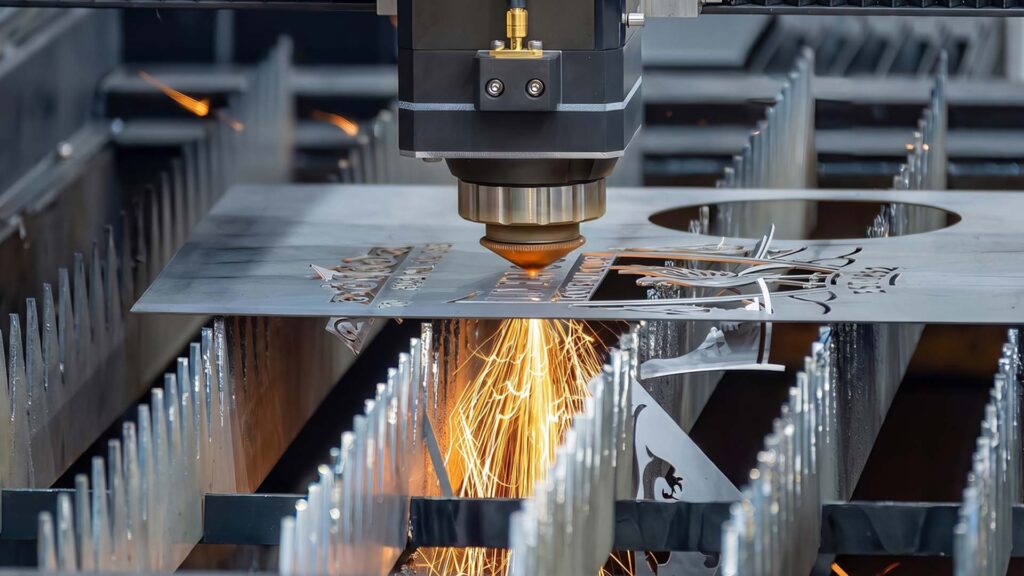
You can usually get a custom metal box in a matter of weeks without paying massive setup fees.
Plastics and fiberglass are a completely different story.
You cannot just bend a plastic box into a new shape. To get a custom size, the factory has to build a custom steel mold. Those molds cost thousands of dollars. Worse, they take months to engineer and build. If you need a unique size in a hurry, picking molded plastic or fiberglass will instantly stall your project.
How Do Electrical Enclosure Material Costs Compare?
While you should never choose a material strictly based on the upfront price tag, project budgets are a reality. Understanding the pricing scale helps you avoid over-engineering your solution.
To help you compare, here is a general cost index. We use standard carbon steel as the baseline (1x) multiplier:
| Enclosure Material | Relative Cost Multiplier | Best Budget Use Case |
|---|---|---|
| Carbon Steel | 1x (Baseline) | Clean, climate-controlled indoors |
| Polycarbonate / ABS | 1.2x to 1.5x | Indoor wireless and smart devices |
| Aluminum | 1.5x to 2x | High-heat electronics and pole mounts |
| Fiberglass | 2x to 2.5x | Harsh wastewater and chemical areas |
| Stainless Steel 304 | 2.5x to 3x | Factory washdowns and standard outdoor |
| Stainless Steel 316 | 3x to 4x | Heavy marine salt and severe corrosives |
Which Material Should You Choose for Your Project?
Let’s wrap this up. Remember our golden rule. Do not cheap out on outdoor or harsh environments.
A cheap box will always cost you thousands of dollars in the long run. Keep standard carbon steel safely inside where it belongs. If your project faces weather, heavy water, or harsh chemicals, you must default to Stainless Steel or Fiberglass.
Use this electrical enclosure material selection guide to match your environmental conditions to the correct substrate:
| Environmental Condition / Project Need | Best Enclosure Material Choice |
|---|---|
| Ocean / Heavy Marine Salt | Stainless Steel 316 or Fiberglass |
| High-Pressure Washdowns | Stainless Steel 304 or 316 |
| Wi-Fi or Cellular Signals Required | Polycarbonate or Fiberglass |
| High-Heat Electronics Inside | Aluminum |
| Clean Indoor Room (Budget Constraint) | Carbon Steel |
| Harsh Wastewater Chemicals | Fiberglass |
| Job-Site Drilling & Modification Required | Aluminum or Polycarbonate |
Stop guessing on your next project. Pick the material that matches your reality, install it once, and never worry about it again.
Conclusion
Choosing the right enclosure material is not just a minor technical detail. It is the difference between a system that runs smoothly for a decade and a costly midnight emergency.
Do not let a cheap box ruin your expensive electronics. Take the time to evaluate your environment, check your wireless needs, and plan for any on-site drilling.
If you decide that an aluminum, carbon steel, or stainless steel enclosure is the best fit for your project, that is exactly what we do. At ShincoFab, we specialize in custom sheet metal fabrication. We can cut, bend, and weld the exact metal box you need without the long wait times of plastic molds.
Still unsure which material is right for your specific environment?
Reach out to us. Tell us what your enclosure is up against, and we will help you build it right the first time.