
Battery Enclosure

Stop risking certification failures on poor weldments. We provide leak-tight, DFM-optimized aluminum and steel battery enclosures for EV, ESS, and industrial applications. All without the $50k custom tooling NRE.

A Battery Enclosure Is Not a Metal Box.

If your fabrication partner treats an EV or ESS battery enclosure like a standard chassis, you pay the price in the testing lab. At ShincoFab, we engineer out the 3 most common failure points before cutting a single sheet of metal.

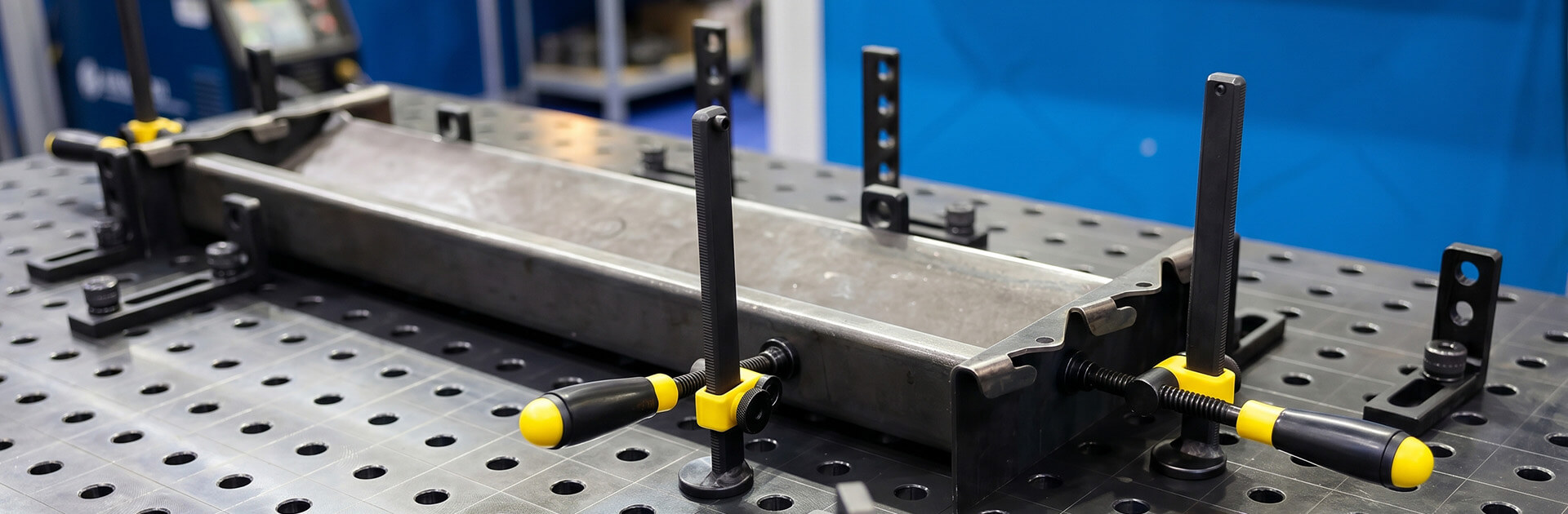
Precision welding fixtures for zero-distortion enclosure assembly

Weld Distortion & Gasket Failure

  • The Nightmare: Laser or TIG welding a thin-gauge aluminum cover to a rigid frame introduces heat. Heat causes warping. Warping destroys your IP67 gasket seal.
  • Our Fix: We utilize custom pneumatic fixturing and precisely calibrated pulsed-laser heat-control processes. We guarantee the flat sealing surfaces and tight tolerances required for zero-leakage enclosures.

Galvanic Corrosion

  • The Nightmare: Mixing an aluminum enclosure with copper busbars and zinc-plated steel fasteners creates a literal galvanic battery. In humid environments, the metal eats itself.
  • Our Fix: We design for survival through engineered isolation strategies. By applying dielectric powder coatings, specific anodizing, and surface passivation, we eliminate bi-metallic corrosion over a 10+ year lifespan.

Thermal Runaway Containment

  • The Nightmare: Cell failure is inevitable. If the enclosure breaches immediately, the entire system fails disastrously.
  • Our Fix: An enclosure is a structural firewall. We fabricate rigid steel and aluminum assemblies engineered to contain internal pressure and flame for the critical 5-minute thermal runaway window (compliant with UL 2580 and UN 38.3 standards).

The Fabrication Hardware Behind Our Tolerances

At ShincoFab, we don’t guess. We measure, control, and execute. Here is exactly what is on our shop floor to ensure your battery enclosures pass integration and vibration testing.
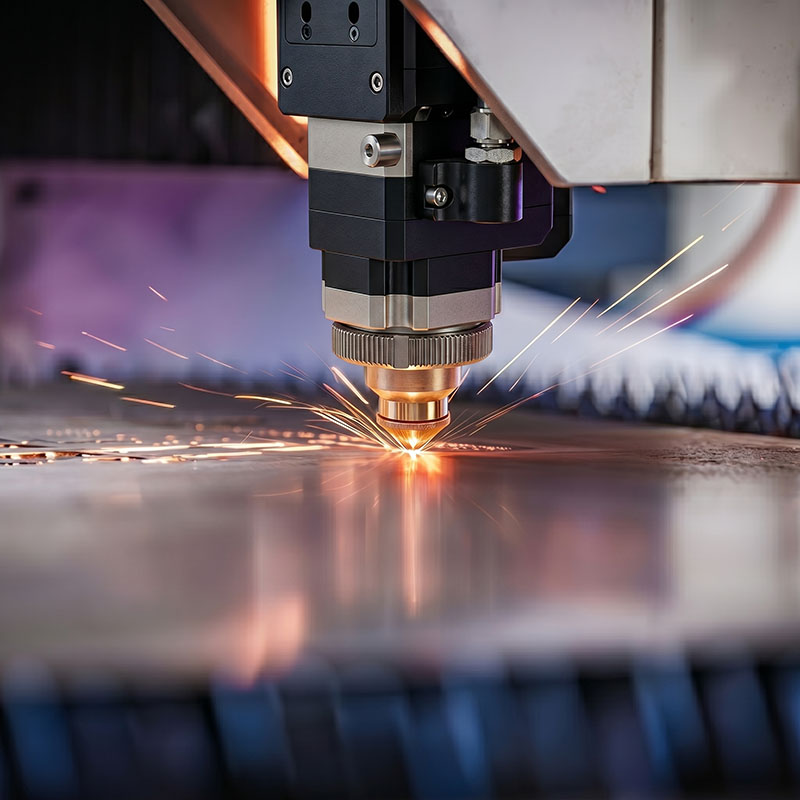
Multi-kW fiber laser cutting thick metal plate for battery enclosures

Precision Laser Cutting & Punching

  • The Capability: Multi-kW fiber lasers and CNC punch presses handling aluminum up to 15mm, and carbon/stainless steel up to 20mm.
  • The Tolerance: We hold strict tolerances down to +/- 0.05mm.
  • The Engineering Value: This extreme precision ensures flawless fit-up during Cell-to-Pack (CTP) integration. No forced assembly, no distorted chassis, and perfectly aligned mounting holes every time.

CNC Bending & Forming

  • The Capability: Multi-axis CNC press brakes with automated angle measurement systems.
  • The Engineering Value: We engineer out failure. Instead of relying on sharp, welded corners that fail during harsh vibration testing (UN 38.3), we utilize precision forming to create continuous, radiused corners. This eliminates stress concentrations and significantly increases the structural integrity of the battery tray.

Advanced Welding & Joining

  • Our automated and manual welding capabilities include robotic MIG/TIG, precision fiber laser welding, and manual TIG for complex geometries performed by AWS-certified welders.
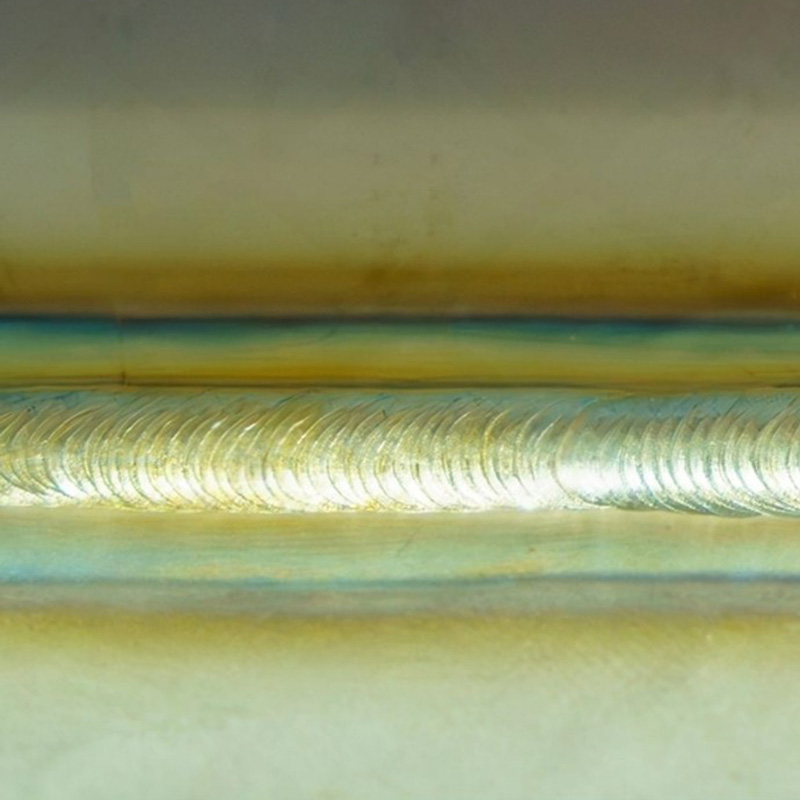
  • Full weld penetration and structural rigidity are engineered into every seam. We go beyond basic surface tacking to create the continuous, 100% leak-tight seams critical for achieving IP67/IP69K and NEMA 4X environmental ratings.

Engineered Surface Finishing

  • The Capability: In-house or strictly controlled partner networks for powder coating, anodizing (Type II & III), and passivation.
  • The Engineering Value: Beyond corrosion resistance (salt-spray tested), we apply specialized dielectric powder coatings specifically formulated for battery enclosures. This provides a critical layer of internal short-circuit protection and electrical isolation for internal cell modules and busbars.
Continuous, leak-tight TIG weld seam on an aluminum enclosure

High-Stakes System Integration Beyond the Metal Box

A battery enclosure is not an isolated component, it is the physical foundation of a volatile energy system. We engineer the critical interfaces so your team spends less time modifying enclosures and more time optimizing pack performance.

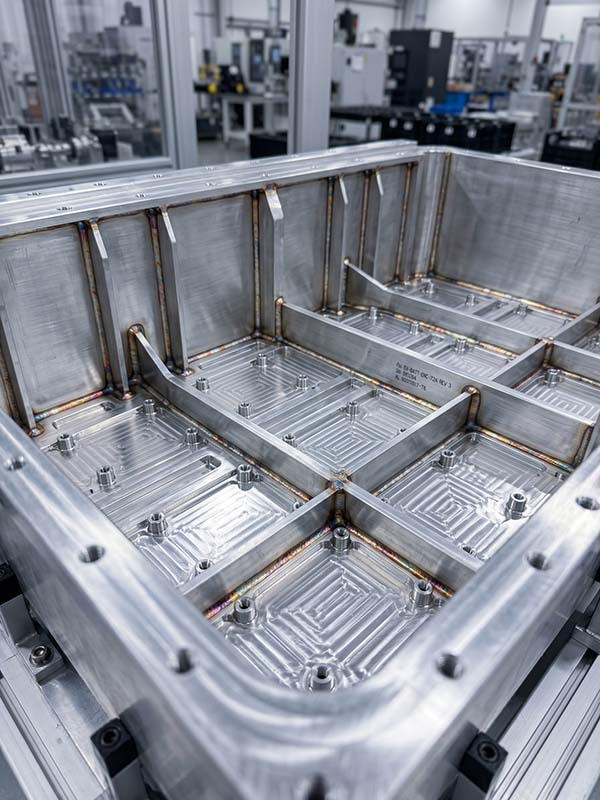
Machined battery tray interior

Thermal Management Integration

  • The Interface: Pre-engineered, high-strength mounting points for bottom or side liquid cooling plates.
  • The Critical Factor: We guarantee extreme floor flatness tolerances. This ensures uniform compression of your Thermal Interface Material (TIM), eliminating air gaps and hot spots that degrade cell life.

Pressure Equalization & Venting

  • The Interface: Precision-machined knockouts and robust welded flanges designed specifically for your chosen pressure relief valves (PRV) or rupture disks.
  • The Critical Factor: Whether accommodating altitude-induced pressure cycles in EVs, directing explosive gases in ESS applications, or engineering an explosion proof battery box, our interfaces ensure your safety mechanisms deploy exactly as designed, without structural compromise.

BMS & HV Busbar Routing

  • The Interface: Integrated EMI/RFI shielding zones, custom standoff mounts, and secure cable management channels.
  • The Critical Factor: We fabricate internal structures that strictly adhere to your high-voltage creepage and clearance specifications (e.g., UL 840). We eliminate sharp edges and chafing risks, protecting BMS wire harnesses and HV busbars under high-vibration conditions.

Fast-Track Prototyping. Zero Tooling Debt. Zero Manufacturing Blind Spots.

Stop waiting 12 weeks for expensive die-casting tools just to validate a design. We bridge the gap between engineering concept and scalable production, catching costly mistakes before metal is ever cut.

The 48-Hour DFM Review (The Engineering Fast-Pass)

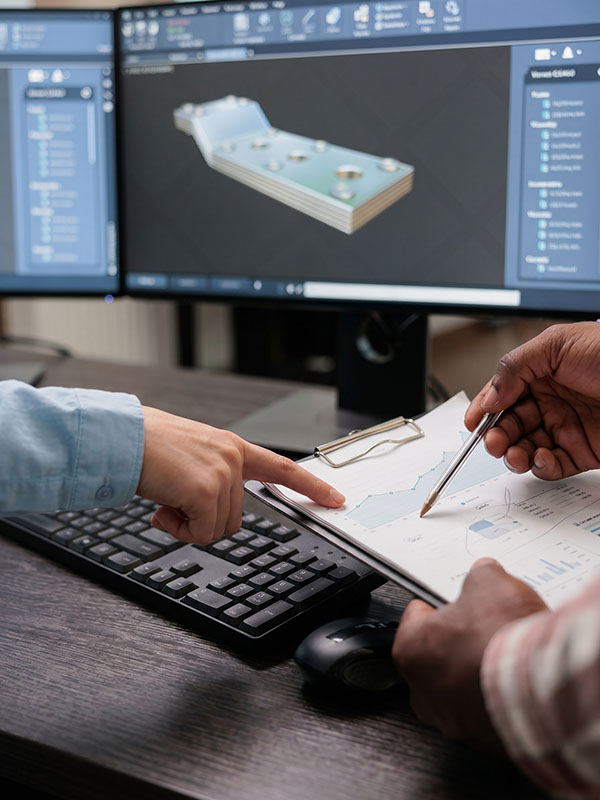
  • The Process: Don’t wait for a slow sales cycle. Send us a simplified .STEP or .IGES file under NDA. Within 48 hours, our manufacturing engineers will return a comprehensive Design for Manufacturability (DFM) analysis.
  • Identifying Specific Cost Drivers: We pinpoint impossible bend radii, restricted weld-access zones, and over-toleranced features. We then propose practical, cost-saving modifications that maintain structural integrity.

Modular Weldments vs. Custom Tooling (The Procurement Win)

  • The Problem: Stamping or die-casting a custom sized battery enclosure for an unvalidated EV or ESS pack requires massive upfront NRE (Non-Recurring Engineering) costs and months of lead time. If the design changes, your tooling investment is dead.
  • Our Solution: We utilize intelligent sheet metal folding, off-the-shelf extrusions, and precision modular weldments to fabricate your first 10 to 100 prototype units. You get fully functional, test-ready enclosures at a fraction of the cost, giving your team the flexibility to iterate without the financial penalty.
Battery enclosure DFM review

Verifying Your Last Line of Defense with Absolute Traceability

In the EV and ESS industries, a battery enclosure is a critical safety device. We don’t ask you to take our word for its integrity. We deliver the hard inspection data to prove it before a single unit ships.

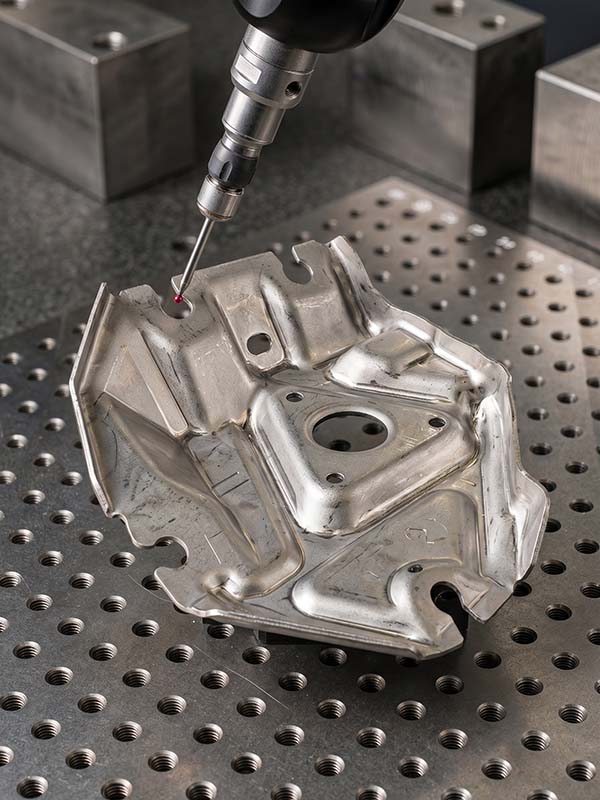
CMM dimensional inspection of metal part

100% Leak & Seam Verification

  • The Standard: Random sampling is unacceptable for IP67/IP69K enclosures.
  • The Verification: We perform 100% pressure decay or helium mass spectrometry leak testing on every welded assembly. You receive documented proof that your enclosures are completely sealed against moisture and environmental ingress.

CMM Dimensional Inspection for Robotic Assembly

  • The Standard: A perfectly welded box is useless if it jams your automated production line.
  • The Verification: We utilize advanced Coordinate Measuring Machines (CMM) to provide complete First Article Inspection (FAI) and PPAP reports. We guarantee that every mounting point, flange, and threaded insert aligns flawlessly with your downstream robotic assembly stations. Zero forced fit-ups.

FOD & Machining Swarf Prevention

  • The Standard: A single microscopic metal shaving can bridge a cell and trigger a catastrophic internal short circuit.
  • The Verification: Standard sheet metal shops just blow parts off with compressed air. We don’t. We utilize controlled-environment cleaning, assembly, and specialized packaging protocols to guarantee your enclosures arrive 100% free of machining swarf, debris, and conductive contaminants.

The Engineered Material Matrix for Weight, Cost, and Survival

There is no perfect material. There is only the correct engineering trade-off. Stop guessing and stop searching. Match your application to the exact alloy using our fabrication matrix below.

Aluminum Alloys (5052-H32 / 6061-T6)

  • Target Application: Mobile EVs, Commercial Vehicles, and Aerospace.
  • The Advantage: Maximizes pack energy density (critical for hitting 350+ Wh/kg targets) while offering superior thermal conductivity for active cooling systems.
  • The Engineer’s Note: We utilize 5052-H32 sheet for complex, radiused bending without risk of cracking, reserving 6061 extrusions for structural load-bearing frames.

Stainless Steel (304 / 316L)

  • Target Application: Marine, offshore, extreme corrosive environments, and battery enclosures for oil and gas.
  • The Advantage: Ultimate corrosion resistance and structural survival without the need for secondary coatings.
  • The Engineer’s Note: For offshore ESS units exposed to continuous salt spray, we specifically fabricate with 316L to eliminate chloride stress corrosion cracking. It adds weight, but it makes the enclosure virtually indestructible.

Mild/Carbon Steel (Galvanized + Powder Coated)

  • Target Application: Stationary Energy Storage Systems (ESS), heavy-duty outdoor battery cabinets, and off-grid solar battery storage.
  • The Advantage: Unbeatable cost-per-kilogram and massive structural rigidity.
  • The Engineer’s Note: When mobility and weight are not constraints, precision-formed carbon steel is the smart economic choice. We pair this with multi-stage pre-treatment and dielectric powder coating to ensure decades of rust-free performance.
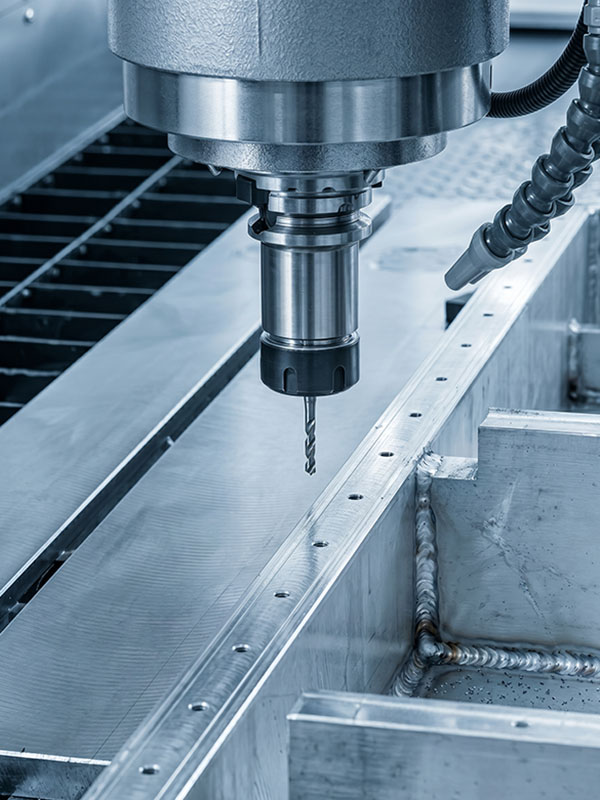
CNC machining aluminum extrusion for battery enclosure

Validate Your Battery Pack Design Without the $50k Tooling Penalty.

Bypass the 12-week wait for die-cast molds. We engineer precision sheet metal enclosures that meet IP67 and thermal runaway standards from day one. You maintain total flexibility to iterate designs before locking in hard tooling.

Frequently Asked Questions

We respect your time. Before you submit your CAD files, here is exactly where we stand on tolerances, testing, MOQs, and quality compliance. Expect zero marketing spin and only the verifiable facts.
How do you guarantee IP67/IP69K sealing on large sheet metal weldments?

We do not rely on visual inspections. Sealing large aluminum or steel trays requires controlling heat distortion. We utilize heavy-duty pneumatic fixturing and pulsed-laser welding to minimize warping. Every single enclosure then undergoes 100% pressure decay or helium mass spectrometry leak testing before it leaves our facility. You receive the documented test results.

Our MOQ for first-run prototypes is 1 unit. We understand that EV and ESS development requires physical validation before scale. We use soft tooling, CNC folding, and modular weldments to deliver your initial 1–50 units without custom die-cast tooling costs. Once validated, our automated lines can scale to thousands of units per month.

For laser cutting and CNC punching, we hold +/- 0.05mm. However, for large welded assemblies (e.g., 2 meters in length), overall geometric and flatness tolerances shift due to thermodynamics. Typically, we maintain overall assembly tolerances of +/- 0.5mm to 1.0mm. If tighter tolerances are required for specific liquid cooling plate interfaces, we utilize post-weld CNC machining to guarantee absolute flatness and alignment.

Yes. We operate under strict ISO 9001 / IATF 16949 quality management systems. We provide Mill Test Reports (MTRs) for all raw metals (verifying specific alloy and temper grades), alongside complete First Article Inspection (FAI) reports, dimensional CMM data, and Level 3 PPAP documentation for automotive clients.

Absolutely. That is exactly what our 48-Hour DFM Review is for. Send us your solid model (.STEP or .IGES). Our manufacturing engineers will unfold the model, calculate the exact K-factors and bend deductions based on our specific press brake tooling, and identify any impossible geometry before quoting.

Stop Waiting 3 Weeks for a Prototype Quote.

Send us your CAD today. We replace the frustrating, black-box sales process with actionable engineering feedback and transparent pricing.

Whatsapp

+86 13392819510

Address

Building 1, No.8, Second Street, Huangjiang Town,
Dongguan City, Guangdong Province

Socials

Please enable JavaScript in your browser to complete this form.
Click or drag files to this area to upload. You can upload up to 3 files.
Scroll to Top

Let's Talk About Your Project