
Pla 3d Printing Service

Our industrial grade PLA 3D printing services deliver precision FDM 3D printing for rapid prototyping and low-volume production. We hold high-performance PLA tolerances down to ±0.1mm (±0.004”). Upload CAD file today and start custom 3D print production—parts ship in as fast as 24 hours.

Technical Capabilities of Our PLA 3D Printing Service

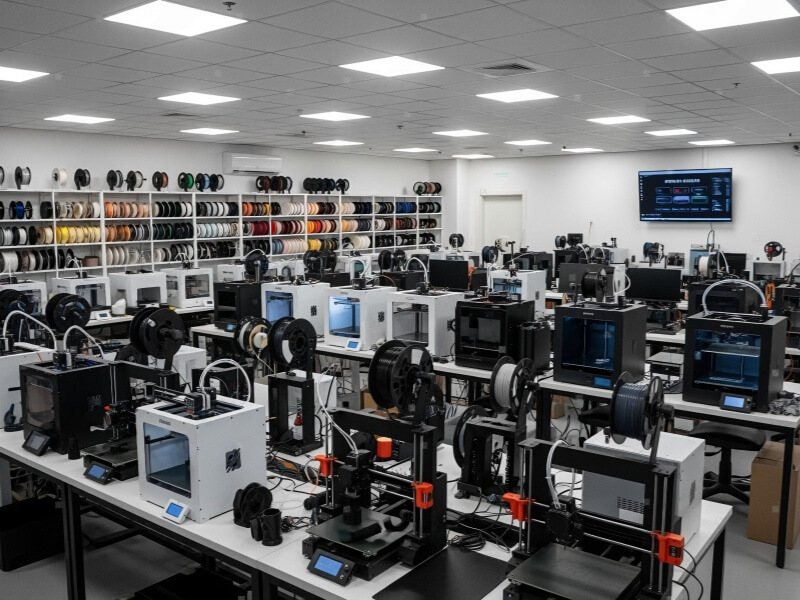
This is not a desktop garage operation. We operate a dedicated, climate-controlled additive manufacturing facility equipped with industrial-grade FDM/FFF systems to ensure dimensional stability and batch-to-batch repeatability.

indutrial 3D printing

Industrial Print Fleet

We deploy a diversified fleet optimized for specific part requirements, including the Stratasys Fortus 900MC / F900 platform for aerospace-grade precision, Bambu Lab X1C and X1E arrays for high-speed low-volume batching, and industrial Prusa MK3S/MK4 farms for agile runs.

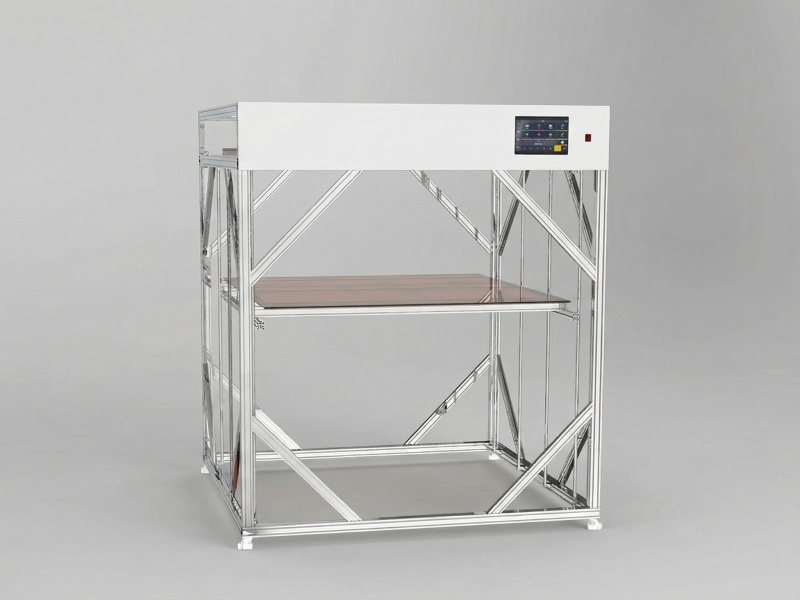
1 cubic meter 3D printer

Max Build Envelope

Up to 1000mm x 1000mm x 1000mm (39.3” x 39.3” x 39.3”).
Engineering Advantage: Enables single-piece construction for large assembly jigs, fixtures, and drone airframes. No splitting, no post-print gluing, ensuring 100% structural integrity of your CAD design.

Production Capacity

Daily throughput capacity exceeds 50kg of PLA/PLA+ filament. Procurement Advantage: Our scalable print farm architecture guarantees machine availability. Whether you need a single prototype today or a 500-part production run by next week, we eliminate supply chain bottlenecks.

3D printing quality control inspection

Dimensional Tolerances

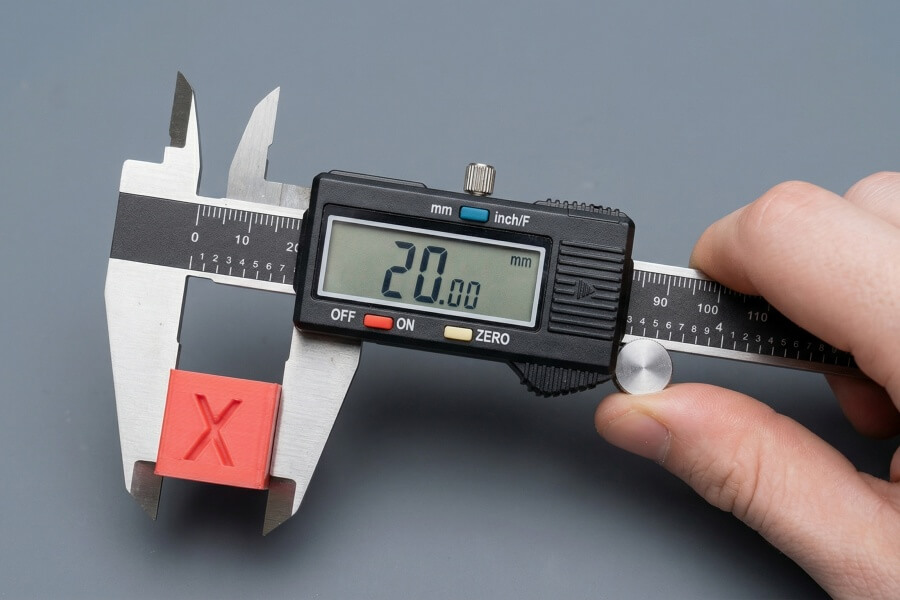
Standard tolerances held at ±0.15% or ±0.1mm (±0.004”), whichever is greater, strictly verified by our in-house QC before shipping.

Engineered PLA Grades

Not all PLA is created equal. We utilize advanced polymer blends to push the boundaries of standard polylactic acid 3D printing. Select the specific grade formulated to solve your engineering challenge.

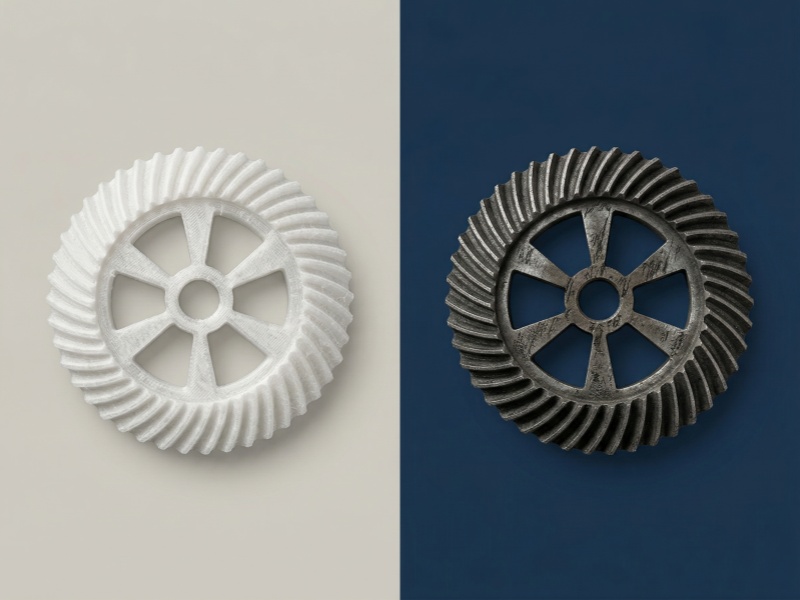
3D printing PLA prototype

Standard PLA

Optimized for high-speed printing and maximum dimensional accuracy. Ideal for form-and-fit validation, space claim models, and non-load-bearing architectural prototypes.

Tough PLA / PLA+

Formulated with impact modifiers to deliver an Izod Impact Strength that rivals ABS, but without the thermal warping. Perfect for functional snap-fit joints and PLA 3D printed parts for prototyping and production that must survive shop-floor drops.

Carbon-Fiber Reinforced PLA

Infused with chopped carbon fibers to dramatically increase the Flexural Modulus. Choose this for drone airframes, robotic end-effectors, and structural brackets where maximum stiffness and minimal deflection under load are critical.

ESD-Safe PLA

Engineered with carbon nanotubes to provide a consistent surface resistivity of 107 to 109 ohms/sq. Mandatory for electronics housing prototypes, PCB handling trays, and cleanroom fixtures.

The following values represent typical mechanical properties printed in the XY axis. Z-axis strength is specified to account for FDM anisotropy.

Material GradeTensile Strength (ASTM D638)Flexural Modulus (ASTM D790)HDT @ 0.45 MPa (ASTM D648)Z-Axis Layer Adhesion (Tensile)
Standard PLA 45.0 - 55.0 MPa 2.5 - 3.5 GPa 52 - 58 °C 25.0 - 30.0 MPa
Tough PLA+ 35.0 - 45.0 MPa 2.0 - 2.8 GPa 55 - 65 °C 28.0 - 35.0 MPa
PLA-CF 50.0 - 70.0 MPa 3.8 - 5.5 GPa 60 - 75 °C 30.0 - 40.0 MPa
ESD-Safe PLA 35.0 - 45.0 MPa 1.8 - 2.6 GPa 52 - 58 °C 20.0 - 26.0 MPa

Design for Additive Manufacturing (DfAM)

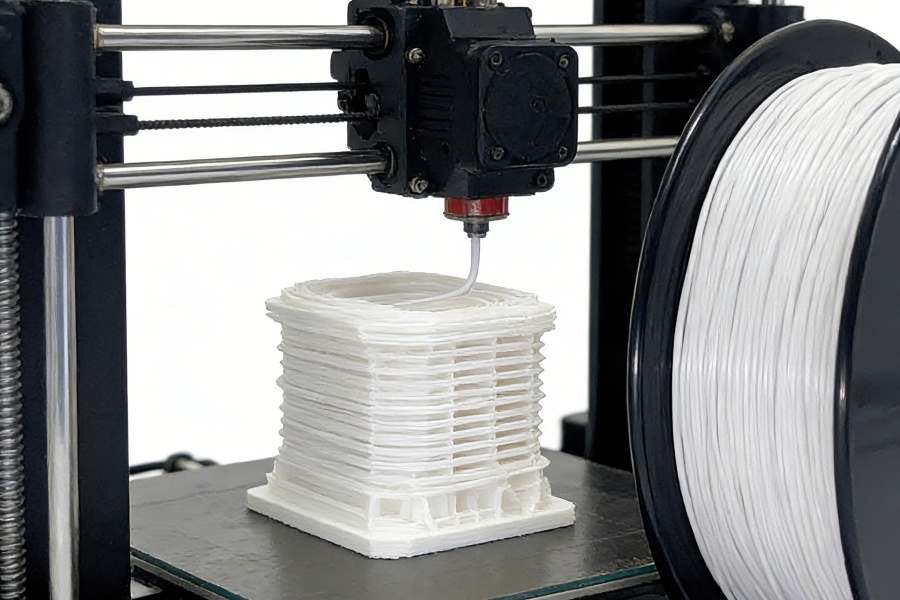
FDM is a layer-by-layer 3D printing process governed by thermal physics and nozzle dynamics. To ensure structural integrity and dimensional accuracy, please optimize your CAD models against the following engineering parameters prior to upload.

Minimum Wall Thickness

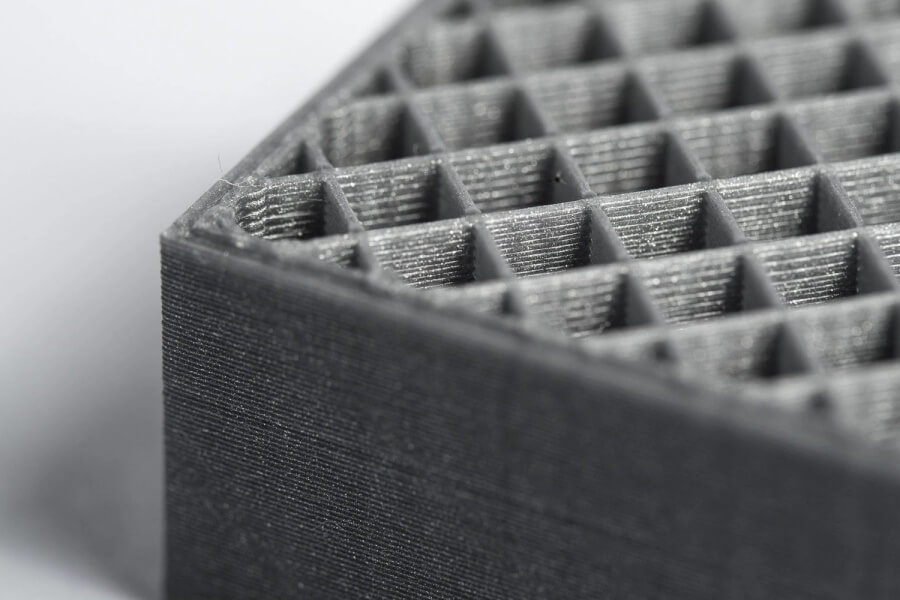
1.2mm recommended for structural integrity.

Engineering Rationale: Our standard industrial nozzles are 0.4mm. A 1.2mm wall allows for exactly three solid perimeters (shells), maximizing tensile strength and preventing infill bleed-through on the exterior surface. For non-load-bearing cosmetic walls, absolute minimum is 0.8mm.

3D printed part cross-section walls and infill
3D printed minimum feature size test pegs

Minimum Feature Size

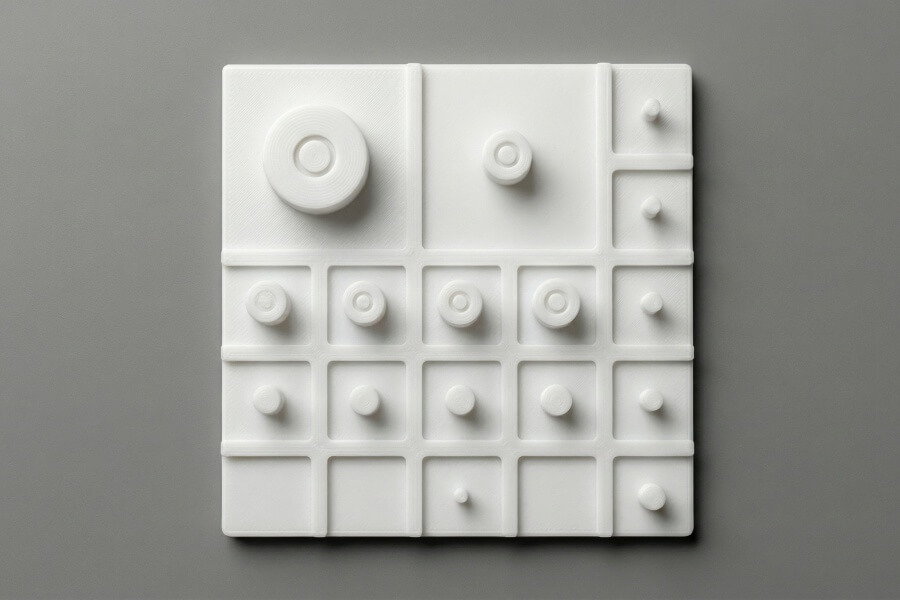
0.8mm for isolated features (e.g., pins, pegs, or thin ribs).

Engineering Rationale: Features smaller than 0.8mm lack sufficient surface area for inter-layer adhesion and will likely shear off under minimal lateral force or during shipping.

Dimensional Tolerances

Standard FDM: ±0.2mm (±0.008”).

Precision-Tuned FDM: ±0.1mm (±0.004”).

Engineering Rationale: We do not promise CNC machining tolerances on thermal extrusion processes because that violates physics. Expect ±0.2mm for standard runs. For critical mating surfaces, specify our precision parameter profile. We utilize slower print speeds and lower layer heights to hold ±0.1mm.

Advanced Support Structures

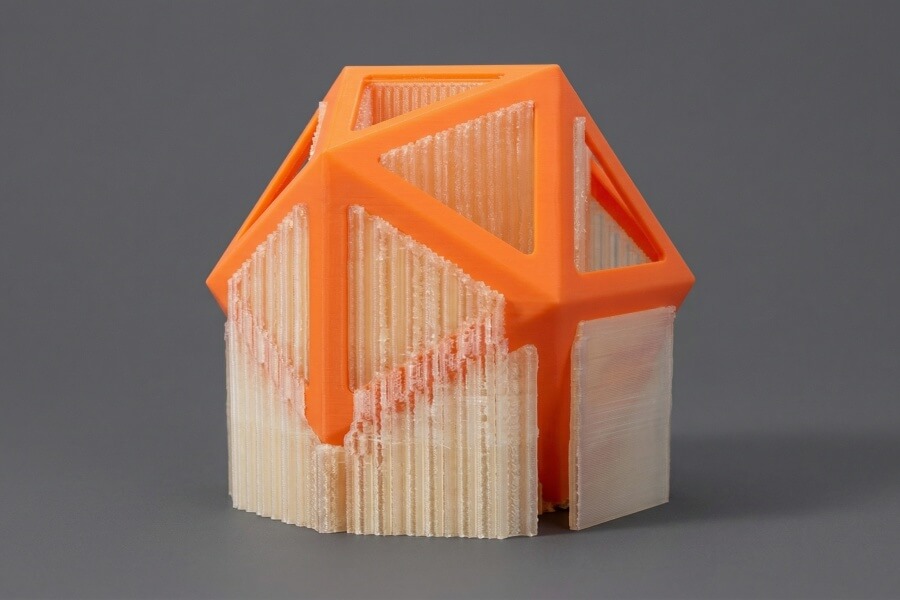
Dual-Extrusion with Soluble Supports (PVA/HIPS).

Engineering Rationale: Unlike cheap single-extruder desktop machines that require physical breakaway supports (leaving ugly, inaccurate surface scars), our industrial systems utilize dual-extrusion technology. We print complex overhangs, blind holes, and internal fluid manifolds using water-soluble PVA. The result? Flawless bottom surfaces and the ability to print un-machinable internal geometries.

Industrial PLA Use Cases

We don’t print toys. We manufacture 3D printed prototypes and functional polymer solutions designed to accelerate your development cycle and protect your tooling budget. Leading engineering teams deploy our PLA services to solve the specific industrial challenges listed below.
PLA 3D Printing

Form, Fit, and Ergonomic Prototyping

Zero Tooling Risk.
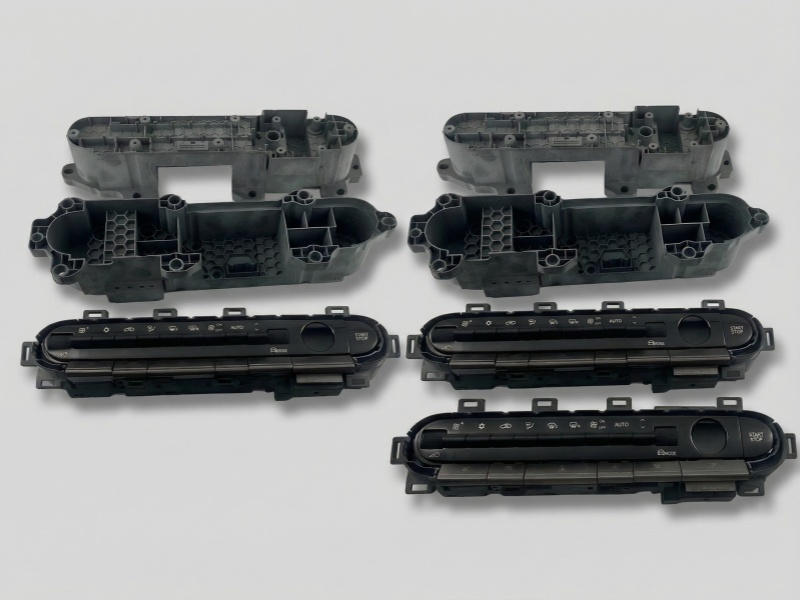
Before you cut a $20,000 steel injection mold, validate your CAD model physically through additive manufacturing with PLA. Test assembly clearances, verify snap-fit engagements, and evaluate housing ergonomics overnight.

3D printed assembly fixture industrial

Rapid Manufacturing Aids & Tooling

Bypass the CNC Bottleneck.
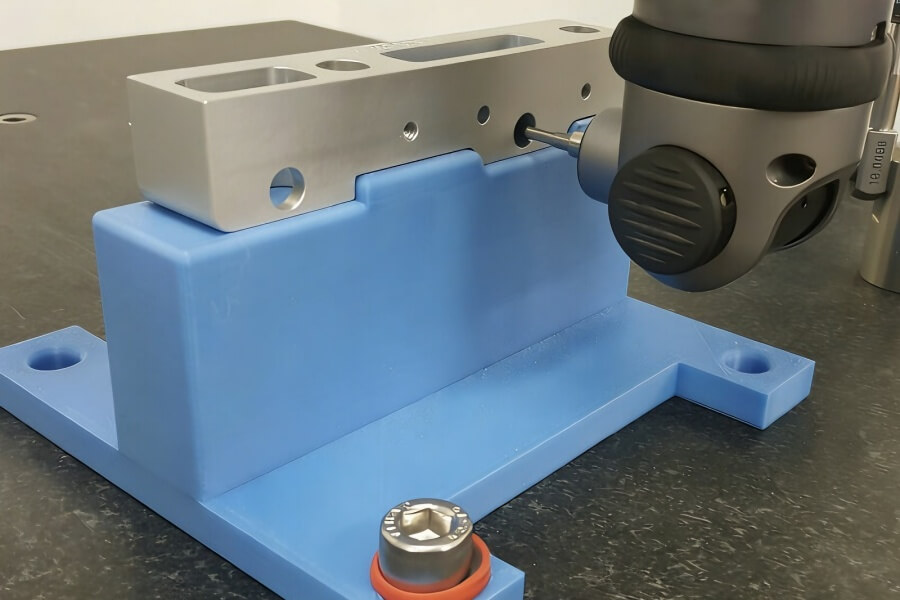
Stop tying up your expensive 5-axis CNC machines to cut simple assembly aids. We produce custom CMM holding fixtures, Go/No-Go gauges, and robotic end-effectors in Tough PLA+ in under 48 hours. Result: Lighter weight for operators, zero metal-on-metal scratching on your finished parts, and an 80% reduction in fixture costs.

Investment Casting Patterns

The Lost-PLA Process.
Bypass the long lead times of machining aluminum wax-injection dies for low-volume metal casting. Our standard PLA provides an exceptional sacrificial pattern characterized by low thermal expansion and a clean, near-zero-ash burnout. Ideal for complex pump impellers, intake manifolds, and custom automotive brackets transitioning directly to foundry casting.

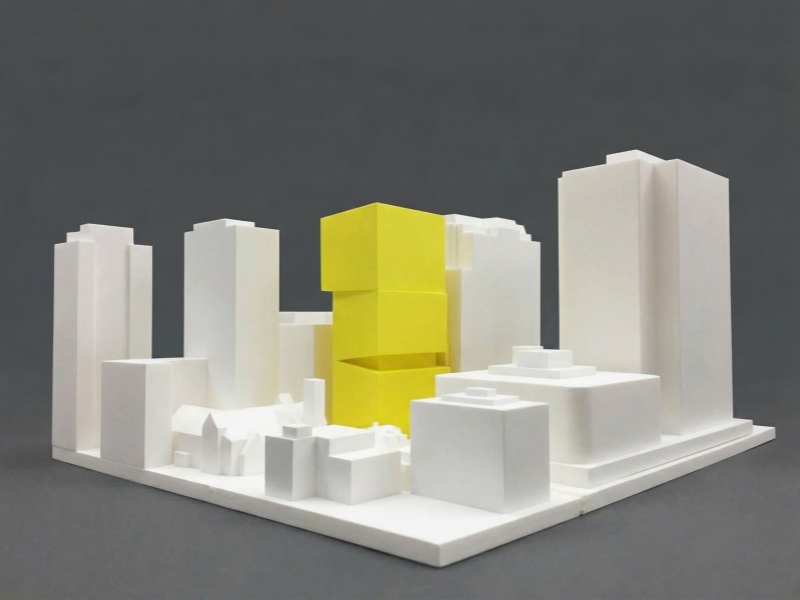
Architectural massing model 3D printing

High-Fidelity Communication Models

Accelerate Stakeholder Sign-Off.
Non-technical stakeholders and investors don’t understand 2D engineering drawings or CAD screens. Secure project funding faster with large-scale, physical space-claim models. Perfect for architectural massing studies, plant floor-plan layouts, and trade show displays.

Post-Processing & Assembly

A print is only halfway done when it leaves the build plate. We offer comprehensive 3D printing post-processing for PLA in-house to transform raw FDM extrusions into functional, cosmetic, or assembly-ready parts.

Standard Finish

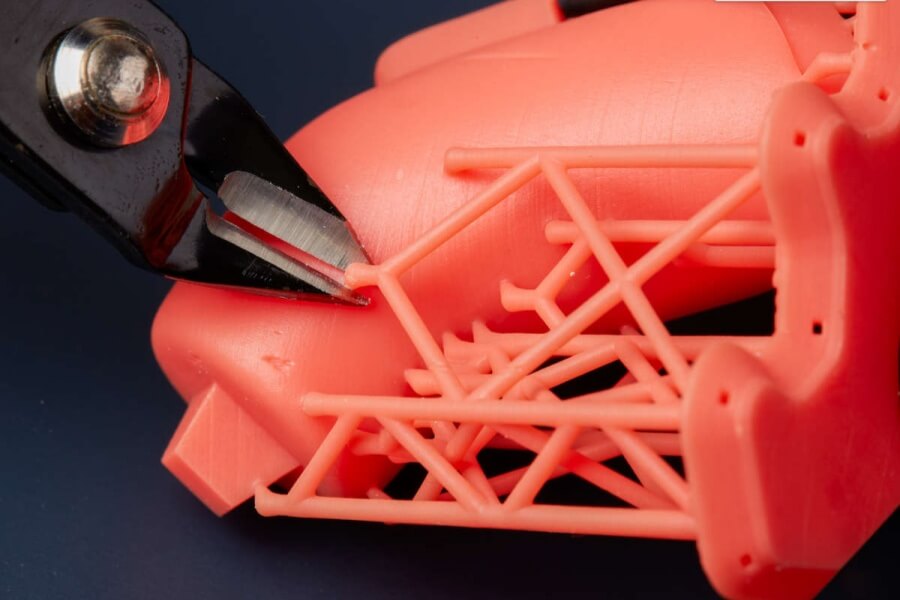
Support structures are meticulously removed, and contact points are flush-trimmed. Z-axis layer lines (striations) will be visible.

Best for: Internal proof-of-concept, fit checks, and functional jigs where aesthetics do not impact mechanical performance.

remove contact points

Sanded & Automotive-Primed

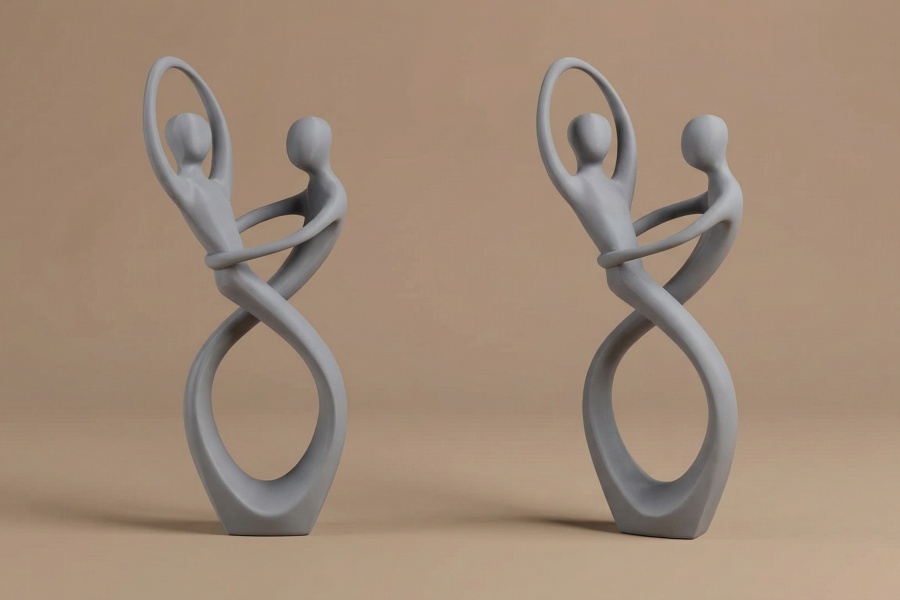
We eliminate the typical 3D-printed appearance. Parts undergo multi-stage mechanical sanding to remove layer stepping, followed by an application of high-build primer.

Best for: Cosmetic prototypes, trade show models, or parts awaiting your in-house final topcoat.

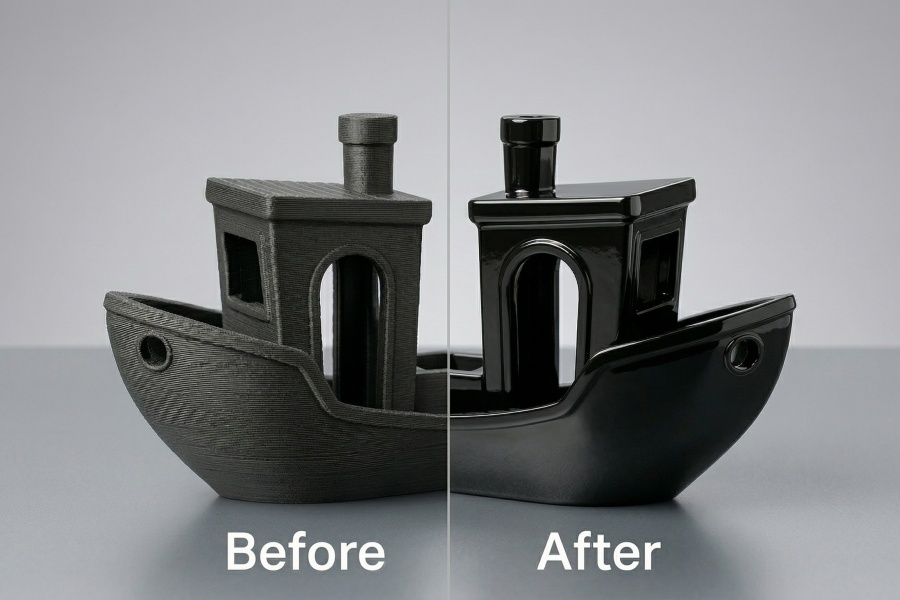
Chemical Vapor Smoothing

Utilizing controlled solvent vapor, we reflow the exterior polymer skin of the PLA part. This process seals micropores and delivers a smooth, glossy, watertight surface that closely rivals injection-molded plastics.

Best for: Aerodynamic testing models, fluid handling housings, and high-end aesthetic presentations.

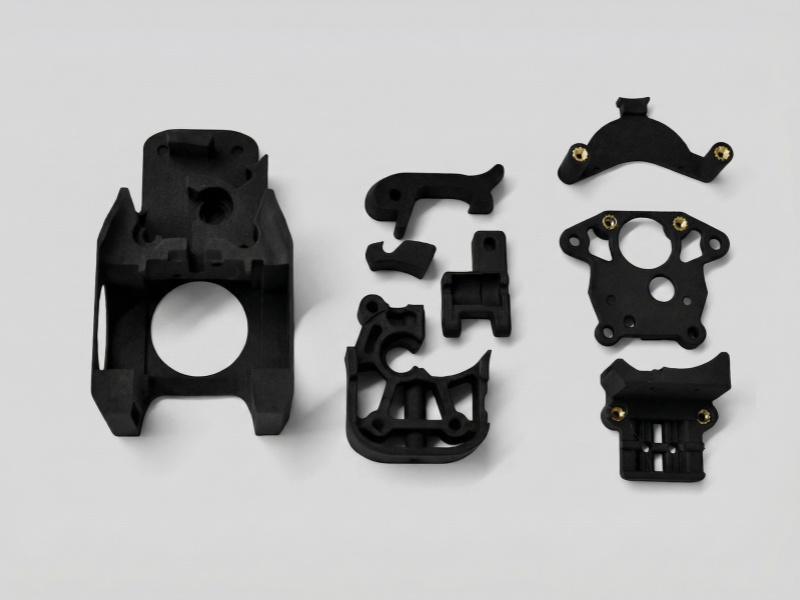
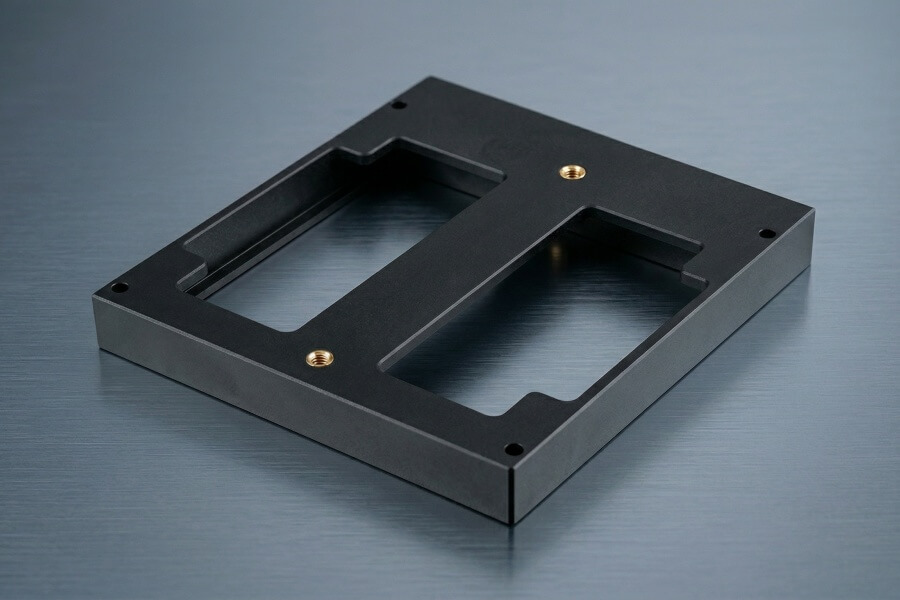
Heat-Set Threaded Inserts

FDM thermoplastics do not hold tapped threads well under repeated fastening cycles. We thermally embed brass threaded inserts (M2 to M8) directly into your PLA/PLA+ parts post-print.

Engineering Result: Delivers exceptional pull-out resistance and torque-out strength, instantly turning a plastic prototype into a durable, functional mechanical assembly.

PLA Engineering Limits

As manufacturing partners, our job is to prevent engineering failures before they happen. PLA is a phenomenal rapid prototyping material, but it obeys the laws of physics. If your application falls into the warning zones below, we will advise against PLA and recommend a high-performance alternative.
amorphous deformation

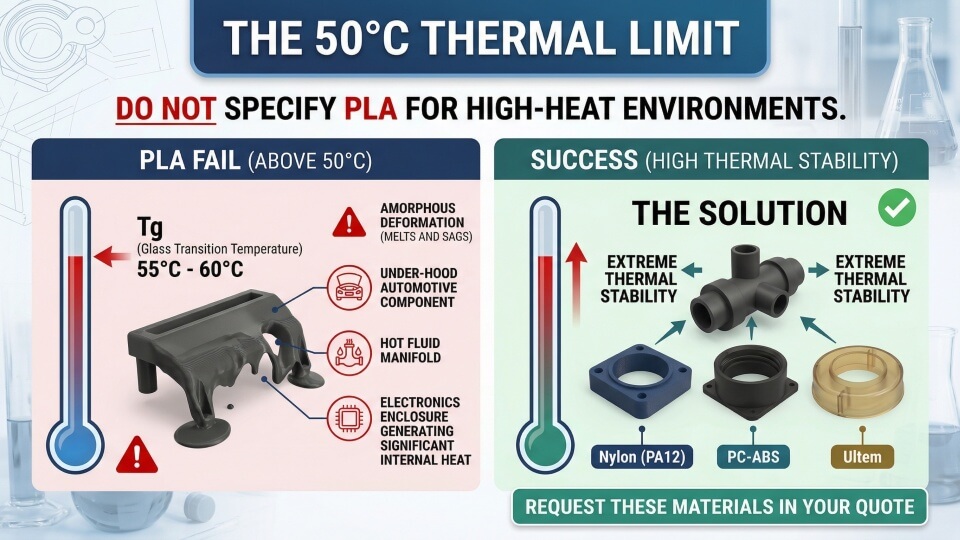
The 50°C Thermal Limit

DO NOT specify PLA for high-heat environments.

Standard PLA approaches its Glass Transition Temperature (Tg) around 55°C to 60°C. If your part is an under-hood automotive component, a hot fluid manifold, or an electronics enclosure generating significant internal heat, PLA will suffer amorphous deformation (it will melt and sag).

The Solution: Request Nylon (PA12), PC-ABS, or Ultem in your quote for extreme thermal stability.

UV Degradation

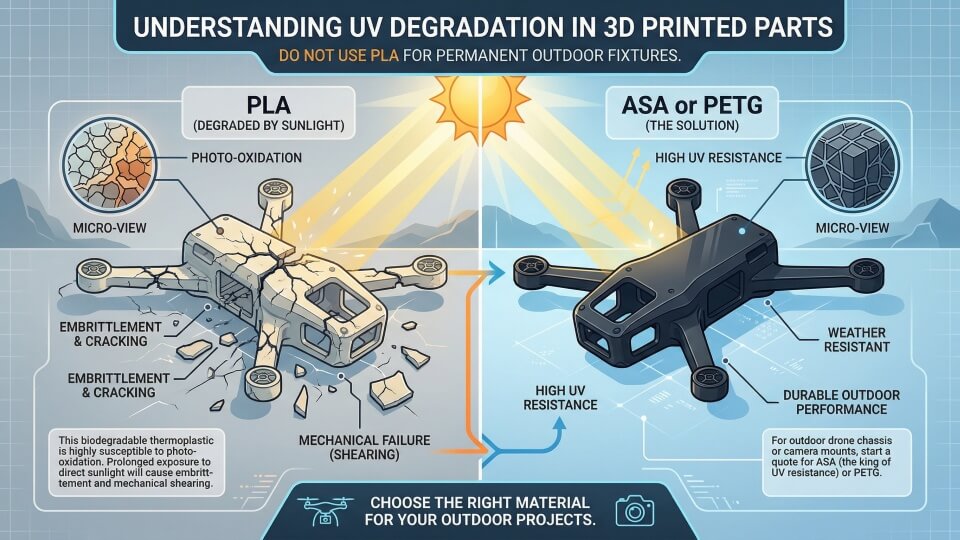
UV Degradation

DO NOT use PLA for permanent outdoor fixtures.

This biodegradable thermoplastic is highly susceptible to photo-oxidation. Prolonged exposure to direct sunlight will cause embrittlement and mechanical shearing.

The Solution: For outdoor drone chassis or camera mounts, start a quote for ASA (the king of UV resistance) or PETG.

Why PLA Remains the Undisputed King of Indoor Prototyping

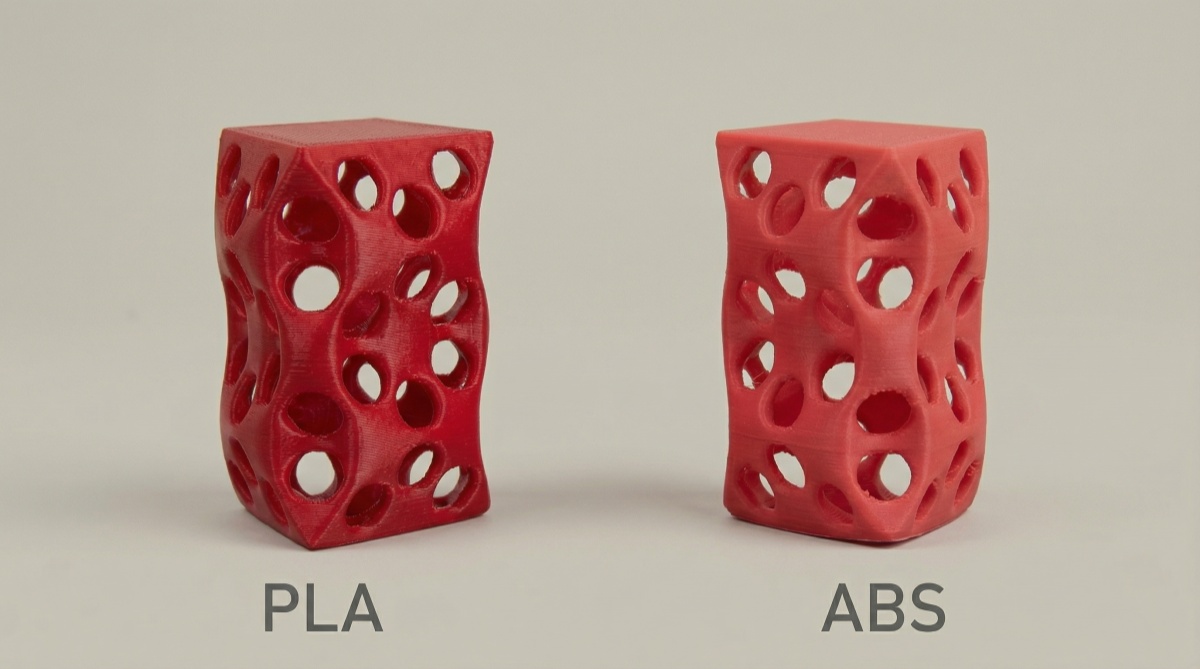
If your part operates indoors and under 50°C, PLA is mathematically your best investment. In any strict PLA vs ABS for 3D printing comparison, PLA delivers superior stiffness (a higher tensile modulus), significantly lower cost-per-cubic-centimeter, and most critically, zero thermal warping.

Vendor Onboarding & Procurement Logistics

While engineers validate the design, procurement ensures the supply chain doesn’t break. We streamline your vendor approval process with transparent SLAs, corporate freight routing, and rigorous quality documentation.

3D Printing machine

Production Lead Times

  • Standard Production: 3 to 4 business days. Optimized for scheduled low-volume manufacturing and routine prototyping.
  • Expedited / Line-Down Emergency: Same-Day or 24-Hour turnaround available. When your assembly line is halted waiting for a jig, we bump your STEP file to the front of our print farm queue.
international ship

Shipping & Freight Routing

We ship globally via FedEx, UPS, and DHL. Corporate Advantage: Standard Incoterms are EXW (Ex Works) or DAP. To bypass your internal freight-approval friction, we can ship directly on your company’s corporate carrier account (Simply provide your account number on the PO).

3D printing parts inspection

Quality Assurance & Compliance Docs

To satisfy your internal ISO 9001:2015, ISO 13485, and AS9100D vendor audit requirements, we don’t just ship parts. We deliver complete traceability. The following documents are available upon request with your PO:

  • CoC (Certificate of Conformity): Certifying parts meet the requested CAD geometry and material callouts.
  • Material Certs / TDS: Validating the exact polymer grade and lot number used in your batch.
  • Dimensional Inspection Reports: Basic caliper checks or full First Article Inspection (FAI) reports for critical tolerances.

Validate Your Design Before You Print.

Drop your STL or STEP file here. Before you commit to our PLA 3D printing service, our engineers will instantly analyze your wall thickness, tolerances, and pricing. Zero commitment required.

Frequently Asked Questions

Before you trust us with your proprietary CAD data, you need straight answers. We stripped away the marketing fluff to address your most critical technical questions with radical honesty. No overpromising. Just physics, material science, and hard facts.

Can FDM PLA hold tight enough tolerances for press-fit bearings (H7/p6)?

No. Thermal extrusion physics simply cannot reliably hit the micron-level tolerances required for precision bearing fits. Anyone in this industry who promises you an FDM press-fit straight off the printer is lying.

Our Engineering Solution: Design your bearing bores undersized by 0.5mm. We will print the surrounding walls with 100% solid infill, allowing your machinists to use a standard chucking reamer post-print to achieve a true, CNC-grade press fit.

Technically, yes, but only inside industrial composting facilities at 60°C. It will never degrade on your office desk or inside a server rack. The true engineering advantage of PLA over ABS is strict EHS (Environmental Health & Safety) compliance. PLA is completely odorless and virtually free of toxic VOCs. This makes it the only structural polymer safe for unventilated cleanrooms, testing labs, and corporate offices.

Through print farm architecture and centralized G-code deployment.

We never just put an operator in a room with a USB drive. For volume production, we utilize automated print management software to deploy your verified G-code simultaneously across dozens of identical, strictly calibrated machines (like our Bambu Lab X1E arrays). This ensures Part #1 has the exact same thermal history, layer adhesion, and dimensional accuracy as Part #500. You receive your entire batch in days, not weeks.

Absolutely not. It is a waste of your budget and actually increases the risk of part failure due to internal thermal stress. The mechanical rigidity of an FDM part is governed by the moment of inertia. This means structural strength comes entirely from the outer walls (perimeters), not the solid core.

Our Engineering Advice: Instead of 100% infill, specify 4 to 6 solid perimeters (shells) paired with a 30% to 40% Gyroid or Cubic internal lattice. This yields superior bending strength, eliminates warping, and cuts your part cost by up to 40%.

By controlling the thermal gradient. Even though PLA has a low shrink rate (~0.2%), a 400mm long part will inherently experience thermal contraction forces capable of ripping it off a standard glass bed. We print massive geometries inside enclosed, climate-controlled chambers using PEI spring-steel build plates and proprietary adhesion compounds. If your design features sharp 90-degree corners on a large footprint, our DFM engineers will flag it and recommend adding 3mm sacrificial adhesion brims to the corners to guarantee a perfectly flat bottom surface.

We operate under a strict default non-disclosure policy. Your proprietary files never sit on a public cloud server. We process all STEP and STL uploads on heavily encrypted, localized slicing workstations. Once your physical parts ship and pass verification, your CAD files and G-code are permanently purged from our active print nodes.

Require formal paperwork? We will gladly execute your company’s custom Non-Disclosure Agreement (NDA) before you transmit a single byte of data. Route your documents directly to our legal desk.

Zero MOQ. Infinite Scalability. You can order a single, $30 functional prototype today to test a mechanical snap-fit. If it works, you can order 2,000 units tomorrow for a bridge-production run, and we will distribute the G-code across our print farm to deliver them in days.

Note: To maintain our industrial-grade service and QA processes, our minimum project billing value is simply $50.

Discuss Your Application with an Engineer.

Not sure which PLA grade matches your mechanical load? Need a custom NDA executed before uploading your proprietary CAD? Skip the automated queue. Connect directly with our industrial PLA 3D printing service team for material selection, DFM support, and volume pricing. We respond to all technical inquiries within 12 hours.

Whatsapp

+86 13392819510

Address

Building 1, No.8, Second Street, Huangjiang Town,
Dongguan City, Guangdong Province

Socials

Please enable JavaScript in your browser to complete this form.
Click or drag files to this area to upload. You can upload up to 3 files.
Scroll to Top

Let's Talk About Your Project