

Anodizing Services

Fully managed aluminum anodizing services engineered for critical tolerances. From complex anodizing with masking services to Type III hardcoat with precise thread protection. We take single-source responsibility. Every fabricated run includes full traceability, RoHS compliance, and First Article Inspection (FAI) reports.

Type II & III Anodizing Services

ShincoFab does not just cut and bend metal. We engineer the complete component, including aluminum surface finishing. Understanding exact dimensional changes is critical for your tight-tolerance assemblies, threads, and bearing fits. Review the data below to see how our managed network of Type II and Type III anodizing partners performs.

Gold anodized knurled aluminum adjustment knob

Type II Anodizing

MIL-A-8625, Type II (Sulfuric Acid Anodizing / Soft Anodize)

  • Primary Application: Excellent corrosion resistance, ideal substrate for vibrant color anodizing for aluminum, and moderate wear protection.
  • Coating Thickness: Typically 0.0001” to 0.001” (2.5μm to 25μm), customizable to your exact spec.
  • Dimensional Impact: Minimal. Type II typically penetrates the substrate evenly and builds up slightly, having negligible effect on standard tolerances.
  • Available Colors: Clear, Black, Red, Blue, Gold, and Custom Pantone Matching (with ΔE ≤ 1.0 consistency).
  • Best For: Housings, brackets, cosmetic enclosures, and non-wear functional components.
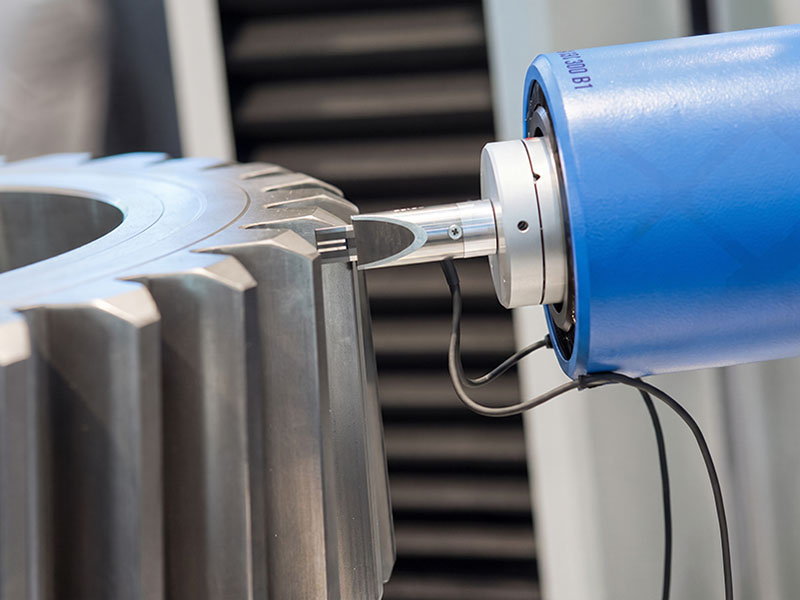
CMM probe measuring precision machined metal gear

Type III Hardcoat Anodizing

MIL-A-8625, Type III (Class 1 Non-Dyed, Class 2 Dyed)

  • Primary Application: Extreme abrasion resistance, high dielectric strength, and enhanced surface hardness to improve corrosion resistance and enhance wear resistance in heavy-duty applications.
  • Coating Thickness: Typically 0.002” (50μm), closely controlled to ± 0.0001”.
  • Surface Hardness: 60 – 70 Rockwell C (Equivalent). Note: Hardcoat approaches the hardness of tool steel.
  • Dielectric Strength: Approx. 800 V per 0.001″ of thickness (ideal for electrical insulation).
  • Best For: Gears, pistons, sliding wear surfaces, medical devices, and aerospace applications.

Base Metals Dictate the Finish

The quality of your anodized finish is written in the chemistry of your aluminum. Not all alloys react identically in the anodizing tank. Alloying elements like copper, zinc, and silicon profoundly impact the final color, luster, and thickness. Review the breakdown below to see exactly how your selected alloy will perform in our certified partners’ tanks.

Matte grey anodized high-strength aluminum parts

6000 Series (e.g., 6061-T6)

The Industry Standard

  • Performance: Outstanding. This magnesium/silicon alloy is the most versatile material for anodizing.
  • The Result: Produces a dense, protective anodic oxide layer that accepts dyes beautifully to prevent aluminum corrosion.
  • What to Expect: Vibrant, consistent colors (Red, Blue, Gold) and a deep, true Black. Yields a high-quality cosmetic finish with predictable dimensional changes.

7000 Series (e.g., 7075-T6)

The High-Strength Challenge

  • Performance: Requires specialized process control. The high zinc and copper content in 7000 series alloys, particularly Aluminum 7075, creates resistance during the anodizing process.
  • The Result: The anodic layer tends to be softer and more porous than on 6061.
  • The Engineer’s Warning: Cosmetic appearance is affected. Clear anodizing will often take on a yellowish-green or grey tint. Dyed Black may appear slightly matte or charcoal-grey rather than a deep, glossy black. If true cosmetic consistency is required, consult with our team on specialized pretreatment options.

2000 Series (e.g., 2024)

The Copper Complication

  • Performance: Difficult. The high copper content drastically slows the growth of the oxide layer and increases the risk of burning (part destruction) during Type III Hardcoat.
  • The Result: Yields a very dull, matte finish. Achieving maximum hardcoat thickness (0.002″) is extremely challenging and often impossible.

Cast Aluminum (e.g., A380, A356)

The Silicon Barrier

  • Performance: Highly unpredictable. Castings contain high levels of silicon, which does not anodize.
  • The Result: The silicon particles remain embedded in the coating, resulting in a dark, mottled surface finish. Furthermore, inherent porosity in castings will trap acid, causing delayed chemical leaching and corrosion days after processing.
  • Our Recommendation: We strongly advise against cosmetic anodizing for castings. If you require corrosion protection on cast parts, we suggest discussing alternatives like chemical conversion coating (Chem Film/Alodine) or specialized sealing processes.

Controlling the Final Finish

A flawless anodized finish does not start in the chemical tank. It begins with proper surface preparation on our fabrication floor. Anodizing is an electrolytic conversion coating, not a paint. It will not hide tool marks, scratches, or raw material defects. In fact, it often highlights them. Review the steps below to see how we control the final aesthetic and functional performance of your parts before and after they visit the finishing facility.

Raw aluminum parts showing mechanical tool marks

Surface Preparation

The luster of the anodized layer is entirely dependent on the starting surface finish.

  • For High Gloss / Reflective: Parts must be polished or CNC-machined to a low surface roughness (Ra 16 μin or better). The smoother the substrate, the brighter the finish.
  • For Matte / Non-Reflective: Specify mechanical texturing on your prints to achieve a matte finish. We provide automated media blasting (e.g., Glass Bead #120) in-house to create a uniform, non-directional matte finish that diffuses light and masks minor handling marks.
  • The Golden Rule: What goes into the tank dictates what comes out. If you have specific aesthetic requirements, call out the Ra or blasting spec clearly on your drawings.

Color Consistency

Batch-to-batch color variation is the most common frustration in cosmetic anodizing. Whether you specify standard Clear, Black, Red, Blue, Gold, Green, or require Custom Pantone matching, we do not rely on the naked eye to verify your finish.

  • Scientific Color Control: We require our finishing partners to utilize spectrophotometry to measure and verify the exact hue of every batch.
  • Strict Parameter Management: Dye concentration, temperature, pH, and immersion time are digitally controlled.
  • The Result: Whether you order 100 parts today or 1,000 parts next year, we manage the supply chain to deliver consistent, repeatable color matching (ΔE ≤ 1.0). Your product assemblies will look unified, not pieced together.

Sealing

Anodizing creates a microscopic honeycomb structure of nanopores in the aluminum oxide coating. If left unsealed, the part will easily absorb dirt, grease, and stains. Proper sealing is critical for the survival of the finish.

  • Our Process Standard: We specify Hot Deionized (DI) Water sealing for clear finishes, and specialized Nickel Acetate sealing for dyed and hardcoat parts.
  • The Performance Guarantee: This process completely closes the nanopores, locking in the dye and locking out the environment.
  • Corrosion Resistance: Our properly sealed Type II parts consistently pass the rigorous 336-hour ASTM B117 salt spray test, ensuring your components survive harsh field conditions without pitting or oxidation.

Design for Anodizing (DFA)

The difference between a delayed project and a smooth production run often comes down to the drawing. Anodizing is an electrochemical process, which means fluid dynamics, electrical contact, and chemical penetration must be accounted for in your design. Ensure rapid quoting and flawless execution by following the DFA guidelines below when submitting your CAD and PDF prints.

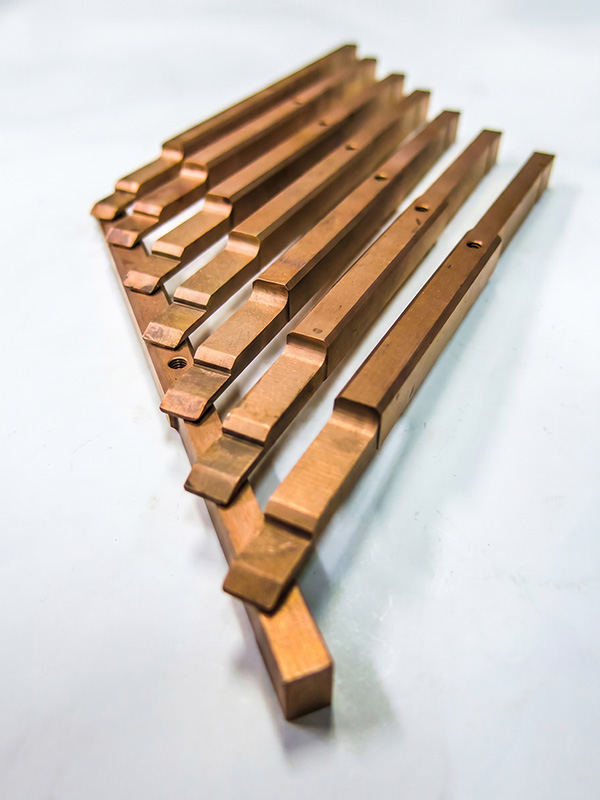
Metal racks for electrical contact in anodizing baths

Define Acceptable Rack Mark Locations

  • The Physics: Anodizing requires a solid electrical connection. The part must be clamped to a titanium or aluminum rack to conduct current through the acid bath. Where the rack contacts the part, the anodic layer cannot form.
  • Your Action: There will always be a rack mark. Do not leave this to chance. Explicitly designate acceptable rack mark zones on your PDF drawing (e.g., inside a bore, on a non-cosmetic back face).

Explicitly Call Out Masking & Plugging Requirements

  • The Physics: You may have critical grounding points that require bare metal conductivity, or tight-tolerance threaded holes (e.g., M3 or smaller) where a 0.002″ hardcoat buildup would ruin the threads.
  • Our Solution: We engineer precision masking instructions using high-temp tapes and custom-molded silicone plugs that conform perfectly to your part, preventing acid seepage during outsourced processing.
  • Your Action: Clearly hatch or highlight all masked areas on your 2D print. If there are blind tapped holes, note whether they must be plugged to prevent acid entrapment (gas traps).

Pre-Plate vs. Post-Plate Dimensions

  • The Physics: As discussed in our Type III section, hardcoat builds up.
  • Your Action: Clearly state on your drawing whether the dimensions shown are Pre-Plate (Machine) or Post-Plate (Final). This eliminates ambiguity and prevents our quality team from rejecting parts that are actually within spec.

Avoid Gas Traps & Acid Entrapment

  • The Physics: The anodizing process releases oxygen gas. If your design features deep blind holes or complex internal cavities without proper venting, gas pockets can form, leaving those areas uncoated. Worse, trapped acid can slowly bleed out and destroy the finish days later.
  • Your Action: If possible, design through-holes rather than blind holes. If blind holes are unavoidable, discuss racking orientation and rinsing procedures with our engineering team.
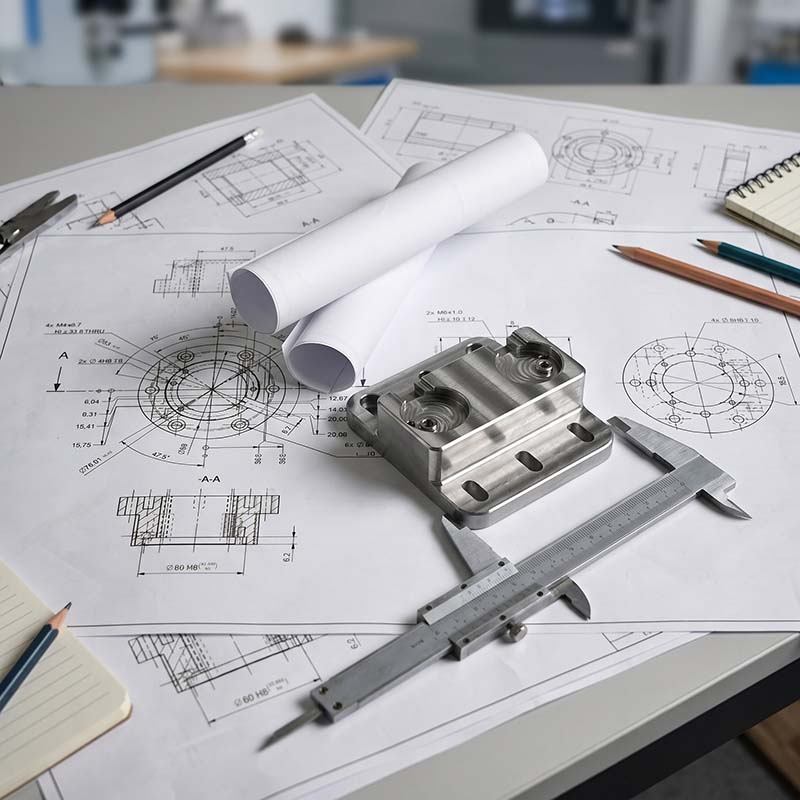
Caliper measuring metal part on engineering drawing

Quality & Handling Protocols

Anodizing is the final step in your manufacturing process. By the time parts are ready for finishing, you have already invested thousands of dollars in raw materials and CNC machining time. We protect that investment by acting as your single-point quality gatekeeper. We have engineered the strict protocols below to eliminate the risk of damage, contamination, and compliance failure across our vendor network.

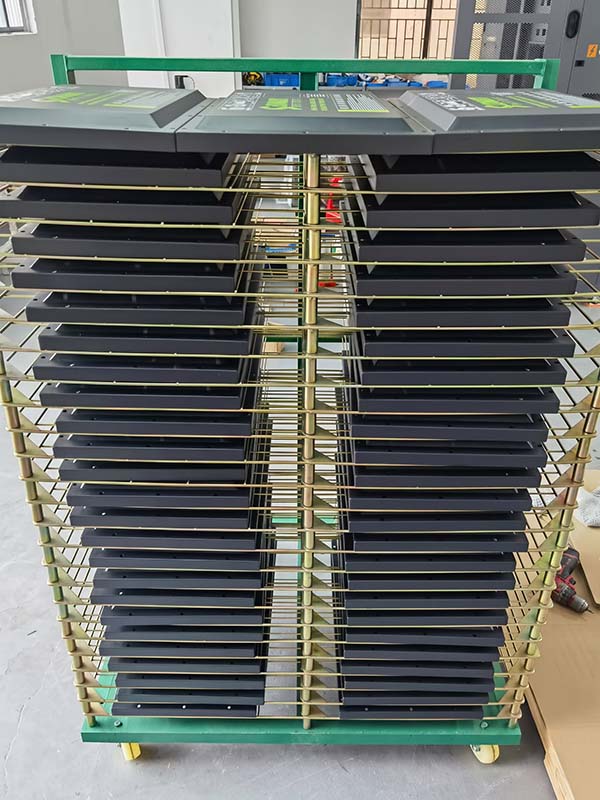
Separated metal parts in protective transit rack

Damage Prevention Protocols

Scratches and dings do not happen in the chemical tanks. They happen on the shop floor and during transit. We engineered out human error through the strict procedures below.

  • Contamination-Free Handling. Every part is handled exclusively with clean-room gloves to prevent skin oils from interfering with the anodic layer before finishing.
  • Secure Transit to Partners. We completely reject bulk shipping. Finished components are individually separated and shipped in custom foam-lined transit boxes to our anodizing partners, ensuring zero metal-on-metal contact.

Audit-Proof Traceability & Documentation

For procurement and quality managers, a part isn’t finished until the paperwork is approved. We ensure your incoming inspection (IQC) is effortless:

  • Data-Driven Quality: Beyond trusting our partners, we prioritize verification. Our QA team utilizes eddy-current testing to confirm the exact anodic layer thickness prior to shipment.
  • The Paper Trail: Every single batch leaves our dock with detailed thickness logs and a complete Certificate of Compliance (CoC).
  • The Result: You pass your audits, maintain your ISO/AS9100 compliance, and never have to chase down multiple sub-tier vendors for missing paperwork.

Predictable Lead Times

Surface finishing is the final step before assembly. It cannot be the black hole of your supply chain. We do not give vague estimates. We operate on strict, data-driven production schedules integrated seamlessly with our audited finishing network to keep your assembly lines moving.

Standard Production | 3–5 Business Days

  • The Commitment: From the moment your parts are fabricated and inspected to the moment they are boxed for final shipment.
  • Best For: Mid-to-high volume production runs and standard JIT inventory replenishment.

Expedited & First Article (FAI) | 24–48 Hours

  • The Commitment: Pre-negotiated dedicated tank space and priority processing for urgent requirements.
  • Best For: Line-down emergencies, rapid prototyping, and First Article Inspection (FAI) approvals where every hour counts. (Please note your expedite request in the RFQ form to confirm same-day tank availability).

Outbound Logistics | Real-Time Tracking

  • Immediate Notification. Once your parts clear Final QC, our ERP system automatically triggers a shipping notification with your UPS or FedEx tracking number.
  • Carrier Transit. Transit times depend on your location and selected freight speed. However, there is no guessing and no chasing us for updates once the box leaves our dock.
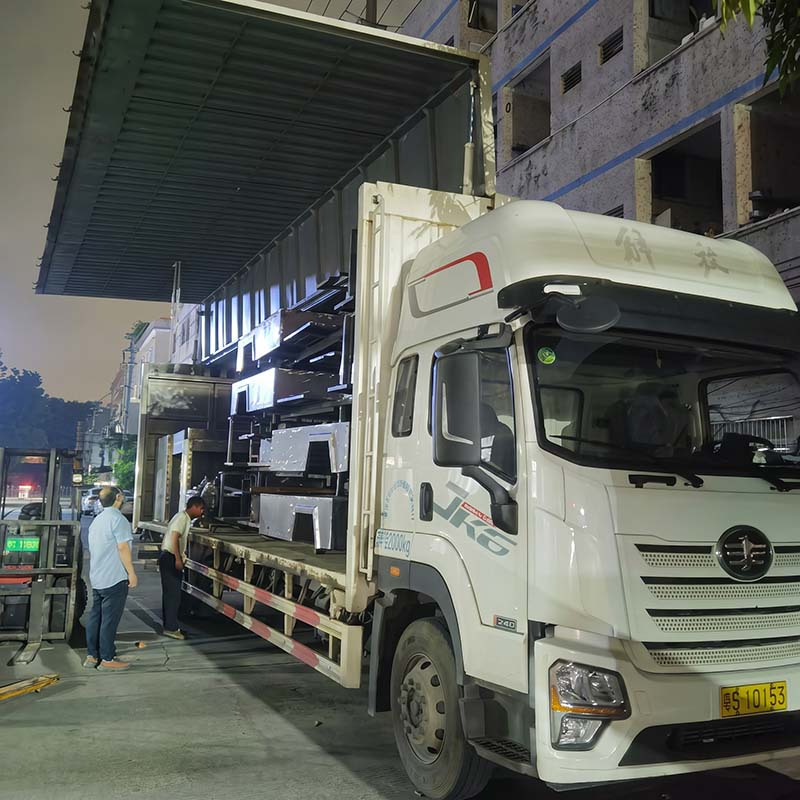
Truck being loaded with finished fabricated metal products

Pre-Production Design for Anodizing (DFA) Review.

Don't wait until production to find out. Eliminate variables related to hardcoat buildup, gas traps in blind holes, and alloy compatibility. Send us your preliminary CAD, and our manufacturing engineers will conduct a free Design for Anodizing (DFA) print review.

Frequently Asked Questions

Still have questions before submitting your prints? Here are the straight answers to the most common technical questions we get from engineering and procurement teams when evaluating turnkey fabrication and anodizing companies.

Do you have a Minimum Order Quantity (MOQ) or Minimum Lot Charge?

We do not have a strict piece-count MOQ. We routinely process single-piece prototypes and First Article variants. Because setting up the chemical bath, racking, and QA testing requires the same overhead for 1 part as it does for 1,000, we pass through a transparent Minimum Lot Charge (MLC) from our finishing partners for very small runs. For volume production, pricing scales down significantly. Upload your CAD to obtain an anodizing quote and see the exact cost breakdown.

No. This is a critical design failure. The sulfuric acid bath used in both Type II and Type III anodizing will rapidly dissolve steel, stainless steel, and brass. This will destroy your inserts, ruin the part, and contaminate the anodizing tanks. All non-aluminum inserts MUST be installed after the anodizing process. If they cannot be removed, the entire insert area must be meticulously masked, which significantly increases cost and risk.

We strongly advise against this. While Type III hardcoat does build up, pushing the coating thickness beyond the standard 0.002″ to 0.003″ limit severely compromises its structural integrity. The coating will become extremely brittle, prone to micro-cracking (spalling), and may flake off during assembly. Anodizing should never be used as a dimensional salvage operation for poor machining.

Masking is a highly manual, labor-intensive process. The cost depends entirely on the geometry.

  • Standard blind tapped holes: We use reusable silicone plugs. The cost impact is minimal.
  • Complex geometric surfaces: Requires precision application of high-temp tapes or the creation of custom masking fixtures. This will add to both the setup cost and lead time.
  • Best Practice: Only call out masking where it is absolutely critical for grounding or tight mechanical fits.
We can get extremely close, but anodizing is not painting. Because the dye is absorbed into the porous oxide layer of the raw metal, the exact hue is influenced by the aluminum alloy (e.g., 6061 vs. 7075) and the surface roughness (Ra). We require our partners to use spectrophotometry to ensure lot-to-lot consistency (ΔE ≤ 1.0) of established processes, but if you need an absolute match to a printed Pantone swatch, we highly recommend running a small sample batch first.

Get Your Precision Aluminum Anodizing Quote in 24 Hours

Ready to move forward? Our engineering team is standing by to review your geometry and specifications. Submit your data package below, and we will return a comprehensive, risk-free turnkey manufacturing and finishing quote within 24 hours.

Whatsapp

+86 13392819510

Address

Building 1, No.8, Second Street, Huangjiang Town,
Dongguan City, Guangdong Province

Socials

Please enable JavaScript in your browser to complete this form.
Click or drag files to this area to upload. You can upload up to 3 files.
Scroll to Top

Let's Talk About Your Project