MJF Printing Service

An industrial mjf printing service delivering production-grade PA11, PA12, and TPU parts with true isotropic strength. Eliminate the structural weaknesses of traditional 3D printing. The optimal solution for complex functional prototyping and low-volume end-use manufacturing.

The Engineering Edge of Our MJF Printing Service

Forget the brittle layer lines of FDM and the porous surfaces of standard SLS. The industrial mjf printing service at ShincoFab relies on voxel-level thermal fusing to deliver functional nylon parts that actually survive the factory floor. Here is the physical science behind why our HP multi jet fusion process achieves true injection-molded mechanical performance within the powder bed fusion category, all without the tooling.

Voxel-Level Control for Sharp, Accurate Geometries

Unlike Selective Laser Sintering (SLS) which uses a laser to trace cross-sections, HP’s MJF process applies fluids at a voxel level across the entire powder bed. A fusing agent is applied where the powder needs to melt, while a detailing agent is sprayed around the contours to prevent unwanted thermal bleed. A heavy-duty infrared lamp then fuses the entire layer simultaneously.

The Result: Faster build times, sharper edge definitions, and dimensional accuracy (±0.3mm) superior to standard SLS.

Multi Jet Fusion process diagram
Z-axis strength 3D printing illustration

True Isotropic Strength with No Weak Z-Axis

The primary failure mode of traditional FDM 3D printing is delamination, where parts snap along the Z-axis layer lines. MJF eliminates this structural flaw. Because the fusing process achieves full thermal blending between layers, our 3d printed parts exhibit true isotropic mechanical properties.

The Engineer’s Benefit: A part printed in the Z-axis is just as strong, rigid, and impact-resistant as one printed in the X or Y plane. You can design for mechanical stress without worrying about print orientation.

~98% Density: Watertight and Pressurized Capable

Porosity is a known issue in many 3D printing processes, making them unsuitable for fluidic applications. MJF eliminates this. Our multi jet fusion production parts achieve a density of approximately 98% or higher out of the printer.

Real-World Application: These minimal-porosity PA12/PA11 parts are virtually watertight. They are routinely used for custom pneumatic manifolds, fluid reservoirs, and IP67-rated electronic enclosures that must withstand pressurized outdoor environments.

Specify Industrial MJF Materials Without Guesswork

Stop evaluating polymers based on marketing adjectives. Match your engineering requirements to actual physical properties. Compare our mjf 3d printing material options below and specify ShincoFab’s industrial-grade powders to ensure your parts survive real-world mechanical stress.

HP 3D High Reusability PA 12 (Nylon 12)

The industry standard for functional end-use parts and robust nylon 12 3d printing. It offers the best balance of strength, detail resolution, and chemical resistance to oils and greases.

  • Key Specs: Tensile Strength: 48 MPa | Heat Deflection Temp (HDT @ 0.45 MPa): 175°C
  • Best For: Complex assemblies, electronic housings, jigs, fixtures, and fluid-handling components.
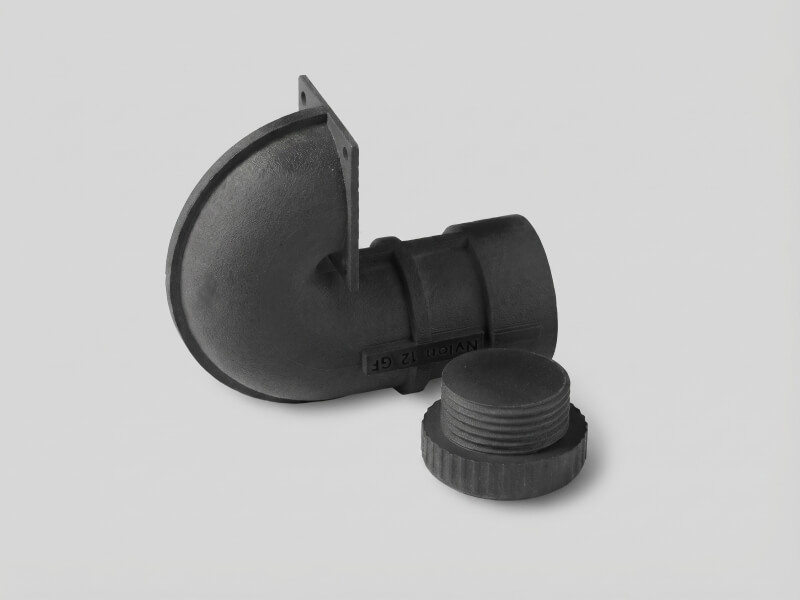
rigid nylon structural component

HP 3D High Reusability PA 12 Glass Beads

When standard Nylon isn’t stiff enough, this 40% glass-bead-filled material delivers exceptional dimensional stability and a significantly higher tensile modulus. It resists warping under continuous mechanical or thermal stress.

  • Key Specs: Tensile Modulus: 2800 MPa | HDT (@ 0.45 MPa): 186°C
  • Best For: Heated enclosures, rigid structural nodes, robotic end-of-arm tooling (EOAT), and parts replacing machined aluminum.
PA11 nylon tough flexible part

HP 3D High Reusability PA 11

Engineered for ultimate toughness and flexibility without breaking. Unlike brittle FDM or SLA resins, PA 11 absorbs high impact and repetitive mechanical stress, returning to its original shape.

  • Key Specs: Elongation at Break: 50% (XY), 60% (Z) | Superior impact resistance compared to PA 12.
  • Best For: Living hinges, snap-fit enclosures, crash-resistant drone parts, and sports equipment. (Note: If your previous 3D printed snap-fits broke during assembly, switch to PA 11).
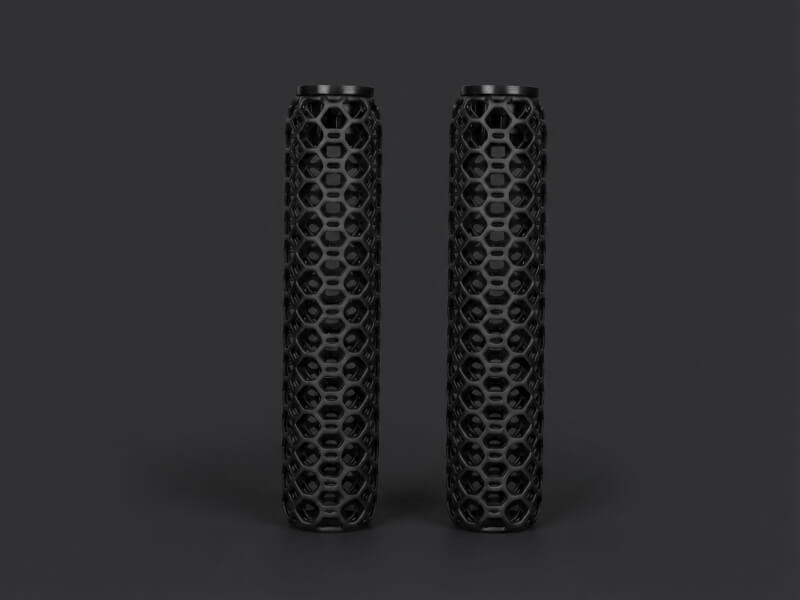
flexible lattice elastomer part

BASF Ultrasint® TPU 01

A highly flexible, durable polyurethane elastomer that offers excellent energy rebound and abrasion resistance. MJF technology allows you to print programmable TPU shore hardness by designing varying internal lattice structures.

  • Key Specs: Shore Hardness: Current standard (e.g., 88A/90A) | High elongation and tear strength.
  • Best For: Complex honeycomb lattice structures, custom gaskets, shock absorbers, grippers, and ergonomic grips.

MJF Design Guidelines & Dimensional Capabilities

Design with confidence, not guesswork. Review our exacting manufacturing constraint box below to ensure your complex geometries print successfully on the very first run. By understanding these exact physical boundaries, you eliminate the risk of costly redesigns, failed prints, and production delays.

Design ParameterSpecification BoxEngineering Notes & DFM
Maximum Build Volume 380 x 284 x 380 mm
(14.9 x 11.1 x 14.9 inches)
Engineer’s Tip: Need something larger? Design with mechanical interlocking joints or split assemblies. We can bond them post-print with industrial adhesives for near-parent strength.
Dimensional Accuracy ±0.3 mm (up to 100mm) or ±0.3% (over 100mm) Standard industrial MJF tolerance. If your design requires tighter tolerances (like H7 press-fits), design undersized and let us CNC machine the critical features post-print.
Z-Axis Layer Thickness 80 microns
(0.08 mm)
The Advantage: This ultra-fine 80-micron voxel resolution produces denser parts and a significantly smoother out-of-the-bed surface finish than standard SLS (100-120 microns).
Minimum Wall Thickness 0.8 mm (Recommended)
0.5 mm (Absolute Minimum)
DFM Warning: While the laser can resolve 0.5mm, we strongly advise a 0.8mm minimum to ensure delicate walls survive the aggressive pressure of bead-blasting and post-processing.
Minimum Feature / Pin Size 0.5 mm Ideal for sharp embossed text, deep logistics tracking codes, or fine locating pins.

Managing Thermal Warpage

Let’s talk about the physics of MJF. Because the multi-jet fusion process involves intense heat and rapid cooling inside the powder bed, large, flat, thin-walled surfaces are highly susceptible to thermal warp.

The Solution: Do not design large flat planes if they can be avoided. We strongly advise adding structural ribbing or honeycombing to large flat areas to manage thermal stress. If your design cannot be altered, our CAM engineers will strategically angle the part orientation within the build envelope to minimize warpage risk.

Production-Ready Surface Finishes

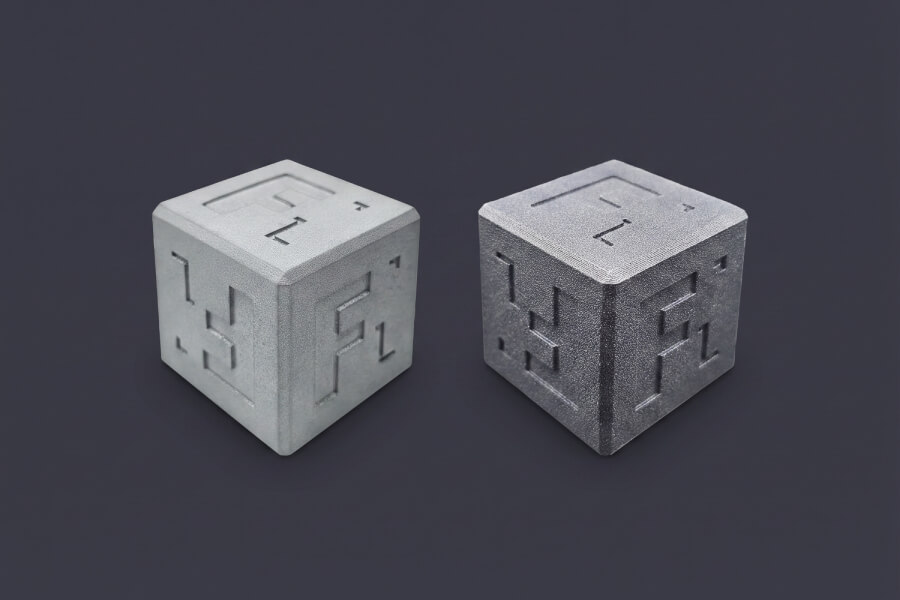
Untreated MJF parts possess a porous, matte-grey finish. As a complete mjf printing service with finishing options, ShincoFab upgrades these raw plastic 3d printing prototypes into premium, end-use components by sealing surface porosity, increasing structural durability, and delivering an injection-molded tactile feel.

Standard Bead Blast (Raw Matte Grey)

Straight from the cooling bed, parts are aggressively media-blasted to remove all residual unbound powder.

  • The Result: A uniform, matte grey finish with a slight tactile texture.
  • Best For: Internal mechanical components, functional testing, jigs, and hidden automotive brackets where aesthetics are irrelevant.
bead blasted nylon part
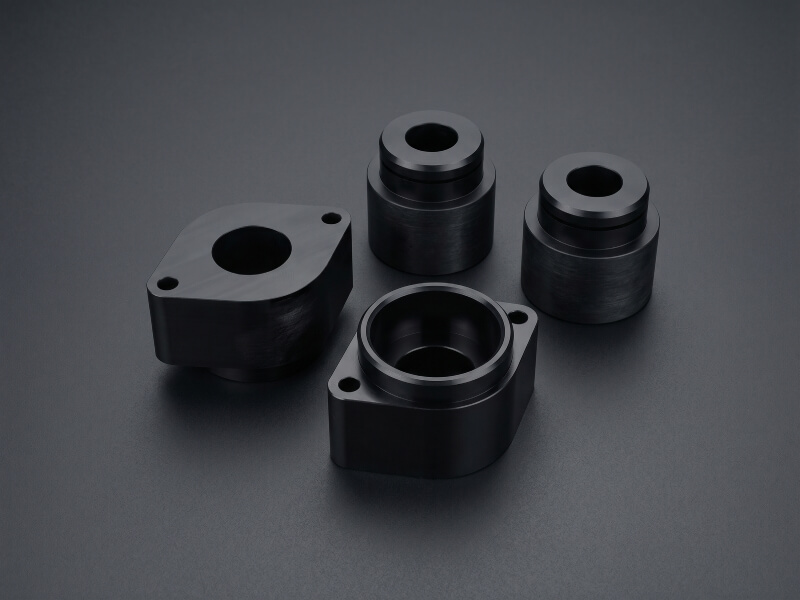
deep black nylon part

Deep-Dyed Black (Penetrating Color)

We don’t just paint the surface (which chips under mechanical stress). Parts are submerged in a heated, specialized dye bath that penetrates the outer micro-porosity of the nylon.

  • The Result: A deep, uniform black finish that resists scratching and fading.
  • Best For: Exposed electronic housings, drone frames, and robotic parts.

Engineer’s Note: Black effectively hides grease, dirt, and handling marks in harsh industrial environments.

Chemical Vapor Smoothing (Injection-Molded Quality & Watertight)

This is how you bridge the gap between 3D printing and traditional injection molding. We expose the parts to highly controlled, vaporized chemical solvents. The vapor briefly melts and reflows the outer microscopic layer of the nylon, permanently sealing the surface before curing.

  • Visual & Tactile Shift: Transforms the rough, powdery finish into a sleek, semi-gloss surface that looks and feels exactly like high-end injection-molded plastics.
  • Mechanical Upgrade: Beyond aesthetics, vapor smoothing seals surface micro-cracks. This dramatically enhances elongation at break, improves impact resistance, lowers surface friction, and makes the part 100% watertight and bacteria-resistant.
  • Best For: Medical device enclosures, consumer-facing products, fluidic pipes, and dynamic moving assemblies requiring low friction.

If your application demands absolute fluid containment or a cosmetic gloss, we highly recommend ordering your mjf 3d printing with vapor smoothing finish.

vapor smoothed nylon part

MJF vs. Injection Molding and SLS

Need to justify the process to your procurement team or technical director? Here is the exact economic breakdown and definitive mjf vs sls 3d printing comparison.

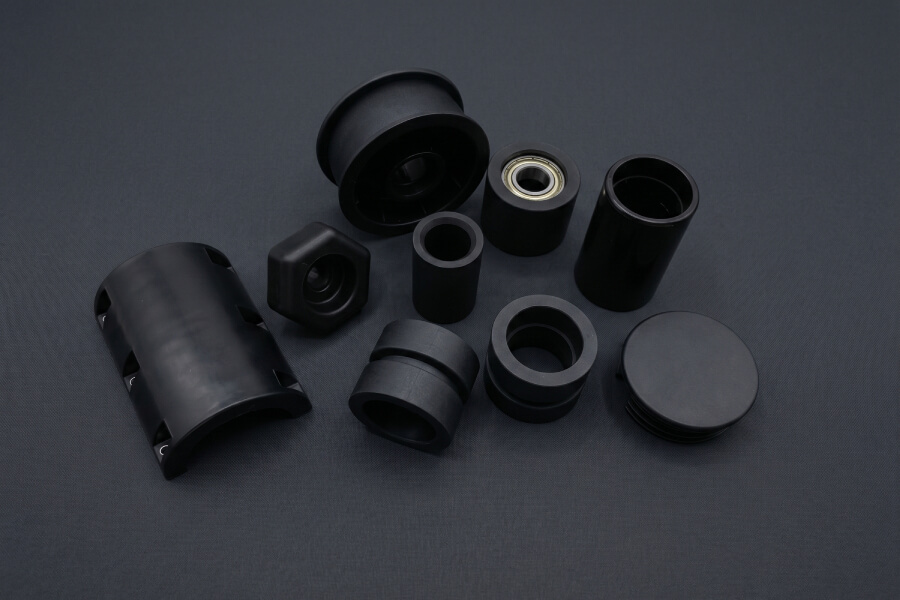
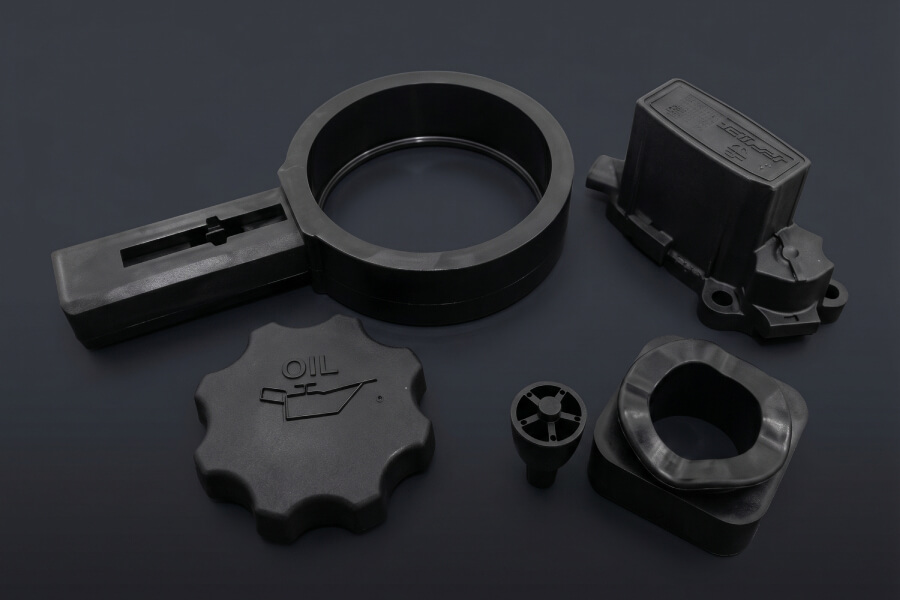
batch 3D printed nylon parts

MJF 3D Printing vs. Traditional Injection Molding

The ultimate solution for bridge manufacturing and low-volume production.

  • Tooling (NRE) Costs: $0 (MJF) vs. $10,000 – $50,000+ (Injection Molding).
    The Advantage:_ Eliminate capital expenditure risk entirely. If your design changes in rev 2, you don’t have to scrap an expensive steel mold.
  • Time to Market: 3 Days (MJF) vs. 4 to 8 Weeks (Injection Molding).
    The Advantage:_ Launch your product a month early and capture market share while your competitors are still waiting for mold flow analysis and tool machining.
  • The Break-Even Point (Honest Assessment): MJF is the definitive choice for production runs between 1 and 5,000 units. However, if you are scaling to 10,000+ units with a locked design, injection molding will yield a lower per-unit cost.

HP MJF vs. Legacy SLS (Selective Laser Sintering)

Why MJF is replacing SLS for true functional end-use parts.

  • Mechanical Integrity (Z-Axis): Isotropic (MJF) vs. Anisotropic/Weak (SLS).
    The Advantage:_ SLS relies on point-to-point laser sintering, which can leave microscopic weak spots between layers. MJF’s planar thermal fusing creates fully isotropic parts that withstand multi-directional stress.
  • Production Speed (Cycle Time): 10x Faster (MJF).
    The Advantage:_ An SLS laser must physically trace every square millimeter of a cross-section. MJF’s print heads sweep across the entire bed in a single chemical/thermal pass, dramatically reducing lead times for high-volume batches.
  • Feature Resolution & Surface Detail: MJF utilizes a detailing agent at the voxel edge to prevent thermal bleed. This results in incredibly sharp edges, crisp embossed text, and higher dimensional accuracy (±0.3mm) straight out of the machine compared to the slightly “fuzzier” edges typical of standard SLS.

Proven Industrial MJF Applications

True manufacturing value is proven on the factory floor rather than on a spec sheet. Discover how industry leaders leverage our custom 3d printed parts to bypass the geometric constraints of CNC milling and the prolonged lead times of injection molding to solve complex engineering bottlenecks.

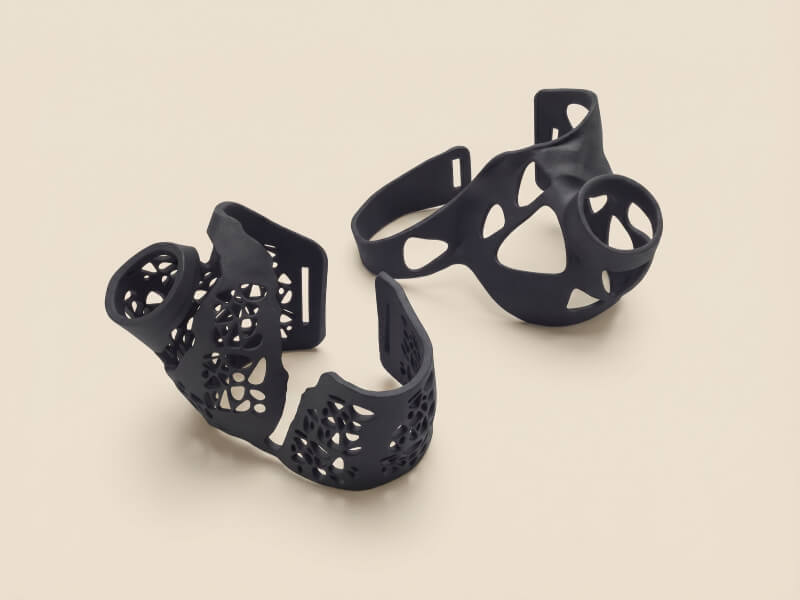
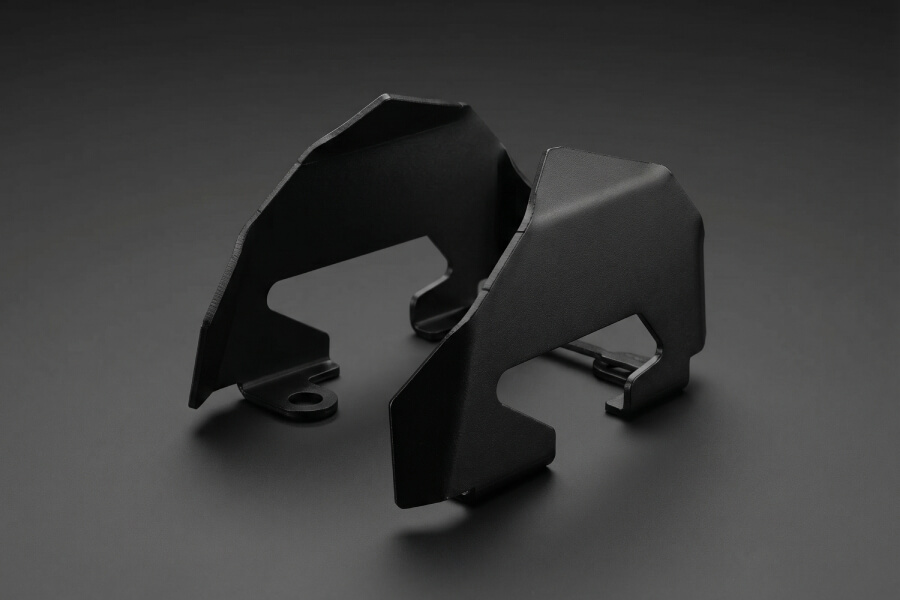
Topology-Optimized Lightweight Drone Frames

  • The Traditional Problem: Machining complex, lightweight aluminum brackets for drones is prohibitively expensive, and standard FDM plastics lack the structural integrity to survive crash impacts.
  • The MJF Solution: Using PA 12, engineers design parts with generative design and complex internal honeycomb lattices—geometries that are physically impossible to mold or CNC machine.
  • The Result: Parts consolidate from multi-piece assemblies into a single monolithic component, reducing overall vehicle weight by up to 50% while maintaining the rigidity necessary for payload stability.
generative design drone bracket
Robotic end effector 3D printing

Eliminate Downtime with Rapid EOAT and Fixtures

  • The Traditional Problem: When a custom robotic End-of-Arm Tooling (EOAT) or assembly jig breaks, waiting 3 weeks for the machine shop to mill an aluminum replacement costs thousands of dollars in line downtime.
  • The MJF Solution: Upload the CAD file on Monday, install the new PA 11 or PA 12 fixture on Wednesday.
  • The Result: Not only is the tooling replaced in 48 hours, but the printed nylon is naturally non-marring (it won’t scratch your cosmetic final products), and it is 70% lighter than steel, significantly reducing operator fatigue and robotic arm payload limits.

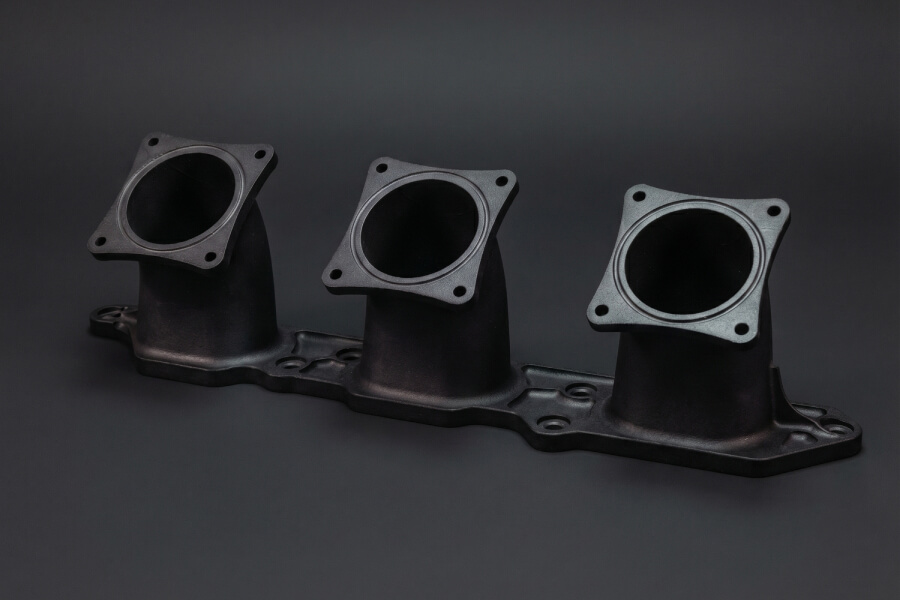
One-Piece Leak-Free Fluid Manifolds

  • The Traditional Problem: Manufacturing custom fluid manifolds via CNC requires cross-drilling intersecting straight holes and sealing the ends with threaded plugs—creating turbulent 90-degree corners, pressure drops, and multiple points of potential leakage.
  • The MJF Solution: Because MJF achieves ~98% density without porosity, engineers print highly complex, watertight custom manifolds in one piece.
  • The Result: You can now design smooth, sweeping internal channels (conformal routing) that optimize fluid lamina flow. Zero cross-drilling required. Zero plugs. Zero assembly leaks.
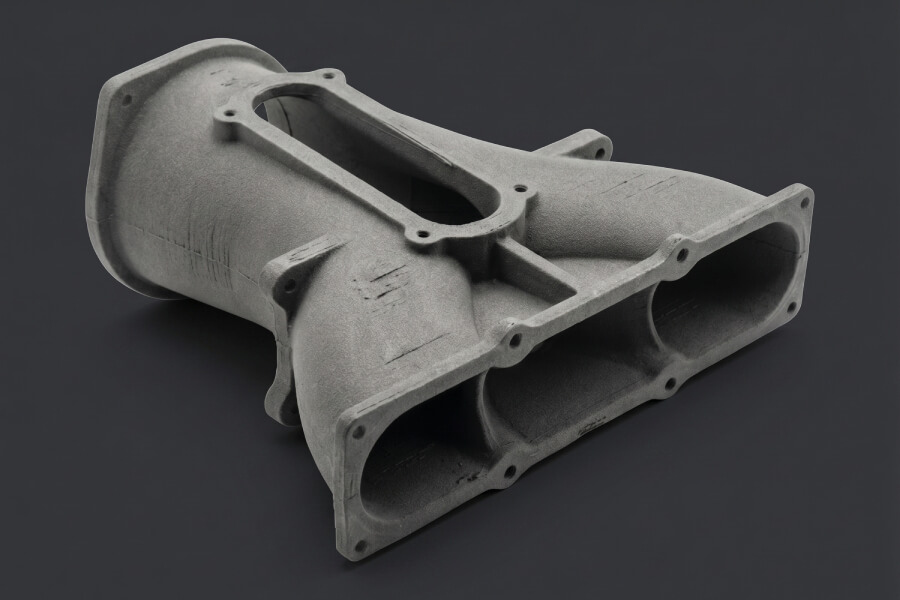
One-piece 3D printed hydraulic manifold

Fully Traceable Industrial Quality Assurance

Protect your supply chain with hard data rather than blind trust. Transitioning from functional prototypes to end-use production requires rigorous inspection and certified repeatability. We back every MJF batch with advanced metrology, documented traceability, and an uncompromising financial guarantee.

Industrial 3D printing quality control

Process Controlled & Audit-Ready

We don’t operate a hobbyist print farm; we run a highly controlled digital manufacturing facility. Our processes are strictly governed by industry-leading quality management systems to ensure repeatability across every batch.

  • ISO 9001:2015: Certified standardized quality management and continuous improvement.
  • AS9100D (Aerospace & Defense): Full material traceability, lot control, and risk management for flight-critical components. (Note: Only include if actually certified)
  • ISO 13485 (Medical Devices): Bio-compatible material handling, strict climate control, and documented process validations for healthcare applications.

Note: Only include if actually certified

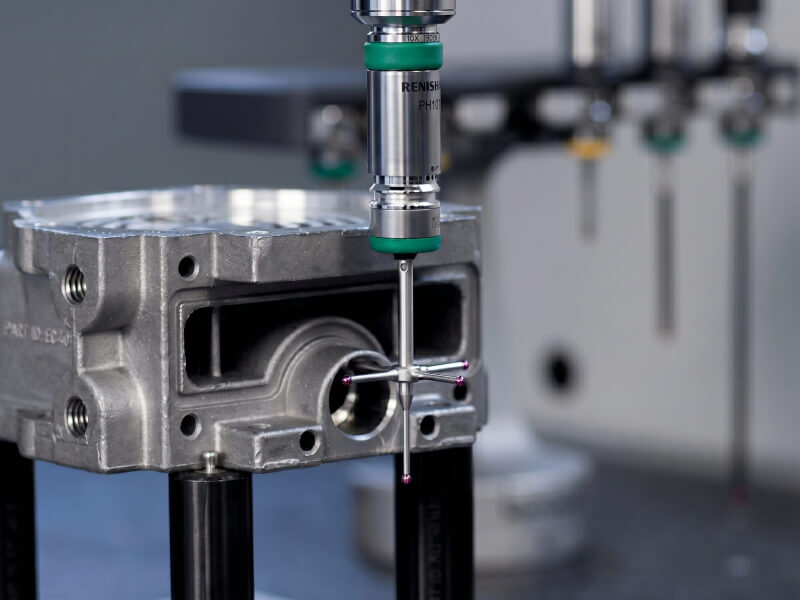
CMM touch probe 3D printed part

Documented Dimensional Verification

You should never have to manually calibrate parts you paid us to manufacture. For high-volume or critical end-use production runs, we provide comprehensive, data-backed inspection documentation upon request:

  • First Article Inspection (FAI): Available compliant AS9102 formats. We run the first batch, measure every critical feature, and await your engineering sign-off before commencing full production.
  • CMM Metrology Reports: Advanced Coordinate Measuring Machine verification to prove your parts perfectly match the nominal dimensions and tight tolerances (±0.3mm) designated on your CAD file.
  • Material TDS & CoA: Full Certificates of Analysis ensuring the HP PA12/PA11 powder used is fresh, uncompromised, and perfectly mixed via HP’s strict refresh protocols.
Industrial 3D printed parts boxed for shipping

Strict Print-to-Spec Guarantee

Procurement should not be a gamble. We operate on a very simple, non-negotiable principle:

If the part does not meet the agreed-upon dimensional tolerances or material specifications, we will reprint it at our own expense. Period. No endless arguments, no hidden fine print. We deliver what you engineered, or we make it right.

Stop Compromising Your Designs for CNC Limitations

Bypass the delays of machine shops and the crippling costs of injection molds. Upload CAD file for mjf printing today and receive functional, isotropic PA12 parts in as fast as 3 days.

Frequently Asked Questions

Before you finalize your BOM or upload your CAD, here are the physical realities of designing for MJF.

Can MJF parts hold directly tapped threads for assembly?

While raw MJF PA12 is dense enough to be tapped, direct printed or tapped plastic threads (especially under M6) will eventually strip under repeated industrial torque. We strongly advise against it.

  • Specify Brass Heat-Set Inserts and design your part with blind holes to ensure reliable, repeatable mechanical fastening.
  • Request In-House Thermal Insertion by selecting the Install Inserts option on your quote request. We handle the automated insertion so your parts arrive completely ready for final assembly.

Yes, for standard applications. Because the MJF process achieves ~98% part density, components are inherently watertight straight out of the powder bed without needing messy liquid sealants, making them ideal for standard fluid reservoirs.

  • The High-Pressure Upgrade: However, if you are designing custom pneumatic manifolds or high-pressure liquid routing, microscopic surface porosity can still cause weeping. We highly recommend selecting our Chemical Vapor Smoothing service. It permanently melts and seals the outer boundary layer, guaranteeing a 100% leak-proof, injection-molded-grade barrier.

Let’s state the chemical reality: Raw, uncolored Nylon 12 is susceptible to UV degradation. Extended exposure to direct sunlight will cause the part to discolor, “chalk,” and slowly lose its mechanical ductility over time.

  • The Mitigation Strategy: Never specify raw grey for outdoor use. Our Deep-Dyed Black process significantly improves UV resistance by blocking light penetration.
  • The Ultimate Protection: For permanent, structural outdoor applications (like drone housings or agricultural equipment), specify a UV-resistant automotive polyurethane topcoat, which we can apply post-print.

Let’s be brutally honest: No standard powder-bed 3D printing technology can hold a true ±0.01mm press-fit tolerance straight out of the printer. MJF holds a highly reliable ±0.3mm, but that is not sufficient for precision bearings or airtight O-ring grooves.

The Hybrid Solution: Do not abandon your 3D printed design. Design your critical bores or mounting faces with 1mm of extra material (undersized holes). We offer in-house CNC Post-Machining. We will print the complex geometry via MJF, then mount it on our 5-axis mill to bore, ream, or face your critical dimensional tolerances for aerospace requirements.

You get the design freedom of 3D printing with the precision of CNC.

Absolutely. You do not need to redesign your entire assembly or revert to expensive large-format tooling.

  • The Engineering Solution: Our CAM engineers will evaluate your STEP file and strategically partition the CAD geometry. We integrate advanced mechanical interlocking features (such as dovetail or step joints) precisely outside of your maximum stress zones.
  • Industrial Assembly: Post-print, the segmented parts are bonded using aerospace-grade, two-part structural epoxies. Because MJF PA12 features microscopic surface porosity, the epoxy deeply penetrates the material matrix. The resulting joint is highly durable, often exceeding the mechanical strength of the parent nylon itself.

While MJF does not suffer from the traditional injection molding sink marks caused by cooling shrinkage, large solid masses are the enemy of MJF printing. Solid blocks of powder retain excessive thermal mass during fusing, causing severe dimensional warping and drastically increasing your print cost.

The Pro-Tip for Lowering Your Quote: Never upload a solid block of plastic. Use your CAD software to shell your part to a uniform wall thickness of 2mm to 4mm. If you need structural rigidity, add internal ribbing or honeycomb lattices. Hollowing your part reduces material consumption, drastically lowers your quote, and ensures perfect dimensional stability.

Ready for Production? Let’s Evaluate Your CAD.

Stop guessing about tolerances and costs. Submit 3d model for printing securely, and get instant quote mjf printing pricing along with actionable engineering feedback within 24 hours.

Whatsapp

+86 13392819510

Address

Building 1, No.8, Second Street, Huangjiang Town,
Dongguan City, Guangdong Province

Socials

Please enable JavaScript in your browser to complete this form.
Click or drag files to this area to upload. You can upload up to 3 files.
Scroll to Top

Let's Talk About Your Project