




Spot Welding Services

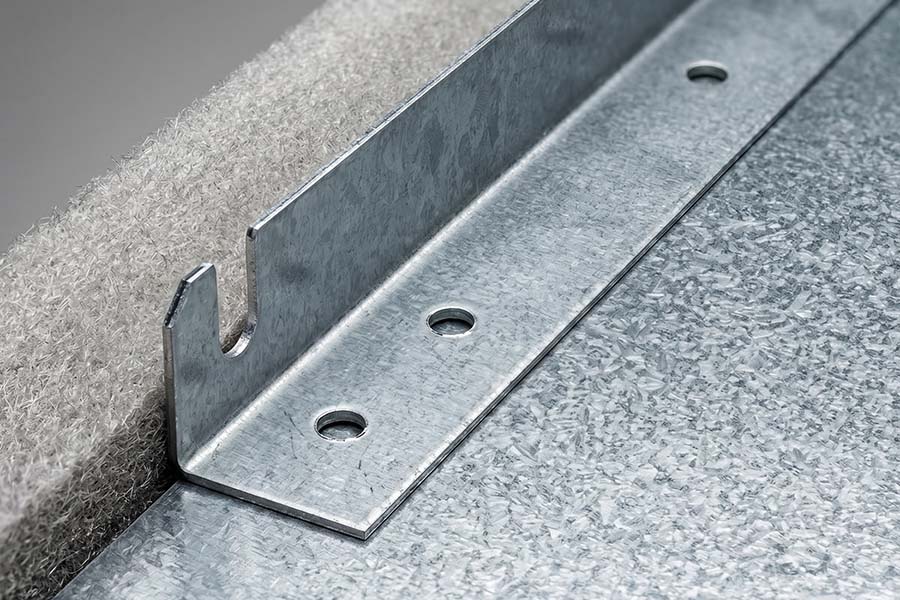
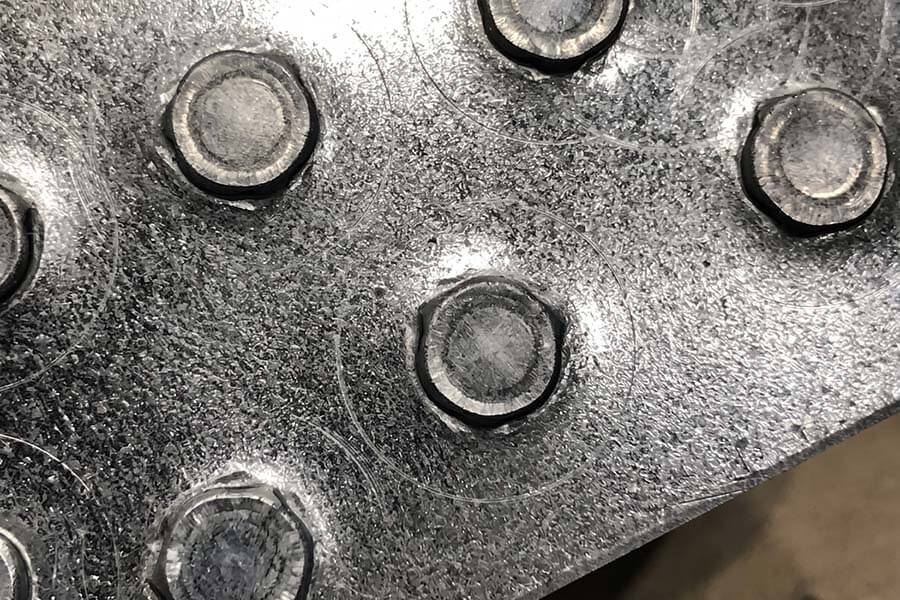
Unlike standard spot welding services, our AS9100 & Nadcap certified facility utilizes real-time parameter monitoring to precisely control the Heat-Affected Zone (HAZ). We prevent burn-through, limit thermal distortion, and guarantee repeatable shear strength across high-volume runs.

Spot Welding Services Equipment & Specs

To consistently pass pull tests and eliminate thermal distortion in sensitive materials, guesswork is not an option. That is why ShincoFab’s spot welding services rely exclusively on closed-loop, computer-controlled welders that adapt to resistance changes in real-time. This guarantees a highly controlled Heat-Affected Zone (HAZ) and perfectly repeatable weld nuggets, part after part.

Machine Roster

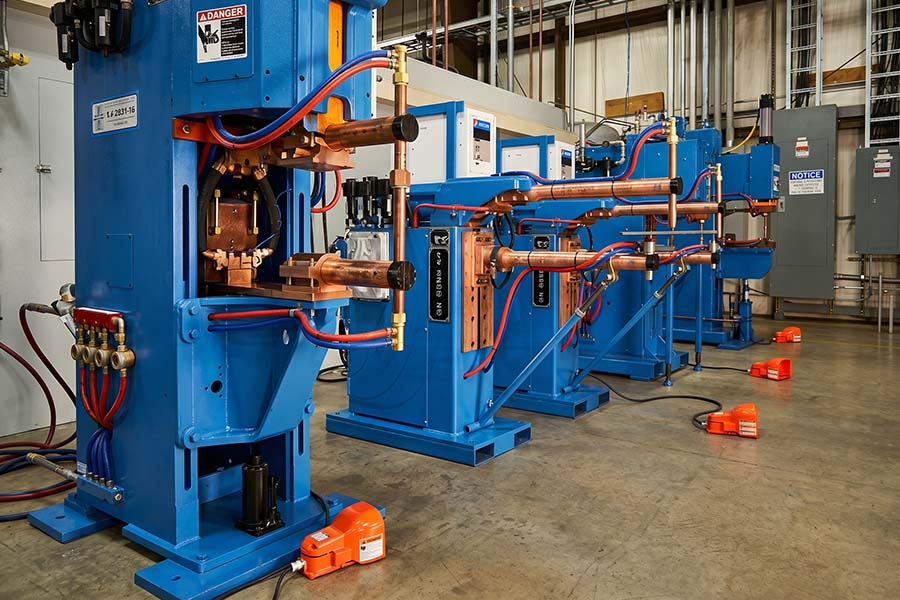
  • 3-Phase Sciaky Resistance Welding Machines (75 to 200 KVA): Capable of providing the high and stable amperage required for challenging aerospace alloys.
  • Medium-Frequency Direct Current (MFDC) Inverter Spot Welders: Delivering extreme precision for micro-welding and delicate assemblies.
Industrial resistance welding machines
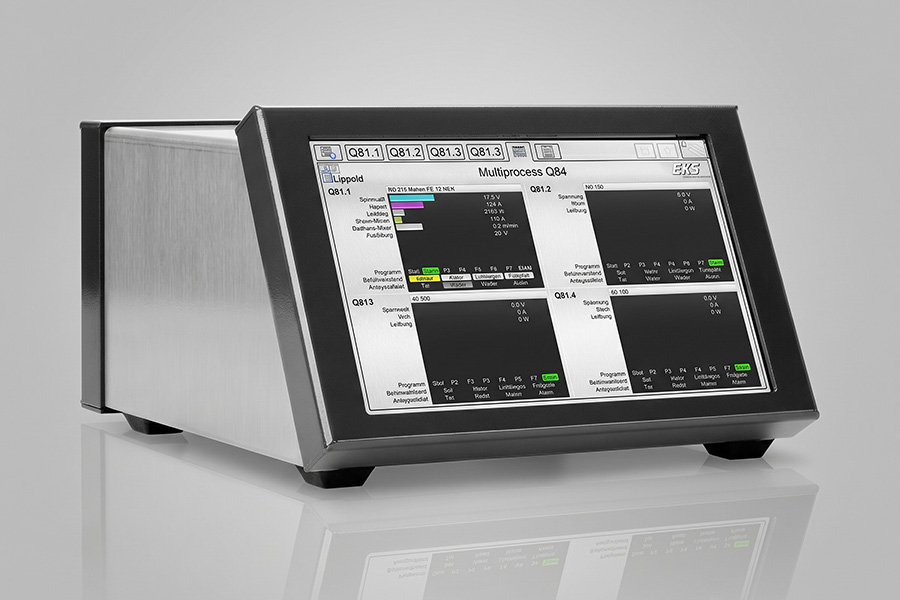
Welding parameter waveform monitoring

Precision Parameter Control

Our systems monitor and micro-adjust key physical variables during every weld cycle:

  • Weld Current (Amperage): Regulated dynamically to prevent burn-through.
  • Electrode Force: Servo/pneumatic controlled for exact forging pressure.
  • Weld/Hold Time: Measured and executed down to the millisecond.
  • Displacement: Monitored to ensure exact penetration and nugget growth before current termination.

Material & Gauge Matrix

We are certified to spot weld the following material groups within strict tolerances:
  • Group 1 (Aluminum & Magnesium Alloys): .010” to .125” thickness.
  • Group 2 (Carbon Steel, Stainless Steel, Nickel & Cobalt Alloys): .005” to .200” thickness (E.g., 304/316L, Inconel).
  • Group 3 (Titanium Alloys): .010” to .090” thickness.
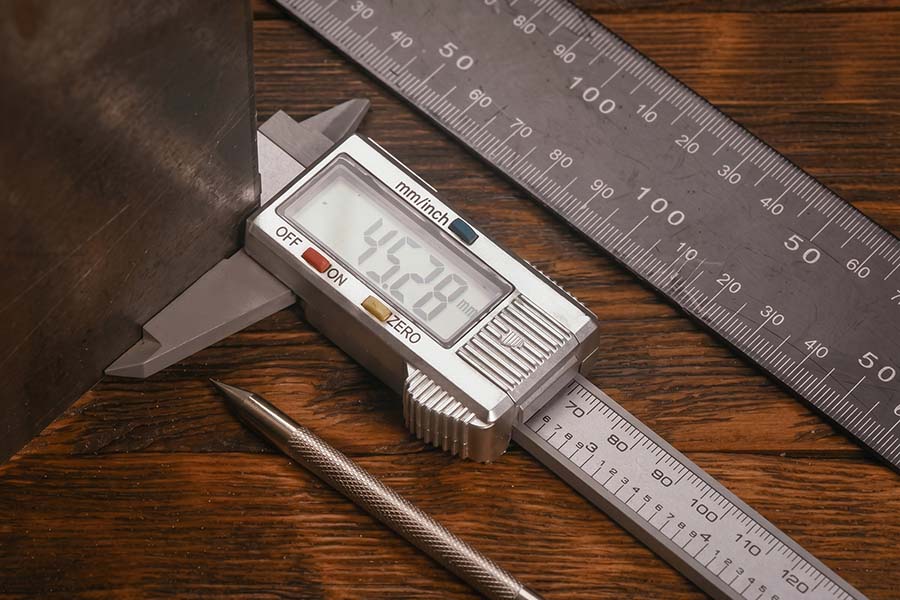
Digital caliper measuring sheet metal gauge

Destructive Testing & Full Traceability

Surface appearance means nothing if the internal weld nugget is compromised. At ShincoFab, we never guess on joint integrity. We actively destroy sample run pieces to guarantee that your production batch will not fail in the field.

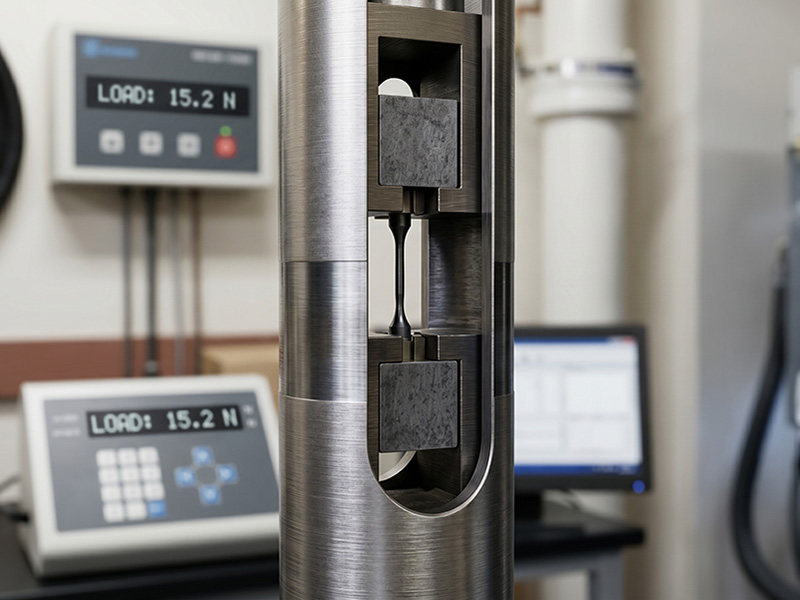
Destructive tensile testing for weld strength

Physical Destructive Testing

Pull & Peel Testing: We perform destructive pull tests applying up to 2,000 lbs of force to verify absolute weld nugget integrity. In our acceptable tests, the parent metal must yield before the weld fails.

Macro-etched weld cross-section analysis

In-Process Metallurgical & Dimensional Inspection

  • Macro-etching: We cross-section and chemically etch weld samples to verify proper penetration, nugget diameter, and the absence of internal voids or micro-cracks.
  • Continuous Verification: 100% visual inspection combined with strict internal dimensional verification ensures flat assemblies meet tight geometric tolerances.

Spot Welding vs Alternative Methods

We don’t force a square peg into a round hole. While resistance spot welding is exceptional for specific applications, it is not a universal fix. If another joining method is better suited for your geometry, cosmetics, or material, we will tell you upfront. Here is how engineers should evaluate their options:

Resistance Spot Welding

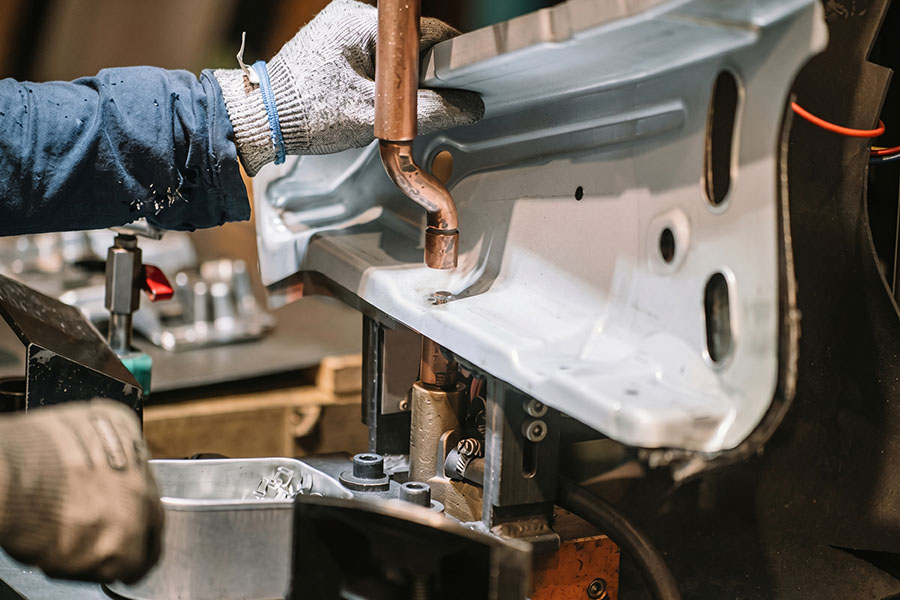
  • The Sweet Spot: High-speed, highly repeatable joining of sheet metal lap joints (overlapping pieces).
  • The Advantage: Maximum sheer strength, extremely cost-effective for large production runs. It adds zero weight because no flux, filler metals, or fasteners are required.
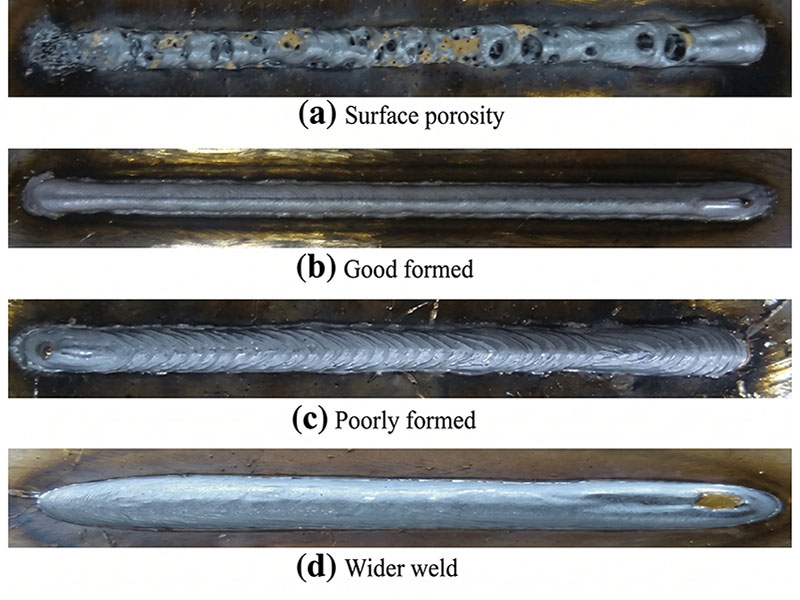
  • The Trade-off: Not ideal if you require absolutely flush, invisible cosmetics on both sides, as minor electrode indentations or slight heat discoloration may occur.
Resistance spot welding of sheet metal lap joints
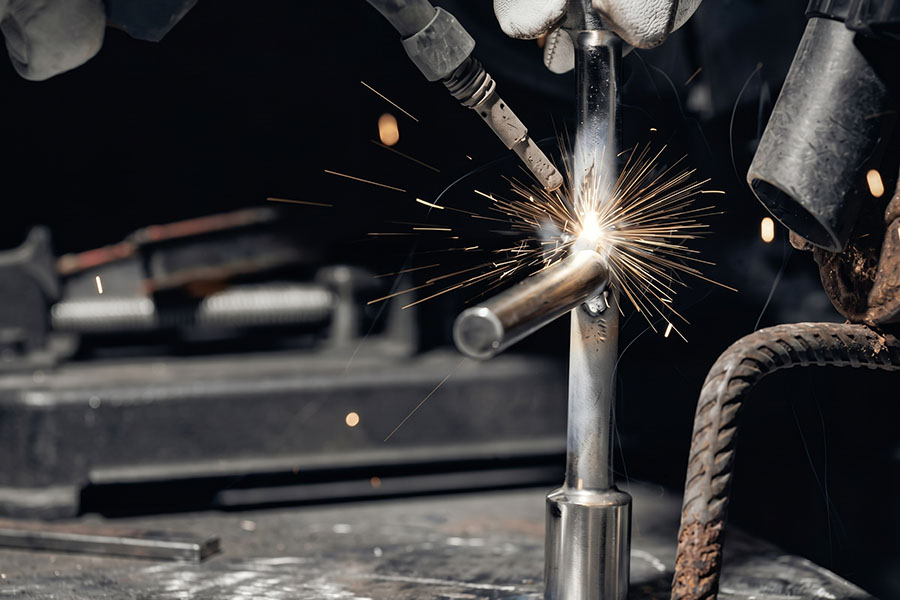
MIG welding on metal joints

TIG & MIG Welding

  • The Sweet Spot: Corner joints, butt joints, or assemblies using heavy structural gauges.
  • The Advantage: Capable of forming fully watertight/airtight seams. Welds can be ground entirely flat and polished for a molded, seamless cosmetic finish.
  • The Trade-off: Slower, introduces more global heat (higher risk of distortion out of tolerance), and costs significantly more per inch of weld.

Riveting / Mechanical Fastening

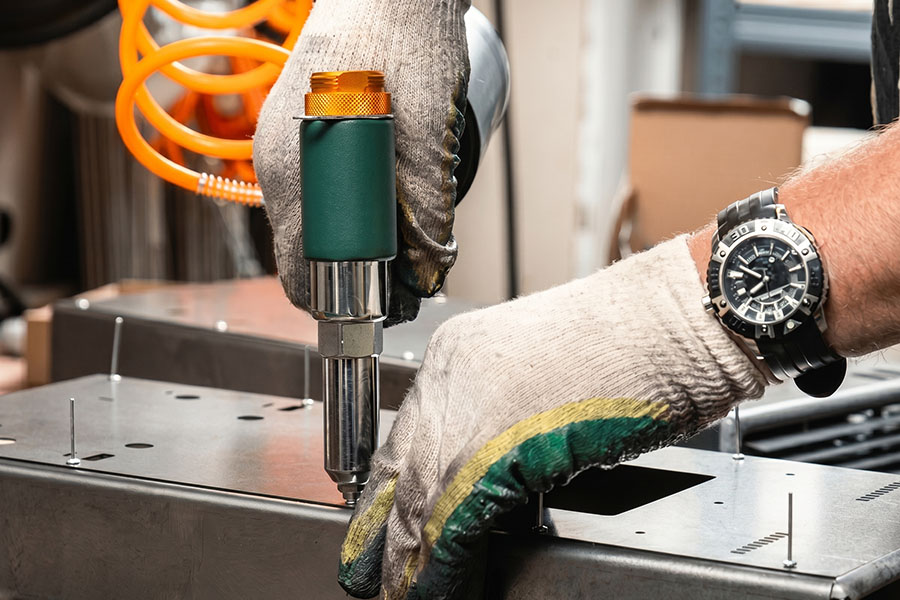
  • The Sweet Spot: Joining incompatible materials (e.g., aluminum to steel, or metal to plastic).
  • The Advantage: Zero heat input, eliminating thermal distortion entirely.
  • The Trade-off: Requires drilling holes (which creates stress concentrators), adds the physical weight and cost of hardware (rivets), and is slower in high-volume production.
Pneumatic riveting on sheet metal

Facility Certifications & Regulatory Compliance

Vendor qualification shouldn’t be a bottleneck. We maintain the industry’s most rigorous Quality Management Systems (QMS) and process accreditations, allowing direct, frictionless integration into your approved vendor list (AVL).
AS9100 certified aerospace quality inspection

Quality Management & Special Processes

  • AS9100 Rev D Certified: Fully compliant QMS for aviation, space, and defense organizations.
  • ISO 9001:2015 Certified: The global standard for rigorous, repeatable manufacturing quality.
  • Nadcap Accredited (Welding): Independently audited and approved for aerospace special processes.
Reviewing blueprints for material compliance

Material Compliance & Data Security

  • RoHS & REACH Compliant: We guarantee the use of compliant parent materials and finishing processes. Full material and plating certifications are provided to ensure your assemblies face zero friction in global supply chains.
  • Strict NDA & IP Protection: You don’t need defense-level clearance to get strict discretion. We routinely execute Non-Disclosure Agreements (NDAs) and maintain secure IT infrastructure to ensure your proprietary CAD models and blueprints never leak.

Spot Welding DFM Guidelines

To avoid costly redesigns and ensure your assemblies clear our engineering review on the first pass, your CAD models must be optimized for the resistance welding process. Here are the critical rules of thumb for designing spot-welded sheet metal joints:

Minimum Edge Distance

  • Never place a spot weld right on the edge of a flange. If there isn’t sufficient parent material surrounding the weld nugget, the molten metal will expel (blowout), destroying the internal strength and leaving a sharp, jagged edge.
  • The Rule: Keep the center of the weld at least 1.5 to 2 times the weld nugget diameter away from the edge of the sheet.
Spot welded sheet metal flange
Standard spot weld pitch and spacing

Weld Spacing / Pitch

  • Electrical current takes the path of least resistance. If you place spot welds too close together, the current will “shunt” through the previous weld rather than melting the new spot, resulting in a weak or non-existent nugget.
  • The Rule: Maintain a minimum pitch (center-to-center distance) of at least 3 to 4 times the nugget diameter.

Mating Surfaces & Gap Sizing

  • Spot welders are not clamps. While the electrodes apply forging pressure, forcing heavily distorted or poorly toleranced parts together prior to welding builds residual stress into the joint, ultimately leading to early mechanical failure.
  • The Rule: Ensure mating flanges are perfectly flush. Design self-locating features (like tab-and-slot) into your blanks if possible, and maintain a gap tolerance of closest to zero prior to clamping.
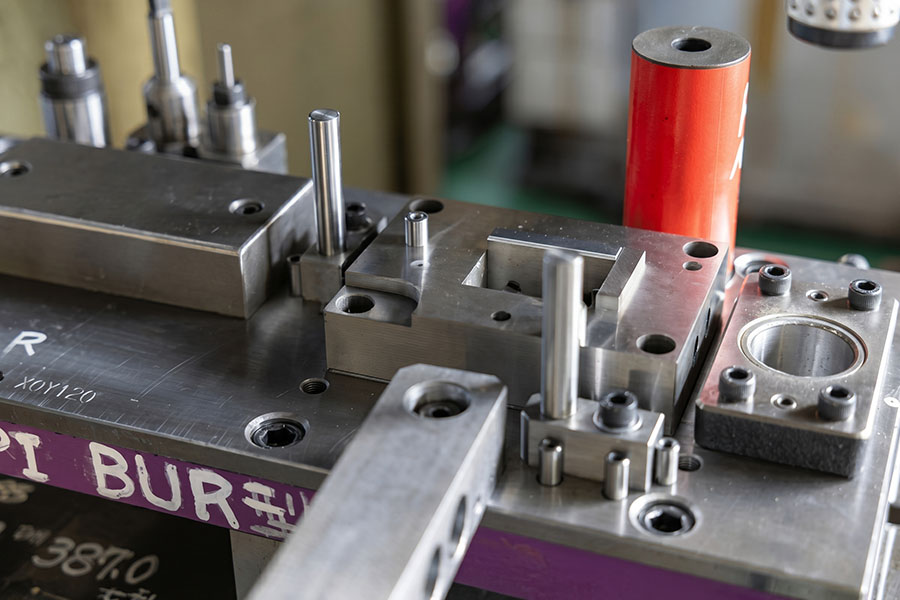
Precision industrial tooling for part alignment

Standardizing Drawing Callouts

Ambiguity leads to bad welds. Do not simply draw circles on your 2D prints. Use proper AWS A2.4 standard welding symbols. Explicitly define the required nugget size, shear strength per spot, and spacing directly in the CAD/PDF annotations so our operators eliminate guesswork.

Ready for Pricing? How to Submit a Frictionless RFQ

Time is critical, and back-and-forth emails kill project velocity. To provide you with an exact, actionable quote, we don’t do guesswork. Follow this 3-step process to get your pricing fast:
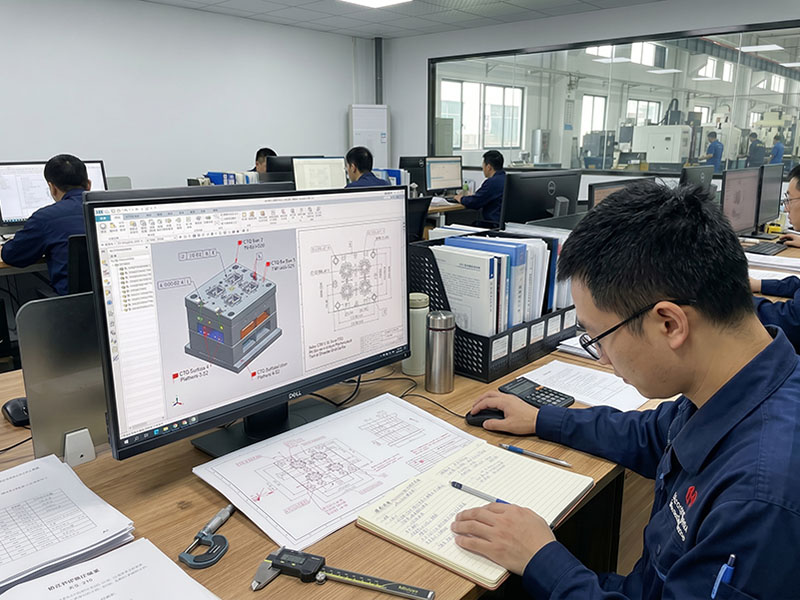
Engineers reviewing 3D CAD models and 2D prints

Step 1: Upload Your CAD & Final Assembly Prints

Provide your native 3D files (STEP/IGES preferred) so our engineers can evaluate the geometry, clearances, and tooling access. Ensure a 2D PDF of the final assembly is included to define critical tolerances.

Step 2: Specify AWS Callouts, Materials & Certifications

Be explicit. Make sure all spot welds are defined using standard AWS symbols. In your RFQ notes, define the exact parent material (e.g., Al 5052-H32, .063”) and explicitly state if the job requires special regulatory handling (e.g., “Requires Nadcap process,” “Medical grade cleaning required,” or “AS9100 FAI needed).
Engineering DFM review for project quoting

Step 3: Receive Your Exact Quote Within 24 Hours

Once submitted, our estimating engineering team reviews your design for manufacturability (DFM) and strict compliance. You will receive an itemized quote detailing cost, lead time, and any technical feedback.

Stop Accepting Failed Pull Tests & Burn-Through.

Don’t let inconsistent resistance welding compromise your high-value assemblies or project deadlines. We routinely rescue failing projects. Send us your problem drawing, and our engineering team will provide a rapid analysis of your joint design and material selection.

Frequently Asked Questions

We respect your time. Before you submit your drawings, here are the direct answers to the most common metallurgical, tooling, and supply-chain questions we receive from engineering and procurement teams.
Can you spot weld dissimilar metals (e.g., Aluminum to Steel)?
Generally, no. Spot welding relies on melting the parent materials together. Aluminum and steel have drastically different melting points and levels of electrical resistance, leading to metallurgical incompatibility and brittle intermetallic phases. For dissimilar metals, we strongly recommend and provide alternative joining methods, such as riveting or mechanical fastening, to prevent structural failure and galvanic corrosion.

Unlike deep draw stamping or custom molding, spot welding requires minimal tooling. Standard copper-alloy electrodes (Class 1 or 2) are utilized for most flat assemblies. Minor NRE charges only apply if your part’s complex geometry requires highly customized holding fixtures or specialized offset electrodes to reach restricted areas. We will clearly itemize any fixture costs upfront in your quote.

Uncontrolled spot welding creates significant heat discoloration, heavy indentation, and oxide buildup, which causes plating and powder coating to fail (flake off) near the weld zone. Because our closed-loop machinery rigorously controls the Heat-Affected Zone (HAZ), oxidation is minimized. However, minimal surface prep (like light sanding or chemical etching) may still be required to ensure perfect adhesion of aerospace coatings.

Lead times depend on material availability and processing volume. However, typical turnaround for production runs is between 2 to 4 weeks after First Article Inspection (FAI) approval. Expedited routing is available for critical aerospace/defense demands (AOG equivalents) at an adjusted rate.

Contact Our Engineering & Procurement Support Team

If you have CAD files ready for pricing, please use the form above for the fastest 24-hour turnaround. For facility audits, quality documentation, or general manufacturing inquiries, reach out directly to our department leads below.

Whatsapp

+86 13392819510

Address

Building 1, No.8, Second Street, Huangjiang Town,
Dongguan City, Guangdong Province

Socials

Please enable JavaScript in your browser to complete this form.
Click or drag files to this area to upload. You can upload up to 3 files.
Scroll to Top

Let's Talk About Your Project