

Frequently Asked Questions
We don’t hide behind marketing speak. Below are the unvarnished, technical answers from our shop floor regarding structural integrity, post-machining limitations, and cost-reduction strategies. Read these to avoid common DfAM pitfalls before finalizing your CAD.
Are DMLS parts actually as strong as CNC machined parts?
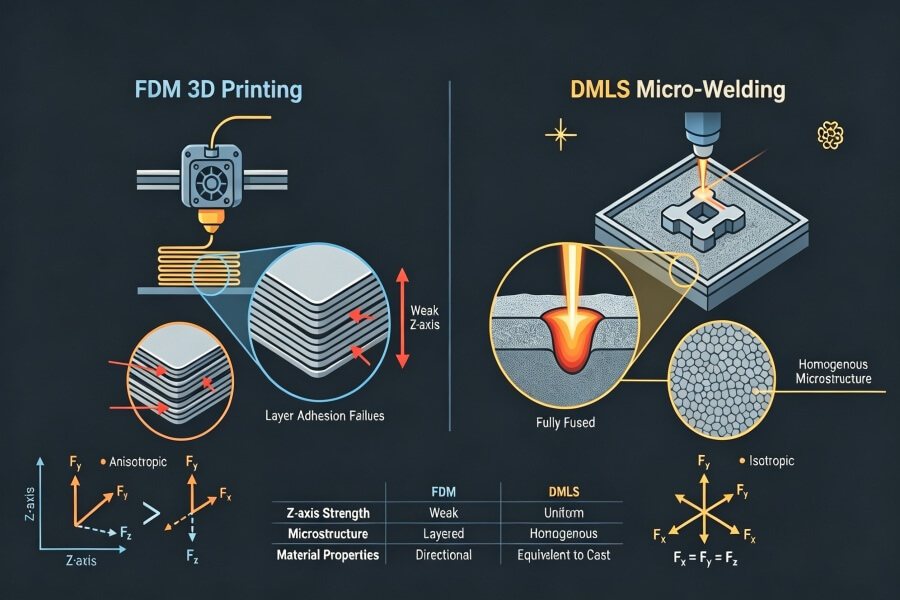
Yes. Unlike traditional casting, DMLS parts achieve >99.8% density. Because the metal is fully melted and fused at the microscopic level, the resulting mechanical properties (Yield Strength, Tensile Strength) meet or exceed ASTM standards for cast and wrought metals. The grain structure is completely isotropic.
Can you print internal threads, or do they need to be machined?
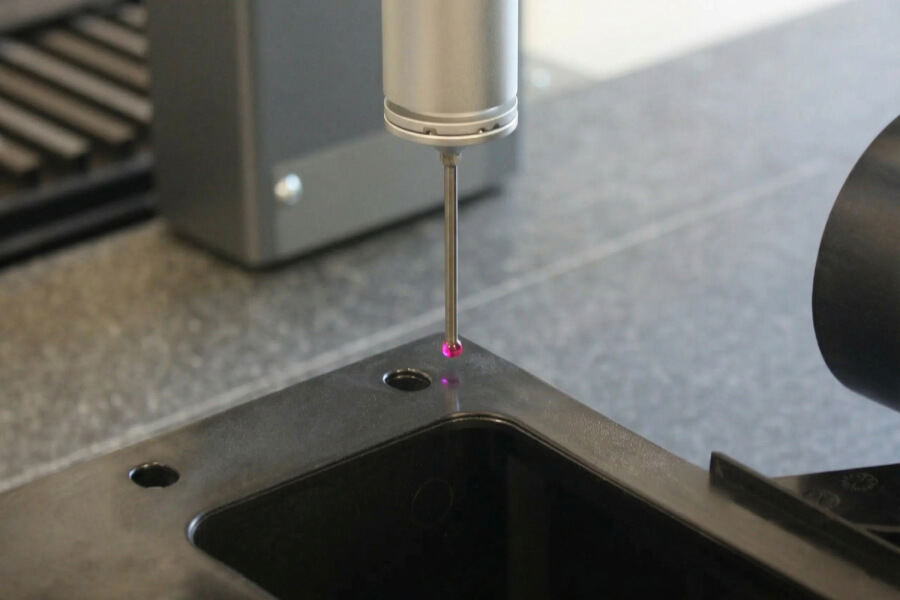
We strongly advise against printing functional threads. While it is technically possible for large threads, the surface roughness of DMLS will cause binding and galling. Our Standard Practice: We print pilot holes to a near-net shape and then CNC tap the threads or install helical inserts (e.g., Helicoils) post-build. This guarantees strict dimensional accuracy and thread strength.
DMLS is expensive. How can I design my part to reduce costs?
In CNC machining, complexity drives cost. In DMLS, machine time (Z-height) and material volume drive cost. To save money:
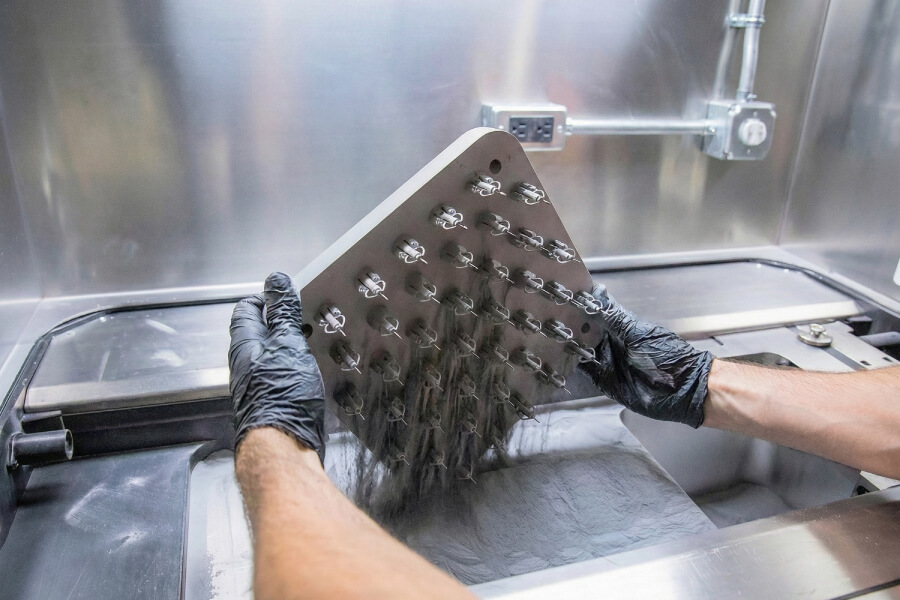
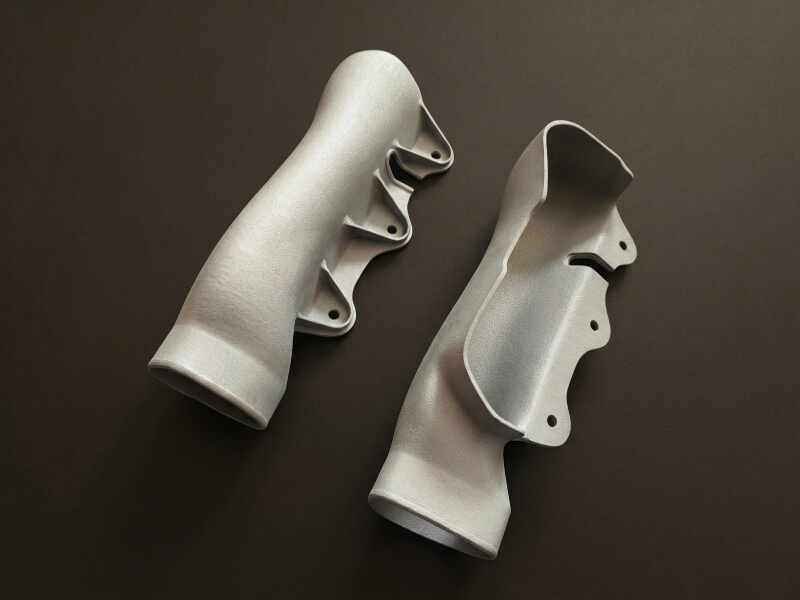
- Hollow out solid blocks (ensure you add powder escape holes).
- Redesign to minimize the need for support structures.
- Orient the part to minimize its overall height in the Z-axis. Our engineers can assist with this during the DFM review.
What if my part exceeds your maximum build envelope?
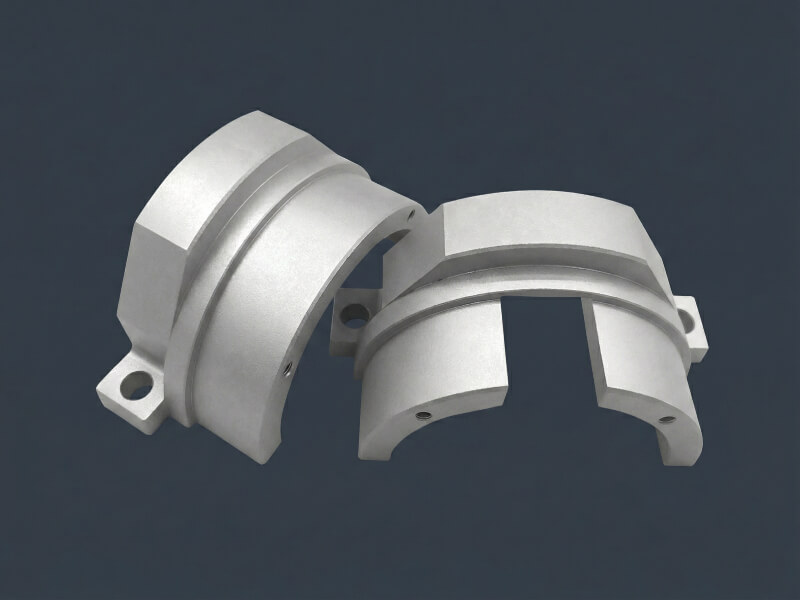
DMLS metal is true metallurgical metal. If your part is too large for our EOS M400 machines, we can strategically section your CAD model, print the components separately, and seamlessly join them using standard TIG or Electron Beam Welding (EBW). The joined part will function exactly like a solid piece.
Can DMLS parts be conventionally heat-treated, machined, or coated after printing?
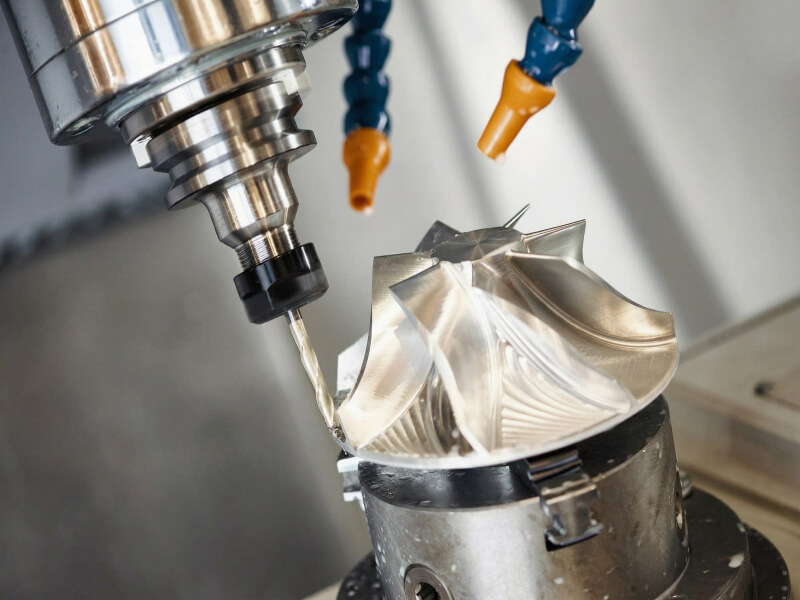
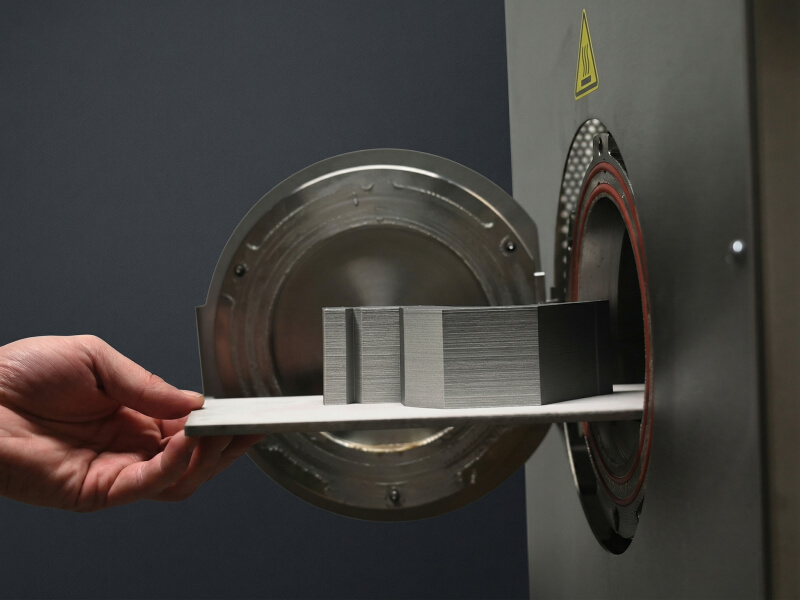
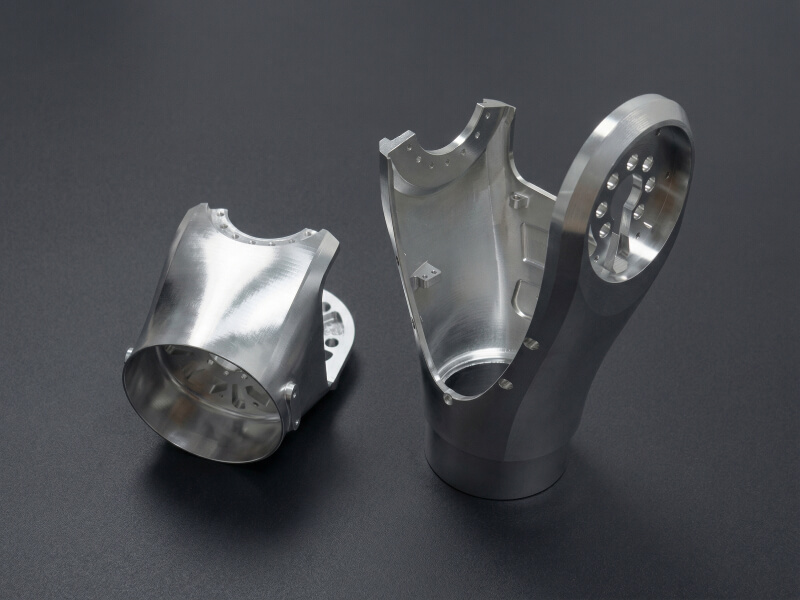
Absolutely. Once the part leaves the printer and undergoes initial stress relief, it behaves exactly like billet stock. We routinely perform CNC post-machining, H900 heat treatments (for 17-4 PH stainless), Hot Isostatic Pressing (HIP), and standard platings or anodizations.
