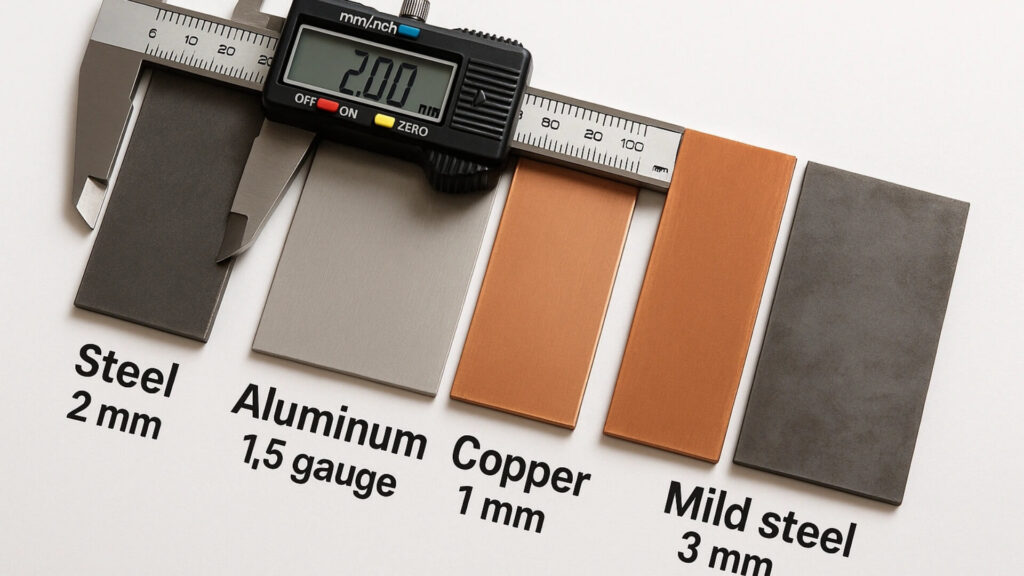
You just finished making a great metal part. Now, you need to protect it.
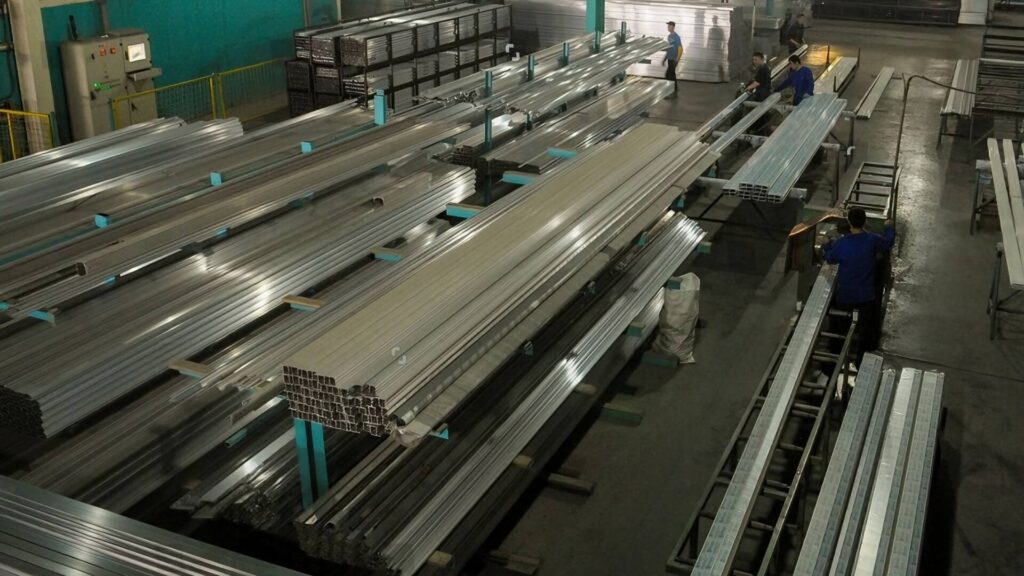
At ShincoFab, our sheet metal fabrication floor processes thousands of parts every month. We have seen what can happen when a precisely stamped, bent, or machined part receives the wrong finish: the coating can interfere with fit, raise finishing costs through masking, or fail to meet the product’s environmental and appearance requirements.
In this guide, we break down the practical differences between anodizing and powder coating. Rather than relying on generic claims, we focus on dimensional impact, durability, corrosion requirements, color control, and common failure modes. By the end, you should have a clearer framework for selecting the right finish for your project.
The Short Answer: Which Finish Should You Choose?
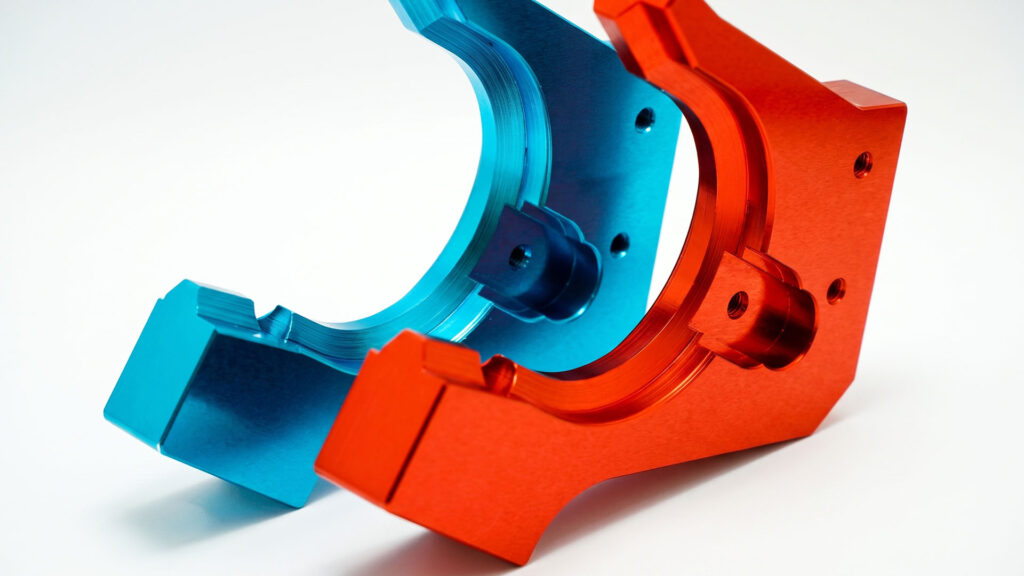
The primary difference is that anodizing is an electrochemical conversion process that forms an aluminum-oxide layer from the base metal, while powder coating applies a dry organic coating that is melted and cured on the surface. The Aluminum Anodizers Council’s anodizing reference guide identifies Type II sulfuric-acid anodizing and Type III hard anodizing as common aluminum finishing systems.
As a practical factory rule, prioritize mechanical fit before cosmetic color.
- Choose anodizing for mechanical function: Use it for aluminum parts with close tolerances, mating surfaces, threaded features, sliding contact, or a premium metallic appearance.
- Choose powder coating for cosmetic protection: Use it for housings, outdoor cabinets, frames, brackets, and components requiring a broad color range, gloss level, or texture.
Function should dictate the finish. To see why, it helps to examine how each process changes the part.
What Is Anodizing?
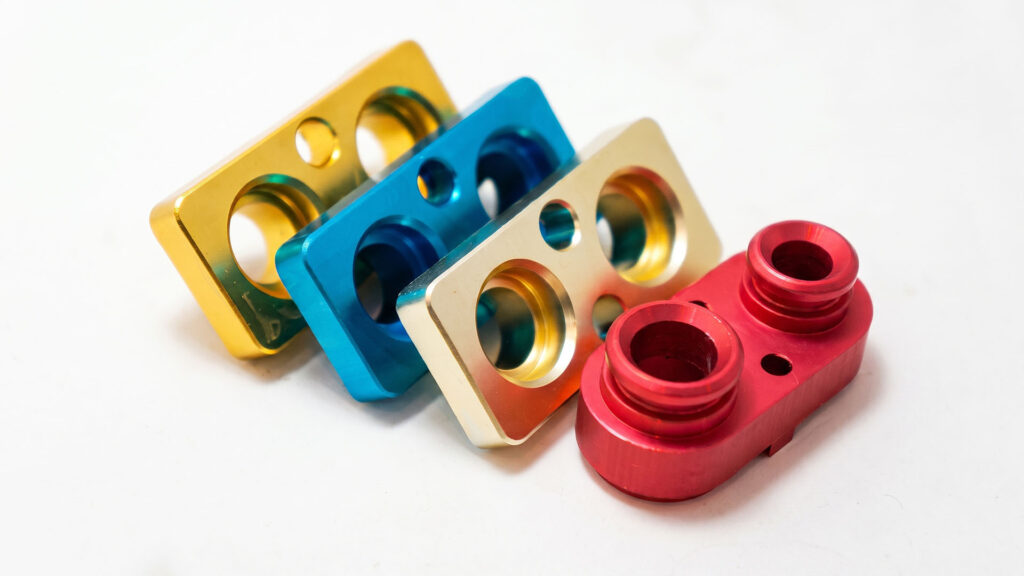
Anodizing is an electrochemical process used primarily on aluminum. In sulfuric-acid anodizing, the aluminum surface is converted into a controlled aluminum-oxide layer. Unlike paint, this oxide layer is integrated with the metal rather than simply sitting on top of it.
For common sheet-metal and machined aluminum alloys such as 5052 and 6061, anodizing can provide corrosion resistance, wear resistance, electrical insulation, and a metallic appearance. The final result still depends on alloy chemistry, pretreatment, coating thickness, color process, and sealing method.
Benefits of Anodizing
- Better dimensional control than thick applied coatings: The anodic layer both penetrates into and builds outward from the base aluminum. The exact dimensional change depends on the process and coating thickness.
- Strong resistance to peeling: Because the oxide is formed from the aluminum substrate, anodizing does not behave like a separate paint film that can delaminate in the same way.
- Useful wear resistance: Hardcoat anodizing guidance from the Aluminum Anodizers Council identifies abrasion resistance as a key Type III performance requirement. Hardcoat surfaces can achieve high hardness, but actual results depend on alloy, thickness, sealing, and process parameters.
- Premium metallic appearance: Clear, black, bronze, and other anodized finishes preserve a more metallic visual character than most organic coatings.
Limitations of Anodizing
- Color matching can be difficult: Alloy, surface finish, coating thickness, dye chemistry, and process variation can all affect appearance. If exact color consistency matters, provide the finisher with samples made from the same material lot.
- Not suitable for steel: Aluminum anodizing processes are intended for aluminum; steel and stainless-steel parts cannot be run through standard aluminum anodizing baths.
- Threads and holes need design attention: Anodizing changes dimensions. Define critical bores, threaded holes, masking requirements, and final tolerance limits on the drawing before production.
Anodizing is often ideal for precision aluminum components. However, when your priority is bold color, a thick protective film, or coating steel, powder coating is normally the better option.
What Is Powder Coating?
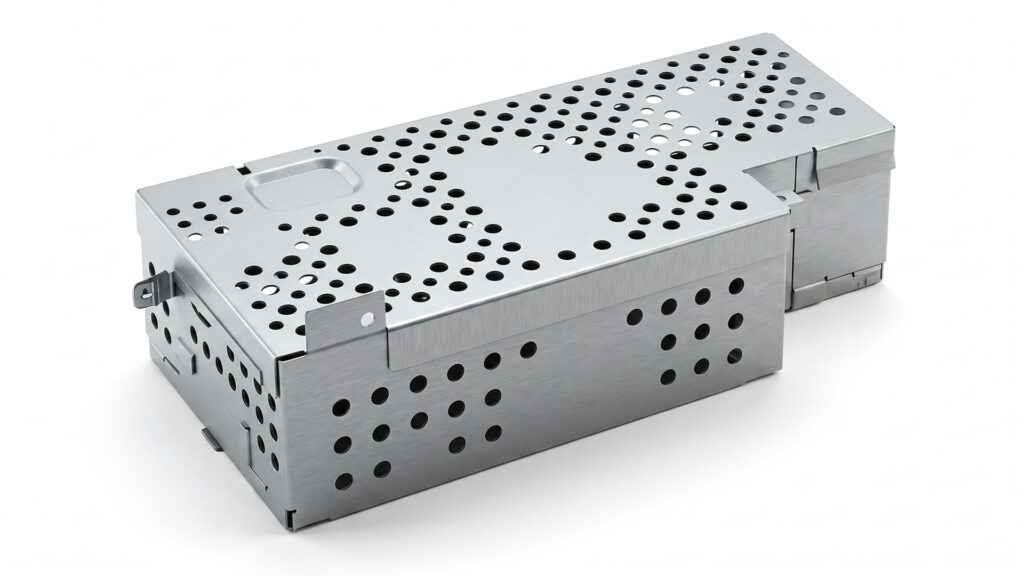
Powder coating is an organic finishing process in which dry powder is applied—commonly by electrostatic spray—and then cured to form a continuous coating film. The U.S. Environmental Protection Agency describes powder coatings as being applied through electrostatic spraying or dipping; when a recovery system is used, oversprayed powder may be collected and recycled.
The coating material may be thermoset or thermoplastic, depending on the performance requirement. For fabricated steel and aluminum parts, thermoset powder coatings are commonly selected for protective and decorative applications.
Benefits of Powder Coating
- Extensive appearance options: Powder coating can provide a broad selection of colors, gloss levels, textures, and special effects. It is usually the practical choice when a product must meet a defined color target or brand standard.
- Protection for diverse metals: With correct pretreatment, powder coating can be used on steel, aluminum, and many other conductive metal substrates.
- A protective organic film: Powder coating forms a continuous cured film that can help protect a part from handling damage, moisture, and outdoor exposure. Performance depends on pretreatment, powder chemistry, film thickness, curing, substrate design, and the actual service environment.
- Reduced VOC emissions compared with conventional liquid coatings: Because the coating is applied as dry powder rather than a solvent-borne liquid, powder coating generally produces far lower VOC emissions during application.
Limitations of Powder Coating
- It can affect fit: Powder coating adds a cured film to the exterior of the part. This can reduce clearance in slots, interlocking features, mating surfaces, and threaded holes.
- Masking can add cost: Features that must remain uncoated—such as grounding points, bearing seats, threaded holes, sealing surfaces, and tight bores—often require plugs, caps, tape, or custom masking fixtures.
- Edges and complex geometry require process control: Sharp edges, deep recesses, Faraday-cage areas, and weld zones can be difficult to coat uniformly. Discuss these details with the coater before finalizing the design.
Quick Reference Comparison
| Feature | Anodizing | Powder Coating |
|---|---|---|
| Process type | Electrochemical conversion coating on aluminum | Dry organic coating applied and cured on the surface |
| Dimensional impact | Changes dimensions, but much of the oxide grows into the aluminum | Adds a distinct external film and can reduce part clearance |
| Best materials | Primarily aluminum alloys | Steel, aluminum, and many conductive metals |
| Color range | Limited by alloy, process, dye, and color method | Broad range of colors, textures, and gloss levels |
| Wear behavior | Type III hardcoat is suitable for abrasion-focused applications | Film can provide a protective barrier during normal handling |
| Best use cases | Precision aluminum parts, heat sinks, machined components, premium electronics hardware | Outdoor enclosures, cabinets, frames, brackets, branded products |
| Critical drawing note | Define anodize type, thickness, color, masking, and critical dimensions | Define powder chemistry, color, gloss, texture, DFT range, masking, and pretreatment |
How They Compare in Real Projects
Durability and Wear Resistance
If your concern is repeated metal-on-metal contact, sliding wear, or abrasion, hardcoat anodizing is a strong candidate. It is commonly used where the drawing requires a hard, wear-resistant aluminum surface.
If your main risk is incidental impacts during transport, installation, or everyday handling, powder coating can be appropriate because its cured polymer film creates a thicker external barrier. This is not a universal rule: powder chemistry, coating thickness, pretreatment, part geometry, and operating temperature all affect actual performance.
Corrosion and Weather Protection
Both finishes can protect parts from corrosion when properly specified.
For powder-coated outdoor steel, do not specify only a color. Define the complete system: substrate preparation, pretreatment, primer if required, powder type, target dry-film thickness, cure schedule, and acceptance criteria.
When comparing corrosion-test claims, use caution. ASTM B117 salt spray testing defines the salt-fog test apparatus and operating conditions, but it does not prescribe a universal exposure duration or pass/fail interpretation for every product. Instead of stating that a coating “survives” a fixed number of hours, specify the required test duration, scribe condition, allowable corrosion, and evaluation method in the project specification.
For anodized aluminum, dyed finishes intended for outdoor use require special care. Some organic dyes can fade or shift after prolonged UV exposure, while electrolytic coloring systems may be more suitable for demanding exterior applications.
Dimensional Changes: The Fit Factor
For parts with close tolerances, do not rely on general statements such as “anodizing will not affect the fit.” It does affect dimensions, particularly in holes and threads.
The Aluminum Anodizers Council’s guidance on anodized holes and threads explains that anodic coating growth can reduce hole diameters because both internal surfaces receive coating. For precision parts, confirm the expected dimensional change with the anodizer before releasing the drawing.
Include these requirements on the drawing:
- Coating type and required thickness
- Critical dimensions measured before or after finishing
- Areas to mask
- Thread and bore requirements
- Whether holes will be tapped before or after finishing
- Cosmetic surface requirements and acceptable rack-mark locations
Cost and Lead Time
Do not publish universal minimum charges or standard turnaround times, because they vary greatly by region, batch size, alloy, part geometry, masking labor, color, pretreatment, logistics, and supplier capacity.
A more accurate statement is:
Powder coating can be economical for local, low-to-medium-volume work when a suitable coating line is available. Anodizing may be cost-effective for high-volume aluminum parts with limited masking and straightforward processing. Request quotations based on the final drawing, material, finish specification, batch quantity, cosmetic requirements, and required testing.
Environmental Considerations
Powder coating is often selected to reduce VOC emissions relative to conventional solvent-borne liquid paint. However, avoid calling either finish automatically “eco-friendly.”
Anodizing involves chemical processing, rinsing, wastewater treatment, and process controls. Powder coating involves pretreatment, curing energy, powder recovery, and waste management. The best environmental choice depends on the factory’s actual controls and the project’s environmental requirements.
How to Choose for Your Application
Best for Precision Machined and Interlocking Parts
Winner: Anodizing
Choose anodizing when the part is aluminum and has tight mating surfaces, controlled bores, internal chassis features, heat-dissipation requirements, or moving contact surfaces. Confirm dimensional changes with the anodizer before production, especially for Type III hardcoat.
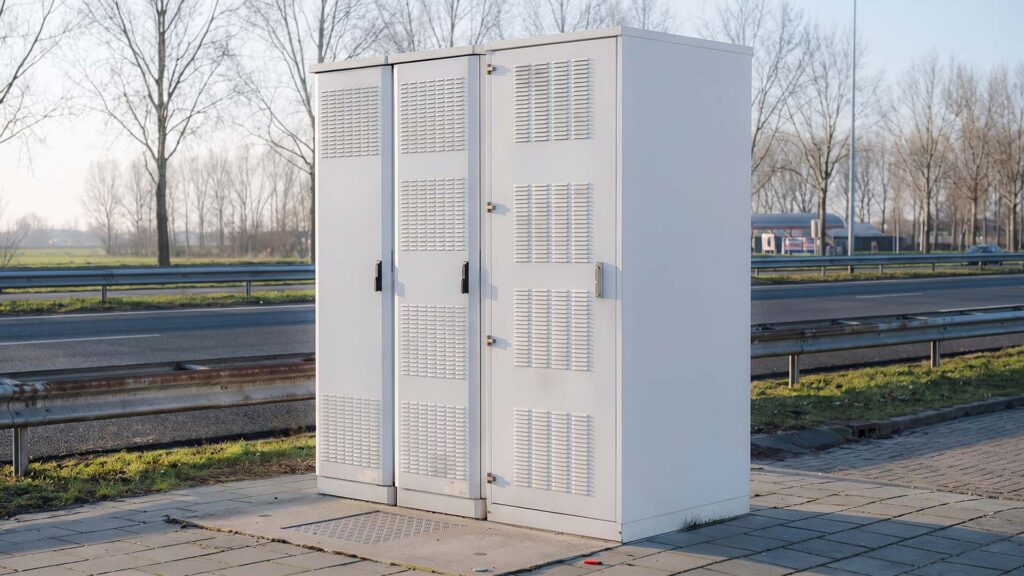
Best for Outdoor Enclosures and Architectural Parts
Winner: Powder Coating
Choose powder coating when the part is a steel or aluminum enclosure, cabinet, frame, panel, or bracket that needs a specified color and an outdoor coating system. For demanding environments, specify the full pretreatment-and-coating system rather than only naming “powder coating.”
Best for Consumer Electronics and Tech Hardware
Winner: Depends on the Product Goal
Choose anodizing for aluminum products that need a refined metallic appearance, controlled dimensions, and a premium tactile feel.
Choose powder coating for products that need high-visibility colors, a textured finish, consistent brand colors, or coverage on steel components.
Cleaning and Maintenance
Do not use strong acidic or alkaline cleaners on anodized aluminum unless the finish supplier has confirmed compatibility. For architectural anodized aluminum, Linetec’s anodize cleaning and maintenance guidance recommends using mild soap solutions with a soft cloth, sponge, or brush, followed by thorough rinsing with clean water. Avoid strong acid or alkali cleaners, as well as excessive abrasive rubbing, which may damage the finish.
For powder-coated parts, use a mild cleaner compatible with the coating manufacturer’s instructions. Avoid abrasive pads and aggressive solvents unless the supplier confirms they are safe for the exact powder formulation.
What Happens When Parts Scratch?
A scratched powder-coated part may sometimes be cosmetically improved using a compatible touch-up coating. For major damage, stripping and recoating may be possible, but the chosen stripping method must be evaluated for its effect on the substrate, welds, dimensions, and adjacent components.
A deeply scratched anodized part is more difficult to repair invisibly. Re-anodizing or localized brush anodizing may be possible in certain applications, but repairs should be reviewed with a qualified finishing supplier because stripping, etching, and reprocessing can affect dimensions.
Can You Powder Coat Over Anodized Aluminum?
Yes, but it should be a deliberate engineered coating system rather than an automatic repair choice.
Powder coating may be applied over anodized aluminum if the surface is properly cleaned and prepared for adhesion. However, if you only need powder coating for color and protection, anodizing first may add unnecessary cost.
If you need anodizing for a functional reason and powder coating for a separate appearance or protection requirement, ask the finishing supplier to define the required pretreatment, sealing condition, adhesion test, and acceptance criteria.
Final Recommendation
Choose anodizing when you need an aluminum finish that supports tight tolerances, wear resistance, and a metallic appearance.
Choose powder coating when you need broad color options, a protective external film, or a finish suitable for steel and aluminum enclosures.
Before releasing your fabrication drawing, specify the finish early and include the coating type, thickness, color, masking, critical dimensions, test requirements, and cosmetic acceptance standard. This gives your fabricator and finishing supplier the information needed to produce parts that assemble correctly and perform reliably.