ShincoFab engineers regularly see clients waste money and ruin viable designs by picking the wrong aluminum.
Stop over-engineering your sheet metal parts. Exotic aerospace grades will not improve a standard bracket. Instead, they crack in our CNC press brakes and drain your project budget. The truth we tell our clients is that 90% of everyday projects only need one of two common grades.
In this guide, the ShincoFab fabrication team will show you how to pick the right one based on real-world shop experience. You will learn how to decode the confusing numbers, which grades bend without breaking our tooling, and which ones hold a solid weld in our welding bays. We will also show you how to cut your material costs without hurting your final product.
Why Picking the Right Aluminum Grade Matters
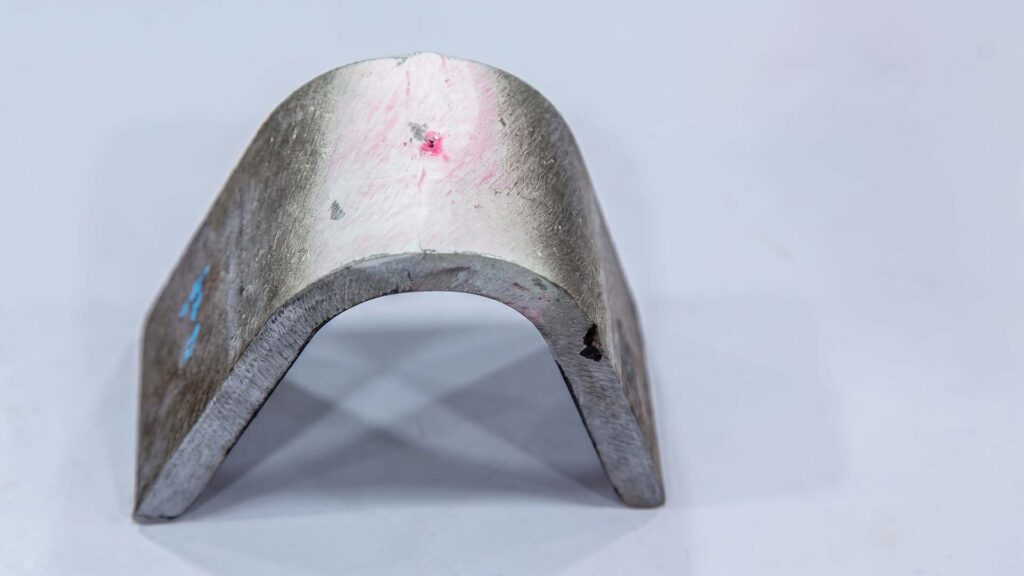
An operator puts your specified aluminum into the press brake to make a simple 90-degree bend. Instead of folding, the metal cracks right down the middle and goes directly into the ShincoFab scrap bin.
Choosing the wrong aluminum grade leads to three massive headaches that we see clients face every month:
- Wasted money: Scrapped parts eat directly into your manufacturing budget.
- Cracked bends: Harder alloys will snap instead of fold, delaying your lead times.
- Ruined tools: Forcing the wrong metal through our machines wears down our expensive factory equipment, which ultimately drives up production costs.
The hidden costs get even worse if you need our team to weld your parts.
6061-T6 aluminum provides high structural strength in its T6 temper, but welding heat can substantially soften the material adjacent to the weld. AWS D1.2 welding guidance recognizes a post-weld minimum tensile strength of 24 ksi for 6061-T6, compared with a typical base-metal tensile strength of about 45 ksi; this loss is concentrated in the heat-affected zone (HAZ).
The heat from the welder erases the factory hardening. You paid extra for premium strength, but your welded joint is now the weakest link.
What Do Aluminum Grade Numbers Mean?
Aluminum Series Chart: 1000 to 7000 Series Explained
Your Bill of Materials (BOM) will typically list a four-digit number like 5052 or 6061. The first digit identifies the primary alloying ingredient mixed with the aluminum.
As defined by the Aluminum Association alloy system, wrought aluminum alloys are classified into seven principal series according to their major alloying elements:
- 1000 Series: Pure aluminum. Very soft and easy to shape.
- 2000 Series: Mixed with copper. Strong, often used in airplanes.
- 3000 Series: Mixed with manganese. Great for everyday items like pots and pans.
- 4000 Series: Mixed with silicon. Mostly used to make welding wire.
- 5000 Series: Mixed with magnesium. A highly reliable choice at ShincoFab for bending and welding.
- 6000 Series: Mixed with magnesium and silicon. Tough, structural, and easy to machine.
- 7000 Series: Mixed with zinc. The strongest option, but very hard to work with.
Don’t Ignore the Temper
On our shop floor, the four-digit number is only half the story. You also need to look at the letters and numbers at the end, like “-H32” or “-T6”. This is the temper, which tells us how the factory treated the metal to make it harder.
- “H” Tempers (like H32): This means the metal was strain-hardened (rolled or stretched) at the factory.
- “T” Tempers (like T6): This means the metal was heat-treated and baked in an oven for maximum strength.
Temper drastically impacts your design. Two sheets of 6061 will behave significantly differently on our machines depending on their temper. A soft temper bends easily, while a T6 temper is highly prone to snapping in our press brake.
The Best Aluminum Grades for Sheet Metal Fabrication
You do not need to memorize every aluminum grade. ShincoFab guides clients toward just three options for 90% of our custom manufactured parts.
To help you compare the primary structural and fabrication differences, review this quick specification table for our most common aluminum grades (mechanical properties verified via MatWeb Material Property Data):
| Aluminum Grade | Ultimate Tensile Strength | Yield Strength | Minimum Bend Radius | Weldability | Relative Cost |
|---|---|---|---|---|---|
| 5052-H32 | 33,000 psi | 28,000 psi | 1T (Tight fold) | Excellent | Baseline (1x) |
| 6061-T6 | 45,000 psi | 40,000 psi | 2.5T to 3T | Excellent | +20% to 25% |
| 7075-T6 | 83,000 psi | 73,000 psi | High risk of cracking | Poor (Do not weld) | ~3x Baseline |
5052: ShincoFab’s Go-To for Bending and Welding
5052 aluminum is a non-heat-treatable magnesium alloy that provides excellent formability and high resistance to saltwater corrosion. As a 5000 series metal, its magnesium base gives it a typical ultimate tensile strength of 33,000 psi and a yield strength of 28,000 psi (in the common H32 temper). This grade is an ideal choice for designs requiring our operators to bend, cut, or weld. It is easy to work with on our machines.
- Easy to form: It folds smoothly in our press brakes without micro-fracturing.
- Marine-ready: It fights off rust and saltwater. We highly recommend this when fabricating outdoor electronic enclosures for our clients.
- Tight bends: 5052-H32 can safely handle a tight 1T bend radius. This means our tooling can bend it sharply without ruining the metal’s integrity.
6061: The Strong All-Rounder
6061 aluminum is a 6000 series heat-treatable alloy containing magnesium and silicon that offers high structural strength and excellent machinability. In its T6 temper, it delivers an impressive ultimate tensile strength of 45,000 psi and a yield strength of 40,000 psi. We step clients up to 6061 for fabricated parts that must hold weight or keep their shape under pressure. It is the most popular structural aluminum.
- Tougher: It handles heavy loads much better than 5052.
- Machines well: If your CAD file calls for precise CNC drilled holes, 6061 gives our cutting tools clean, burr-free edges.
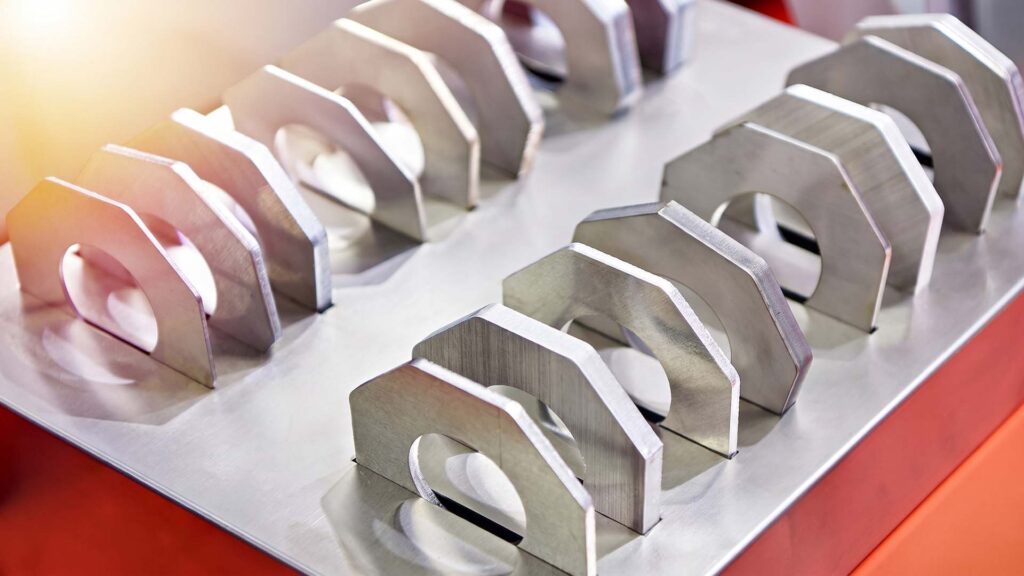
That strength requires a trade-off on the production line. 6061-T6 needs at least a 2.5T to 3T bend radius before it snaps. If you specify a tight fold in your design, we will have to reject it or risk breaking the part in half.
7075: The Heavyweight Champion (Use with Caution)
7075 aluminum is a 7000 series high-strength zinc alloy primarily used in aerospace and high-stress military applications. Driven by its zinc composition, it achieves a massive ultimate tensile strength of 83,000 psi and a yield strength of 73,000 psi, rivaling many types of structural steel. While it is strong, it is highly challenging for standard sheet metal fabrication.
- Aircraft-level strength: It is one of the strongest aluminum grades on the market.
- Hard to bend: Our press brake operators struggle to form this metal without cracking it.
- Poor weldability: Do not ask our welding team to weld 7075. It falls apart under the torch.
- Expensive: You will pay a significant material premium. We actively discourage clients from using 7075 unless their project strictly demands extreme strength and low weight.
5052 vs. 6061 Aluminum: Which Should You Choose?
Both 5052 and 6061 look like great options on paper for a basic metal enclosure. Our engineers ask three simple questions to break the tie before cutting.
Are We Bending It?
Bending metal is where most poorly-designed projects fail.
- For tight bends: We use 5052. It handles our sharpest dies (1T bend radius).
- For gentle bends: We use 6061, but we must use a larger bottom V-die to give it a 2.5T to 3T bend radius. If bent any tighter, it snaps.
Are We Welding It?
Heat significantly alters metal properties in our welding bays.
- Great for welding: 5052 and 6061 both flow beautifully under our TIG and MIG welders. To ensure the strongest joints, our shop pairs 5052 with ER5356 filler wire (matching its magnesium chemistry), and we generally use ER4043 filler wire for 6061 (where the added silicon prevents weld cracking). Just remember that 6061 loses some local strength near the joint.
- Terrible for welding: We stay away from 7075. The intense heat causes it to crack and weaken rapidly.
Will It Live Outside?
- Saltwater and marine use: 5052 is our top recommendation. It offers excellent resistance to saltwater corrosion, as supported by marine corrosion research.
- General outdoor use: 6061 holds up well in the rain, but it is not as tough against salt as 5052.
- Keep it dry: 7075 rusts easily. If you use it outside, you must protect it.
Which Grades Look Best Painted or Anodized?
Stick to classic grades like 6061 and 5052 if you plan to add color. They take anodizing and powder coating beautifully, delivering a smooth, even finish through proper anodizing processes.
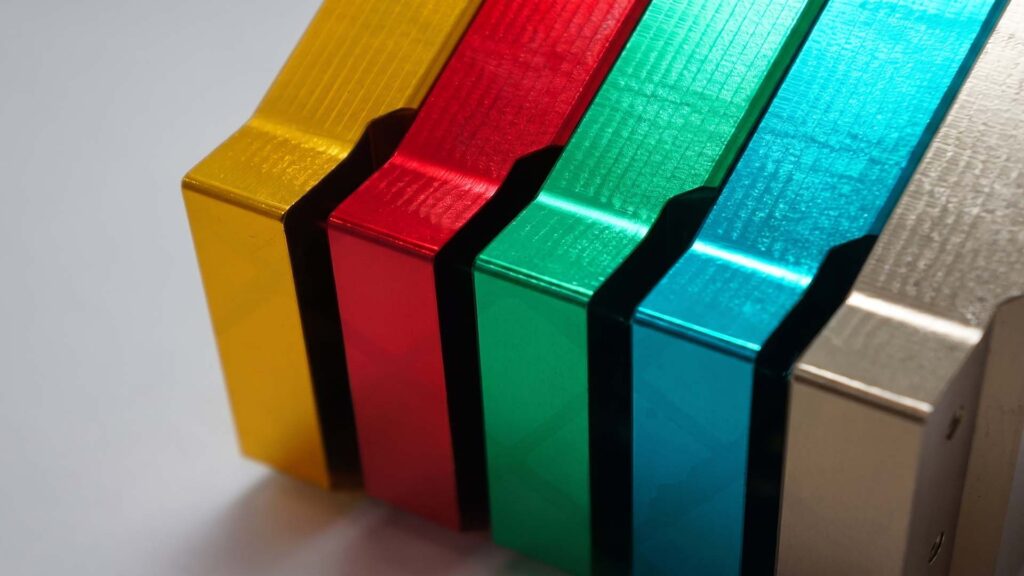
Based on what we see in our finishing processes, specialty alloys often struggle to hold the finish. They can come out of the anodizing tank looking blotchy, dull, or streaky.
What is Actually Easy to Find in Our Stock?
Designing the perfect part with a rare aluminum grade often causes a painful 6-week wait for a custom mill run.
Stick to the industry standards to get your parts fabricated fast. At ShincoFab, grades like 5052-H32 and 6061-T6 are standard inventory on our racks. You can send us the file today, and we can start building tomorrow.
Thickness matters just as much as the grade. Stick to universally stocked sheet thicknesses like 0.063″, 0.090″, or 0.125″. If you request an oddball size like 0.075″, our material suppliers will force us to buy a whole pallet. We then have to pass that Minimum Order Quantity (MOQ) cost on to you.
How ShincoFab Helps You Save Money on Aluminum
Many designers want the strongest metal for their project. Paying for strength you don’t need, however, is a fast way to blow your budget.
While raw material prices fluctuate, the cost ratios between grades remain relatively steady. If you establish 5052 as your baseline cost, stepping up to 6061 typically adds a 20% to 25% premium. If you demand aerospace-grade 7075, your material costs can easily triple compared to the 5052 baseline.
We constantly help our clients cut their invoice significantly just by dropping down a grade. If your part is a simple bracket or a cover panel, our team will use 5052. Your end-user won’t notice a difference, but your procurement department definitely will.
Common Mistakes We See When Clients Buy Aluminum
Buying for Strength Instead of Workability
Specifying the strongest metal in your CAD software tempts many designers. Maximum strength, however, can become a major liability on the fabrication floor. If a metal is too hard, it fights back. It will crack in our press brake, dull our drill bits, and warp under our welding torch. Always prioritize workability over raw strength unless you are actually building an airplane.
Forgetting About the Shop Environment
You need to match the metal to the fabrication capabilities. Forcing an overly hard material into a complex shape consistently increases your defect rate and lead time, even on ShincoFab’s advanced laser cutters and heavy-duty press brakes. Pick a forgiving metal like 5052 or 6061 to ensure smooth production.
Conclusion
Stop over-engineering your parts and let the fabrication experts guide you.
If your design requires tight bends and welds, let ShincoFab build it with 5052. If you need a structural part that holds its shape, specify 6061. Leave the expensive aerospace grades to the airplane builders.
By sticking to these common grades, you will save money, get your finished parts from our factory faster, and ensure a reliable final product. Ready to start your next sheet metal project? The ShincoFab team is here to help.