Sourcing sheet metal from China can often slash your manufacturing costs by 30% or more. But one bad container of rusted parts will quickly wipe out those savings.
As a production manager here at ShincoFab, a direct sheet metal fabrication factory based in China, I see the reality of this every single day. I have seen countless tricks that shady middlemen use, and I know exactly where buyers lose their money before they eventually find their way to a legitimate manufacturer like us.
In this guide, I will show you how to source sheet metal the right way from a factory floor perspective. Stop chasing the cheapest unit price on Alibaba. Instead, I will teach you how to calculate your true landed cost, find a reliable factory, and lock in quality control before you send a single dime.
By the end of this article, you will have a step-by-step playbook to get high-quality metal parts delivered to your door with minimal headaches.
Why Source Sheet Metal from China? (And When NOT To)
Sourcing from China can save you a lot of money. But it is not a magic fix for every project. Let’s look at when it actually makes sense to make the jump.
When Does Sourcing from China Make Financial Sense?
If you only need 50 parts, stay local. The shipping and setup costs will eat your savings.
But what if you need 5,000 parts? That is when China makes sense. You have to factor in applicable U.S. import tariffs and sea freight. High volume absorbs these extra costs.
As a general rule, if your annual spend on a specific metal part is roughly over $10,000, the math starts working in your favor. If it is less, the hassle might not be worth it.
How Do You Calculate Your True Landed Cost?
Many buyers see a cheap quote on Alibaba and get excited. Do not fall for this.
You cannot just look at the factory’s unit price. You must calculate the “landed cost.” This is the final price of the part sitting on your warehouse floor.
Last quarter, a US-based client shared their exact breakdown with our ShincoFab engineering team after switching to us from a local supplier. Here is a real-world landed cost breakdown we helped them calculate for a 5,000-piece run:
| Cost Category | Local US Quote | China Factory Quote |
|---|---|---|
| Unit Price | $12.00 | $6.00 |
| Tariffs (25%) | $0.00 | $1.50 |
| Sea Freight | $0.00 | $1.00 |
| Quality Assurance (QA) | $0.00 | $0.50 |
| True Landed Cost | $12.00 per part | $9.00 per part |
In this scenario, the client still saved 25% compared to their local supplier. But if they had only planned for the $6 price, their profit margins would have been ruined. Always calculate the landed cost first.
Why Do You Need a Factory with a Complete Supply Chain?
In the US or Europe, your metal might go to three different shops. One cuts it. Another bends it. A third paints it. This wastes time and money.
Chinese factories usually have the entire supply chain under one roof. They cut, bend, weld, and powder-coat in the same building.
If a part fails inspection, they fix it right there. You do not have to pay to ship bad parts between different vendors. This speeds up your project and lowers your risk.
Step 1: Where Are China’s Sheet Metal Hubs Located?
China is a massive country. You cannot just search for a random sheet metal factory online and pick the first option. Different regions specialize in different manufacturing processes, and identifying the right city for your specific needs is half the battle.
China’s primary sheet metal manufacturing hubs are located in three distinct regions. South China (Shenzhen) specializes in high-precision tech components. North China (Hebei) dominates the heavy structural steel market. East China (Suzhou) serves as the middle ground for medium-to-high volume automotive and machinery parts.
Here is where you should look based on your project:
South China (Shenzhen/Dongguan)
This area is the tech capital of the world. If you need small, highly precise parts, look here.
- Best for: Server racks, medical devices, and electronics enclosures.
- Speed: Very fast turnarounds and rapid prototyping.
- Cost: Slightly higher labor costs, but you get top-tier quality.
North China (Hebei)
Need big, heavy, structural metal? Go north. Hebei is the heavy industry powerhouse of China.
- Best for: Industrial brackets, large frames, and thick steel parts.
- The Cost Advantage: Hebei is usually 10-15% cheaper for heavy steel parts than Shenzhen.
- Why? Because these factories sit right next to China’s biggest raw steel mills. You save big on raw materials and local transport.
East China (Suzhou/Wuxi)
East China is the perfect middle ground. It balances the high tech of the South with the heavy scale of the North.
- Best for: Automotive parts, renewable energy frames, and precision machinery.
- Volume: This is the sweet spot for medium-to-high volume orders.
- Quality: Factories here are known for great engineering support and strict quality control.
Step 2: How Do You Build a Bulletproof RFQ?
A vague request gets a bad quote. If you simply ask a factory to make a metal box, they will guess the details.
Their guess will usually favor their profit, not your quality. You need a bulletproof RFQ.
What Should You Include in Your Tech Pack?
Your tech pack is the instruction manual for your part. Never leave room for guesswork.
At ShincoFab, our CNC programming team processes dozens of RFQs daily. The quotes we process the fastest and price the most accurately consistently include these three things:
- 3D Models: Send STEP files. They show the exact shape of your part so our factory can immediately plan the laser cutting and bending sequences.
- 2D Drawings: Send PDF files. These show the critical dimensions and rules the factory must follow.
- Exact Material Grades: Do not just ask for aluminum. Instead, write 6061-T6 aluminum sheet, 3.0mm thick. If you do not specify, they might use a cheaper, weaker metal.
How Do You Set Clear Tolerances and Finishes?
If a part does not fit into your final product, it is usually because the tolerances were too loose. You must tell the factory exactly what is acceptable.
Here is the difference between a bad request and a good one:
- Bad Request: Asking the factory to just make sure the bottom is flat.
- Good Request: Requiring flatness to be within 0.1mm across a 500mm span, verified by a CMM report.
The same rule applies to finishes. Do not just ask for generic black paint. Specify an exact powder coat code, like RAL 9005. Tell them which surfaces must look perfect and which ones can have minor scratches.
The Ultimate Tech Pack Checklist
Before you hit send on your RFQ, take a screenshot of this checklist and make sure you have specified:
- 3D Models: STEP files included for laser cutting/bending.
- 2D Drawings: PDF files showing all critical dimensions.
- Material Grade: Exact metal type and thickness (e.g., 6061-T6 aluminum, 3.0mm).
- Tolerances: Measurable limits (e.g., +/- 0.1mm across a 500mm span).
- Finish Codes: Specific surface treatments (e.g., Powder coat RAL 9005).
Step 3: How Do You Find and Filter the Right Suppliers?
Alibaba is full of options. But not everyone on there actually owns a factory. You need to filter the good from the bad.
Should You Use a Trading Company or a Direct Manufacturer?
A direct manufacturer owns the machines. A trading company is just a middleman.
- Direct Manufacturers: You get lower prices and direct control over quality. But communication can be tough if they do not speak good English.
- Trading Companies: They speak great English and handle the logistics. But they charge a markup, and you rarely know which factory is actually making your parts.
How do you tell them apart? Ask for a live video call from the factory floor. If they make excuses, they are probably a trading company.
PRO TIP from the Factory Floor: The WeChat Video Trap
Trading company sales reps frequently walk through our ShincoFab facility, holding up their phones on WeChat video, pretending our machines are theirs to win an overseas client. To beat this trick, ask the person on camera to show a business card, a company sign, or workers wearing uniforms with the actual factory’s logo.
How Do You Protect Your Designs in China?
Do not send your 3D models yet. First, you need to protect your ideas.
A standard Western NDA is useless in China. Local courts will not enforce it. Instead, you need a Chinese NNN Agreement.
NNN stands for Non-Disclosure, Non-Use, and Non-Circumvention. It stops the factory from sharing your design, using it for themselves, or selling it directly to your competitors. Always get this signed before sharing files.
Who Owns Your Custom Tooling and Fixtures?
Sheet metal often requires custom stamping dies or welding fixtures. You will pay for these upfront. But who actually owns them?
Many buyers get trapped. They try to leave a bad factory, but the factory refuses to hand over the tools. You then have to pay for new tools all over again.
Fix this before you pay. Put it in writing. State clearly that you own the tooling and can legally move it to another factory at any time.
What Supplier Red Flags Should You Watch Out For?
A good supplier will push back. They will ask engineering questions to make sure they get it right.
PRO TIP from the Factory Floor: Beware the Yes Man
Watch out for suppliers who blindly agree to every tolerance, every finish, and every deadline without asking a single engineering question. Run away. They are not reading your drawings; they just want your deposit.
Step 4: How Do You Verify and Audit Your Shortlist?
You have a few good suppliers on your list. Now you must prove they are who they say they are. Do not skip this step.
Which Legal Documents and Certifications Should You Check?
Start by asking for their business license and quality certificates. A fancy website means nothing.
ISO 9001 is your essential baseline for quality. It proves they have a real system for catching mistakes before parts leave the building.
If you are in a strict industry, ask for more. Look for IATF 16949 for automotive parts or ISO 13485 for medical devices. Always check the expiration dates on these documents to make sure they are current.
How Do You Conduct a Virtual Factory Tour?
You do not need to fly to China to audit a factory. A simple WeChat or Zoom video call works wonders.
Ask your contact to walk the factory floor with the camera on. Here is what you should look for:
- The Right Machines: Do you see laser cutters, CNC press brakes, and welding stations?
- Similar Parts: Are they currently making parts that look like yours? If you need heavy steel frames, but they are only making tiny aluminum brackets, that is a bad sign.
- Cleanliness: Is the floor organized? Messy factories usually produce messy parts.
Step 5: How Do You Lock In Quality Control (Before Mass Production)?
Quality control starts before the machines even turn on. If you wait until the parts are finished, it is too late.
What Is a First Article Inspection (FAI)?
We strongly recommend demanding a First Article Inspection (FAI) before starting a large order.
This means the factory makes a small pilot batch first. They send you a few physical samples along with a detailed measurement report.
You test the parts yourself. If they fit and look good, you give the green light for mass production. If they fail, the factory fixes the process before wasting tons of metal.
How Do You Prevent Material Fade?
The first batch is usually perfect. But by the third or fourth run, some factories try to cut corners to boost their profits. This practice is known as material fade.
We despise this practice at ShincoFab, but we see our lower-tier competitors do it all the time. They might quietly swap premium 304 stainless steel for cheaper, rust-prone 201 stainless steel.
How do you stop this? Demand a Material Test Certificate (MTC) with every single shipment. We provide these standard with every ShincoFab order, but you should also make it clear to the factory that you will randomly test the metal chemistry on your end.
Why Should You Hire Third-Party Inspectors?
You cannot inspect 5,000 parts through a computer screen. You need boots on the ground.
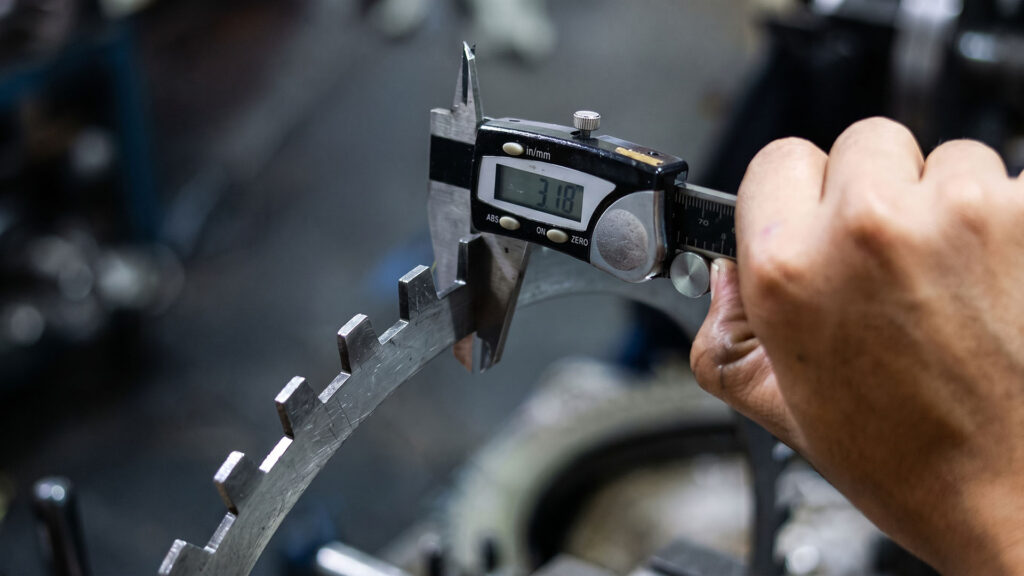
Hire an independent inspection company to visit the factory. They will check your parts right before they go into a shipping container.
This costs about $299 to $350 per day for a company like V-Trust or QIMA. It is the best insurance policy you can buy. It helps prevent bad parts from leaving China.
What Should Be in Your Defect Action Plan?
What happens if a container of 5,000 metal enclosures arrives rusted or bent? You cannot easily ship heavy metal back to China.
You need a Defect Action Plan agreed upon before you sign the contract. Make sure your plan covers:
- Who pays the bill for local rework.
- How future order credits are calculated and applied.
- The exact timeline for sending free replacement parts.
Get this in writing.
Step 6: How Do You Manage Shipping, Packaging, and Logistics?
Your parts are finished and passed inspection. Now comes the final hurdle. You need to get them to your warehouse without damage or surprise fees.
How Do You Prevent Rust During Sea Freight?
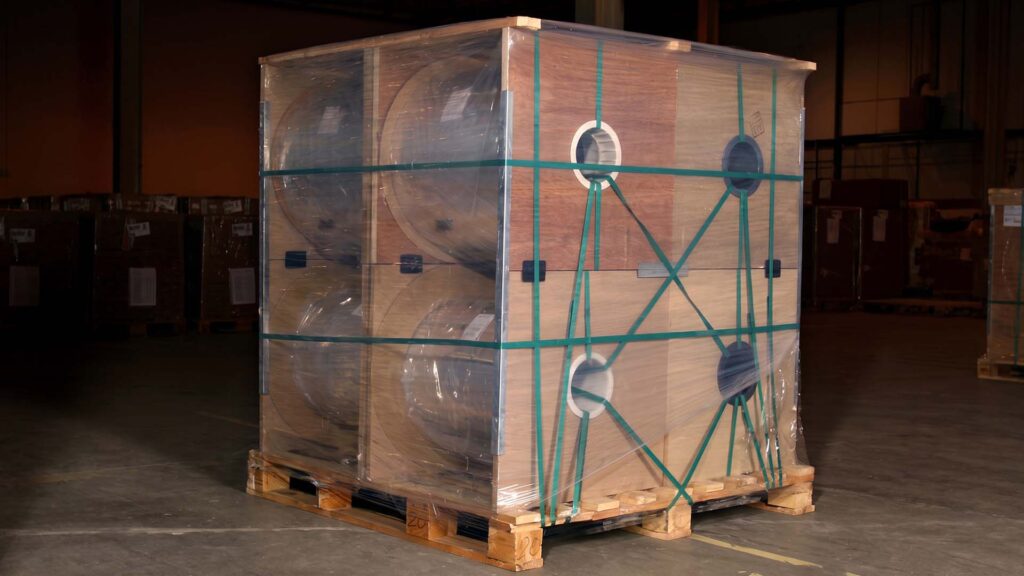
Sheet metal is heavy, so it usually ships by sea. But sitting in a humid shipping container for a month is a recipe for rust.
You must tell the factory exactly how to pack your parts. Do not leave it up to them.
Demand VCI (Volatile Corrosion Inhibitor) bags and plenty of desiccants. VCI bags emit chemical compounds that create an invisible, rust-proof layer on the metal’s surface. Also, require proper cardboard or foam separation. This ensures the metal parts do not scratch each other when the ship hits rough waves.
Should You Use Sea Freight or Air Freight?
How fast do you need your parts? Your timeline dictates your shipping method.
- Air Freight: This takes 5 to 7 days, but it costs about four times as much. It is only good for light prototypes or absolute emergencies.
- Sea Freight: Shipping to the US West Coast takes 25 to 35 days, plus another 3 to 5 days for customs clearance. It is much cheaper, but you must plan your inventory months in advance.
Which Incoterms Are Best for Beginners?
Incoterms are the international shipping rules. They decide who pays for what at the border.
Here are the two most common rules you will use:
- FOB (Free on Board): The factory pays to get the parts to the Chinese port. You pay for the ocean freight, the 25% tariffs, and the final delivery truck.
- DDP (Delivered Duty Paid): The factory handles everything. They pay the ocean freight, the tariffs, and deliver the parts right to your door.
DDP is the easiest option for beginners. Just make sure the factory actually includes the tariffs in their final quote so you do not get a surprise bill later.
Frequently Asked Questions
What is a normal Minimum Order Quantity (MOQ)?
A standard MOQ for sheet metal from China ranges from 50 to 1,000 pieces, depending on the manufacturing method.
If your part requires custom stamping dies, the MOQ will be high. For example, on our own ShincoFab stamping lines, expect a minimum of 500 to 1,000 pieces just to make the setup time worth it.
If your part is made with laser cutters and CNC press brakes, the MOQ is much lower. Because we utilize flexible CNC bending cells, ShincoFab (and other quality direct manufacturers) will happily run 50 to 100 pieces for a pilot run. Always negotiate a small pilot run before you commit to a massive order.
What are standard payment terms in China?
The standard payment terms for manufacturing in China are 30/70, meaning a 30% upfront deposit and a 70% final balance.
- 30% Deposit: You pay this upfront so the factory can buy raw materials and start production.
- 70% Balance: You pay this only after the parts pass your third-party inspection and are ready to ship.
If your project requires custom tooling, you usually pay 100% of the tooling cost upfront. Once you build trust over a few successful orders, you can often negotiate better terms, like Net 30 or Net 60 days.
Conclusion
Sourcing sheet metal from China is one of the best ways to scale your business and increase your profit margins. But as we have seen, it is not as simple as clicking “buy” on a website.
Remember the golden rule: stop chasing the cheapest unit price. Always calculate your true landed cost first.
Protect your designs with an NNN agreement before you share any files. Give the factory a bulletproof RFQ so they cannot guess your tolerances, and check off every item on the tech pack checklist. And most importantly, never pay your final balance until a third-party inspector has checked your parts.
Treat your Chinese factory like a partner, but manage them with strict rules and clear contracts. If you follow this playbook, you will build a reliable supply chain that delivers high-quality metal parts consistently.