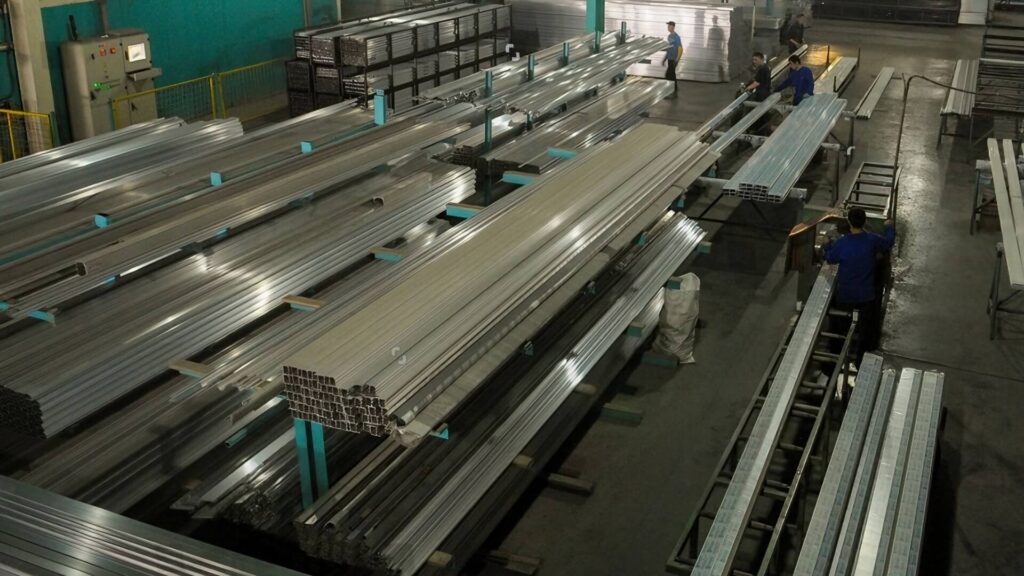
As the lead fabrication engineer here at ShincoFab, I work with aluminum on our factory floor daily. I know firsthand how these metals behave when you put them on a 100-ton press brake or send them out into harsh marine environments.
The standard yield strength of 5052-H32 aluminum is 28,000 psi (193 MPa). However, the minimum guaranteed yield strength is 23,000 psi (160 MPa), while its ultimate tensile strength is 33,000 psi (228 MPa).
5052-H32 is one of the strongest non-heat-treatable aluminum alloys you can buy that is highly resistant to cracking when our operators bend it. It is ideal for the custom enclosures and panels we produce, but it is not meant for heavy, load-bearing structural frames.
Here is how these yield strength numbers affect your bending tolerances, machining processes, and overall project costs so you can make the right buying decision.
What is the Yield Strength of 5052-H32 Aluminum?
Yield Strength in PSI and MPa
While the standard textbook yield strength is 28,000 psi (193 MPa), real life in our ShincoFab material receiving bay is slightly different.
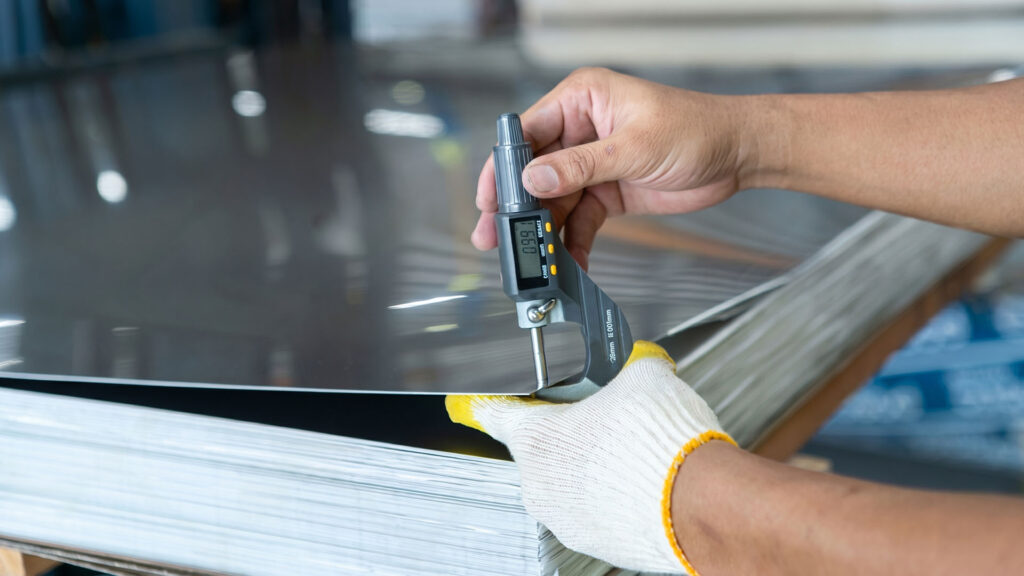
When a new truckload of aluminum arrives, our QA team immediately checks the Material Test Certificate (MTC). While the textbook says 193 MPa, our last batch of 0.125″ 5052-H32 sheet tested at 205 MPa on the mill’s MTC. It typically tests slightly higher than the baseline.
Typical vs. Minimum Yield Strength (Why Online Numbers Differ)
If you search online, you will see different numbers ranging from 160 MPa to 193 MPa. Here is the reality of that discrepancy:
- 193 MPa (28,000 psi) is the typical average. It is what we generally see when we test samples in our shop, and aligns with standard material databases like MatWeb’s property data for 5052-H32.
- 160 MPa (23,000 psi) is the minimum guaranteed strength.
When ShincoFab engineers review your CAD drawings, we base safety calculations on that lower 160 MPa number to plan for the worst-case scenario and minimize the risk of field failure.
Understanding Yield and Ultimate Strength for H32 Temper
Yield Strength vs. Ultimate Tensile Strength (Failure Modes)
Yield strength is the point of no return—when the metal bends and stays bent. Ultimate tensile strength tells you when it breaks. For 5052-H32, the ultimate strength is 33,000 psi (228 MPa).
When this metal fails, it gives you warning signs. In our ShincoFab testing lab, we notice it stretches and warps first. If we apply extreme pressure to a 1-inch strip of 5052-H32, it permanently deforms once it hits that 28,000 psi yield point, but it generally won’t physically snap into pieces until the stress pushes past 33,000 psi.
What Does the H32 Temper Mean on the Floor?
According to The Aluminum Association, the naming provides specific structural clues:
- “H” stands for strain-hardened.
- “32” means quarter-hard.
This specific temper provides a highly effective balance of strength and formability for sheet metal fabricators.
How 5052-H32 Yield Strength Affects Our Daily Fabrication
Bending and Springback on the Press Brake
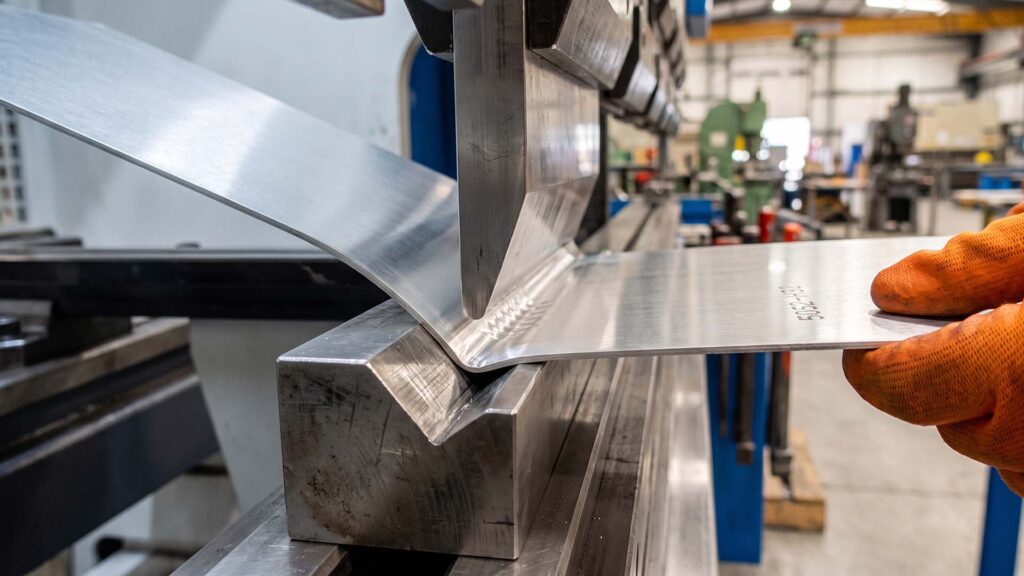
When our operators put 5052-H32 on our Amada press brakes, its moderate yield strength causes a predictable springback effect. Because it is quarter-hard, the metal fights back a little when the punch presses into the die.
To hit a precise 90-degree angle for a client’s chassis, we typically over-bend the metal to about 92 degrees. Once the ram releases, it relaxes into the required tolerance. As a rule of thumb at ShincoFab, if we are bending a standard 0.125″ thick sheet, we use a minimum bend radius of 1.5t (0.187″) to minimize micro-cracking on the outside edge.
Will 5052-H32 Machining Risks Gum Up Your CNC?
5052-H32 is beautiful to bend, but cutting it requires finesse. Because its yield strength is lower than rigid alloys like 6061, it is softer and more prone to gumming.
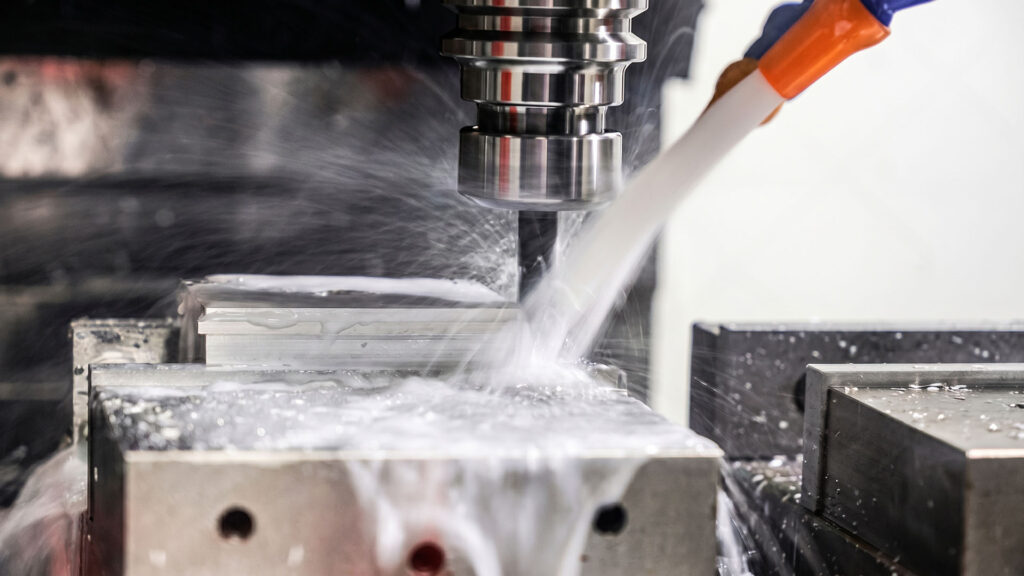
When our machinists throw 5052-H32 on the CNC routers, the metal can melt and stick to the flutes of the endmill if it gets too hot. We fix this by keeping our feed rates aggressive and flooding the cut with high-quality coolant to evacuate chips efficiently.
Why 5052-H32 is a Top Choice for Our Clients’ Projects
Tough Against Salt and Rust
We fabricate a lot of marine components at ShincoFab. 5052-H32 contains minimal copper, making it highly corrosion-resistant. In ASTM B117 salt-spray testing, 5052-H32 demonstrates strong resistance to corrosion and pitting in chloride-rich conditions, making it well suited to marine applications.
Great for Welding
Whether our certified welders are laying down TIG beads or using MIG on thicker plates, 5052-H32 holds its structural integrity. It retains its strength at the heat-affected zone much better than many softer alloys do.
Common Real-World Uses (And Structural Limits)
Because 5052-H32 hits that sweet spot of yield strength and formability, we frequently use it for:
- Boat hulls and marine brackets
- Custom electronic enclosures (bends easily into tight boxes to protect wiring)
- Outdoor architectural signage
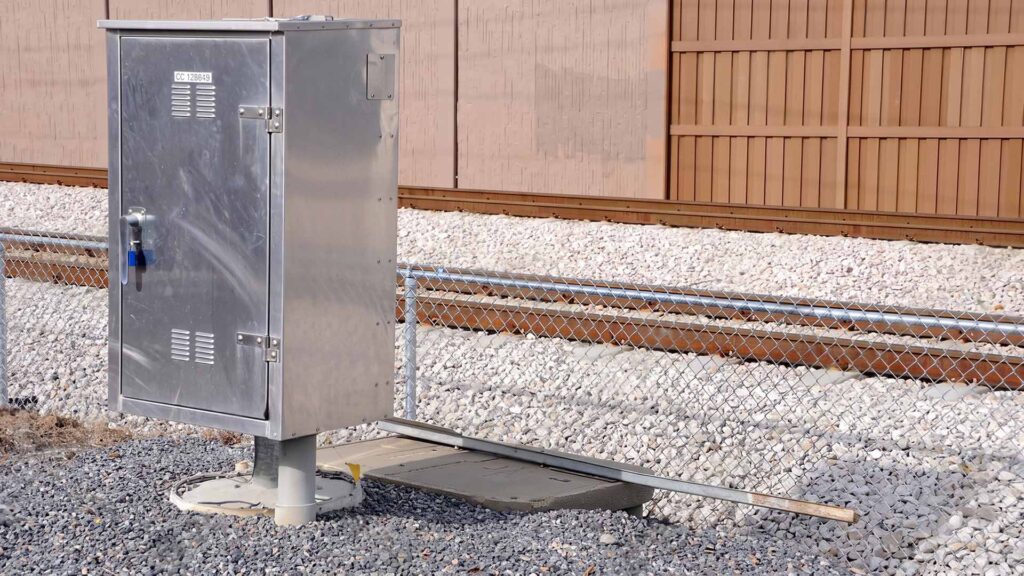
If your CAD file involves heavy, load-bearing frames, our engineers will redline it. Do not use 5052-H32 for building support beams or heavy machinery frames; you should upgrade to a true structural alloy like 6061.
How 5052-H32 Compares to Other Aluminum Grades
To help you choose the right material for your project, here is a quick comparison of 5052-H32, 6061-T6, and 3003 aluminum based on their primary applications, formability, and relative costs.
| Aluminum Grade | Best Application | Formability / Bending | Relative Cost |
|---|---|---|---|
| 5052-H32 | Custom enclosures, marine parts | Excellent (Highly crack-resistant) | Moderate (Baseline) |
| 6061-T6 | Heavy load-bearing frames | Poor (Prone to cracking on tight radius) | Higher (Typically 10-15% more than 5052) |
| 3003 | Low-stress parts, basic forming | Excellent (Very soft) | Lower (Typically 15-20% less than 5052) |
5052-H32 vs. 6061-T6: Which Aluminum Should You Choose?
While 6061-T6 is a structural powerhouse, it is highly prone to cracking right down the bend line if formed on a press brake at a tight radius. Choose 5052 if your part needs folds. Choose 6061 if your part needs to hold up heavy weight.
5052-H32 vs. 3003 (Cost vs. Performance)
3003 aluminum bends easily but is very soft. While raw material prices constantly fluctuate, our historical purchasing data shows that 5052-H32 is typically 15-20% more expensive than 3003, but it generally remains 10-15% more cost-effective than 6061.
If your part will face wind, vibration, or weather, the extra yield strength of 5052 is easily worth the slightly higher initial investment.
Conclusion
5052-H32 aluminum provides an optimal balance on the factory floor, allowing us to make tight bends with minimal risk of cracking the metal.
If you are designing a project that requires forming, welding, and surviving harsh outdoor environments, 5052-H32 is an excellent choice. If you have an upcoming project and aren’t sure if 5052-H32 is the right material, send your CAD files over to our team at ShincoFab. We’d be happy to review your design and help you make the right call.