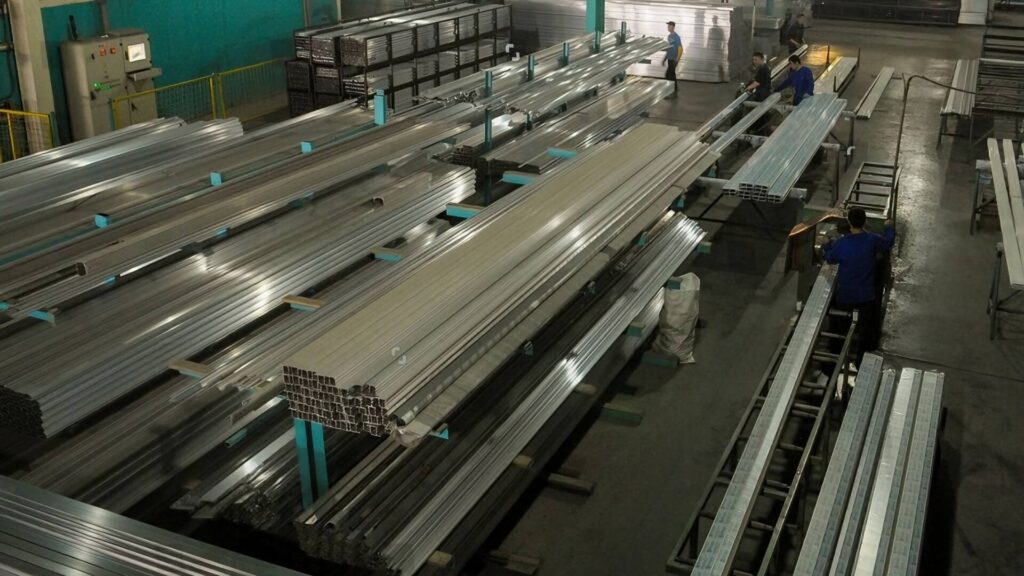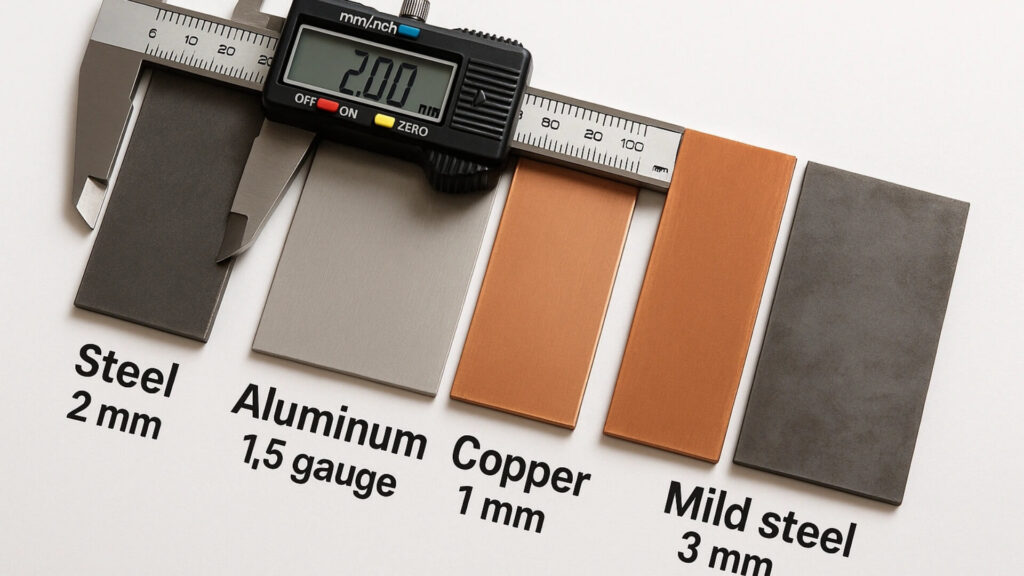
After 15 years of running press brakes and analyzing scrap bins here at ShincoFab, I have seen the same expensive mistake over and over. When a part fails a load test, engineers instinctively spec a thicker gauge of metal.
But adding weight kills your profit margins, increases freight fees, and slows down your assembly line.
In this guide, I will show you exactly how we reduce weight in sheet metal parts on our factory floor without sacrificing structural integrity. You will get the exact playbook our engineering team uses. We cover how to choose between 5052 Aluminum and High-Strength Low-Alloy (HSLA) steel, add stiffening ribs, and avoid the hidden manufacturing traps that look great in CAD but fail on the shop floor.
To reduce sheet metal part weight without sacrificing strength, switch to lighter materials like 5052 Aluminum or high-strength steel. You can further reduce weight by stamping stiffening ribs into thinner gauges, punching dead-weight cutouts based on FEA simulations, and using lightweight rivets instead of welding.
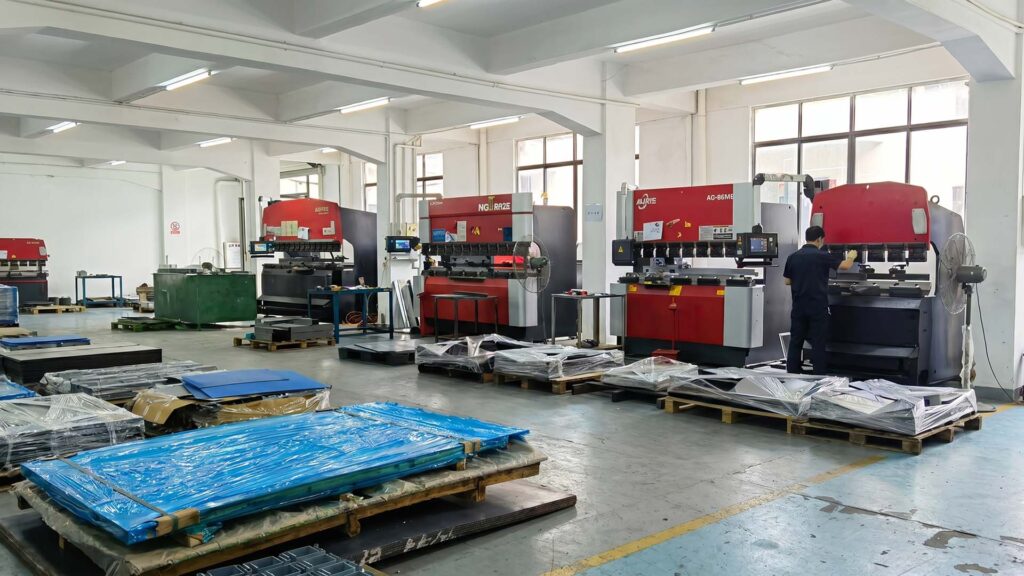
Why Put Your Sheet Metal on a Diet?
Relying on thicker gauges is a lazy design choice. Smart design beats bulk every single time.
Putting your sheet metal on a diet is a massive boost to your bottom line.
Reducing the weight of your sheet metal parts provides three primary benefits to your manufacturing process:
- You save on raw materials. Metal is sold by the pound. Thinner parts protect your budget when global steel or aluminum prices spike.
- You slash LTL shipping costs. Freight fees add up fast. Dropping 20% of the weight off a 5,000-part run can save you an entire pallet’s worth of shipping costs.
- You speed up assembly. Heavy parts slow down the factory floor. Lighter parts are safer for operators to handle and much faster to rivet or weld.
Step 1: Start with the Right Material (Foundation)
Should You Use Aluminum or Steel to Reduce Weight?
Switching from standard cold-rolled steel to something like 5052-H32 Aluminum is the fastest way to drop weight. Aluminum is about one-third the weight of steel. If you are building simple NEMA enclosures or indoor server racks, aluminum is your best friend.
But on the shop floor, we know aluminum is not a magic fix. It costs more per pound, and it’s prone to tearing if your bend radius is too tight. If your part faces high mechanical stress, you still need steel.
Should You Upgrade to High-Strength Steel?
If you must use steel, upgrade to high-strength steel (like HSLA Grade 50). Because of its higher yield strength, you can step down from an 11-gauge to a 14-gauge and save nearly 40% in weight.
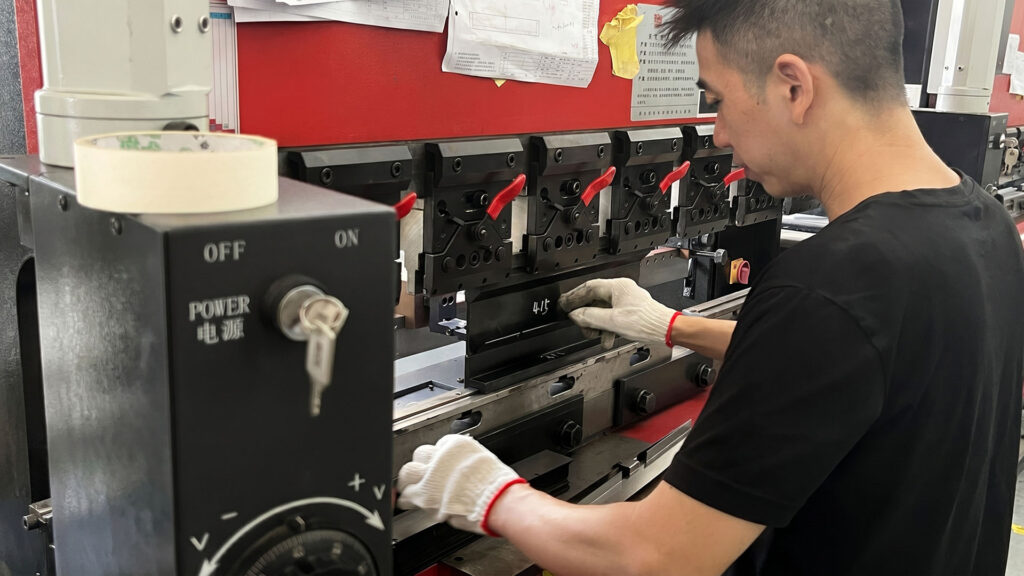
However, machine operators must account for springback when bending high-strength steel. When we bend high-strength metal on our Amada press brakes, it fights back, it wants to snap back toward its flat shape. If your manufacturer isn’t experienced, this will cause your scrap rate to skyrocket. At ShincoFab, we calculate precise “overbend” angles and use specific V-dies to ensure high-strength materials hit your exact tolerances without turning your budget into scrap metal.
How Do Mill Tolerances Add Hidden Weight?
There is a secret weight gain hiding in your supply chain: mill tolerance.
When we order sheet metal from the mill, it has an allowable thickness range governed by standards like ASTM A568. If you specify standard 14-gauge (.0747″) steel, the mill might deliver metal that sits at .080″. For a single bracket, you won’t notice. But across a 10,000-part run? That “invisible” extra thickness adds hundreds of pounds of unnecessary weight and wipes out your cost savings.
Factory Tip: For weight-critical projects, always specify restricted gauge tolerances or half-standard tolerances when ordering materials. This ensures your weight savings are locked in before the laser cutter even turns on.
Step 2: Optimize the Geometry (Design Phase)
What is the Difference Between Strength and Stiffness?
A lot of designers send us CAD files that confuse strength with stiffness.
- Strength is how much load a part takes before it breaks.
- Stiffness is how much a part bends (deflects) under that load.
You do not need thick metal to stop a part from bending. You just need a smarter shape.
How Do Ribs and Dimples Stiffen Thin Metal?
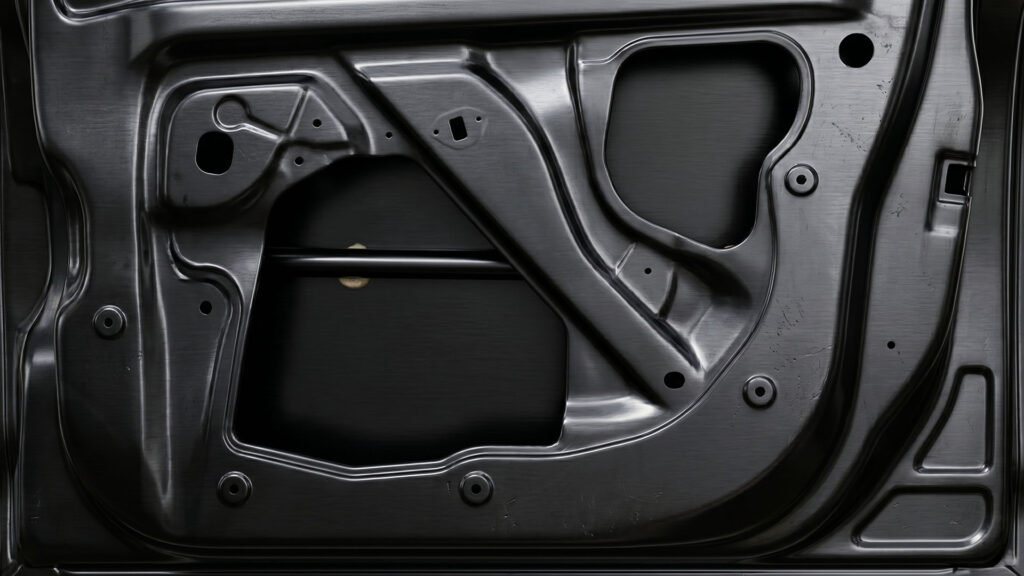
You can make thin metal incredibly stiff by embossing it, which involves stamping ribs or dimples into the flat sheet.
In a recent ShincoFab project, a client sent us a 2.0mm steel control panel that was suffering from structural wobbling, commonly known as oil canning. Instead of jumping to a thicker 2.5mm steel, we recommended stamping two 4mm deep linear ribs into a lighter 1.5mm material. This approach saved them $2.50 per unit in material costs and passed the exact same load test.
When Is Custom Tooling Worth the Cost?
Ribs and custom hems require special dies. If you use thinner metal to save $2 a part, but we have to machine a custom $5,000 die, evaluate the ROI:
- Low volume (under 500 parts): Stick to standard press brake bends (like 90-degree flanges or standard hems). Expensive custom dies will wipe out your material savings.
- High volume (5,000+ parts): Invest in the tooling. The die pays for itself in just a few months.
Step 3: Remove the Dead Weight (Subtraction Phase)
What Are the Risks of Punching Holes to Save Weight?
Look closely at your FEA (Finite Element Analysis) simulation. The blue zones are dead space with zero stress. You can punch holes there to save weight.
However, turning your part into Swiss cheese is a dangerous trap. First, if you are making an outdoor enclosure, those holes let in dust and water (ruining your NEMA or IP rating).
More importantly: fatigue failure. If that part goes onto a heavy, vibrating machine, the constant real-world vibration causes micro-cracks around the sharp edges of cutouts. Always use radiused corners on your cutouts to distribute stress.
Step 4: Rethink Assembly and Fastening (Joining Phase)
How Do You Fasten Thin Sheet Metal Without Warping?
Do not ruin weight savings with heavy steel nuts and bolts, and watch out for the hidden costs of assembly.
Switching to .040″ aluminum saves weight, but TIG welding ultra-thin aluminum is a nightmare. It pumps too much heat into the metal, causing massive warpage.
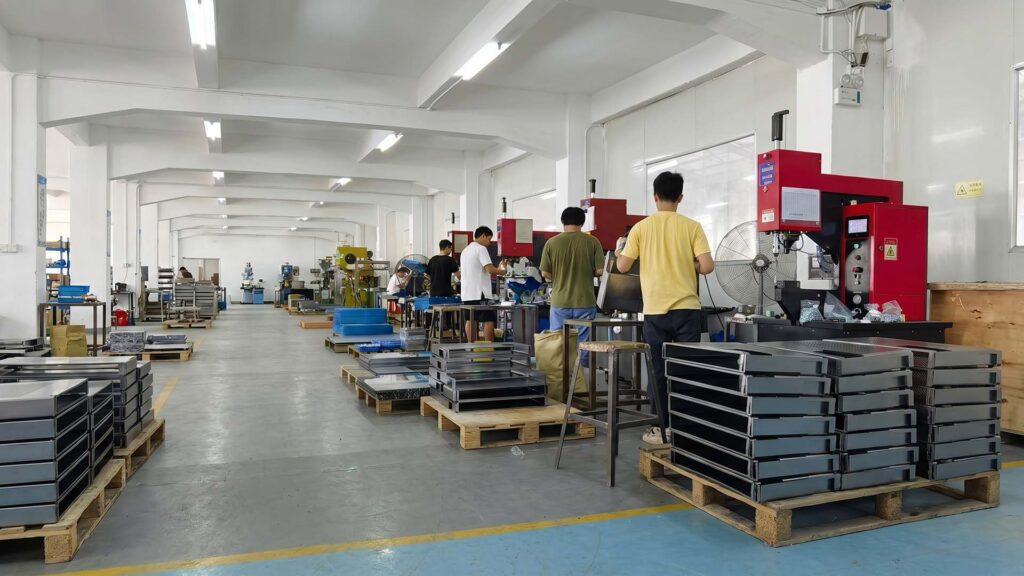
How we handle it: Skip the welder for thin gauges. We recommend using aerospace-grade blind rivets or heavy-duty structural adhesives. You keep the lightweight benefits without paying for warped scrap.
Step 5: Prove It and Produce It
Weight reduction is no longer a guessing game. You have the materials, the geometry tricks, and the manufacturing tools to do it right. But before you spend thousands of dollars, run it through an FEA simulation to find the dead weight.
Conclusion
You do not have to settle for heavy, expensive sheet metal parts. By picking the right materials and using clever geometry, you can drop the weight and keep the strength.
But you do not have to figure it all out alone. Here at ShincoFab, we manufacture custom sheet metal parts every day. We know the difference between a CAD drawing that looks lightweight and a part that actually survives the press brake and the welding table.
Whether you need help managing springback on high-strength steel, figuring out the best way to join thin-gauge aluminum without warping, or calculating the ROI on custom tooling, our engineering team is ready to help. Stop paying for thick metal you do not need, and watch your profit margins grow.