As the Lead Fabricator at ShincoFab, a custom sheet metal fabrication factory, I have spent years in metal fabrication, cutting, welding, and buying tons of steel. I know firsthand how picking the wrong metal can ruin a project and destroy your budget. I have seen it happen right on our own shop floor.
Choosing between hot rolled and cold rolled steel dictates your project’s strength, surface finish, and final budget. This guide breaks down the real differences based on thousands of hours of production data from the ShincoFab facility.
Buying the cheapest steel can actually cost you more money in the long run. Stop buying steel based on the raw price per pound. Buy based on your total fabricated cost to save hours of frustrating labor.
The Short Answer: Hot vs. Cold Rolled Steel
If you are in a rush, here is the bottom line we tell new ShincoFab clients:
- Hot rolled steel is highly cost-effective and easy to bend. But it has a rough, scaly surface and loose measurements.
- Cold rolled steel is stronger, smoother, and highly precise. Cold rolling is a secondary process. The factory cools hot rolled steel, then presses it through rollers at room temperature.
- The ShincoFab rule of thumb: Use hot rolled for hidden structural frames. Use cold rolled for precision parts, enclosures, or anything you plan to powder coat.
How much does this difference actually cost you?
Steel prices fluctuate by region, product specification, and delivery terms. For example, in the U.S. market in November 2023, Steel Market Update’s sheet-price benchmark reported an average hot-rolled coil price of $940 per short ton, compared with $1,150 per short ton for cold-rolled steel. That represented a premium of roughly 22% for cold-rolled material at that time—reflecting the added processing required to achieve tighter dimensional control and a smoother surface finish.
Hot rolled steel and cold rolled steel differ primarily in their manufacturing processes, resulting in different strength levels, surface finishes, and price points. The table below compares the cost, strength, finish, and precision of both metals.
| Feature | Hot Rolled Steel | Cold Rolled Steel |
|---|---|---|
| Common Grades | A36 | 1018, 1045 |
| Price | Less expensive | Premium cost |
| Strength | Standard | Up to 20% stronger |
| Finish | Rough and scaly | Smooth and oily |
| Precision | Shrinks and warps slightly | Exact and consistent |
What is Hot Rolled Steel?
How It’s Made
Think of hot rolled steel like rolling out warm pizza dough. The factory heats a giant block of steel above 1,700°F.
At this extreme heat, the metal turns soft and pliable. Huge rollers then flatten and stretch it into sheets or long beams. Finally, the factory leaves the steel out to cool at room temperature.
The Pros and Cons
Because it is made quickly at high heat, hot rolled steel is highly cost-effective compared to cold rolled options. It is also highly malleable, meaning it is easy to bend and shape without breaking.
But there is a catch. As the hot steel cools, it shrinks. It does not shrink evenly. This means the final shape is slightly warped, and the corners are rounded.
Because of this uneven cooling, expect the dimensional tolerance to vary by ±2% to 5% (or roughly ±0.3 to 0.5 mm). In our press brake department at ShincoFab, this means we have to constantly adjust our bending angles to account for these material inconsistencies.
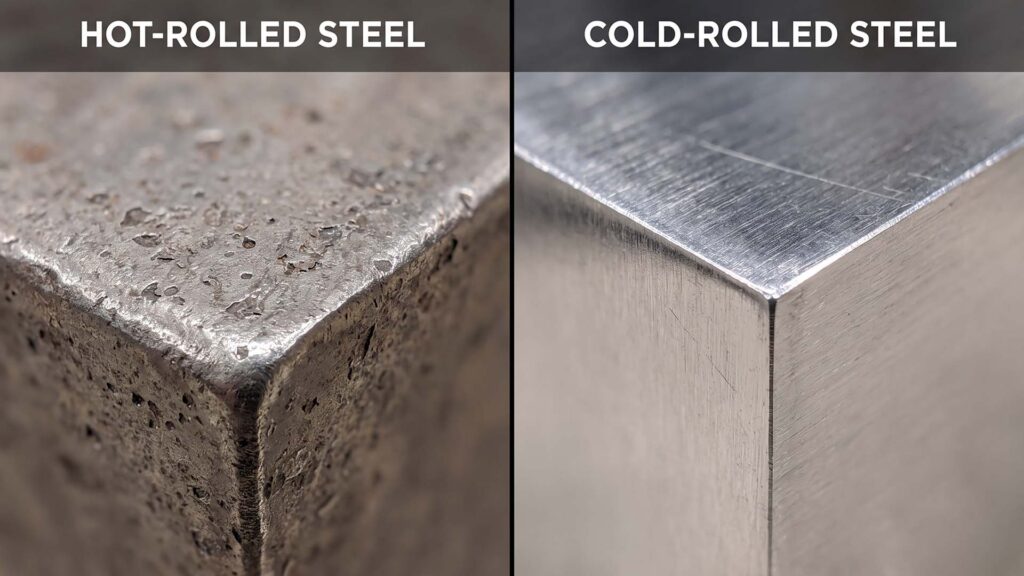
The cooling process also leaves a rough, blue-grey crust on the surface. This crust is called mill scale.
Best Uses for Hot Rolled Steel
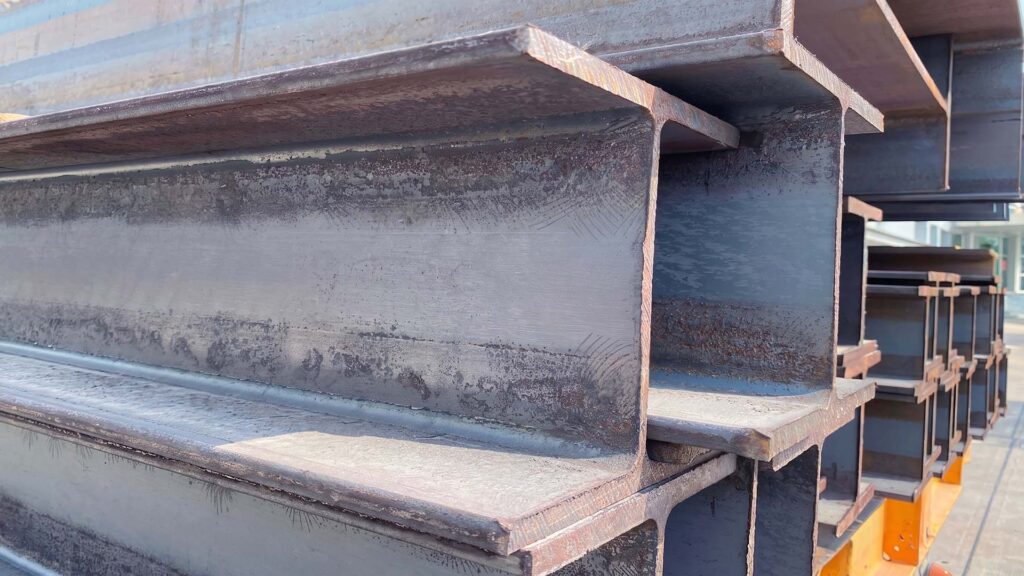
You should use hot rolled steel when tight measurements and pretty finishes do not matter. When buying this metal, the most common grade you will encounter is A36 (a standard specification defined by ASTM International). This specific grade is the industry standard for heavy-duty projects where raw strength and minimizing initial material costs are your main focus.
Common uses include:
- Structural I-beams for buildings
- Heavy truck frames
- Railroad tracks
- Agricultural equipment
What is Cold Rolled Steel?
How It’s Made
Cold rolled steel is not a completely different metal. It is actually just hot rolled steel that gets a second round of processing.
After the hot steel cools down to room temperature, the factory runs it through another set of rollers. Because the metal is cold, it takes a lot more pressure to flatten it. The factory uses oil to keep the rollers moving smoothly.
The Pros and Cons
This extra step creates a massive upgrade in quality. The steel comes out exceptionally flat, with sharp corners and highly precise measurements. It also has a smooth, oily finish that looks great.
Squeezing the cold metal forces its internal structure to pack tighter. This makes the steel much stronger.
According to metallurgical data from resources like The Engineering ToolBox, cold rolling increases the yield strength of the steel from roughly 235 MPa to 365 MPa. This creates a massive 55% increase in strength compared to hot rolled steel.
The downside? It commands a higher price. Because the metal is so hard, it is also much harder to bend or shape without cracking, which is why our engineers routinely calculate a larger minimum bend radius for cold rolled parts.
Best Uses for Cold Rolled Steel
You should use cold rolled steel when looks and precise sizes matter. The most popular grades used in fabrication are 1018 (ideal for general machining and cold forming) and 1045 (used when higher strength and wear resistance are required). If you are building something that needs pieces to fit together cleanly, this is your metal.
Common uses include:
- Home appliances (like washers and refrigerators)
- Metal furniture and filing cabinets
- Automotive body panels
- Precision machined parts
What is the Difference Between Hot and Cold Rolled Steel?
1. Surface Finish & Looks
Hot rolled steel has a rough, crusty surface called mill scale. It looks dull and feels like sandpaper. Cold rolled steel provides a distinct contrast. It has a smooth, clean surface that is usually coated in a light layer of oil to prevent rust.
2. Strength & Hardness
Cold rolled steel wins this fight easily. The room-temperature rolling process packs the metal grains tightly together. This makes cold rolled steel about 20% stronger and much harder than hot rolled steel.
3. Precision & Shape
When hot rolled steel cools down, it shrinks. This shrinkage is unpredictable. It causes the metal to warp slightly and rounds off the edges. Cold rolled steel is formed at room temperature, so it does not shrink. You get consistently straight edges and highly uniform thickness.
4. Cost & Budget
Hot rolled steel requires less initial investment. The factory skips the extra cooling and rolling steps, which saves time and energy. Cold rolled steel costs more because it takes more work to produce that clean finish.
5. Welding, Laser Cutting & Failure Modes
Here is where things get tricky. Cold rolled steel is packed with internal stress from being squeezed so hard. If you hit it with extreme heat, such as from a laser cutter or a heavy weld, that stress releases. The metal can suddenly warp or spring out of shape.
When we first upgraded to high-power fiber lasers at ShincoFab, cutting cold rolled steel without proper stress-relief resulted in a 15% to 20% scrap rate due to severe warping. We had long, thin parts literally bowing up and hitting the laser head. We solved this by optimizing our cutting paths and occasionally micro-jointing the parts.
Hot rolled steel does not have this problem. It is already relaxed, so it stays flat when you cut or weld it.
Why Does Hot Rolled Steel Cost More to Fabricate?
Hot rolled steel looks great on a spreadsheet. The raw price per pound is low. But buying metal based only on the upfront price is a huge mistake. You have to look at your total fabricated cost.
When hot rolled steel arrives at your shop, it is covered in tough, crusty mill scale. You cannot just weld over this scale. As frequently advised by welding specialists at ESAB, it can lead to weld defects. We have cut open bad welds to prove this to clients, and the resulting porosity is terrible. Your team has to grind it off first.
Just last month, a client insisted on using hot rolled steel to save $50 on a batch of custom brackets. But our welders had to spend 45 minutes grinding off mill scale at a shop rate of $85 an hour. The client spent $63 in labor to save $50 on raw metal. The extra labor completely erased their material savings and increased the overall project cost. At ShincoFab, we try to stop clients from falling into this exact trap.
The Coating & Finishing Test: Prepping for Paint
Paint and powder coat need a clean surface to stick. If you mess up the prep work, your beautiful finish will peel right off.
Here is what you need to do for each type of steel:
- Hot Rolled Steel: Remember that crusty mill scale? If you paint over it, the scale will eventually pop off. In our finishing department, if a client wants a hot-rolled part powder-coated, we must sandblast or acid-wash the steel until the bare metal is fully exposed.
- Cold Rolled Steel: This metal is already smooth and bare. But it comes covered in factory oil to prevent rust. We just run it through our degreasing station, and once the oil is gone, it is ready to paint.
How Do You Tell Hot and Cold Rolled Steel Apart in Person?
Imagine you are at a local metal supplier. The steel racks are not labeled. How do you know what you are buying?
Here is the exact 10-second visual and touch test our inbound QA team at ShincoFab uses to verify raw material shipments:
- Look at the edges: Check the corners of the metal. Hot rolled steel has slightly rounded, sloppy edges. Cold rolled steel has sharp, well-defined corners.
- Feel the surface: Run your bare hand across the flat side. If it feels like rough sandpaper and leaves dry, dark dust on your fingers, it is hot rolled. If it feels smooth and leaves a slick, oily film on your hand, it is cold rolled.
The Secret Middle Ground: HRPO Steel
Sometimes you want the low price of hot rolled steel, but you do not want to deal with the messy mill scale. You are in luck. You can buy HRPO steel.
HRPO stands for Hot Rolled Pickled and Oiled.
Here is how it works. The factory takes regular hot rolled steel and dunks it in an acid bath. This process, known as pickling, dissolves the rough mill scale. Then, they spray the clean steel with oil to stop it from rusting.
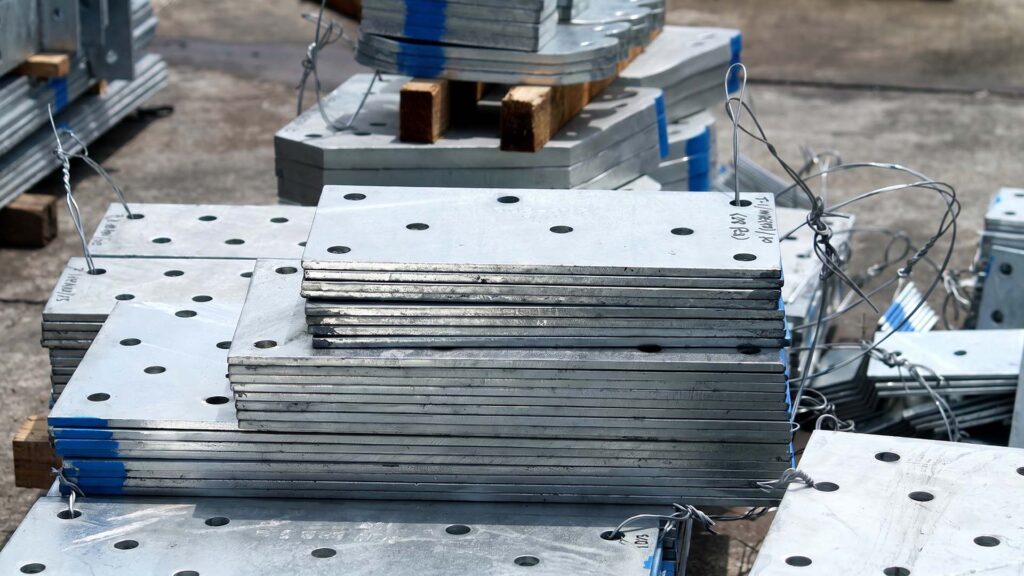
The result is the ultimate middle ground. You get a clean, bare surface that is ready to weld or paint right out of the gate. But because it skips the expensive cold rolling process, it remains a highly cost-effective option.
How to Choose the Right Steel (Focus on Total Fabricated Cost)
It is time to make a choice. Use this quick checklist to match the right metal to your specific needs:
- For heavy load-bearing and strict material budgets: Choose hot rolled steel (like A36). It is perfect for hidden structural frames where looks do not matter.
- For high-quality appearance and tight tolerances: Choose cold rolled steel (like 1018 or 1045). It is the best choice for exposed parts, appliances, and precision fits.
- For a lower material budget but a clean finish: Choose HRPO steel. It saves you money on the raw material while reducing prep time.
Remember my golden rule. Consistently base your steel choice on the downstream labor it requires, not just the upfront invoice.
The cheapest metal is not always the cheapest project. If you buy low-cost hot rolled steel but pay a welder for three hours to grind it clean, the added labor costs can quickly exceed your initial material savings. Focus on your total fabricated cost.
Frequently Asked Questions
Does cold rolled steel rust faster?
Yes, cold rolled steel rusts faster than hot rolled steel if left unprotected. Because it lacks the protective mill scale found on hot rolled steel, the bare surface reacts with moisture immediately. Both metals are made of carbon steel, so both will eventually rust, but you must paint or coat cold rolled steel right away once the protective factory oil is wiped off.
Can you weld cold rolled steel without it warping?
Yes, you can weld cold rolled steel without it warping, but you have to be careful. Cold rolled steel is packed with internal stress. Hitting it with high welding heat can cause it to warp, twist, or crack.
To prevent this, our certified welders at ShincoFab clamp parts tightly into heavy fixtures before welding. We also preheat the metal and let it cool down slowly to help relieve that built-up stress and use stitch welding techniques to minimize heat input.
Is hot rolled steel always cheaper?
Yes, hot rolled steel is almost universally less expensive upfront. The raw price per pound is consistently lower.
But as we discussed, it is not always cheaper in the end. If your project requires tight measurements, heavy grinding, or a flawless paint job, the extra labor will quickly erase your savings.
Conclusion
Choosing between hot rolled and cold rolled steel comes down to one simple question: what are you building?
Do not just look at the raw price tag. Look at the time it takes to finish the job.
If you are building a heavy, hidden frame, limit your material expenses and buy hot rolled steel. If you need a clean, painted finish with precise measurements, spend the extra budget on cold rolled steel. And if you want the best of both worlds, ask your supplier for HRPO.
Now that you know the difference, you can stop guessing. You are ready to buy the right metal, save hours of frustrating labor, and build a better product.