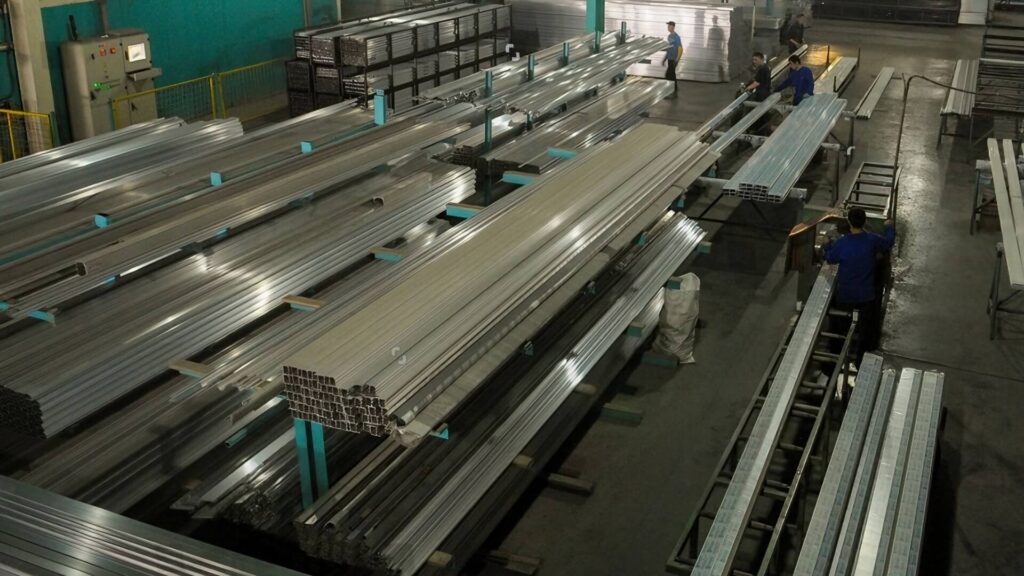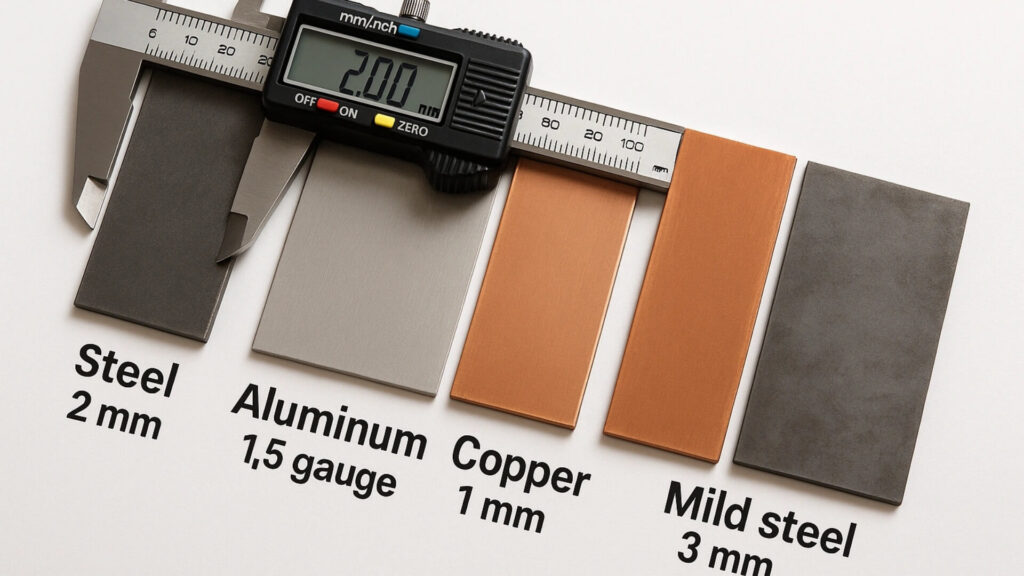
Choosing the wrong sheet metal process can double your costs and compromise your parts. As a production manager here at ShincoFab, I have spent over a decade on our factory floor, reviewing thousands of manufacturing quotes and watching raw steel turn into finished products. I see buyers make the same expensive mistakes every day because they do not understand the real differences between laser cutting and CNC punching.
In this guide, I will guide you on how to choose the right machine for your project based on what actually works on the ShincoFab production line.
The Short Answer on Which Process to Choose
In summary, laser cutting is a thermal manufacturing process ideal for complex, low-volume prototypes, offering high flexibility and tolerances of ±0.001 to ±0.006 inches on thin sheet metal. CNC punching is an automated mechanical process best suited for high-volume production of simple shapes, offering faster cycle times and lower per-part costs at scale. If you are making a few parts or have a complex design, use a laser. If you are making thousands of parts with simple standard holes, use a punch press.
Quick Comparison Table (Cost, Speed, Precision)
Let’s look at an illustrative example based on historical batch runs at ShincoFab. While actual prices fluctuate with material market rates, the cost ratio remains highly consistent. For this comparison, imagine you need a standard aluminum bracket with a few mounting holes.
- At 100 units: Laser cutting typically averages around $2.50 per part. Punching can effectively cost upwards of $15.00 per part because the upfront custom tooling fee must be amortized across a very small production run.
- At 10,000 units: Laser cutting economies of scale might bring the cost down to roughly $1.80 per part. However, punching can drop to approximately $0.45 per part because the tooling investment is fully absorbed by the high volume, and the machine’s sheer speed drastically reduces cycle time.
| Feature | Laser Cutting | CNC Punching |
|---|---|---|
| Best For | Complex shapes & prototypes | High volume & standard holes |
| Upfront Cost | Minimal (No custom physical tools) | Moderate to High (Typically $200 – $2,000+ per custom tool) |
| Lead Time | 1 to 3 days (Fast CAD setup) | Typically 1 to 3 weeks (If new tools are ordered) |
| Precision | ±0.005 inches (Smooth edges) | Typically ±0.010 inches (Tool marks possible) |
Follow the Golden Rule to Design for Laser First and Scale Later
The market changes fast. Flexibility is your best friend. That is why I typically advise our ShincoFab clients to follow one practical rule: design for laser first, and scale with punching later.
- Start with a laser: Lasers do not need custom tools. You can rapidly update your design without wasting money on obsolete tooling. Just last month, a client came to us with an EV battery bracket. We used our fiber lasers to run three different prototype iterations in two days to get the fit right.
- Scale with a punch: Once your design is fully finalized and you need 5,000 or more parts, switch to a CNC punch press. The upfront tooling costs will finally make sense, and the high-speed processing can significantly reduce costs.
How Do These Machines Actually Work?
These machines use two fundamentally different methods to remove metal: extreme heat versus extreme physical force.
How Does Laser Cutting Work?
Laser cutting is a thermal manufacturing process that uses a high-powered beam of light to melt—and in some applications partially vaporize—metal along a digitally programmed path.
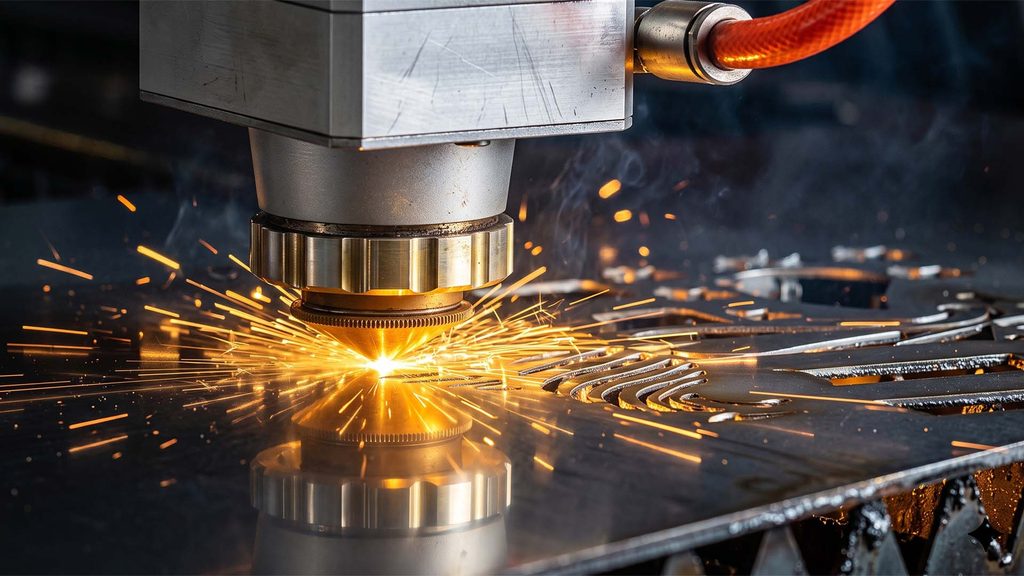
Walking past our 6kW fiber lasers at ShincoFab, you can hear the aggressive hiss of assist gases such as nitrogen or oxygen blowing molten metal out of the cut kerf. This helps produce a clean, precise cut. Because the cutting head does not make mechanical contact with the metal, this process provides several significant benefits.
- No mechanical tool wear: The laser beam has no cutting edge that dulls over time, helping maintain consistent results from the first part through long production runs.
- High geometric freedom: You can cut almost any 2D shape you draw on a computer. You are not limited by the geometry of a physical blade.
- No mechanical forming force: The metal is not mechanically pushed or bent by a punch or blade during cutting, although laser processing still introduces localized heat into the material.
How Does CNC Punching Work?
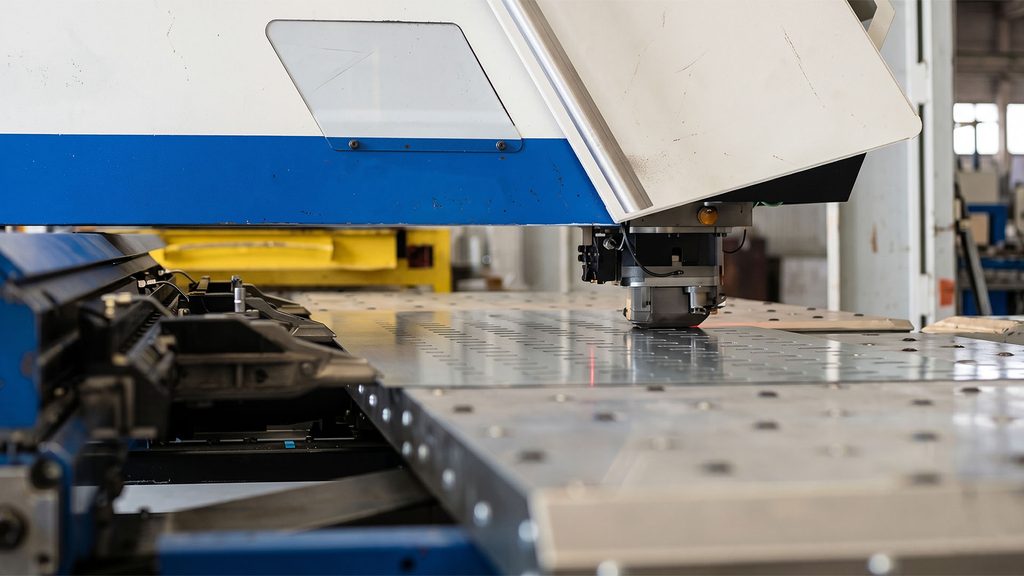
CNC punching is an automated mechanical process that uses extreme physical force to push a hardened steel tool through sheet metal.
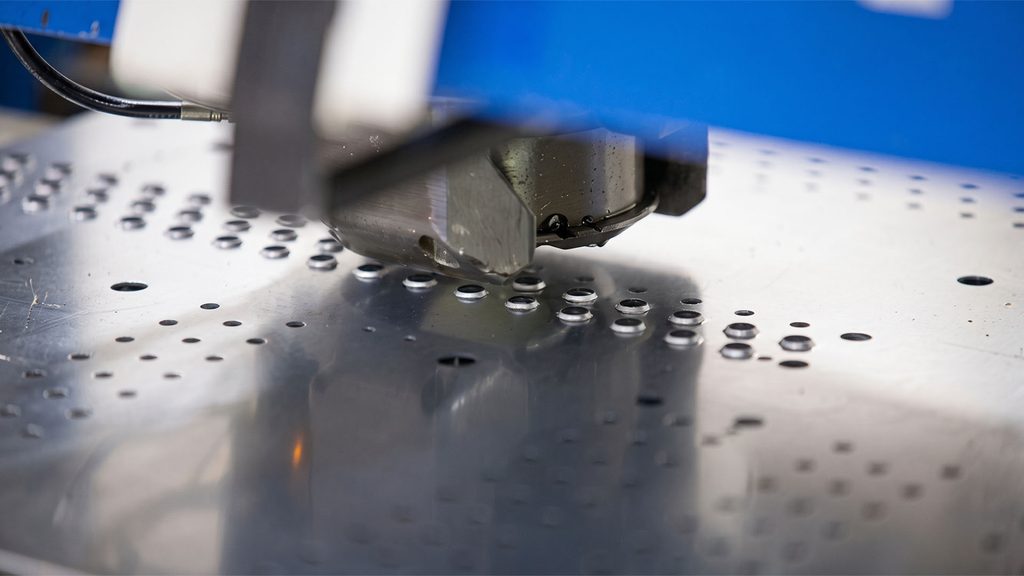
The machine holds a spinning wheel called a turret. This turret holds dozens of different tools. When the machine needs to make a hole, it spins to the right tool and presses it down into a matching die. When our 30-ton punch press is running at full capacity, you can feel the vibration through the concrete floor. This physical force provides distinct advantages:
- High-speed processing: A punch press can hit the metal hundreds of times per minute. It typically punches standard holes faster than a laser can trace them.
- Custom shapes: You can buy tools shaped like squares, ovals, or even your company logo.
- 3D features: Unlike a laser, a punch press can dent and form the metal. It can create louvers, dimples, and countersinks in a single step.
The Big Showdown of Physical Capabilities and Design Rules
Not every design can be made on every machine. You need to match your part’s physical needs to the right equipment.
Part Shape and Complexity (Curves vs. Standard Holes)
Lasers handle complexity well. If your part has organic curves, sharp inside corners, or intricate cutouts, the laser is your best choice. It follows your digital path with high precision.
Punch presses excel at repetition. If you are making a server rack door with hundreds of identical square ventilation holes, the punch press is far more efficient. But do not ask a punch press to cut a smooth, sweeping curve. To do that, it has to take hundreds of tiny, overlapping bites (nibbling). This leaves a jagged edge and is inefficient.
Material Thickness (Thin sheets vs. Thick plates)
The thickness of your metal makes a huge difference in which machine you choose.
- Lasers can cut thick plates. A modern 6kW fiber laser can easily slice through steel that is 1 inch (25mm) thick.
- Punch presses are built for thin sheets. They work best on metal that is under 0.25 inches (6mm) thick. If you try to punch metal thicker than a quarter-inch, the tools wear out fast, and the massive force can bend your part out of shape.
Do I need to change my CAD design if I switch machines?
Yes. This is a trap many buyers fall into. A part designed for a laser may be unmanufacturable on a punch press. Punching uses physical force, which brings strict design rules.
- The Hole Size Rule: A punch press typically requires a hole diameter to be at least 1x the material thickness. If your sheet is 2mm thick, your smallest hole should be 2mm. A laser is much more forgiving and can cut a hole that is just 0.5x the material thickness.
The Risk Factors Behind How These Processes Fail
Lasers use extreme heat to melt metal. If you are cutting very thin sheets, the heat spreads quickly. The metal gets too hot and starts to warp. Entire batches of 0.5mm stainless steel can be ruined if an operator doesn’t manage the heat zone properly. To fix this, operators must slow down the machine or change the cutting gas, which increases your cycle time and cost.
CNC Punching Risks Involving Material Springback and Tool Wear
Extreme physical force brings its own set of challenges. At ShincoFab’s QA station, we consistently check for three main risks associated with punching metal.
- Edge Rollover: When the punch hits the metal, it pulls the top edge down slightly before it breaks through. This leaves a rounded edge on top and a sharp edge on the bottom.
- Material Springback: If you punch a 3D form like a louver, the metal might spring back slightly after the hit, which can throw off your final dimensions.
- Tool Wear: Punches dull over time. If the operator does not sharpen the tool, it will start tearing the metal instead of cutting it cleanly.
The Hidden Costs of Post-Processing
Buyers often look only at the machine time on a quote. However, the real budget impact can occur after the part leaves the machine.
Punching Burrs and the Cost of Manual Grinding
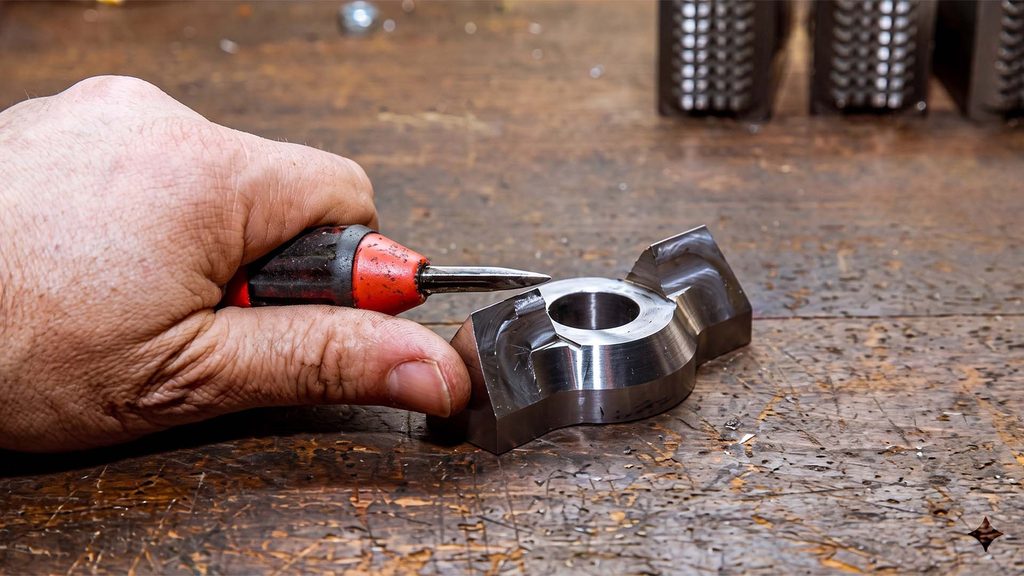
When a punch press shears metal, it can leave a sharp, jagged projection on the bottom edge called a burr. Customer drawings, purchase orders, and edge-finish specifications often require sharp edges to be removed or visible burrs to be controlled before a part is accepted.
Someone has to grind or deburr those edges. The average shop charges about $45 to $60 an hour for manual deburring. If it takes just one minute to deburr each part, a 1,000-part run adds more than 16 hours of labor, creating hidden costs simply to smooth the edges.
Cleaning Laser Oxide Layers Before Powder Coating
If your shop cuts steel using oxygen as the assist gas, the heat creates a dark, flaky oxide layer on the edge. You should not paint directly over this layer, as your paint is highly likely to peel off with it. Workers must chemically clean or grind the laser-cut edges before painting, which adds labor time to your final bill.
Laser Cutting vs CNC Punching Cost Comparison
Choosing the right machine comes down to balancing your upfront fees against your long-term savings.
Upfront Tooling Costs
Laser cutting requires no custom tooling costs; you simply process a digital file.
Before a punch press can make your part, you have to buy the physical tools. Depending on your supplier, a standard round punch tool generally ranges from $200 to $300. However, if you need a custom-shaped forming tool such as a 3-inch louver, this can easily require an investment of $1,500 to $2,500 or more, depending on complexity.
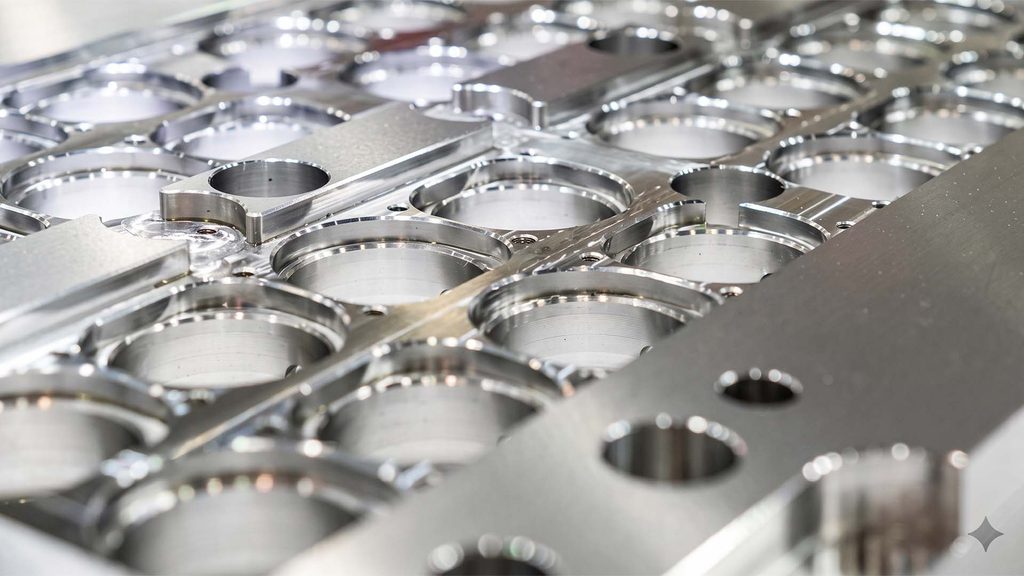
Furthermore, if your engineering team decides to change a custom cutout’s dimensions by just 2 millimeters next year, that specific expensive punch tool becomes obsolete. With a laser, that same design change simply requires a CAD update and incurs no additional tooling costs.
Which Process Is Greener for Power Bills and Scrap Metal?
Energy costs and material costs affect your bottom line directly. However, the real environmental and operating-cost comparison depends on the specific machine model, material, sheet thickness, cutting parameters, nesting layout, and local utility and gas prices.
The Utility Bill
A 6kW fiber laser does not necessarily draw 6 kW from the electrical supply. For example, TRUMPF lists an average production power input of 11 kW for a 6 kW fiber laser on its TruLaser Series 5000 machines. Actual electricity use can vary with the machine configuration, automation, chiller, material, thickness, and cutting duty cycle.
Laser cutting may also require nitrogen or oxygen as an assist gas. The gas cost should be quoted separately because it depends on gas type, pressure, nozzle size, material, cutting parameters, local supply contracts, and on-site gas-generation capability.
By comparison, some modern CNC punch presses list average power consumption of approximately 5.5 to 6.7 kW, depending on the model and configuration. Punching does not require laser cutting assist gas, although it may still require compressed air, lubrication, tooling maintenance, and downstream deburring.
Material Waste
Laser cutting can improve material utilization when close nesting is practical, particularly for complex profiles and mixed-part nests. However, the actual yield depends on part geometry, required part spacing, common-cut opportunities, microjoints or tabs, clamp zones, edge-quality requirements, and the nesting software used.
Punch presses also require a production-safe nesting strategy. Depending on the part design and unloading method, the program may need to retain material bridges, manage clamp areas, or leave sufficient web material to keep parts stable during punching. As a result, neither process automatically guarantees lower scrap; the best choice should be based on a nesting comparison using your actual part geometry and sheet size.
Why Not Both? The Hybrid Approach
Some of the smartest manufacturers use both machines on the same part.
You put the sheet metal in the punch press first to knock out all the standard, repetitive holes. Then, you move that same sheet to the laser cutter to cut the complex outer edges. You get the speed of the punch press and the high precision of the laser.
- The ShincoFab Server Rack Case Study: A telecommunications client needed a server rack door with 200 ventilation holes and a curved outer edge. Using only a laser took 4 minutes per door. Relying solely on a punch press would have required an estimated $2,000 upfront investment for a custom-shaped tool to handle the curve. By using the hybrid approach (punching the 200 holes, then laser-cutting the curve), we cut the cycle time down to just 1 minute and 15 seconds. This approach saved the client roughly 68% in machine time and completely eliminated the need for custom tooling costs.
The Final Verdict on When to Choose Which
Start with Laser for Prototypes, Volatile Demand, and Complex Designs
You should consider laser cutting in any of the following scenarios.
- You are building prototypes and testing new ideas.
- Your customer demand is volatile and you only need small batches.
- Your part has complex curves, sharp inside corners, or thick metal.
Scale to Punching for Finalized Designs and High Volumes
Move your production to a CNC punch press under the following conditions.
- Your design is fully finalized and unlikely to change.
- You are ordering 5,000 or more parts at a time.
- You calculate that the machine speed will pay off your tooling costs within a reasonable timeframe (e.g., 6 months).
Frequently Asked Questions
Can laser cutting do 3D forms?
Laser cutting cannot create 3D forms because it is strictly a flat 2D thermal cutting process. It does not dent, bend, or form the metal. If your part needs 3D features like louvers, dimples, or countersinks, you must use a CNC punch press or secondary forming equipment.
Which process offers better dimensional accuracy?
Laser cutting generally offers superior dimensional accuracy. Modern fiber lasers can consistently hold geometric tolerances of ±0.005 inches, leaving an exceptionally smooth edge. CNC punching typically holds tolerances around ±0.010 inches and may leave slight tooling marks along the cut edges.
Which process wastes less material?
Laser cutting typically wastes less material than CNC punching. Because the laser beam is microscopic, the machine can pack parts very close together on the metal sheet (nesting). A punch press needs wider physical space between parts so the metal web does not tear when the tool strikes it.
Conclusion
Choosing between laser cutting and CNC punching is not about finding a universally superior machine. It is about matching the right tool to your current production stage.
It is generally best to start with laser cutting. It keeps your designs flexible and your upfront custom tooling costs low while you test the market. Once your design is locked and your orders hit the thousands, switch to a punch press. The high-speed processing can easily offset the custom tools. And if your part has both simple holes and complex curves, ask your manufacturer to explore the hybrid approach.
You now have the knowledge to look at a manufacturing quote and understand exactly how your money is being spent. Use this strategy to protect your budget, anticipate hidden labor costs, and get your parts made efficiently.