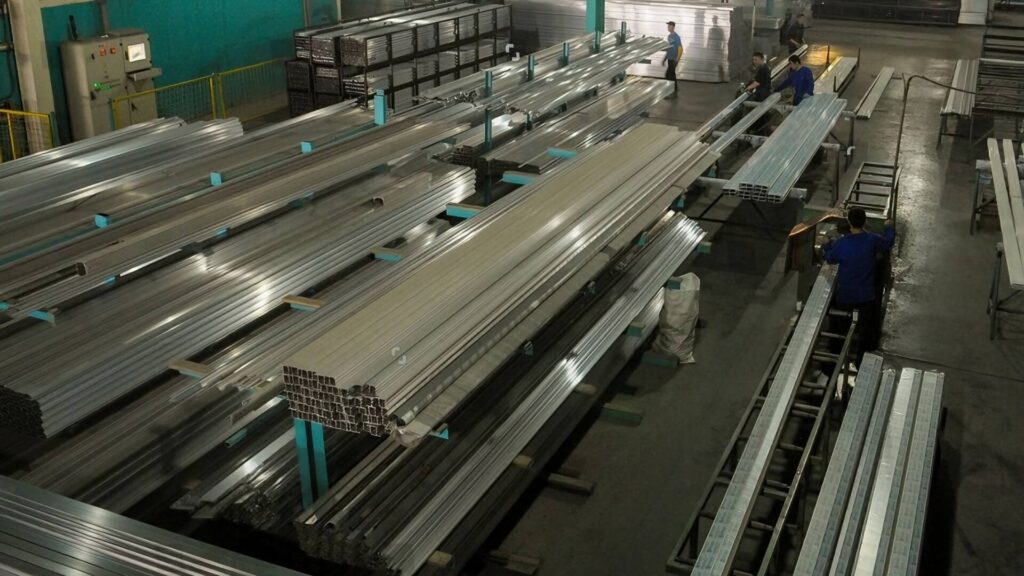
Running the floor at ShincoFab, I’ve overseen the fabrication and logistics of thousands of custom sheet metal orders. Freight bills consume profit margins when shipping 11-gauge steel enclosures. Every extra pound and wasted inch of truck space costs money.
In this guide, I will share the exact strategies we use at our sheet metal facility to reduce shipping costs for our clients. Rather than offering generic advice about constantly switching carriers, you will get a step-by-step strategy based on actual factory-floor experience. You will learn how to shrink costs during the CAD design stage, pack smarter to beat dimensional weight charges, and optimize your freight class. Let’s look at how to fix your shipping strategy today.
Why Are Metal Parts So Expensive to Ship?
Shipping fabricated metal is a massive headache. We deal with heavy, awkwardly shaped items every day. To fix the problem, we first need to look at why your freight bills are so high.
How Do Weight and Size Impact Freight Rates?
Carriers charge based on how much your parts weigh and how much space they take up. Custom sheet metal usually fails on both fronts:
- Heavy and dense: If we ship stacks of flat 1/4-inch steel plates, we can hit the federal Interstate truck weight limit long before the trailer is physically full. A standard 4×8 ft sheet of 1/4-inch steel weighs about 327 lb; stacking 140+ sheets can exceed 45,000 lb before the trailer is full.
- Awkward and bulky: If we ship pre-welded, odd-shaped hoppers or frames, you end up paying premium freight rates for unutilized void space.
Carriers want neat, easy-to-stack boxes. Awkward metal parts are the exact opposite.
What Hidden Fees Increase Shipping Costs?
Base shipping rates often account for around 70% of total freight costs, with the rest coming from hidden fees like fuel surcharges, liftgate fees, and overweight penalties. Freight invoices include hidden fees like fuel surcharges, liftgate fees, and overweight penalties. You cannot change global gas prices, but you can change how your parts are engineered and packed.
How Can CAD Design Reduce Manufacturing Shipping Costs?
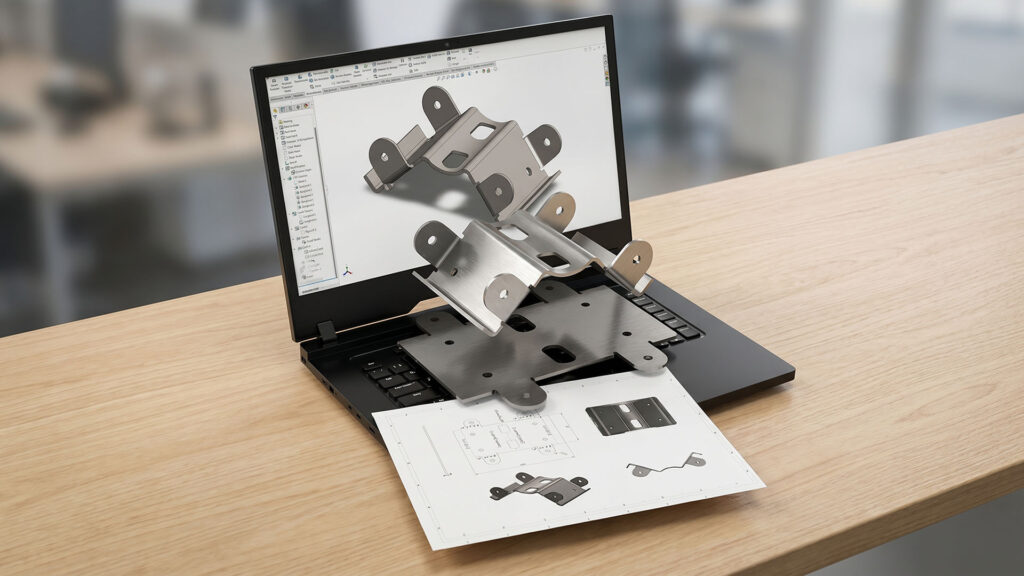
The cheapest way to ship a part is to make it easier to move from the day we program the laser cutter. Don’t wait until the product is boxed. Fix the product first.
How Can You Reduce the Weight of Sheet Metal Parts?
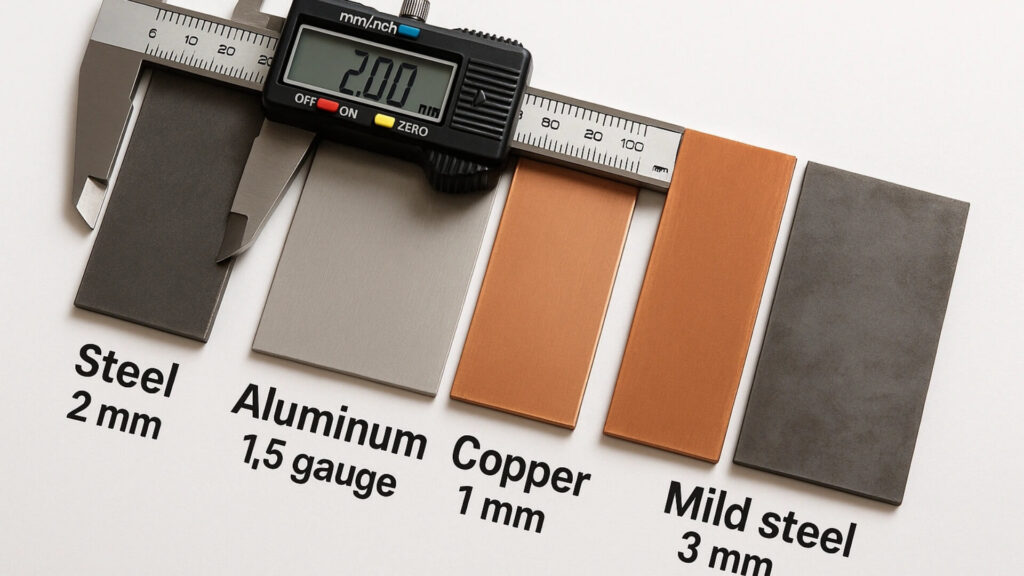
Every extra ounce costs you money. When our engineers review client blueprints at ShincoFab, we always look for weight savings. Do you really need that thick 10-gauge steel? Sometimes, we advise clients to swap it for a lighter 14-gauge with added structural bends for rigidity, or switch to aluminum if the application allows.
- Cut out extra metal where it isn’t needed for strength.
- Add lightening holes in non-load-bearing areas during the CNC punching phase.
Why Should You Design Metal Parts for Flat-Pack Assembly?
Avoid having us weld parts together at the factory if you can help it. A pre-welded sheet metal enclosure is mostly empty air.
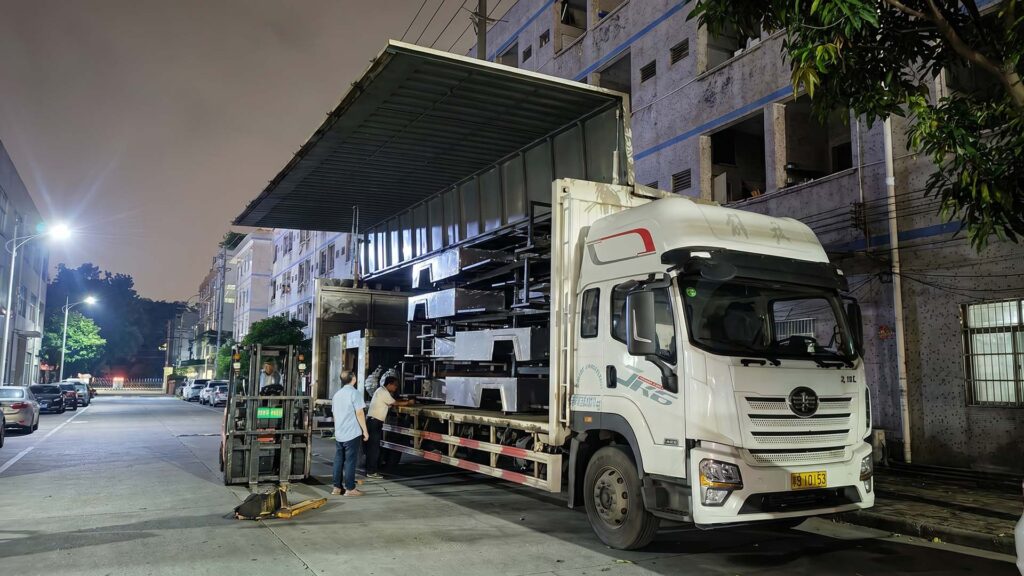
Our Factory Experience: Last year, a client asked us to manufacture and ship fully welded HVAC enclosures. Instead, our engineering team redesigned the enclosures using a tab-and-slot design. By shipping flat, laser-cut panels that the client could easily rivet together on-site, we fit 36 units instead of 12 onto a single truck.This simple change cut their total shipping costs by roughly 40% in practice.
Does Shipping Unpainted Metal Save Money on Freight?
Powder-coated metal scratches easily. To protect finished parts, we have to wrap them in thick layers of foam, which makes the boxes huge.
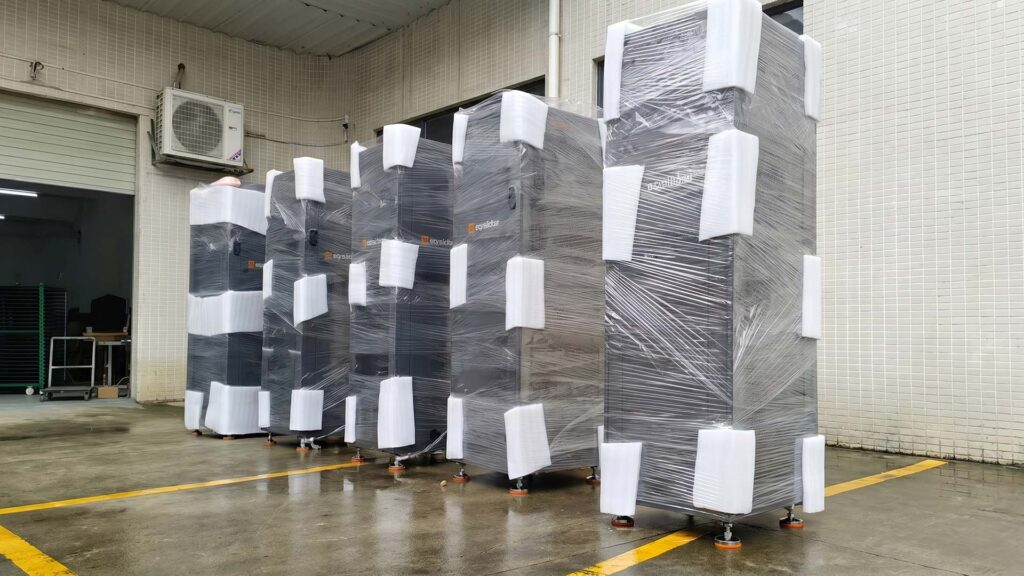
Here is a smarter way we often recommend: have us ship your parts “raw” or simply deburred. Unpainted metal doesn’t need nearly as much padding. We can stack bare parts tightly together on a single pallet. Once they arrive, hire a local shop to powder-coat them. You shrink your shipping footprint instantly.
What Are the Best Ways to Pack Sheet Metal for Shipping?
Your parts are now engineered to be lighter and flatter. Next, we need to fix how they are packed.
How Does Dimensional (DIM) Weight Affect Metal Shipping Costs?
If you put a small, dense bracket into a large box full of packing peanuts, carriers charge you for the size of the box (DIM weight). Carriers calculate dimensional weight by multiplying length by width by height (L x W x H) and dividing by a carrier DIM divisor. For FedEx U.S., Puerto Rico, and international shipments, the standard divisor is 139. At ShincoFab, we custom-fit our corrugated packaging to wrap tightly around the specific geometry of the sheet metal. Right-sizing boxes drops DIM weight instantly.
How Should You Pack Heavy Metal Parts for Shipping?
Heavy sheet metal parts, especially those with sharp laser-cut edges, can easily slice through boxes or scratch each other while bouncing down the highway. But you don’t need thick foam.
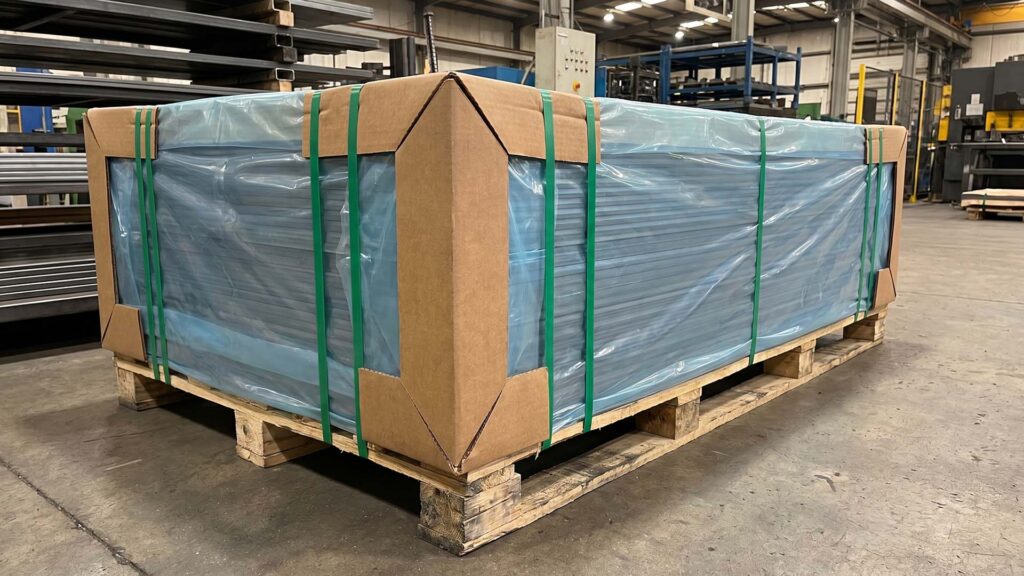
To protect heavy metal parts during shipping without adding bulk, use specific industrial packing materials. The best materials for packing sheet metal include VCI bags and heavy-duty cardboard edge protectors:
- VCI: For cold-rolled steel (CRS) parts, we slip them into Volatile Corrosion Inhibitor (VCI) bags. They stop rust completely without adding bulk. (We don’t need this for aluminum or stainless).
- Edge Protectors: We use heavy-duty cardboard edge protectors rather than bubble wrap. They hold heavy items firmly in place so they don’t crash into each other.
Are Returnable Steel Racks Cheaper Than Wooden Crates?
If we are shipping parts on a regular loop to your assembly line, stop paying us to build custom wooden crates. Wood breaks and is a massive waste of money. Instead, invest in custom, returnable steel racks. We can fabricate these for you. They let us stack parts perfectly and slide neatly into a truck.
How Can You Optimize Your Freight and Logistics Strategy?
What is the Best NMFC Freight Class for Sheet Metal?
NMFC (National Motor Freight Classification) is a standardization system managed by the National Motor Freight Traffic Association that groups commodities into 18 freight classes from Class 50 to Class 500, based on density, handling, stowability, and liability.
If you ship less-than-truckload (LTL), your price depends on your NMFC code, which is heavily based on density. For example, if we ship an empty, fully welded server rack, it takes up space without adding much weight. Carriers often assign this a high freight class (e.g., Class 250 for low-density, fully welded racks), which is expensive. By packing flat panels tighter and increasing the weight per cubic foot, we can drop the shipment into a lower freight class (e.g., Class 60), depending on the actual density.
How Does Consolidating Shipments Lower Freight Costs?
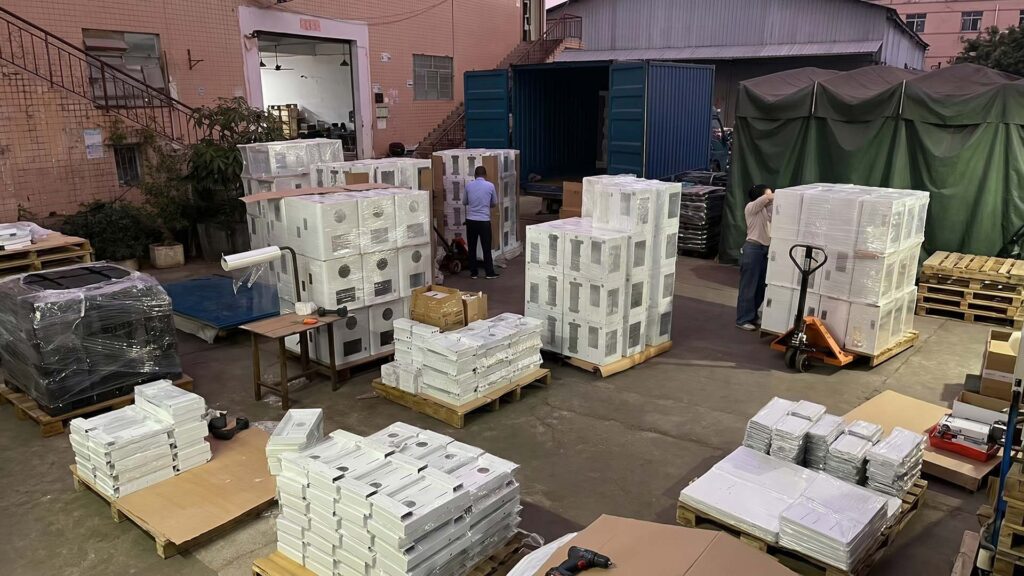
Whenever possible, we advise clients to hold their orders for a few days. Combine those small, frequent loads into one Full Truckload (FTL).
Today, LTL rates for heavy steel parts might average around $200 per pallet on a regional 500-mile lane. A dedicated FTL truck for that same distance might cost around $1,500 total. If we consolidate 15 pallets onto that single FTL, your cost drops to about $100 per pallet.
How Do 3PLs, Freight Brokers, and BOLs Impact Pricing?
Managing freight classes and consolidating shipments is complex. Instead of booking directly with carriers, many manufacturers partner with 3PLs (Third-Party Logistics) providers or Freight Brokers. These partners leverage bulk volume to negotiate lower rates for heavy metal shipments. Additionally, always ensure your Bill of Lading (BOL) accurately lists the exact weight, dimensions, and optimized NMFC class. An accurate BOL prevents carriers from re-classifying your shipment and hitting you with unexpected back-charges.
Conclusion
Shipping fabricated sheet metal does not have to drain your profits. By making a few smart changes, you will protect your margins.
Remember, the biggest savings happen before a piece of metal ever reaches our press brakes. You must start at the drawing board. If your CAD designs are optimized to be lighter and pack flatter, your entire supply chain becomes much cheaper.
This is exactly the methodology we apply at ShincoFab. When handling sheet metal fabrication, we do more than just cut and bend metal; we look for early design optimizations that make parts both physically easier and significantly cheaper to ship. Send our engineering team your current blueprints for a manufacturability review, and let’s start reducing your total freight overhead today.