If you are stuck choosing between stainless steel and titanium, you are not alone. As a lead fabrication engineer at ShincoFab, I have spent years working with both of these metals on our sheet metal fabrication floor. I don’t just read about these materials. My team and I cut, bend, and weld them regularly. I know firsthand how they behave under our CNC lasers, how they warp on the welding table, and why they fail in the real world.
In this guide, I will help you make the right choice for your next project. I will not give you a boring chemistry lecture. Instead, you will get the hard facts straight from the ShincoFab shop floor. We will break down the real machining costs, the hidden risks of mixing metals that we’ve seen clients make, and when the high price of titanium is actually worth it.
By the end of this article, you will have a clear framework for which metal best suits your project so you can stop researching and start building.
Why Are We Comparing These Two Metals?
The short answer
The main difference between stainless steel and titanium is that titanium offers a superior strength-to-weight ratio and exceptional corrosion resistance at a premium price, while stainless steel is heavier but significantly more cost-effective and easier to machine.
The table below provides a quick comparison of how 304 Stainless Steel and Grade 5 Titanium stack up across key fabrication metrics.
| Metric | 304 Stainless Steel | Grade 5 Titanium |
|---|---|---|
| Cost per Pound | $1.50 – $2.50 | $15.00 – $25.00 |
| Density (oz/in³) | 4.62 | 2.56 |
| Salt-Spray Resistance | ~1,000 hours | 3,000+ hours |
| Machinability | Standard (Baseline) | High Friction (150-200% slower) |
The problem
Titanium is incredibly light, but it comes with a massive price tag and is notoriously difficult to machine. Stainless steel is cheap and easy for us to fabricate, but it is significantly heavier. If you pick the wrong one, you either blow your manufacturing budget or end up with a part that is too heavy to use efficiently.
Our Stance (The Bottom Line)
Let me save you some time based on what we see leaving the ShincoFab loading docks every week. Stainless steel is the default choice for 90% of the projects we manufacture.
You should primarily pay the titanium premium if your project demands these two specific conditions.
- Extreme weight reduction.
- Maximum durability in saltwater.
If your project stays on the ground and out of the ocean, keep your cash and let us build it out of stainless steel.
The Basics of Both Metals
Stainless Steel as the Heavy-Duty Workhorse
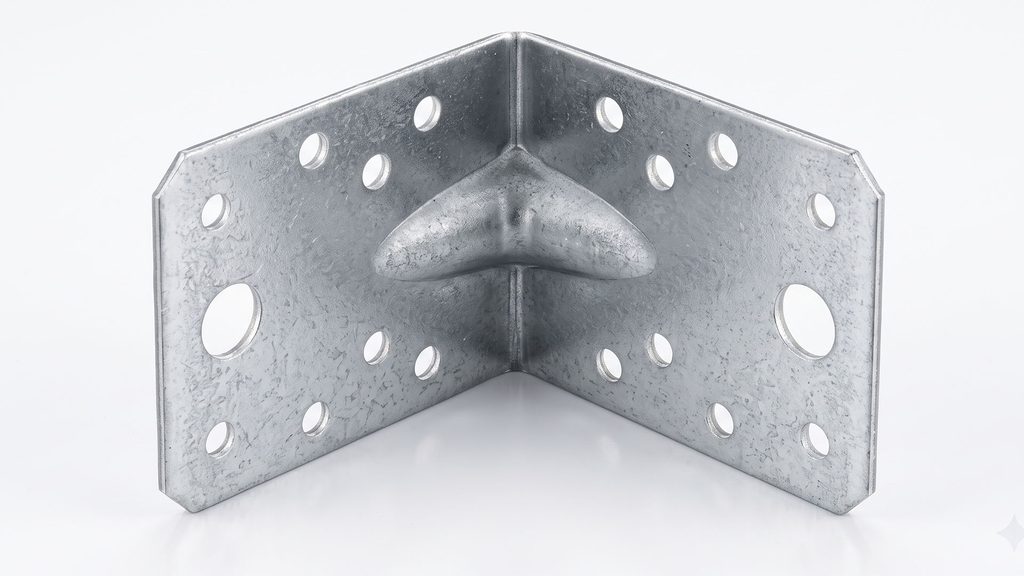
Stainless steel is an alloy, starting with iron and carbon, but adding chromium is what gives it its famous rust-resistant shield.
At ShincoFab, we prefer stainless steel because it is predictable, cost-effective, and very easy to weld in our standard bays. When clients send us RFQs (Requests for Quote), we typically recommend the following two main options.
- 304 Stainless: The go-to choice for general enclosures, chassis, and brackets.
- 316 Stainless: The upgrade we specify for food-grade or marine-adjacent projects for extra rust protection.
While metal prices regularly fluctuate based on market conditions, our purchasing team typically secures bulk 304 stainless steel sheet for roughly $1.50 to $2.50 per pound. Although these figures vary depending on your order volume, this provides a realistic historical baseline for your initial project estimates.
Titanium as the Lightweight Champion
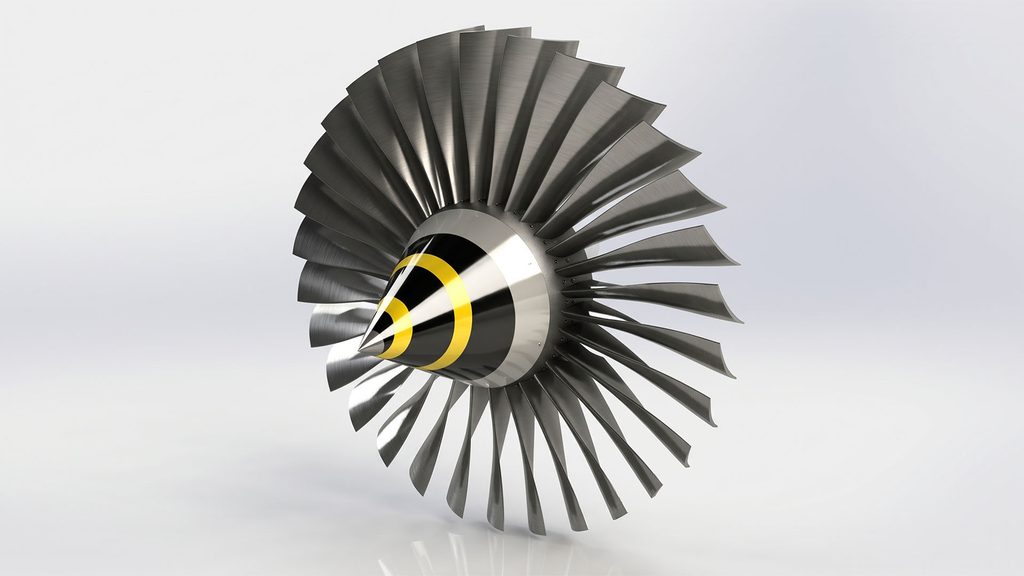
Titanium is a naturally occurring chemical element extracted from mineral ores. Its biggest benefits are its high strength-to-weight ratio, corrosion resistance, and biocompatibility, which is why titanium is widely used in aerospace components, subsea equipment, and surgical implants such as joint replacements.
When we source titanium for specialty aerospace or subsea clients, we usually work with the following two grades:
- Grade 2: The primary choice for general-purpose applications, corrosion-resistant equipment, and basic sheet metal forming.
- Grade 5 (Ti-6Al-4V): The heavy hitter needed for maximum structural strength in demanding aerospace and high-performance applications.
That performance comes at a steep premium. Depending on global supply-chain conditions and strict material-certification requirements, Grade 5 titanium generally ranges from $15.00 to $25.00 per pound from our aerospace suppliers.
Supply Chain Reality (A Factory Perspective)
Price is not the only hurdle. If a client needs a quick prototype replacement tomorrow, we have racks of stainless steel sitting in the ShincoFab inventory right now. We can load it onto the laser cutter today.
Titanium is a different story. We often have to place special orders with certified mills and wait weeks for both the material and its necessary aerospace certifications (Material Test Reports) to arrive.
How Do They Actually Compare Head-to-Head?
Is Stainless Steel or Titanium Stronger and Lighter?
Both metals are highly strong, but titanium delivers that strength without the heavy bulk. To picture this, think about a 1-inch solid block. A 1-inch cube of 304 stainless steel weighs 4.62 ounces. The exact same cube in titanium weighs only 2.56 ounces.
That is nearly half the weight. It is a huge engineering difference if we are fabricating a drone chassis or custom race car components for you.
Which Metal Is More Corrosion Resistant?
Both metals fight off rust very well, but they handle harsh environments differently.
Stainless steel does an excellent job against rain and normal weather. Titanium is remarkably resilient in saltwater and many chloride-containing environments. In a standard ASTM B117 salt-spray test environment, corrosion performance can vary significantly depending on the specific alloy grade, surface finish, coating, fabrication quality, and test requirements.
For chloride-rich, marine, and subsea applications, titanium generally provides substantially stronger corrosion resistance than Grade 304 stainless steel. Grade 304 may develop localized pitting in severe chloride exposure, while titanium is widely selected for demanding seawater and chemical-processing applications because of its stable protective oxide layer.
Can You Use Stainless Steel Bolts on Titanium?
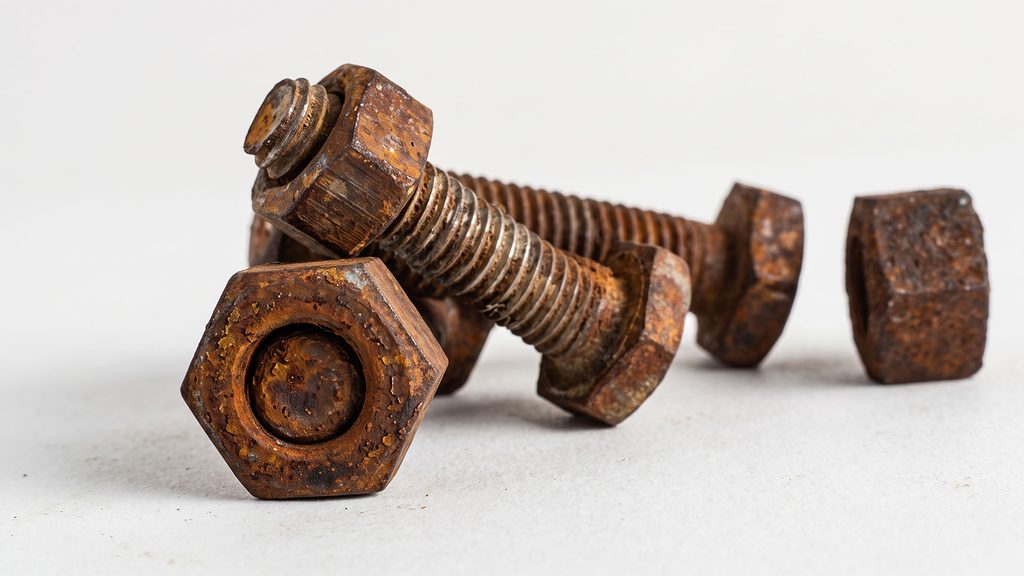
We strongly advise our clients against direct stainless steel-to-titanium contact in wet, salty environments.
We once had a client who ignored our engineering advice and bolted a custom titanium marine housing with stainless hardware. When mixed in a wet, salty environment, the dissimilar metals can create an electrochemical reaction. This is a destructive process known as galvanic corrosion (or bimetallic corrosion). Six months later, the stainless hardware had corroded and seized into a single block. Stick to one material ecosystem whenever possible.
How Do They Fail in the Field?
No metal is flawless. When things go wrong, they fail in very different ways:
- Titanium: Its biggest weakness is a phenomenon known as galling. On the shop floor, if we aren’t careful with titanium threads rubbing together, they generate severe friction, lock up, and strip out.
- Stainless Steel: Its biggest enemy is hidden pitting. In harsh marine environments, tiny holes can eat through the metal from the inside out, weakening the structure silently.
Which Metal Has Better Thermal Properties for Extreme Heat?
Both metals can withstand incredibly high temperatures, but they manage thermal expansion and conductivity differently. Stainless steel has a higher rate of thermal expansion, meaning it swells more when heated. However, it effectively manages the high, continuous heat of standard automotive exhausts. Titanium has lower thermal conductivity and retains its structural integrity at much higher temperature extremes with minimal expansion. This is why aerospace engineers specify titanium for jet engine exhausts and spacecraft shielding.
Which Metal Offers Better Finishes, Colors, and Scratch Resistance?
In the ShincoFab finishing department, stainless steel takes a mirror polish beautifully. It looks incredibly sleek for architectural panels, but it is highly prone to showing fingerprints.
Titanium scratches a little easier on the surface. But it has a hidden superpower: anodizing. We can use electrical currents to turn the titanium into bright, permanent colors without requiring any paint.
Working with the Metals (The Real Cost of Manufacturing)
Cutting and Shaping
Stainless steel plays nice with most of our standard shop tools. Our Amada fiber lasers and CNC press brakes can cut and fold it all day without much fuss.
Titanium is highly abrasive and rapidly degrades cutting tools. Because it is so tough, it generates a massive amount of heat when you cut it. We’ve tracked the data in our CNC machining center: it takes our machinists 150% to 200% longer to CNC machine a titanium part compared to stainless steel. It also wears down our solid carbide drill bits 3 to 4 times faster.
Welding
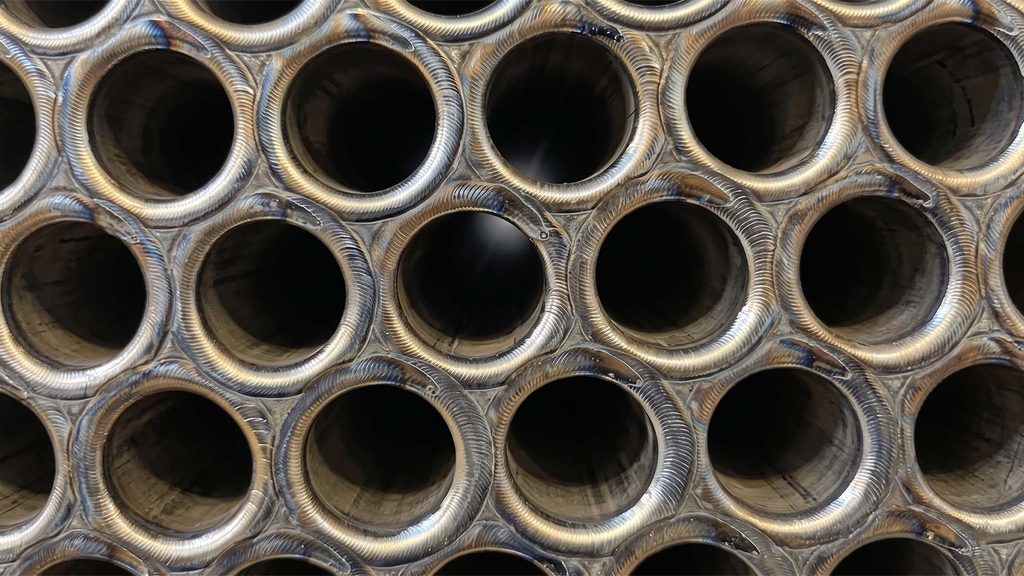
Welding stainless steel requires standard TIG or MIG processes. Our certified welders can execute these welds in our open shop bays with high consistency.
Welding titanium is a high-stress job. Titanium reacts with oxygen, nitrogen, and hydrogen at high temperatures, causing severe embrittlement. To prevent this contamination and adhere to the AWS D1.9/D1.9M Structural Welding Code—Titanium, fabricators must shield the weld zone and surrounding hot metal with argon gas. At ShincoFab, our welding team achieves this by using dedicated welding chambers or specialized shielding gear to flood the area with this expensive gas.
Can You Weld Titanium to Stainless Steel?
The short answer is no; you cannot directly fusion weld titanium to stainless steel. If you try to TIG or MIG weld them together, the two metals will mix and form a highly brittle intermetallic compound. The weld will crack and fail rapidly as it cools. If your design requires joining these two specific metals, you must use mechanical fasteners (like bolts or rivets), or rely on highly specialized processes like explosion bonding.
The Hidden Costs of Choosing Titanium
People often look at the price tag of raw titanium and stop there. But the real shock comes from the hidden costs of making the part. When you choose titanium, you pay for three primary areas of manufacturing friction.
- Special tooling: We have to buy expensive, high-performance cutting tools that wear out quickly.
- Higher labor costs: Slower cutting feeds and speeds mean you pay the machinist for more hours.
- Strict environments: You are paying for controlled spaces and expensive argon gases just to weld it safely.
Stainless steel avoids almost all of these extra fees.
Real-World Applications for Both Metals
Industrial & Heavy Duty
Stainless steel is the backbone of the modern world. At ShincoFab, we form it into the following essential components.
- Commercial kitchen hoods and food prep stations.
- Structural brackets and panels in modern architecture.
- Custom car exhausts that need to handle intense heat.
Titanium takes on the extreme jobs. It is used when failure is not an option. Our clients commission titanium for the following critical applications.
- Airplane and jet drone components to save massive amounts of weight.
- Medical devices and trays that require strict biocompatibility.
- Deep-sea marine ROV gear that sits in saltwater all day.
Why Everyday Gear Like Your Watch, Ring, or Knife Uses These Metals
As fabricators, we understand exactly why consumer brands make these specific material choices.
- Titanium watches and rings: It feels amazing on your wrist because of that low density (2.56 oz/in³). You forget you are wearing it. It is also hypoallergenic, so it rarely causes allergic skin reactions.
- Stainless steel pocket knives: You want a steel blade, not a titanium one. Stainless steel is a harder metal. That means it holds a sharp edge for much longer.
The Final Verdict on Choosing the Right Metal
The Titanium Premium ROI
When does saving a few ounces justify a 5x to 10x price jump? I use a very simple rule when consulting with ShincoFab clients.
If your project goes up in the air or inside a human body, titanium often justifies the investment. The weight savings and safety are worth the premium. If your project stays on the ground, let us build it out of stainless steel. It will do the job effectively for a fraction of the cost.
When to Choose Stainless Steel
We highly recommend sticking with stainless steel under the following conditions.
- You are working with a strict manufacturing budget.
- You need heavy-duty strength and do not care about the extra mass.
- You need us to easily weld or machine the parts with quick turnaround times.
When to Choose Titanium
We advise upgrading to titanium under these specific conditions.
- Shedding weight is critical to your project’s success.
- The part will live in extreme environments, like deep boiling saltwater.
- You need a body-safe, hypoallergenic material.
Conclusion
Choosing between stainless steel and titanium does not have to be a headache. Now you know the real material costs, the hidden manufacturing friction, and how they actually perform under industrial machines.
Remember my simple rule. Stick with stainless steel for your everyday, heavy-duty projects. It will save you time, money, and a lot of frustration in the shop. But if your part needs to fly, swim in the ocean, or go inside a human body, do not hesitate to pay the titanium premium.
When you have the facts and your CAD files ready, reach out to the team at ShincoFab. We are ready to start building.