Relying on a single factory across the ocean is no longer a strategy. It is a massive risk.
At ShincoFab, we have spent years helping companies fix broken supply chains and move their metal fabrication closer to home. On our factory floors, we have seen firsthand what works and what fails when moving production across borders.
In this guide, our engineering and logistics teams will show you a proven path to nearshore your precision sheet metal parts without shutting down your assembly line. You will learn how to beat U.S. Section 301 tariffs of 25% or more on many Chinese imports, choose the right strategy between Mexico and China, and avoid the hidden traps of the USMCA that we see buyers fall into routinely. Finally, we will give you ShincoFab’s proven step-by-step 90-day transition plan to move your tooling safely.
Stop chasing the cheapest unit price and start buying supply chain agility.
Why is Precision Sheet Metal Nearshoring Booming Right Now?
Historically, buyers accepted Asian manufacturing quotes based solely on rock-bottom unit prices. Those days are over. Today, smart buyers prioritize geographic proximity.
What Are the Hidden Costs of Offshoring Sheet Metal?
A cheap unit price is a trap. Instead, you must calculate the final bill.
How Fast Can You Get Parts When Nearshoring?
Waiting five weeks for a cargo ship puts your assembly line at massive risk. Fortunately, nearshoring mitigates this risk.
Shipping data from the Freightos Baltic Index (FBX) for Q3 2024 shows a 40ft container from Shenzhen to Los Angeles took 35 days and cost roughly $6,000. We recently helped a ShincoFab telecom client switch to a nearshore model; their dedicated freight truck from Monterrey to Dallas now typically takes just 2 days and costs approximately $2,500.
Consequently, you get your parts in days. Moreover, if a production problem occurs, you can fix it the same week.
How Does Total Cost of Ownership (TCO) Compare to Unit Price?
Stop evaluating just the factory price. Instead, you must measure the Total Cost of Ownership (TCO).
When your supply chain is 5,000 miles long, you are forced to buy months of safety stock, which ultimately ties up your capital. In contrast, nearshoring lets you run lean. As a result, having less inventory sitting in a warehouse means more working capital available for your business.
At What Volume Does Nearshoring Make Sense?
Nearshoring provides significant ROI for mid-market buyers, not just enterprise corporations.
While every supply chain is unique, if your annual spend on sheet metal parts exceeds the $500,000 threshold, the financial math frequently flips in your favor. At that volume, the savings on tariffs, freight, and inventory typically outweigh the slightly higher labor costs in Mexico.
How Does Nearshoring Protect Your Intellectual Property (IP)?
Handing your proprietary CAD files to an overseas factory introduces severe risk, as IP theft remains a massive vulnerability for OEMs.
Therefore, moving production to North America establishes much stronger legal protection. At ShincoFab, we process all client proprietary CAD files on secure, localized servers. Our clients sleep better knowing their custom designs are safe within a regulated legal framework.
How Can Nearshoring Help Hit Your Sustainability (ESG) Goals?
Your company likely faces strict carbon reduction targets this year.
Ocean freighters burn massive amounts of dirty fuel. By moving production to North America, you largely eliminate that ocean voyage. Consequently, this transition provides an immediate win for your corporate sustainability goals.
Mexico vs. China: How Do You Choose the Right Nearshoring Strategy?
You do not have to pick just one country. In fact, the smartest buyers avoid treating global manufacturing as a zero-sum game. Instead, they leverage both regions to their advantage.
In What Manufacturing Scenarios Does China Still Win?
China remains a global manufacturing powerhouse.
If you need ultra-high volume production, Asia is hard to beat. Additionally, Chinese factories maintain a massive head start on complex tooling and deep supplier networks. Consequently, for parts exempt from tariffs, China often remains your cheapest option.
Why Does Mexico Win for the US Market?
However, for most other components, Mexico is taking over. The primary advantage driving this shift is proximity.
Because you share the same time zone, your engineers can take a short flight, walk the factory floor, and solve a problem before lunch. It is highly difficult to execute that level of oversight when your factory is across the Pacific.
Consider this illustrative landed cost breakdown for a typical standard aluminum server chassis:
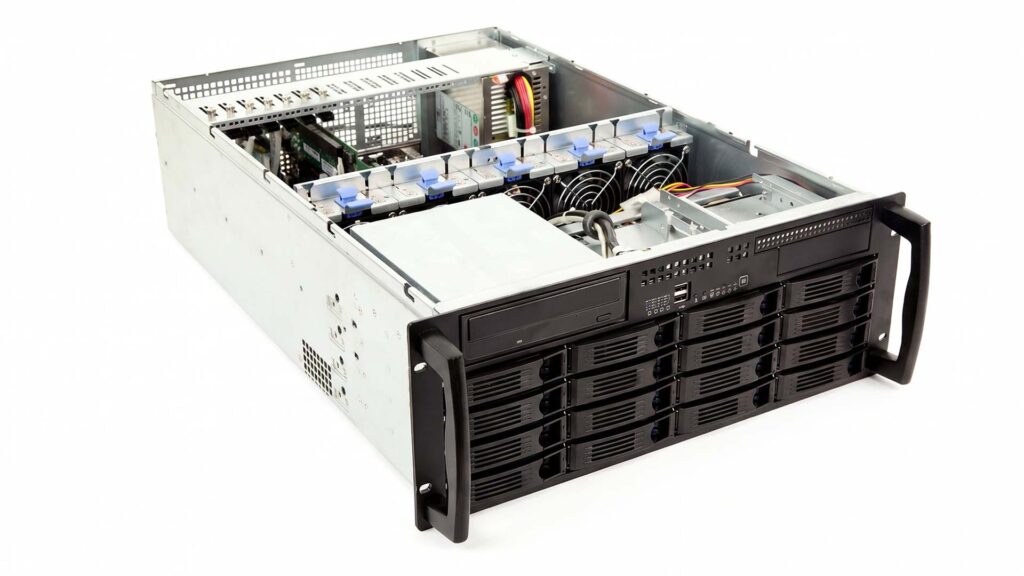
- China: Unit Price ($40) + Ocean Freight ($4) + 25% Tariff ($10) + Inventory Holding Cost ($3) = $57 Total Landed Cost.
- Mexico: Unit Price ($45) + Truck Freight ($1) + 0% Tariff ($0) + Inventory Holding Cost ($1) = $47 Total Landed Cost.
Ultimately, in this specific example, even though the base factory price is higher in Mexico, the buyer saves $10 per part overall. While actual savings will vary by project, the underlying financial logic remains consistent.
What is the China Plus One Strategy
The China Plus One strategy is a global supply chain model where companies maintain primary high-volume production in China while diversifying tariff-heavy, time-sensitive manufacturing to a secondary country like Mexico.
By implementing this split, you keep your complex tooling where the unit economics make sense, while simultaneously gaining the agility of North American delivery without risking your broader supply chain.
What Happens When Manufacturing Rework is Needed?
Mistakes happen in manufacturing. The critical metric is your speed of recovery.
If a bad batch of parts arrives from China, you face an immediate crisis. Not only do you have to ship them back, but you also must wait weeks for rework and negotiate over who pays the bill. Consequently, your assembly line stops.
At ShincoFab, we’ve seen the alternative firsthand. Conversely, if a nearshore supplier makes a mistake, they send a team across the border the next day. In our operations, if a tolerance issue arises, our engineers can fix the parts on-site or rush a new batch on a truck within 48 hours. You stay up and running.
What Are the Top Nearshoring Hubs for Metal Fabrication?
You cannot just drop a pin on a map and expect to find a reliable factory. Manufacturing clusters matter.
When evaluating a partner, you must target regions that already possess the engineering talent, raw materials, and logistics infrastructure you need.
Which Manufacturing Clusters in Mexico Are Best?
Mexico features distinct, highly specialized manufacturing clusters built for different industry requirements. The top nearshoring hubs include:
- Monterrey: If you need heavy manufacturing or large steel enclosures, look here. It sits right below Texas and has massive industrial capacity.
- Querétaro: If you need tight tolerances, head here. This region is the heart of precision sheet metal and aerospace manufacturing.
You do not have to build a supply chain from scratch in these cities.
- Capacity data shows Querétaro currently houses over 300 AS9100-certified aerospace suppliers. This gives you instant access to a workforce that inherently understands strict quality standards.
When Should You Consider Canada and Friend-Shoring?
Mexico is not your only option. Canada provides a fantastic alternative for highly regulated industries.
If you build medical devices or high-tech defense products, Canada offers strict IP laws and top-tier engineering. Although the labor costs are higher, the safety and quality are unmatched.
You can also implement friend-shoring to other allied nations. Moving production to friendly countries reduces your geopolitical risk and keeps your supply chain safe from sudden trade wars.
How Can You Beat Import Tariffs with the USMCA?
Nearshoring to Mexico or Canada allows you to legally avoid massive import penalties.
What is the USMCA?
The United States-Mexico-Canada Agreement (USMCA) is a free trade agreement that replaces NAFTA, establishing updated economic rules that allow qualifying North American goods to cross borders without heavy import taxes. This is your biggest financial weapon.
- Import records show that if you bring custom steel enclosures under HTS heading 7326.90 from China, they may be subject to a 25% Section 301 additional duty, depending on the applicable HTSUS subheading and any exclusions. Under the USMCA, qualifying Mexico-origin goods may be eligible for duty-free treatment.
What Are the USMCA Rules of Origin?
You do not receive a 0% tariff by default. Instead, your parts must comply with the Rules of Origin.
Rules of Origin are specific trade criteria that determine the legal national source of a product. Under the USMCA, a designated percentage of a part’s value must originate from inside the USMCA zone to qualify for zero-tariff status. Therefore, you cannot just ship a finished part from Asia, put it in a new box in Mexico, and claim it is Mexican.
How Do Raw Materials Affect USMCA Tariff Exemptions?
Unverified raw material sourcing is a critical failure point for buyers. You must verify where your Mexican factory purchases its raw metal.
For example, if your partner imports cheap steel or aluminum from China and just bends it in Mexico, you lose your USMCA benefits because the part will lack the necessary North American value to qualify. Therefore, you must consistently ask your fabricator about their supply chain.
ShincoFab follows a strict material sourcing protocol to guarantee USMCA compliance and protect our clients’ profit margins. Our mandatory steps include:
- Sourcing our raw steel and aluminum primarily from certified North American mills.
- Maintaining rigorous, audit-ready traceability records of where material batches come from.
- Verifying HS codes with a customs broker before starting production.
What Engineering and Quality Standards Do You Need?
You cannot afford sloppy work. When you move production, your new partner must meet or exceed your current quality standards.
What Quality Certifications Should a Nearshore Factory Have?
Nearshore metal fabricators must maintain recognized quality management standards to ensure part consistency and defect prevention. The most critical certifications for nearshoring include:
- ISO 9001: The baseline standard for general quality management.
- AS9100: The strict standard required for aerospace and defense parts.
- IATF 16949: The gold standard for automotive manufacturing.
If a factory holds these certificates, you know they enforce rigorous quality control.
Which Core Manufacturing Processes Should You Review?
When evaluating a nearshore factory, including our ShincoFab facilities, you must verify their investment in modern manufacturing equipment. The essential core processes to review include:
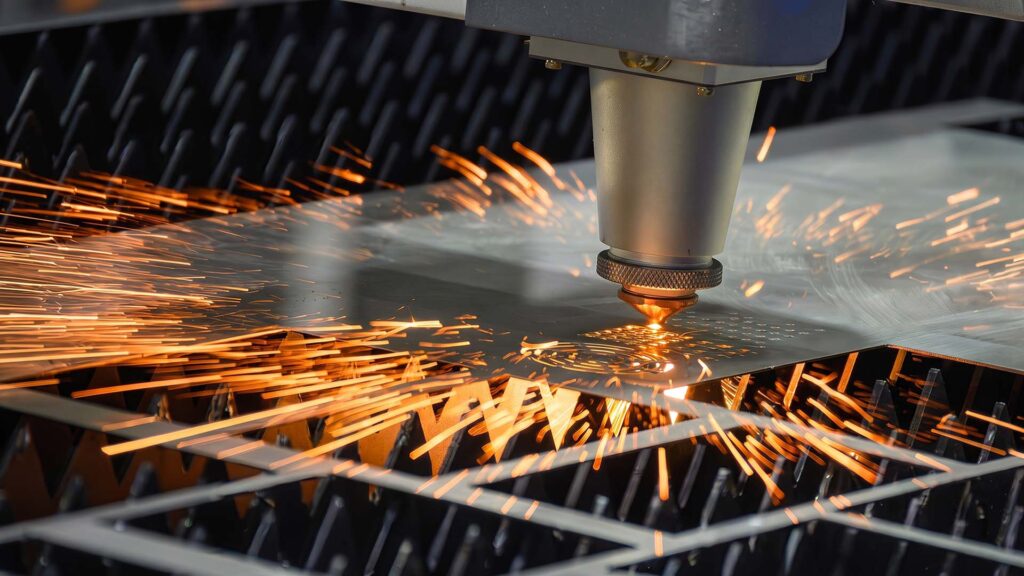
- Cutting: Look for modern fiber lasers. Our shop floor relies on high-wattage fiber lasers because they cut faster and leave cleaner edges than older machines.
- Bending: Ask if their press brakes have multi-axis back-gauges. This ensures your bend angles remain highly accurate across production runs.
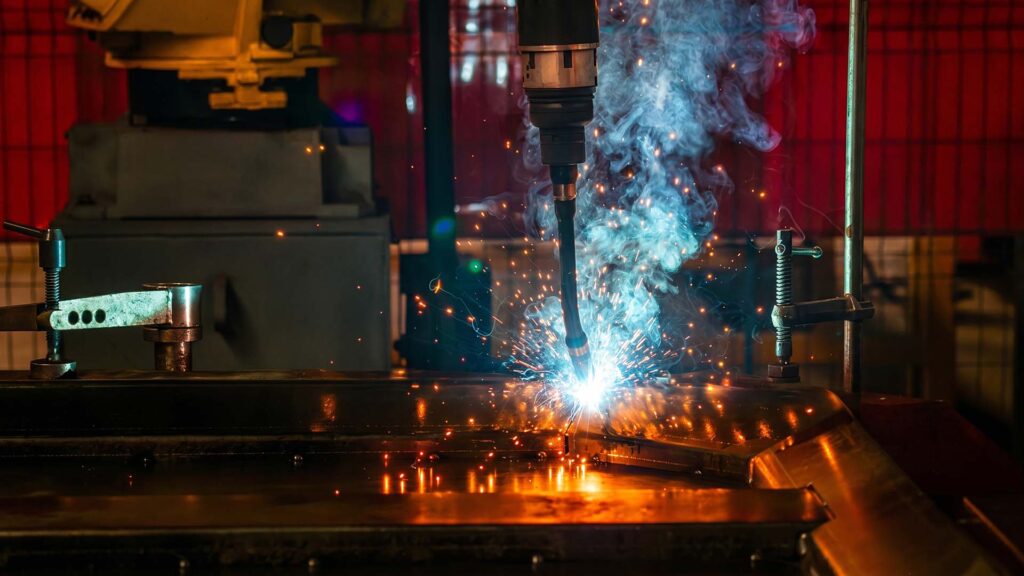
- Welding: Look for robotic welding cells for high-volume jobs. We use automated robotic welding to ensure highly consistent welds from part number 1 to part number 10,000.
Why is Design for Manufacturability (DFM) Important?
Design for Manufacturability (DFM) is an engineering methodology that optimizes CAD designs prior to production to prevent defects, eliminate unnecessary assembly steps, and reduce overall costs.
Before production starts, the ShincoFab engineering team will review your CAD files to improve them. Recently, our engineers suggested moving a hole slightly on a client’s 5G enclosure so the metal would not warp during a bend, which eliminated a secondary welding step.
How Do You Actually Move Your Production in 90 Days?
You found the right partner. Now you must transition your production without breaking your supply chain. Here is the step-by-step 90-day playbook ShincoFab uses to onboard new clients safely.
What Are the Real Switching Costs of Nearshoring?
Transitioning your supply chain requires an upfront investment, but the long-term freight and tariff savings quickly offset these expenses. Accordingly, when budgeting for your move, you must account for these specific switching costs:
- Crating and shipping your heavy tooling and dies from China.
- Engineering time to transfer and update your CAD files.
- Translating technical drawings and quality standards for the new team.
For many companies, the freight and tariff savings can pay for this move within the first few months.
How Much Buffer Stock Should You Build Before Moving?
Avoid shutting down your old factory before securing backup parts.
Buffer stock is a designated reserve of inventory held to prevent production disruptions during supply chain transitions. I recommend holding at least 8 to 12 weeks of extra buffer stock inventory in your warehouse before moving any tooling.
This safety net keeps your assembly line running while your tools sit on a cargo ship.
How Long Does It Take to Move Tooling and Run First-Article Inspections (FAI)?
Once your buffer stock is secure, you must move your tools.
- Timeline averages show it takes 6 to 8 weeks to crate, ship, and clear customs for a progressive stamping die moving from Asia to North America.
However, when the tools arrive, do not start mass production immediately. Instead, run a First-Article Inspection (FAI). At ShincoFab, we strictly enforce FAI protocols. We manufacture a small batch of parts so you can test the quality. Once they pass inspection, you are ready to scale.
How Should You Phase Your Transition to Avoid Downtime?
Moving your entire production simultaneously invites severe operational risk.
Phase your transition. For example, we always advise our clients to move their simplest, highest-volume parts first. Once we prove we can handle those, we transition the complex parts next.
Ultimately, this step-by-step approach protects your business, ensuring your assembly line remains operational and your customers experience no disruptions.
Conclusion
Stop evaluating suppliers based solely on the factory price tag. The cheapest unit price loses its value if your parts sit on a boat for five weeks or incur tariffs that erase your margins.
Fortunately, you do not have to abandon Asia entirely. Instead, the smartest companies execute a hybrid model. Specifically, they keep their complex, high-volume tooling overseas, while moving their time-sensitive, tariff-heavy parts to North America.
This strategy delivers the best of both worlds. You secure lower total costs, faster delivery times, and a supply chain capable of surviving a crisis.
Start small. Select one or two parts that cost you too much in freight and taxes. Build your buffer stock, run a test batch in Mexico, and see the savings for yourself.
Nearshoring puts you back in control of your business. It is time to make the move.