At ShincoFab, we have spent years running the CNC machines, press brakes, and welding stations for overseas clients, and we see the same expensive mistakes happen frequently. First-time buyers often chase the cheapest quote from a trading company, only to get derailed by hidden tooling fees, damaged components, and unexpected customs duties.
In this guide, our engineering team will show you exactly how to import custom sheet metal without risking your budget. We will walk you through the entire process step-by-step from a direct manufacturer’s perspective.
You will learn how to prep your files, protect your intellectual property, negotiate, and get your inventory through customs smoothly. If you want to stop guessing and start getting high-quality brackets and enclosures delivered on time and on budget, you are in the right place.
Why Importing Sheet Metal is Worth It (And Why It Can Be Tricky)
Importing custom sheet metal can often reduce your manufacturing costs by 30% to 50%, depending on your production volume. But as we’ve seen time and again on our factory floor, it is rarely as simple as picking the cheapest quote.
If you only look at the price tag on the component, you are setting yourself up for a costly setback.
The True Cost of Sourcing Overseas
The biggest mistake we see buyers make is chasing the lowest per-part price. A fabricator might quote you $2 for a custom bracket. That sounds great until the bill for shipping, customs, and packaging arrives.
Recently, a client came to us after a disastrous run with a middleman. They saved 10% on the part price but lost 30% overall due to substandard packaging that rusted the parts in transit. Instead, you need to focus on your Total Landed Cost. This is the actual amount you pay to get the assemblies to your door.
Here is a rough estimate of what you might actually pay for an imported order:
- 60% for fabrication and materials
- 20% for shipping and logistics
- 20% for tariffs and customs fees
When you look at the big picture, a slightly more expensive supplier with better shipping rates and reliable packaging will actually save you money.
What Actually Drives Your Price Up?
The three main factors that drive up sheet metal fabrication costs are bends, welds, and raw material selection:
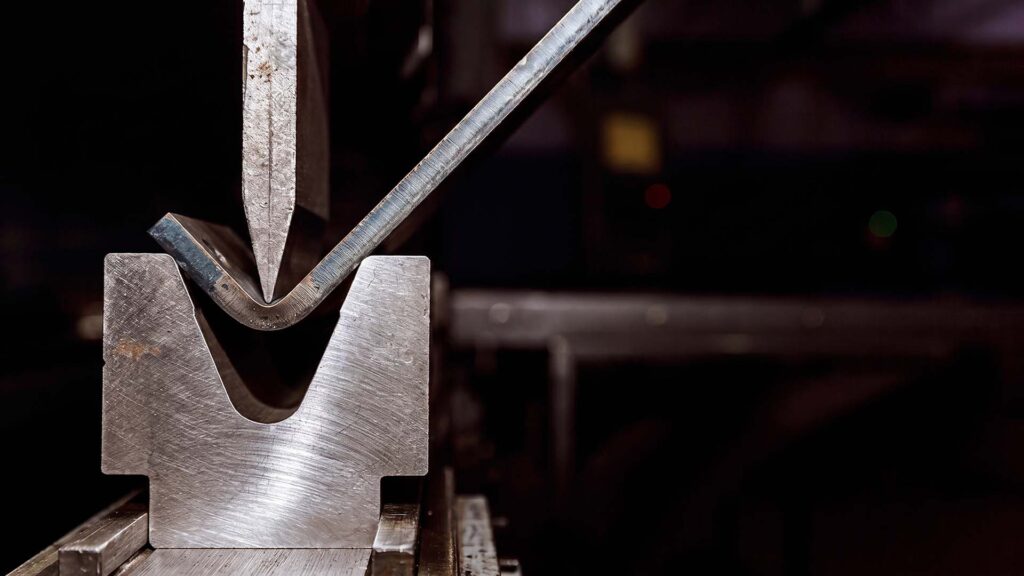
- Bends: Each bend typically requires a CNC press brake setup. For example, if your component requires our operators to change tooling for multiple bend directions, the labor cost goes up quickly.
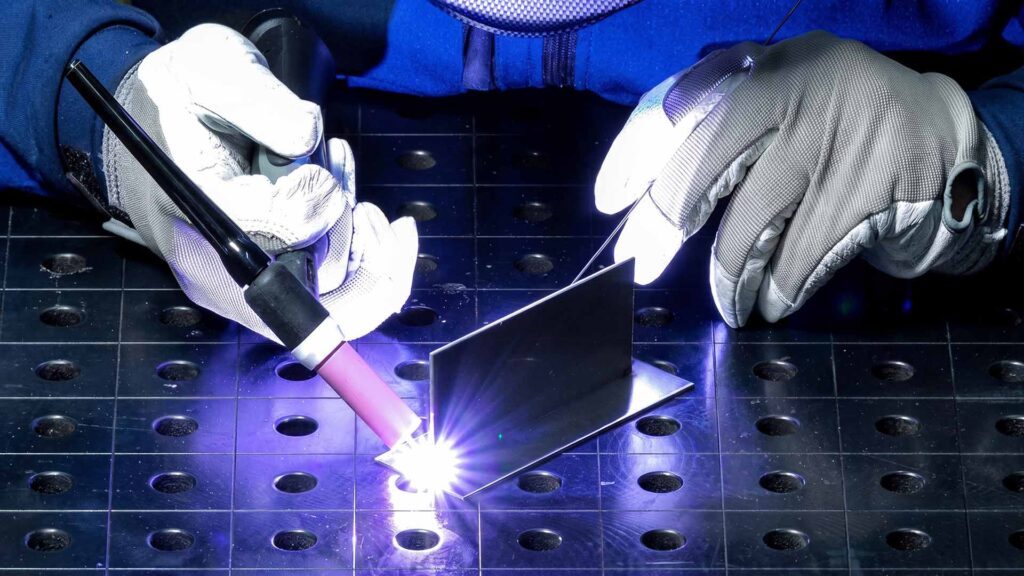
- Welds: TIG or MIG welding is often done by hand. Our certified welders take time to ensure strong joints and grind them down for a clean aesthetic finish.
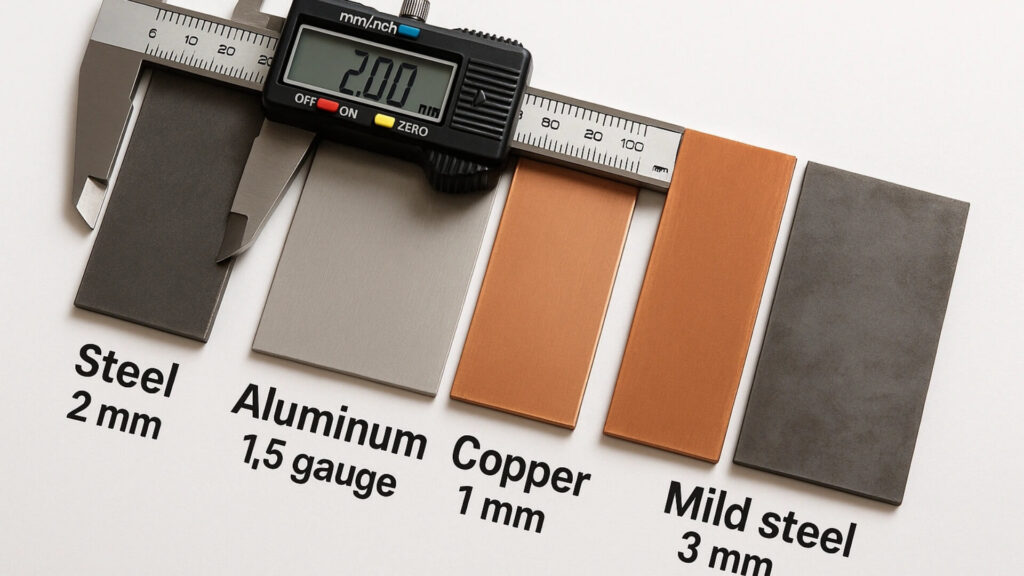
- Materials: Standard Cold Rolled Steel is cheap. Thick 5052 Aluminum or specialized 304 Stainless Steel will cost you a premium due to current raw material market rates.
Every day in our facility, we evaluate CAD files, and we know exactly what eats up machine time and labor. It usually comes down to your design. You can control these costs before you even ask for a quote by optimizing your designs.
Step 1: Get Your Designs Manufacturer-Ready
Before you talk to a fabricator, your files need to be highly accurate. A bad drawing frequently leads to defective components.
What CAD Files Do I Need for Sheet Metal Fabrication?
You cannot just send a rough sketch or a basic PDF and expect an accurate quote. Machine shops need specific digital files to program their laser cutting and CNC bending machines.
It is highly recommended to send these three files to your supplier:
- 3D CAD Files: This gives the manufacturer a complete view of the finished assembly.
- STEP Files: This is the universal 3D format. Nearly all machine shops can open a STEP file, no matter what software they use.
- 2D DWG Files: This flat drawing shows your exact tolerances, threads, and surface finish requirements.
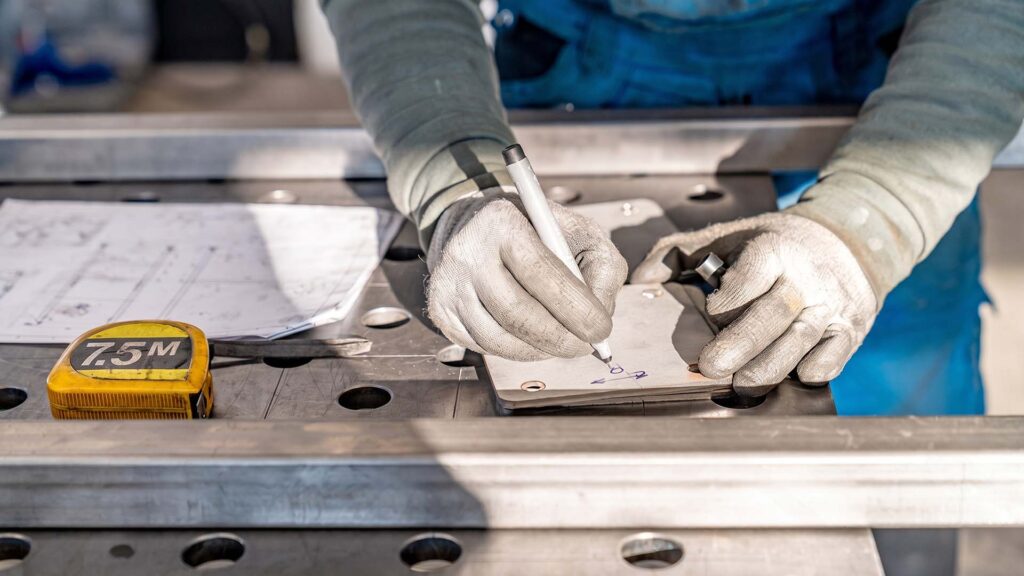
To summarize: CAD files show the finished geometry. STEP files program the CNC machines. 2D DWG files dictate the manufacturing tolerances. Sending all three leaves minimal room for interpretation.
Why You Need a DFM Check
Before you finalize those files, you need a Design for Manufacturing (DFM) check. This is a review to make sure your component is actually easy to build.
Engineers often design parts that look great on a screen but are highly impractical to bend in real life. As a direct manufacturer, our DFM review is standard protocol to catch these expensive mistakes before production starts.
Small design adjustments yield substantial cost savings. For example, standardizing all bend radii to the same size recently saved one of our clients 15% on custom tooling costs because our operators didn’t have to swap out press brake dies midway through production. When your files are clean and optimized, you get better brackets for less money.
Step 2: Find a Supplier and Protect Your Ideas
You have your files ready, but you cannot just email your designs to the first supplier you find.
How to Protect Your Intellectual Property (IP) Overseas
Before you send a single CAD file, you must protect your ideas. A standard Non-Disclosure Agreement (NDA) will not protect you overseas.
Instead, legal experts specializing in international manufacturing recommend an NNN agreement (Non-Disclosure, Non-Use, and Non-Circumvention). It It should prohibit the manufacturer from sharing your design, using it for themselves, or selling it directly to your customers. Make sure you get this signed first.
Factory Direct vs. Middlemen
When you search for suppliers online, you will find thousands of options. But many of them are not actually manufacturing facilities.
Because ShincoFab is a direct factory, we frequently see the markups trading companies add. They take your order, send it to a direct fabricator like us, and often add markups typically ranging from 20% to 40% to your final invoice. Going direct to the manufacturer cuts out this extra fee.
According to supply chain auditing firms, up to 60% of suppliers on platforms like Alibaba can be trading companies rather than direct factories.
To help you spot the difference, here is a quick breakdown of how they compare:
| Feature | Direct Factory (Manufacturer) | Trading Company (Middleman) |
|---|---|---|
| Pricing | Lowest (No intermediary markup) | 20% to 40% higher |
| Communication | Slower, but highly accurate technically | Fast English, but frequent technical mistranslations |
| Minimum Order (MOQ) | High (Usually 500+ units) | Low and flexible |
| Best For… | Scaling cost-effective mass production | Finding niche, off-the-shelf products quickly |
Certifications That Matter
How do you know a manufacturer is legitimate? You look for an ISO 9001 certification. At our facility, our ISO 9001 quality control system governs every step of the shop floor.
But do not just trust a logo on a website. Anyone can copy and paste an image. Here is how you verify it:
- Ask the supplier for a copy of their actual ISO certificate.
- Look for the certification body’s name and the certificate number.
- Go to the certification body’s website, or check against the International Accreditation Forum (IAF) global database, and type in that number to see if it is active.
Step 3: Get Quotes and Talk to the Supplier
Now that you have a trusted manufacturer, it is time to talk money. But talking to an overseas supplier is not like talking to a local shop.
Overcoming the Communication Gap
Miscommunications cost money. From our experience receiving hundreds of RFQs, you must keep your emails simple and direct.
Avoid slang, idioms, or long paragraphs. Use short, declarative sentences. Better yet, rely heavily on visual aids. Take a screenshot of your CAD file, draw a big red arrow pointing to a specific bend, and ask your question. A clear picture prevents a thousand mistakes.
To help ensure you get an accurate price with minimal back-and-forth, use this proven template for your first outreach (Hint: This is exactly how we prefer to receive RFQs):
[Copy & Paste] Supplier RFQ Email Template
Subject: RFQ for Custom Sheet Metal Component – [Your Company Name]
Body:
Hi [Supplier Name],I am looking for a direct manufacturer to produce a custom sheet metal bracket. Please see the attached design files:
- 3D CAD (for general viewing)
- STEP (for CNC programming)
- 2D DWG (for tolerances and finish requirements)
Project Details:
- Material: [e.g., 5052 Aluminum]
- Surface Finish: [e.g., Black Powder Coat]
- Order Quantity: [e.g., 500 units]
Please review the files and provide a quote that clearly separates the following:
- Price per unit.
- Cost for custom tooling or machine setup.
- Estimated lead time for a sample and bulk production.
Thank you,
[Your Name]
How to Read a Sheet Metal Quote
When the quotes come back, do not just look at the bottom line. You need to compare apples to apples.
Look closely for hidden fees. Some machine shops quote an artificially low per-part price but may sometimes hide markups of 50% or more in the tooling or packaging costs. Make sure every quote includes the exact same material grade, surface finish, and shipping terms.
Who Owns Your Custom Tooling?
Sheet metal often requires custom molds, jigs, or fixtures. You will pay a setup fee for these. But who actually owns them?
If you do not ask this upfront, the manufacturer might hold your tooling hostage if you ever try to switch suppliers. We consistently advise buyers to get it in writing. Make sure your contract states that you own the custom tooling once the setup invoice is paid.
How to Structure Your Payment Terms
A major concern for first-time importers is figuring out how to pay safely. Avoid paying 100% upfront via a standard wire transfer. If a supplier demands full payment before manufacturing begins, it is generally safer to walk away.
A widely accepted industry standard for overseas manufacturing is the 30/70 split. You pay a 30% deposit via TT (Telegraphic Transfer) to start production. The remaining 70% balance is only paid after your components pass a final Quality Control (QC) inspection or upon receiving the Bill of Lading (proof of shipping).
Do Not Skip the Sample Part
Do not jump straight into a massive bulk order. You should order a pre-production sample first.
When a new client onboards with our team, we insist on producing a sample. This single component is your best insurance policy. It proves the fabricator actually understands your tolerances and finish requirements. On average, a custom sheet metal sample costs between $150 and $300 and takes 7 to 14 days to arrive in the US via air freight, depending on the part’s size and complexity.
If a supplier ignored your exact drawing, they should pay to make and ship the second sample. Make sure you agree on this rule before you pay the first invoice.
Step 4: Manage Production and Quality Control
You approved the sample, and mass production has started. But you cannot just sit back and wait for a box to show up.
How to Track Production
You need to know what is happening on the shop floor. Do not just accept an email that says, “Everything is fine.” Demand visual proof.
As standard practice, we proactively send our clients photos of their raw materials and short videos of their components being laser-cut and bent. This keeps the process transparent and helps prevent unexpected defects at the end of the run.
Setting Quality Expectations
In mass manufacturing, absolute perfection is rare. A few units will likely have minor scratches or slight bends.
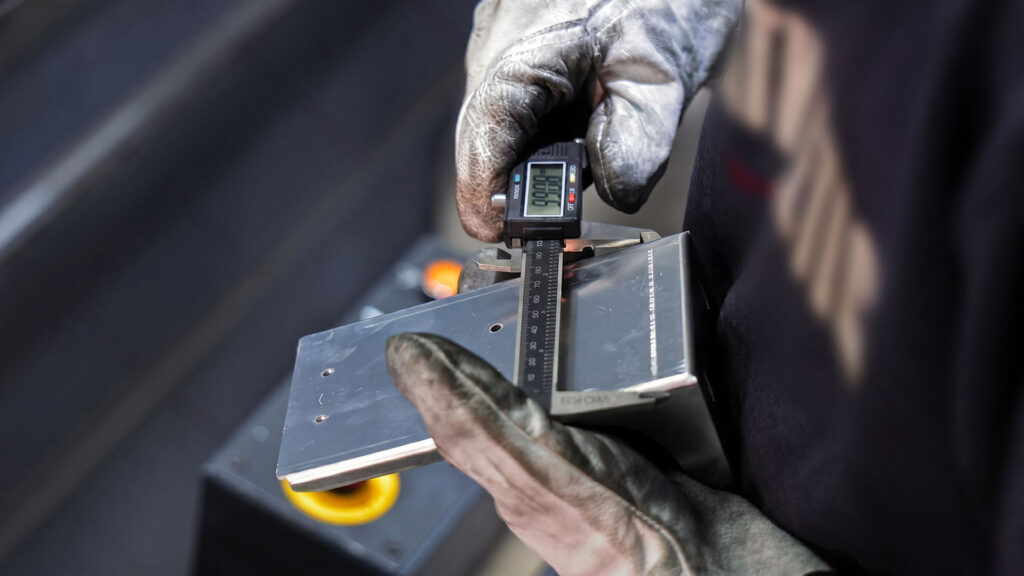
You need to agree on an Acceptable Quality Limit (AQL) before production starts. This tells the supplier exactly how many defective components you will tolerate in a batch. For our bulk sheet metal orders, we strictly adhere to a standard AQL of 2.5% for major defects and 4.0% for minor defects. Anything above that means the fabricator failed the inspection.
What Happens if Your Parts Are Wrong?
Even with strict checks, things can go wrong. What if a whole batch fails your inspection?
You need a clear buyer protection plan in place. Do not pay the final balance until you see the final inspection report. If the components do not match your approved sample, you have two choices:
- Remanufacturing: The manufacturer remakes the defective units at their own expense.
- Refunds: You get a partial or full refund for the defective batch.
Holding back that final 70% payment is your best leverage.
Step 5: Pack, Ship, and Clear Customs
Your components are finished and look great. Now you just need to get them to your warehouse without ruining them.
Packaging Requirements for Heavy Sheet Metal
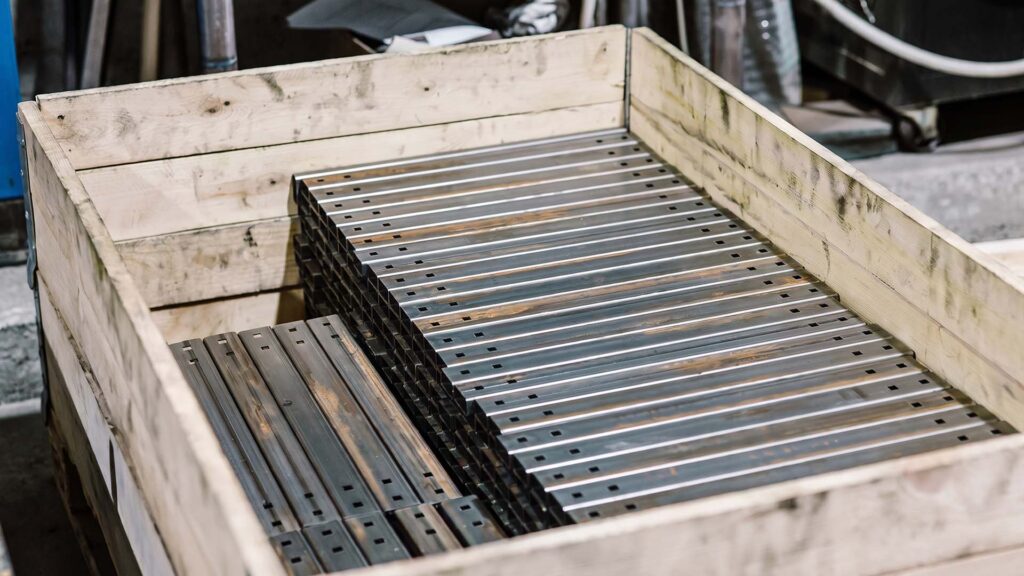
Sheet metal is heavy, sharp, and prone to rust during a long ocean trip. Standard cardboard boxes rarely survive. We’ve perfected our export packaging protocols over the years. If your supplier isn’t doing the following, your parts are at a high risk of arriving scratched, dented, or completely rusted:
- Applying a light coat of anti-rust oil on bare steel components.
- Using custom wooden crates with reinforced edge protectors.
Should You Use Air Freight or Sea Freight for Sheet Metal?
Next, you have to choose how to ship your assemblies. Air freight is fast but expensive. Sea freight is cheap but takes weeks.
How do you decide? It generally comes down to weight. As a general rule of thumb, once your shipment exceeds the 150kg to 200kg (about 330–440 lbs) range, sea freight usually becomes much cheaper than air freight. If your order is lighter than that, stick to air freight to save time.
What is an HTS Code?
A Harmonized Tariff Schedule (HTS) code is a 10-digit classification number used by customs authorities to determine import taxes and duties. When your shipment reaches the border, the government uses this exact number to figure out how much to charge you.
If you or your supplier guess the wrong code, you could face significant fines or unexpected duties. Always verify your HTS code before shipping.
Who Handles the Customs Paperwork?
Clearing customs seems complex, but you do not have to do it alone.
Your manufacturer will provide the Commercial Invoice and packing list. But as the buyer, you are the “Importer of Record.” That means you are legally responsible for following the rules.
I highly recommend hiring a customs broker. For a small fee, they handle the paperwork, pay the duties on your behalf, and ensure your components clear customs smoothly.
Common Mistakes First-Time Importers Make
Importing custom sheet metal does not have to be a logistical burden. But if you rush the process, you will lose money. Here are the most common pitfalls you need to avoid:
- Sending vague specs: If you leave out a tolerance or a surface finish, the fabricator will guess. They usually guess wrong.
- Ignoring lead times: Sea freight takes weeks. If you wait until the last minute to order, you will pay a fortune for rush air shipping.
- Skipping the sample: Avoid ordering 1,000 components without holding one in your hand first. It is the easiest way to lose a significant amount of capital.
- Chasing the lowest price: A cheap quote often hides expensive tooling fees, substandard packaging, or poor quality control.
Conclusion
Importing custom sheet metal is a great way to scale your business and increase your profit margins. But success requires much more than just finding the cheapest machine shop online.
If you focus on your Total Landed Cost, protect your designs, and insist on a pre-production sample, you can avoid the expensive traps that catch most first-time buyers. Remember to communicate clearly and demand visual proof of quality before you pay that final invoice.
If you are looking for a direct factory partner who prioritizes transparent communication and strict quality control, our engineering team at ShincoFab is ready to review your CAD files. Prep your files, run a quick DFM check, and start reaching out today.