Are you stuck trying to decide between steel and aluminum sheet metal for your next project?
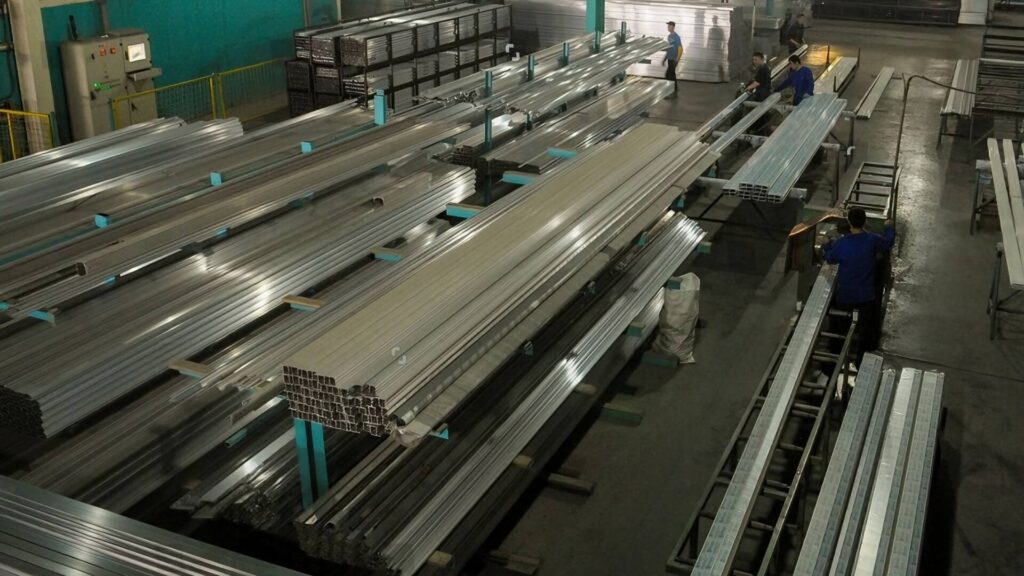
At ShincoFab, our fabrication floor processes tons of both metals every single week. Whether we are loading raw sheets onto our CNC fiber lasers or folding enclosures on the press brakes, we see exactly how steel and aluminum behave under real-world manufacturing stress. We’ve also seen clients make expensive material choices in their CAD files that we had to help them correct.
In this guide, I am going to give you a clear, no-nonsense breakdown of both metals from a professional calibrator’s perspective. You will learn which one handles heavy loads safely, which one survives the elements naturally, and which one is realistic to build with in a home garage versus a pro shop.
By the end of this article, you will know exactly which metal to spec for your design and budget. Let’s find the perfect metal for your build.
Which Metal Should You Pick?
You are busy, and you want to know which metal to spec right now. Based on what we see passing through our shop daily, here is your cheat sheet.
Choose Aluminum If…
When deciding between steel and aluminum sheet metal, choose aluminum if your project requires excellent mobility, natural rust resistance for outdoor use, and easy machinability for complex shapes, such as the following scenarios:
- You need to move it. Aluminum is light. When we manufacture custom truck toolboxes, we always push for aluminum because it saves our clients fuel and makes installation much easier on their backs.
- It stays outside. Aluminum naturally fights off rust. We often recommend it for marine or outdoor enclosures because you won’t spend extra money having us powder-coat it just to survive the rain.
- You need complex, flowing shapes. Softer aluminum alloys (like 5052) cut fast on our lasers and bend easily on the press brake without snapping.
Choose Steel If…
On the other hand, you should choose steel sheet metal if your build demands extreme structural strength, requires staying within a tight upfront material budget, or involves basic DIY garage welding, as detailed here:
- You need extreme strength. Steel handles heavy structural load. If a client asks us to fabricate a trailer frame or a load-bearing bracket, we refuse to use anything but steel.
- You are on a tight material budget. Basic raw mild steel (like A36 or 1018) is usually cheaper to buy upfront than aluminum sheets.
- You want to weld at home. Steel is very forgiving. If you only have a basic MIG setup in your garage, steel is the metal you want to practice on.
Understanding the Basics
Let’s look at what makes these two metals tick. You don’t need a metallurgy degree, you just need to know how they perform.
What is Steel Sheet Metal?
Steel is an alloy of iron and carbon. This classic mix creates a tough, heavy, and dense material. When ordering, you will typically see common mild grades like A36 (hot-rolled) or 1018 (cold-rolled), with thicknesses measured in gauges (such as 10-gauge through 16-gauge). On our fabrication floor, steel is synonymous with brute strength. Think of structural beams, heavy machinery guards, and equipment frames. When you build something that absolutely must hold extreme weight without yielding, steel is your answer.
What is Aluminum Sheet Metal?
In its pure form, aluminum is actually too soft for industrial use. Manufacturers mix it with elements like magnesium or zinc. According to standards set by The Aluminum Association, these combinations create robust alloys (like the popular 5052 or 6061). This gives aluminum serious structural integrity while keeping it lightweight at about one-third the weight of steel. If your completed project needs to be airborne, driven on a highway, or carried by hand, aluminum takes the prize.
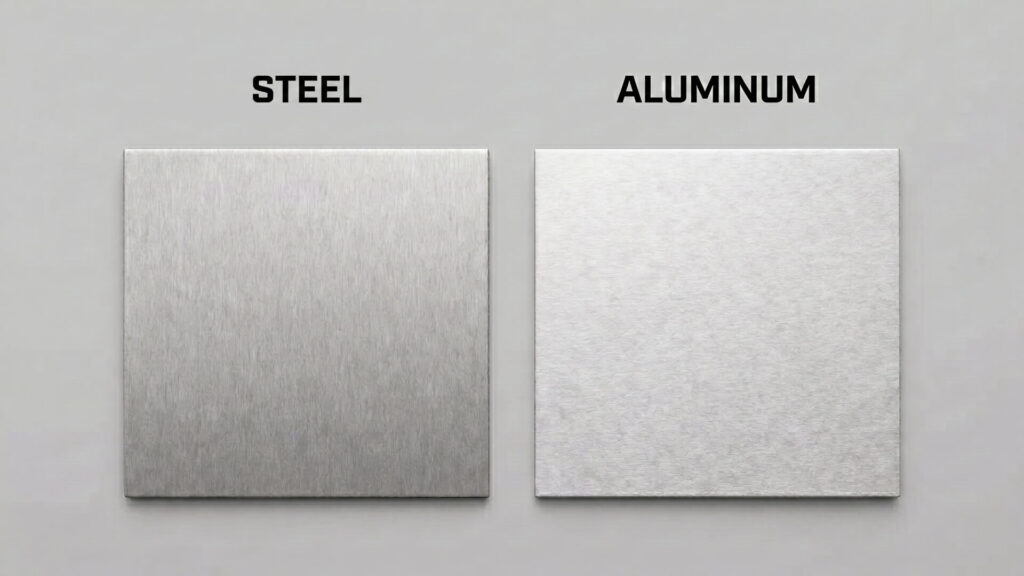
Here is a quick visual comparison of the core differences between steel and aluminum sheet metal:
| Material | Yield Strength | Rust Resistance | Relative Cost | Best For |
|---|---|---|---|---|
| Mild Steel (A36, 1018) | ~36,000 PSI (High) | Low (Needs powder coating) | Lower upfront cost | Heavy structural loads, frames, DIY welding |
| Aluminum (5052, 6061) | ~28,000 PSI (Medium) | Excellent (Natural oxide shield) | 20-30% higher per pound | Outdoor enclosures, vehicle toolboxes, saving weight |
Comparing Strength and Weight
When you pick a metal, you usually trade weight for strength.
- Why Aluminum Wins on Weight: If we fabricate a large 3ft x 3ft enclosure out of 1/8″ aluminum, a single shop technician can easily carry it. When you need a project to stay mobile, aluminum is unmatched.
- Why Steel Wins on Raw Strength: Steel brings pure muscle, backed by hard numbers. Standard mild steel (like A36) boasts a yield strength of roughly 36,000 PSI whereas common 5052 aluminum sits around 28,000 PSI. If you load massive static weight onto a steel bracket, it holds its ground. We use mild steel when failure is an absolute non-option.
Impact Resistance: Denting vs. Tearing
Textbooks love to talk about theoretical tensile strength, but let’s talk about real shop floor accidents. What happens if a heavy steel clamp falls off a welding table onto your finished metal box?
If that box is made of thinner aluminum, its softer and more brittle nature means the heavy tool will likely leave a deep gouge, or even tear a hole straight through the sheet.
If that same box is made of 16-gauge steel, the metal will probably just dent. It might need some hammering out, but the structural integrity stays totally intact.
Rust and Weather Resistance
Aluminum’s Built-in Armor
Aluminum has a secret weapon we rely on for outdoor projects. The moment it touches oxygen, it forms an invisible, microscopic oxide shield that halts further degradation. Because of this, it easily fights off rain, snow, and humidity without rusting.
Keeping Steel Rust-Free
Bare steel hates moisture. Leave a raw steel enclosure on our loading dock in the rain, and it develops surface rust within hours. To stop this, you either have to step up to more expensive, highly-alloyed stainless steel grades (like 304 or 316) that meet strict ASTM standards, or we have to seal your raw steel under a tough layer of protective coating.
Powder Coating vs. Anodizing
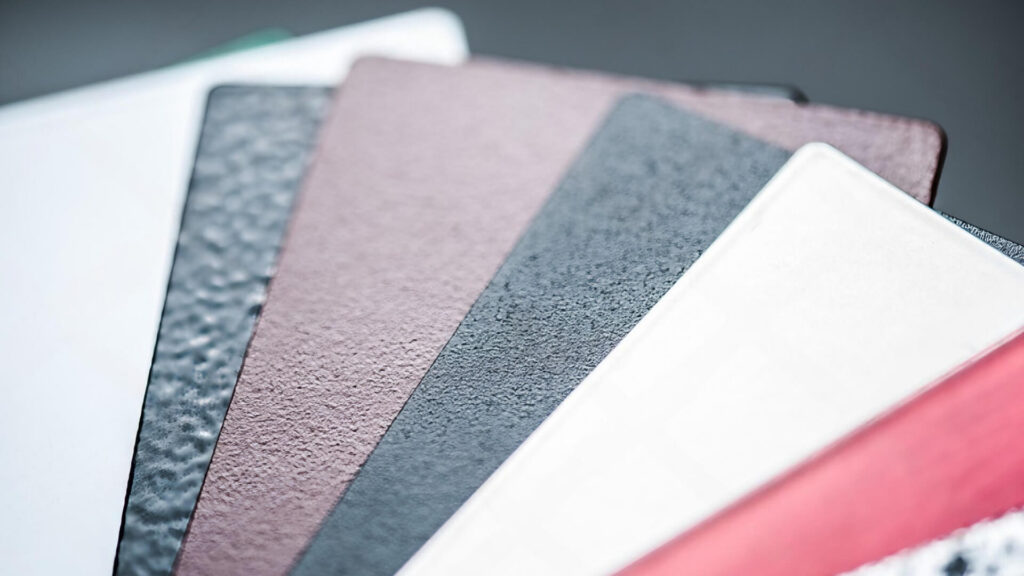
If you choose aluminum, you have the option of anodizing. This electrochemical process dyes the surface of the metal itself, creating vibrant finishes that never peel.
For steel, powder coating is your best friend. In our finishing department, we constantly bake thick, tough layers of powder coat onto steel parts. It creates a hard plastic-like shell that seals out rust, fights off scratches, and looks professional.
Cutting, Bending, and Welding
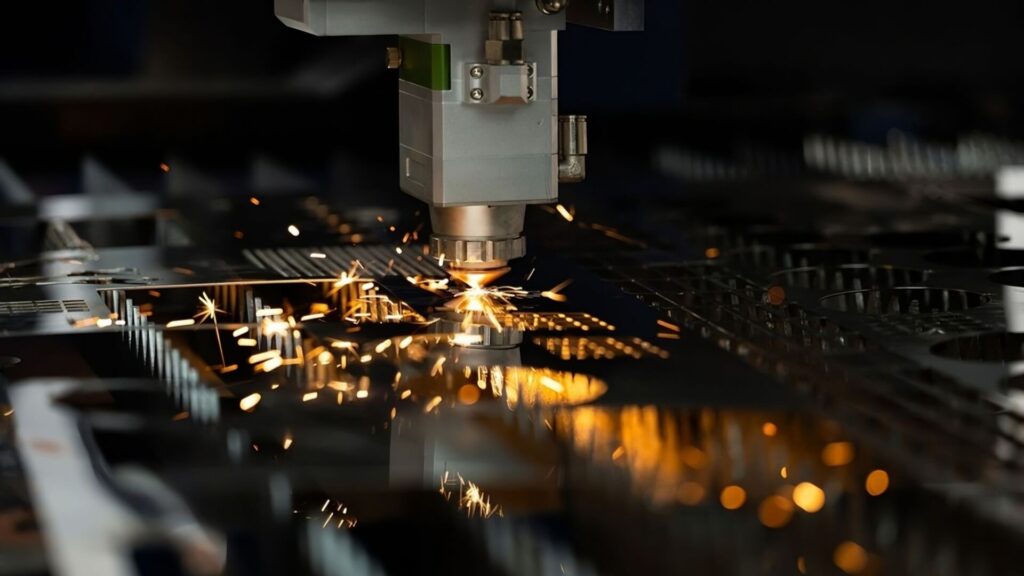
How do these metals actually behave when the machines turn on? This is where theoretical DIY meets fabrication reality.
Cutting and Bending Behavior
Because aluminum is softer, it cuts like butter. Our fiber lasers zip right through it, saving valuable machine time. However, bending it requires expertise. If we try to bend a rigid aluminum alloy (like 6061-T6) too sharply on the press brake, it will crack straight down the bend line.
Steel takes more laser power to cut, but it is predictable. When our operators fold a sheet of 14-gauge 1018 cold-rolled steel, it takes the tight corner smoothly and rarely fractures.
The Welding Reality Check
Here is a major warning from our welding booths.
Welding steel is relatively straightforward. The metal flows predictably under a standard MIG gun.
Aluminum is a completely different beast. It conducts heat so fast that the entire part can warp if you aren’t careful. Furthermore, burning through aluminum’s invisible oxide armor requires an expensive AC TIG welder and practices that align with American Welding Society (AWS) safety and structural standards. Serious skill and hours under the hood are mandatory.
Garage DIY vs Pro Shop
If you are working in a home garage, steel is DIY-friendly. You can chop a sheet with an angle grinder and tack it together with a budget 120V MIG welder.
Aluminum, however, actively fights basic garage tools. It melts and clogs standard grinding wheels instantly. If your design requires welded aluminum, you will almost certainly need to send the CAD file to a professional shop.
Understanding the Real Cost
Many clients look at per-pound material prices and assume steel is the obvious budget winner. But as fabricators, we urge you to look at the total manufactured cost (including freight, labor, and finishing).
Raw steel is definitely cheaper upfront. However, because it is heavy and prone to rust, you will pay significantly more in freight shipping to get the parts delivered to your house. You also must pay a shop to powder coat it so it survives outside. Suddenly, that “cheap” metal gets expensive.
Aluminum typically costs 20-30% more per pound upfront, but it cuts much faster on a CNC laser, saving you expensive billable labor hours at a pro shop. Because it is lightweight, our shipping bill drops significantly. Plus, you can skip the painting step entirely.
When you add up labor, shipping, and finishing, that “expensive” aluminum often ends up saving our clients money.
Real-World Uses
Let’s step out of the shop. Seeing these metals in action usually makes your choice obvious.
Aluminum in the Wild
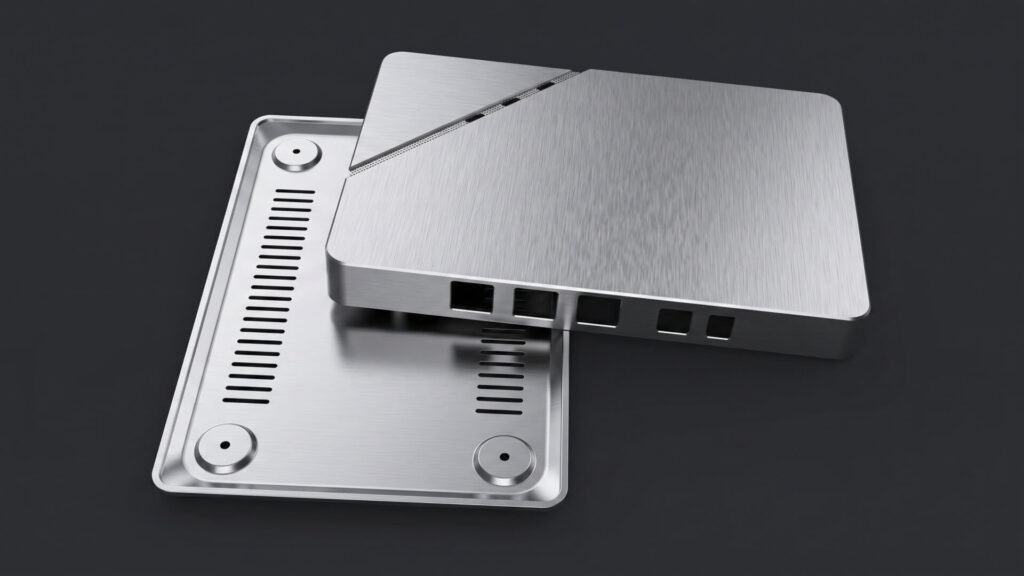
Aluminum sheet metal is highly valued in real-world applications where cutting weight and resisting continuous moisture are critical for success. Common everyday uses include:
- Boats and docks: It fights off constant water and salt without rotting.
- Airplanes and car hoods: It drops massive weight so engines burn less fuel.
- Truck toolboxes and ladders: You can actually lift them without pulling a muscle.
- Electronic cases: It naturally pulls heat away from hot computer parts.
Steel in the Wild
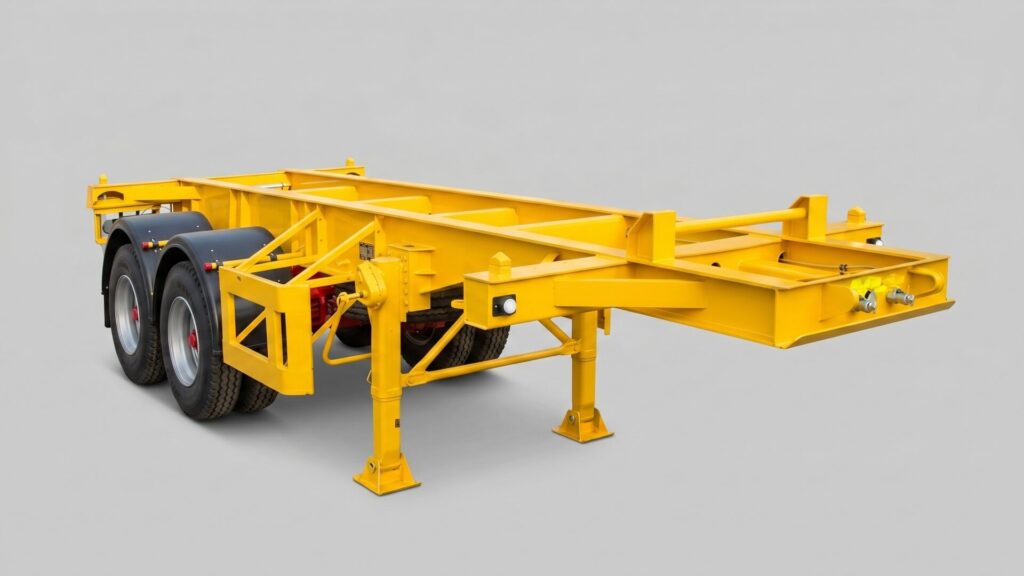
Conversely, steel sheet metal is the industry standard for real-world applications that must endure brutal physical wear, hold massive static loads, or maintain rigid structural integrity, including:
- Trailer frames: It holds crushing weight down the highway without bending.
- Building supports: It safely holds up heavy roofs and entire skyscrapers.
- Heavy machinery: Bulldozer and tractor parts take a brutal beating in the dirt without breaking.
- Kitchen sinks and knives: Stainless steel survives daily washing and holds a sharp edge.
4 Questions Before You Buy
Before you order your material, run your project through these four simple questions to lock in your choice.
Does it stay outside?
Water is your biggest enemy. If your project lives in the rain or snow, aluminum is the easy winner. It fights rust naturally. If you must use steel outside, plan to pay extra for a tough powder coating.
Does it need to be moved?
Think about who is doing the lifting. If you carry the part by hand or bolt it to a moving vehicle, pick aluminum. It is lightweight and saves you fuel. If the part stays bolted to the ground forever, heavy steel is the ideal choice.
Is it holding heavy weight?
This is a safety issue. If your project supports a heavy structure or carries a massive load, choose steel. It will not buckle or break under extreme pressure. Aluminum might bend or tear under that same stress.
What is your total budget?
Do not just look at the raw material cost. Steel is cheaper to buy upfront, but it costs more to ship and paint. Aluminum costs more at the start, but it saves you money on shipping and shop labor.
Conclusion
Choosing the right sheet metal doesn’t have to be a headache. You now know exactly what steel and aluminum can and cannot do. You know how they handle weather, weight, and your wallet.
If you are tackling this in your home garage, you are ready to order your metal and get your hands dirty. But if your design is complex, requires tight bends, or needs a flawless professional finish, you don’t have to build it alone.
Our team at ShincoFab cuts, bends, and fabricates both steel and aluminum every single day. As a dedicated sheet metal fabrication factory, we are always here to help turn your raw designs into finished, high-quality parts when the job gets too big for the garage.
You have the facts. You have a plan. Now, all that is left to do is build it!