Metal Silk Screening Services

Our custom metal silk screening services deliver permanent, high-contrast graphic applications. As a premier provider of silk screening for aluminum and stainless steel, our tolerances are held to ±0.25mm. ASTM D3359 adhesion compliant.

End Peeling Decals with Metal Silk Screening Services

Choosing the right marking process dictates the longevity of your product in harsh environments. Here is exactly why engineers specify metal silk screening services from ShincoFab to apply durable metal screen printing for industrial parts like control panels, enclosures, and chassis.

Durable silk screened graphics on outdoor NEMA enclosure

Silk Screen vs. Laser Marking

  • Pantone-Matched Colors: Laser marking leaves a monochromatic (usually grey/white or black) oxidized mark. Silk screening allows for precise Pantone (PMS) color matching for corporate branding and safety warnings.
  • Surface Integrity: Laser burning alters the substrate and leaves a micro-cracked, tactile edge that can invite corrosion. Silk screening deposits a smooth, broad solid fill without compromising the metal’s protective passivation layer.

Silk Screen vs. Pad Printing

  • Scale and Format: Pad printing is limited to small logos. Our metal screen printing seamlessly handles large-format flat panels, including 1U to 4U rackmount faceplates, industrial identification plates, and oversized NEMA enclosures.
  • Superior Ink Density: On heavily textured surfaces like powder-coated metals, pad printing lacks opacity. Our silk screen process drives high-viscosity ink deep into the surface profile, ensuring high-contrast visibility.

Silk Screen vs. Adhesive Labels

  • Permanent Fusion: Industrial stickers eventually peel off. We utilize baked-on ceramic and 2-part epoxy inks that chemically cross-link with the metal substrate.
  • Extreme Environment Ready: Unlike adhesives that degrade, our cured silk screen prints survive aggressive solvent wipe-downs (like MEK or IPA), prolonged UV exposure, and brutal thermal cycling without delamination.

Technical Capabilities & Specifications

Precision is our standard. ShincoFab engineers every print process to strictly match your BOM. Below are our exact processing capabilities for industrial and medical applications.

Inspector verifying Pantone colors for metal screen printing

Substrates Processed

  • Aluminum: Bare, Anodized, and Chem-film/Chromate (RoHS compliant).
  • Stainless Steel (304 / 316 / 316L): Includes mandatory pre-treatment (vapor degreasing and 320-grit mechanical scuffing) to alter surface tension and guarantee zero-delamination.
  • Cold Rolled Steel (CRS) & Galvanneal.
  • Powder Coated & Painted Surfaces: Adaptable to both smooth and heavy-textured (sand/wrinkle) finishes.

Industrial Ink Systems

  • Epoxy-Based Inks: Our epoxy ink silk screening for metal is engineered for maximum chemical and solvent resistance (survives MEK, acetone, and hydraulic fluids).
  • Polyurethane / Enamel: Formulated for high flexibility and impact resistance (prevents micro-cracking on flexing panels).
  • Medical-Grade / Biocompatible: Specifically cured to survive repeated Autoclave (steam), Gamma radiation, and EtO (Ethylene Oxide) sterilization cycles.
  • UV-Curable: Low VOC emissions with rapid cross-linking for tight-deadline, high-volume metal silk screening.

Tolerances & Metrics

  • Single-Color Registration: ±0.25mm (±0.010 in).
  • Multi-Color Registration: For complex multi-color silk screen printing on metal, we hold registration to ±0.30mm (±0.012 in).
  • Color Matching Accuracy: We deliver precision metal screen printing with Pantone color matching verified by spectrophotometer, maintaining a color deviation of ΔE ≤ 2 across all production batches.

Engineered Silk Screen Solutions by Application

We do not rely on generic ink solutions. We formulate our process to eliminate the specific regulatory, environmental, and aesthetic bottlenecks of your industry.

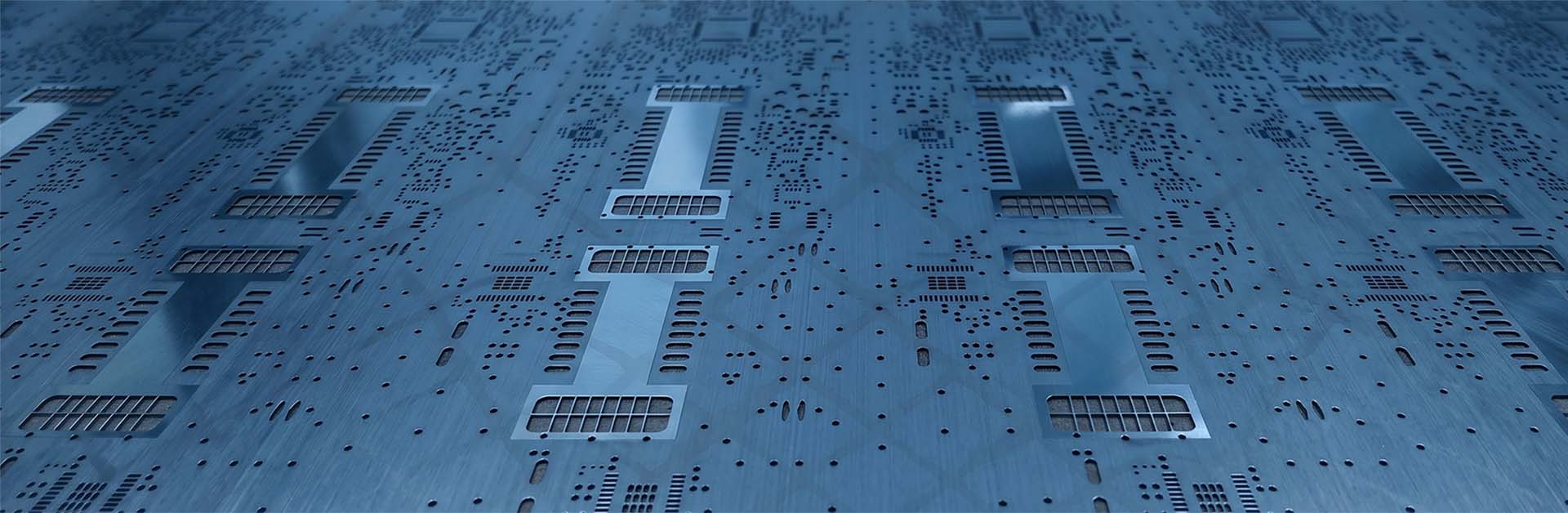
Precision blue screen stencil for custom metal enclosures

For Medical Device OEMs

Permanent Adhesion. Complete Traceability.

  • Bio-compatible markings formulated to survive repeated autoclave (steam), gamma radiation, and EtO sterilization cycles without degradation.
  • Risk mitigation built-in: We provide full lot traceability and Certificates of Conformance (CoC) with every single batch to streamline your FDA/ISO compliance.

For Production & Aerospace Engineers

Mil-Spec Durability at Scale.

  • Ideal for durable silk screening on safety labels and equipment nameplates. Our inks are specifically cross-linked to resist aggressive solvents (like MEK), Skydrol/hydraulic fluids, and extreme UV degradation.
  • Process stability guaranteed: We deliver absolute consistency in registration and adhesion, whether you need a 10-piece prototype run or a 50,000-piece high-volume production.

For Industrial Designers

Flawless Aesthetic Execution.

  • We protect your design intent. Our process holds ultra-fine 150 LPI (Lines Per Inch) halftones and seamless gradients completely free of banding.
  • We overcome the visibility issues of dark substrates. Our precision double pass printing achieves true white ink opacity on black anodized and dark powder coated enclosures.

For Custom Fabricators & Sign Makers

Agile Turnaround for NPI.

  • Your supply chain bottleneck ends here. We offer highly agile turnaround times with zero restrictive Minimum Order Quantities (MOQs).
  • Equipped for speed: In-house same-day screen imaging ensures your rush NPI (New Product Introduction) and rapid prototyping projects hit your strict delivery deadlines.

Strict Thermal Curing and QA Protocols for Permanent Ink Adhesion

An industrial print is only as good as the surface it bites into and the process that cures it. We don’t rely on visual inspections alone; we validate our silk screening through destructive physical testing and rigid thermal controls. Here is how we guarantee your markings will not fail in the field.

Stage 1: Chemical and Mechanical Surface Preparation

Ink repels oil and gloss. Before a single drop of ink touches your part, we run a strict pre-treatment protocol. Depending on the substrate, this includes vapor degreasing to remove machining coolants, mechanical scuffing (using fine Scotch-Brite pads) to increase surface area, and chemical phosphate washing. We engineer the surface tension to ensure maximum mechanical bonding.

Stage 2: Precisely Controlled Thermal Curing

We never rely on ambient air drying for industrial parts. Our heat-cured inks(including two component epoxy and ceramic) undergo a rigorous baking process in calibrated industrial ovens. By strictly adhering to a thermal profile, such as a 150 to 180 °C dwell time for 20 to 30 minutes, we force the ink to chemically crosslink with the metal substrate. This transforms the ink from a surface coating into a permanent fusion.

Stage 3: Destructive and Metrology Testing

A print is not finished until it survives our QA lab. Every production batch is subjected to strict empirical testing before it leaves our facility.

  • Adhesion: We perform the ASTM D3359 Crosshatch Tape Test (5B standard) to ensure zero delamination or edge peeling.
  • Solvent Resistance: We conduct aggressive MEK (Methyl Ethyl Ketone) Double-Rub Tests to verify the ink’s chemical defense layer is fully cured.
  • Color Consistency: We utilize calibrated spectrophotometers to guarantee Pantone (PMS) compliance, ensuring a color deviation of ΔE ≤ 2 across all shipments.
ASTM D3359 crosshatch adhesion test on metal surface

DFM File Preparation Guidelines for a Faster Quote

We respect your time. To eliminate engineering bottlenecks and ensure absolute accuracy on your first article, please review our strict DFM guidelines before submitting your RFQ and CAD/Artwork files.
Measuring safety distance from sheet metal bend line

Accepted File Formats & Typography

  • Formats: We require native vector artwork generated from software like Adobe Illustrator(.AI, .EPS, .Vector PDF, or .DXF).
  • Critical Rule: You must convert all fonts to outlines (or paths) before exporting. This prevents font substitution errors and guarantees your text renders exactly as designed.

Minimum Line Weights

  • Maintain a minimum stroke width and negative space of 0.25mm (0.010 in).
  • Engineering Note: Lines below this minimum width risk emulsion bridge collapse during screen exposure. This physical limitation also causes ink bleed and graphic fill on heavily textured substrates.

Mechanical Keep-Out Zones

  • Keep all critical graphics and text a minimum of 3mm away from bend lines, panel edges, door seams, and inserted hardware (like PEM nuts or standoffs).
  • Engineering Note: Protruding hardware prevents the silk screen from laying perfectly flush against the sheet metal, which will caus.e print distortion and uneven ink deposition.

Specifying Finishes

  • Eliminate subjective terms like matte or gloss from your engineering drawings.
  • For exact aesthetic matching against your base powder coat or anodizing, please specify your desired ink gloss level in GU (Gloss Units) measured at a 60° angle.

Hard Evidence of Flawless Production Execution

We don’t just print samples, we deliver consistent high-volume production and extreme-environment survivability. Here is the data to prove it.

High-Volume Precision

Project: 4U Aluminum Rackmount Faceplates (Data Center/Telecom)

Volume: 10,000 unit production run.

The Execution: We held a strict ±0.25mm registration across a high-density layout featuring 42 individual connector cutouts per panel.

The Result: 100% yield with full acceptance at the customer’s IQC (Incoming Quality Control) routing.

Medical-Grade Durability

Project: 316SS Surgical Trays (Medical Device OEM)

The Execution: Engineered a specific surface-prep protocol and formulated a custom bio-compatible 2-part epoxy ink to mechanically bond with passivated 316 Stainless Steel.

The Result: Tested and passed 500+ extreme autoclave (high-pressure steam) sterilization cycles, maintaining flawless adhesion without any edge peeling or delamination.

316SS surgical trays prepared for autoclave sterilization

Accelerate Your NPI with 72 Hour First Article Samples

Marking and finishing should never bottleneck your product launch. We eliminate external supply chain delays by controlling the entire production sequence internally. Our facility handles screen stretching, emulsion coating, and CNC optical alignment. This guarantees you receive precisely matched and completely cured prototypes ready for immediate QA validation.

Frequently Asked Questions

Navigating custom metal fabrication and industrial printing requires exact answers. We compiled the technical and supply chain logistics below to provide absolute clarity. Review these engineering solutions to see how we handle complex substrates and production routing.

Do we need to supply the blank metal parts, or can you fabricate the entire enclosure?

As a comprehensive sheet metal fabricator, we offer both solutions. While we accept toll processing where you supply the blanks, over 80% of our OEM clients utilize our turnkey manufacturing. We execute the laser cutting, CNC bending, welding, powder coating, and silk screening inside a single facility. This completely eliminates expensive freight bottlenecks and prevents vendor blame shifting when tolerance issues occur.

We do not enforce rigid MOQs. We understand that New Product Introduction requires agile, small-batch prototype runs (e.g., 1 to 50 pieces) before scaling to 10,000+ unit production. While standard screen setup and tooling amortization fees apply to small runs, we will never force you to buy more inventory than your current project phase dictates.

Dark substrates naturally absorb light and standard inks to destroy visual contrast. We solve this through a strict double pass printing protocol. We utilize heavily pigmented high opacity two component epoxy inks. By registering the screen with absolute precision, we deposit a second ink layer directly over the initial flash cured base. This creates a brilliant opaque true white that meets exact Pantone and Gloss Unit specifications.

Silk screening requires the mesh to lay 100% flush against the substrate. Protruding hardware prevents this and causes ink distortion. Our standard DFM rule requires a 3mm keep-out zone around all raised features. If your graphics must be printed closer, our engineering team will sequence the manufacturing routing to perform the silk screening before the hardware insertion process.

Submit Your Print to Get a Quote for Silk Screening in 24 Hours

Skip the back-and-forth sales emails. Give our estimating engineering team the exact specifications below, and we will return a comprehensive pricing and feasibility report within 24 hours.

Whatsapp

+86 13392819510

Address

Building 1, No.8, Second Street, Huangjiang Town,
Dongguan City, Guangdong Province

Socials

Please enable JavaScript in your browser to complete this form.
Click or drag files to this area to upload. You can upload up to 3 files.
Scroll to Top

Let's Talk About Your Project