
Choosing the wrong sheet metal will ruin your project. At our ShincoFab facility, we process thousands of pounds of sheet metal every month. Over the years, I’ve seen clients waste thousands of dollars dealing with peeling paint, sputtering welds, and rusted parts simply because they checked the wrong box on their CAD drawings. I know exactly how these metals act in the real world, not just in a textbook.
If you are stuck between galvanneal and galvanized steel, I can help. In this guide, I will show you the exact differences between the two. You will learn a 5-second trick our incoming material inspectors use to tell them apart on the workbench. I will also show you which one to buy for your project, how to read confusing supplier labels, and how to safely weld and paint them.
No fluff. Just the facts you need to make the right choice and get back to work.
What’s the Real Difference? (The Short Answer)
You need steel that won’t rust. Manufacturers frequently confuse galvanized and galvannealed steel. They sound identical, but they behave very differently.
The real difference between them comes down to one extra step at the factory: heat.
The Quick Breakdown
Both metals start the exact same way. The bare steel gets dipped into a bath of liquid zinc. This zinc acts as a shield to stop rust.
Here is where their paths split:
- Galvanized Steel: It takes the liquid zinc bath and cools off. It has a shiny, silver finish with a speckled pattern. It is tough, cheap, and fights off extreme weather.
- Galvannealed Steel: It takes the zinc bath, but then goes straight into a 1,000-degree oven. This bakes the zinc and iron together. It comes out dull and gray. But because of this baking step, it is incredibly easy to paint and weld.
What is Galvanized Steel?

Galvanized steel is a zinc-coated sheet metal created by dipping bare steel into a protective vat of liquid zinc. It is a heavy-duty, classic rust fighter you have probably seen on highway guardrails or air conditioning ducts.
How It’s Made (The Zinc Bath)
To make it, workers clean raw steel and dunk it into a massive vat of liquid zinc. This molten zinc bath is maintained at 815-850 degrees Fahrenheit.
When the steel comes out, high-speed air blows off the extra liquid. The zinc cools and hardens into a pure, shiny shell. This shell bonds directly to the steel, wrapping it in a tough protective blanket.
The Biggest Benefits
This pure zinc coating is a lifesaver for outdoor projects. Here is what it does for you:
- Unmatched rust blocking: The thick zinc layer takes the beating from rain and snow. The steel inside stays totally dry and safe.
- It heals itself: If you scratch the surface, the zinc chemically reacts to seal the cut. The rust won’t spread past the scratch.
- Keeps money in your pocket: It is cheap to produce. Plus, it can last 50 years outdoors without needing repairs.
- A cool industrial look: It dries with a bright, silvery finish. It has a unique speckled pattern called “spangle.”
The Drawbacks
But galvanized steel isn’t perfect. You will run into a few headaches in the shop. We’ve learned these the hard way on the ShincoFab floor:
- It hates paint: The surface is completely smooth and slick. Once, a client insisted we powder-coat raw galvanized steel without proper prep. The finish literally peeled off in sheets within a year.
- It is a nightmare to weld: The thick zinc layer burns and smokes under a torch. Our welders despise working with raw galvanized because it causes ugly, sputtering welds and ruins the consumables on our MIG guns much faster.
- The coating can crack: If you try to bend the metal sharply on a press brake, the hard zinc shell can flake right off the edges, leaving bare steel exposed to rust.
When You Should Use It
Use galvanized steel when you care about extreme survival, not a custom paint job. It is your best bet for rough outdoor environments.
You should use it for:
- Roofing panels
- Chain-link fences and gates
- HVAC ducting
- Structural beams and pipes
If you need raw, unpainted weather protection, galvanized steel is king.
What is Galvannealed Steel?

Galvannealed steel is a zinc-iron alloy coated sheet metal created by passing galvanized steel through a 1,050-degree annealing oven. It is the upgraded cousin of galvanized steel that solves the two biggest headaches in sheet metal fabrication: painting and welding.
How It’s Made (The Extra Heat)
It starts with the exact same hot zinc bath. But instead of cooling down, the wet steel is pushed straight into a 1,050-degree oven.
This baking process is called annealing. The extreme heat pulls iron out of the raw steel and mixes it with the liquid zinc. Instead of a pure zinc shell, you get a unique zinc-iron alloy.
The Biggest Benefits
This heat treatment changes everything about how the metal acts in your shop. Here are the main perks we rely on when fabricating custom parts:
- Paint sticks like glue: The baking process leaves a slightly rough, porous surface. When we send galvannealed parts into our paint booth, the powder coating grabs onto this texture instantly for a flawless finish.
- Welding is a breeze: The iron in the coating makes it much easier to strike an arc. We see a massive drop in spatter during robotic spot welding, giving you cleaner, stronger joints.
The Drawbacks
The additional annealing step introduces three specific manufacturing trade-offs.
- It costs more: Galvannealed steel typically costs 10% to 15% more per pound than standard galvanized steel. Running a massive oven is expensive. That extra manufacturing cost gets passed on to you.
- Slightly less raw rust protection: The alloy coating is thinner than regular galvanized steel. If you leave it unpainted in the rain, it won’t last quite as long.
- Dull looks: It dries to a flat, matte gray. You won’t get that cool, shiny metallic finish.
When You Should Use It
If your project requires a flawless powder coat, or if you have a lot of welding to do, galvannealed steel is your best option.
You should use it for:
- Car doors and body panels
- Washing machines and refrigerators
- Metal doors and window frames
- Electrical junction boxes
The 5-Second Test: How to Tell What Metal You Have in Your Shop
You have a mystery piece of scrap metal sitting on your workbench. The labels are long gone. How do you know what you are working with? This happens in our shop all the time when a pallet tag goes missing. You don’t need a lab test. You just need your eyes and five seconds.
To quickly tell galvanized and galvannealed steel apart, look directly at the finish. Galvanized steel features a shiny, silver spangle pattern, while galvannealed steel has a dull, matte gray finish with a slightly porous texture.
Here is your quick visual checklist:
- Look for the Spangle Pattern: Does the metal have a shiny, silvery finish? Does it look like it has a speckled, marbled texture, almost like frost on a winter window? If it is bright and patchy, you are holding galvanized steel.
- Look for the Matte Finish: Is the metal a flat, dull gray? Are there zero speckles? If you run your bare hand over it, does it feel just a tiny bit rough or porous? If it looks flat and boring, you have galvannealed steel.
Shiny and speckled equals galvanized. Dull and flat equals galvannealed. It really is that simple.
Head-to-Head: Which One Wins for Your Project?
| Feature | Galvanized Steel | Galvannealed Steel |
|---|---|---|
| Rust Resistance | Excellent (Thick pure zinc shell; lasts 25-50 years outdoors raw) | Good (Thinner alloy shell; better suited for painted outdoor use) |
| Paintability | Poor (Smooth, slick surface rejects paint without heavy prep) | Excellent (Porous, textured surface acts as a built-in primer) |
| Weldability | Poor (Heavy spatter, creates toxic smoke, ruins consumables fast) | Excellent (Conducts electricity well, smooth arcs, low spatter) |
| Appearance | Shiny, silver, with a speckled “spangle” pattern | Dull, flat, matte gray finish |
| Cost | Lower upfront cost | Higher upfront cost (Typically 10-15% more due to baking step) |
Stopping Rust and Corrosion
If you want to leave the metal bare, galvanized steel wins.
It has a thicker, pure zinc coating. G90 galvanized steel can last up to 50 years in rural environments and 25 years in harsh marine environments.
Galvannealed steel still fights rust, but its coating is thinner. If you leave it unpainted outside, it will eventually rust faster than regular galvanized steel.
Bending, Shaping, and Welding
If you are fabricating parts in a shop, galvannealed steel wins hands down.
When you bend standard galvanized steel on a sharp angle, the hard zinc shell can crack and flake off. Galvannealed steel is more flexible. It bends easily without losing its protective layer.
Welding is a similar story. Galvanized steel pops, spits, and makes a messy weld. Galvannealed steel conducts electricity much better. You get smooth, clean spot welds with very little spatter.
The Hidden Health Risks of Welding Zinc (And How to Stay Safe)
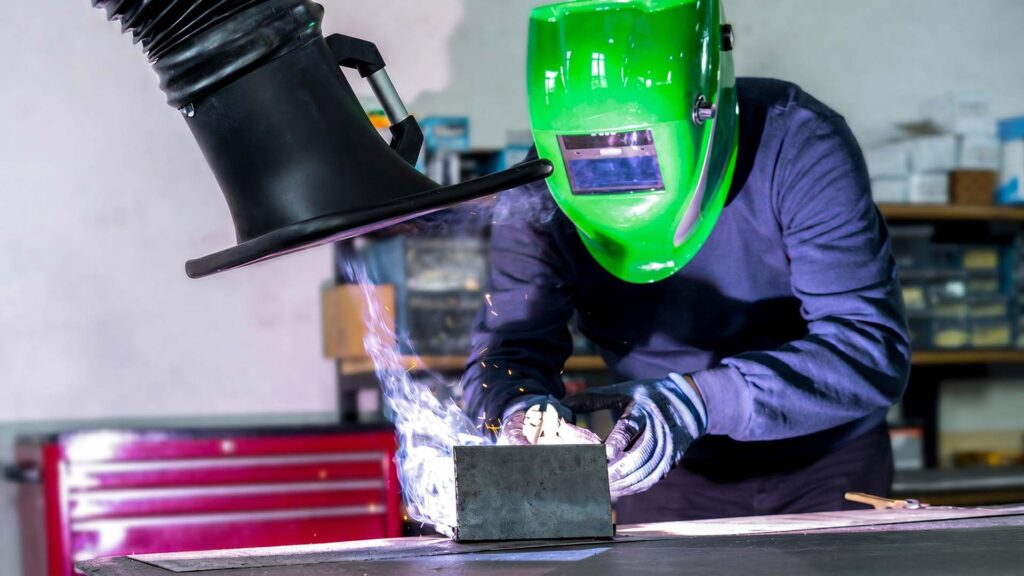
We need to talk about safety for a second. Both of these metals contain zinc. When you hit zinc with a welding torch, it burns and releases a toxic white smoke.
“If you breathe this zinc oxide smoke, you can develop metal fume fever. It hits you a few hours later with chills, a fever, and a massive headache. Anyone who has spent time behind a welding mask knows it feels exactly like a terrible flu.”
Here are three quick ways to protect your health:
- Grind it away: Before you strike an arc, use a grinder to strip the zinc coating off the weld area. Weld on bare steel.
- Use strong fans: Set up a fume extractor or a heavy-duty fan. Blow the white smoke away from your face.
- Wear a respirator: A standard paper dust mask will not save you. Wear a proper welding respirator with P100 filters.
Painting and Looks
Do you want that classic, shiny industrial look? Go with galvanized steel.
Do you want to paint or powder coat your project? Galvannealed steel is the absolute winner. Its dull, porous surface acts like a built-in primer. The paint grabs on and refuses to let go.
Standard galvanized steel is completely smooth. It naturally rejects paint.
How to Paint Galvanized Steel (Without It Peeling in a Year)
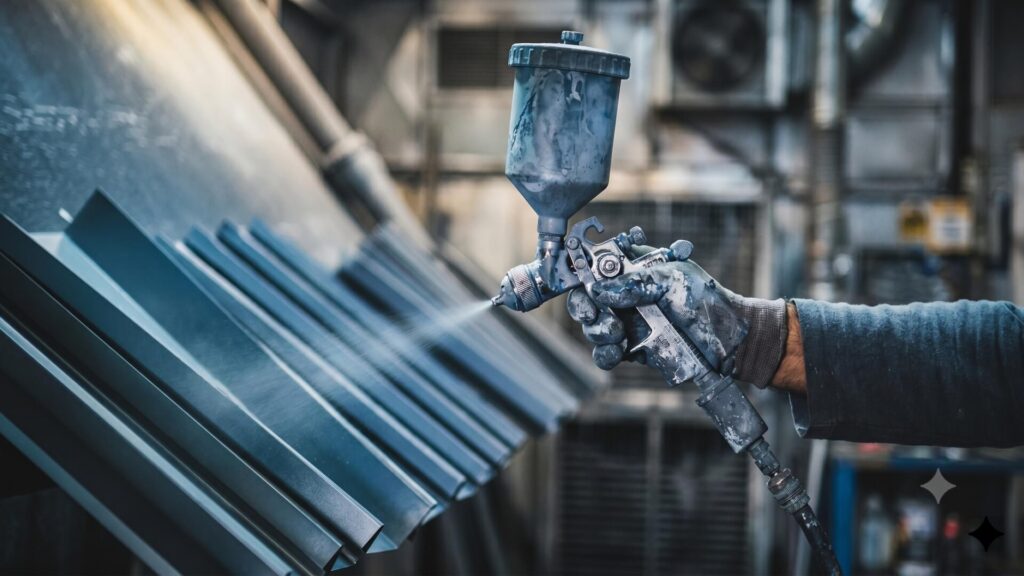
Painting galvanized steel is tricky, but I can show you how to do it right. You just need to strip away the slick surface so the paint has something to grab.
To successfully paint galvanized steel without peeling, you must properly prep the slick zinc coating. The process requires removing the factory oil layer with a degreaser, etching the smooth surface with vinegar or sandpaper, and applying a specialized zinc-rich or self-etching primer.
Follow this simple 3-step guide:
- Clean it: Factories coat galvanized steel in oil to keep it looking shiny. Wipe the metal down with a heavy-duty degreaser to remove this invisible oil film.
- Etch the surface: You need to rough up the smooth zinc. Wipe the metal down with white vinegar and let it sit for a few minutes, or give it a light scuff with fine sandpaper.
- Use the right primer: Never use oil-based (alkyd) paint on bare galvanized steel. The oil chemically reacts with the zinc and literally turns the paint into a soapy film that peels right off. Save yourself the rework and stick to a self-etching primer or a zinc-rich epoxy primer.
Upfront Cost vs. Long-Term Savings
Galvanized steel is cheaper to buy upfront. It takes less energy to make, so the price tag is lower.
But you have to look at the big picture. If you are building painted parts, galvannealed steel will actually save you money. You skip the massive headache of sanding, etching, and prepping the metal. Plus, you won’t have to pay someone to repaint the parts when they peel two years later.
How to Buy the Right Metal
You are ready to buy. You call your local metal supplier. But instead of just asking for generic sheet metal, the sales rep asks if you need G90, G60, or A40.
Don’t panic. We order this material by the ton at ShincoFab. While those designations might look confusing on a supplier quote, they are incredibly easy to read.
Making Sense of the Numbers (G60 vs. A40)

Every piece of coated sheet metal has a label. This label tells you exactly what type of metal it is and how thick the protective coating is.
Here is your quick cheat sheet:
- The Letter: This tells you the type of metal. “G” stands for Galvanized. “A” stands for Galvannealed.
- The Number: This tells you the thickness of the coating. Specifically, it measures ounces of zinc per square foot. A higher number means a thicker coating.
Let’s look at the three most common choices we order for our clients:
- A40 (Galvannealed): This has a light coating (0.40 ounces). It is perfect for indoor parts or things you plan to paint. We use A40 for almost all custom electrical enclosures because it bends beautifully on our CNC machines and takes powder coat perfectly.
- G60 or A60: This is your middle ground (0.60 ounces). It gives you solid rust protection but is still fairly easy to work with in the shop.
- G90 (Galvanized): This is the heavy-duty stuff (0.90 ounces). Use this for extreme outdoor projects, like roofing or parts near salty ocean air. Be warned: when we form G90 for outdoor brackets, we have to adjust our tooling because the thick shell makes it harder to bend without micro-cracking.
Note: All coating designations (A40, A60, G90) follow the ASTM A653/A653M Standard Specification for Steel Sheet, Zinc-Coated by the hot-dip process.
It comes down to a simple trade-off. Thicker coatings give you more rust protection, but they are harder to fabricate. Thinner coatings are easy to work with, but they usually need a coat of paint to survive outside.
Conclusion
There is no single perfect sheet metal, only the right material for your specific application.
- Choose galvanized steel for raw, heavy-duty outdoor frames where long-term rust protection is the only goal.
- Choose galvannealed steel for custom parts that require clean spot-welds and a flawless paint finish.
Match the metal to the mission. At ShincoFab, we know firsthand that picking the right material on day one prevents massive manufacturing headaches on day ten.
You now know how to visually identify these metals, decode supplier labels, and process them safely. Whether you are firing up the torch in your own garage or sending your CAD designs to us, you are ready to get to work.