I don’t just read about metals; I deal with them every day at ShincoFab. When handling everything from CNC punching to press brake bending, knowing that the density of pure copper is 8.96 g/cm³ isn’t just a textbook fact. It is a strict operational metric that dictates our tooling choices, shipping limits, and raw material budgets.
If you are fabricating with copper, you cannot afford to guess its weight. In this guide, I will give you the exact numbers you need without the confusing academic jargon. You will learn a simple formula to calculate the weight of any copper blank in seconds.
More importantly, I will share the real-world operational realities from our ShincoFab workshop. You will walk away knowing exactly how to use density to verify raw sheet stock, maximize the payout on your punching scrap skeletons, and avoid massive freight fees on dense custom parts.
What Exactly is the Density of Copper?
The density of pure copper is 8.96 g/cm³ (0.324 lb/in³) at room temperature. This means a solid one-centimeter cube of copper weighs exactly 8.96 grams.
Let’s get straight to the facts. When I talk about the density of copper, I mean how tightly packed the material is inside a specific space.
Why 8.96 g/cm³ is the Magic Dimension for Copper
The official number you need to remember is 8.96 g/cm³, a baseline metric verified by authoritative material databases like MatWeb. Let’s break that down into plain English.
Imagine a tiny cube of pure copper. It measures exactly one centimeter on every side. If you drop that little cube on a scale at room temperature, it will weigh exactly 8.96 grams.
Here is why this magic number matters to your fabrication projects:
- It gives you a baseline to check if the raw copper sheets your supplier delivered are pure.
- It helps you estimate raw material costs before you start quoting a client’s fabrication project.
- It prevents you from accidentally overloading your material handling equipment, like forklifts and lifting suction cups.
Density vs. Weight Made Simple
People often confuse density with weight. They are not the same thing. Weight is just how heavy an object is. Density tells you how much stuff is crammed into a specific size.
To give you a real example from our factory floor, imagine lifting a standard 4×8 foot sheet of 16-gauge aluminum off a pallet. Two workers can handle it easily. Now, try lifting a 4×8 foot sheet of 16-gauge pure copper. Even though the physical dimensions and thickness are identical, the copper sheet will fight your grip. It weighs nearly three times as much as the aluminum. That heavy drag, that massive cramming of mass into the exact same footprint, is density in action.
So, what exactly is going on inside copper to make it pack so much weight into such a tiny space? Let’s take a quick look under the microscope.
Why is Copper So Heavy?
Have you ever picked up a small copper pipe? You probably noticed it feels surprisingly heavy for its size.
Tightly Packed Atoms
Everything in the world is made of tiny building blocks called atoms. In copper, these blocks are squeezed together extremely tight.
Think of an elevator. If you pack 20 people shoulder-to-shoulder inside, that elevator holds a lot of weight. Copper atoms do exactly the same thing. They stack in a highly locked pattern that leaves almost zero empty space.
Here is why this tight packing actually benefits your projects:
- Strength: It makes the metal tough and durable.
- Speed: It creates an unbroken highway for electricity to flow.
- Cooling: It pulls heat away from sensitive components fast.
This crowded atomic structure is what makes copper act like a true heavyweight. But just how heavy is it compared to the other materials sitting in your workshop? Let’s take a look.
How Copper Compares to Other Metals
It is hard to grasp how dense 8.96 g/cm³ is without a little context. You need to compare it to the other metals sitting on your workbench.
The Heavyweights and Lightweights
Copper is definitely on the heavier side of the spectrum. Here is how it stacks up against a few familiar metals:
- Aluminum (2.70 g/cm³): Aluminum is the featherweight. Copper is over three times denser. If you swap a lightweight aluminum part for a copper one, get ready for a massive weight jump.
- Steel (7.85 g/cm³): Steel feels tough and heavy. But copper is actually denser. A solid copper block will weigh about 14% more than a steel block of the exact same size.
- Gold (19.32 g/cm³): Gold is the ultimate heavyweight. It is more than twice as dense as copper.
Quick Reference: Copper Density vs. Common Shop Metals
| Metal Material | Density (g/cm³) | Density (lb/in³) | Weight Comparison to Copper | ShincoFab Shop Floor Context |
|---|---|---|---|---|
| Aluminum | 2.70 g/cm³ | 0.098 lb/in³ | ~70% Lighter | Requires less press brake tonnage; cheap to ship. |
| Carbon Steel | 7.85 g/cm³ | 0.284 lb/in³ | ~12% Lighter | Standard fabrication baseline; cheaper but lower conductivity. |
| Pure Copper | 8.96 g/cm³ | 0.324 lb/in³ | The Baseline (100%) | Requires specilized handling and fiber lasers for cutting. |
| Gold | 19.32 g/cm³ | 0.698 lb/in³ | ~115% Heavier | Used only in ultra-dense, microscopic electronic plating. |
Knowing these differences helps you make smart choices. It prevents you from designing a part that is way too heavy for your project.
So, 8.96 g/cm³ is the golden rule for pure copper. But is that number carved in stone? Not quite. Let’s look at the sneaky real-world factors that actually change the density of your metal.
Things That Actually Change Copper’s Density
That 8.96 g/cm³ rule is measured at a comfortable room temperature. In the real world, this number rarely stays perfectly still.
Heat and Temperature
Heat makes copper expand. When you heat up a piece of copper, those tightly packed atoms start to vibrate.
They push away from each other to make room. The copper swells up, meaning the same amount of weight suddenly takes up more space. Because the volume increases, the density drops.
Why should you care about this?
- Precision fits: If you design a part for a hot engine, it will expand.
- Preventing cracks: If you don’t leave room for this expansion, your parts might warp or break under the pressure.
Hidden Impurities
Pure copper is rare in everyday commercial applications. It contains traces of oxygen, dirt, or other elements trapped inside. These impurities act like little roadblocks. They disrupt that perfectly packed atomic structure we talked about earlier.
Because these trapped elements are almost always lighter than pure copper, your metal’s overall density drops.
This matters for a few reasons:
- Quality control: If your copper weighs a bit less than it should, you might be dealing with lower-quality scrap.
- Performance hit: Impurities block the flow of electricity. Lower density often means a weaker electrical connection.
But dirt and oxygen aren’t the only things that get mixed into your metal. Sometimes, I intentionally add other metals to give copper an upgrade. Let’s look at what happens to the density when we mix up popular alloys like brass and bronze.
The Density of Popular Copper Alloys
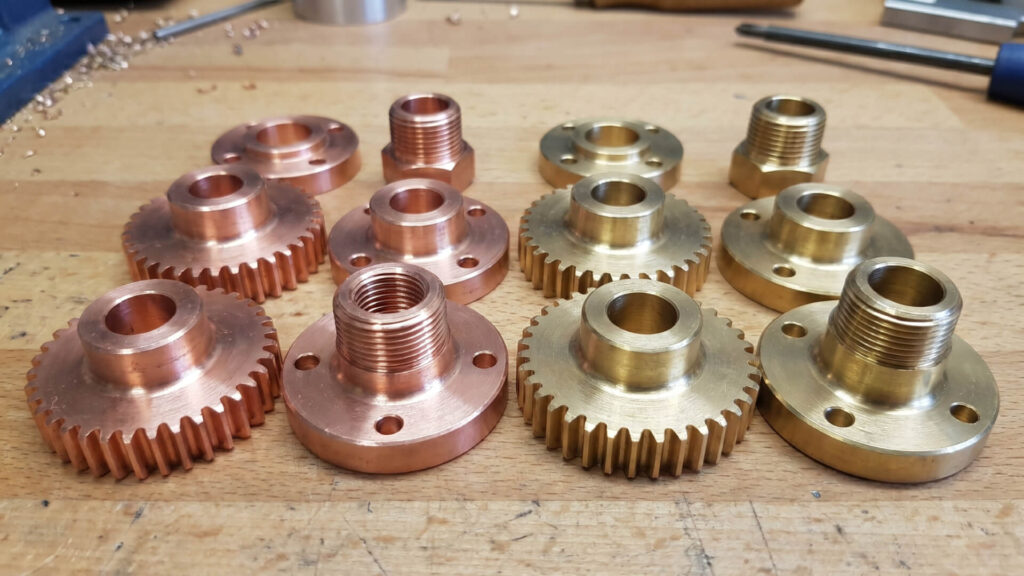
Pure copper is great for wiring. But sometimes it is too soft for heavy-duty structural parts. That is when I mix it with other metals to create stronger alloys.
When you mix metals, the overall density changes.
Brass (Copper + Zinc)
Brass is a mix of copper and zinc. Zinc is a much lighter metal.
Zinc is lighter than copper. Adding zinc decreases the alloy’s overall mass. Consequently, brass possesses a lower density of 8.4 to 8.7 g/cm³.
Here is why you might choose brass:
- Lighter weight: It shaves off extra weight from your final product.
- Easier cutting: It is much easier to carve and shape in a machine.
- Rust resistance: This makes it perfect for plumbing pipes and shiny decorative parts.
Bronze (Copper + Tin)
Bronze is born when you mix copper with tin. Tin is also lighter than copper.
However, the atoms in bronze pack together very tightly. Because of this, the density stays pretty high. It usually lands around 8.7 to 8.9 g/cm³.
Here is why you might choose bronze:
- Extreme toughness: It easily handles heavy friction without wearing down.
- Heavy-duty parts: It is exactly what you want for tough gearings, bearings, and marine hardware.
Copper vs. Brass vs. Bronze Density Cheat Sheet
| Alloy Type | Primary Metal Mix | Average Density | Key Characteristic | Typical Machining Application |
|---|---|---|---|---|
| Pure Copper (C11000) | 99.9% Copper | 8.96 g/cm³ | Max Electrical Conductivity | Electrical busbars, thermal sinks, power enclosures. |
| Bronze | Copper + Tin | 8.7 – 8.9 g/cm³ | Extreme Friction Resistance | Heavy-duty marine hardware, industrial bearings, gears. |
| Brass | Copper + Zinc | 8.4 – 8.7 g/cm³ | Superior Machinability & Lighter | Decorative parts, plumbing fittings, CNC turned components. |
These slight weight differences helps you pick the exact right metal. But how does this knowledge actually help you hit your goals? Let’s look at why this density data is a total game-changer for your projects.
Why Should You Care About Copper Density?
Density is not just random science trivia. At ShincoFab, it is a practical tool we use to build better products, protect our machinery, and save our clients money.
Sheet Metal Machining, Laser Cutting, and CNC Bending
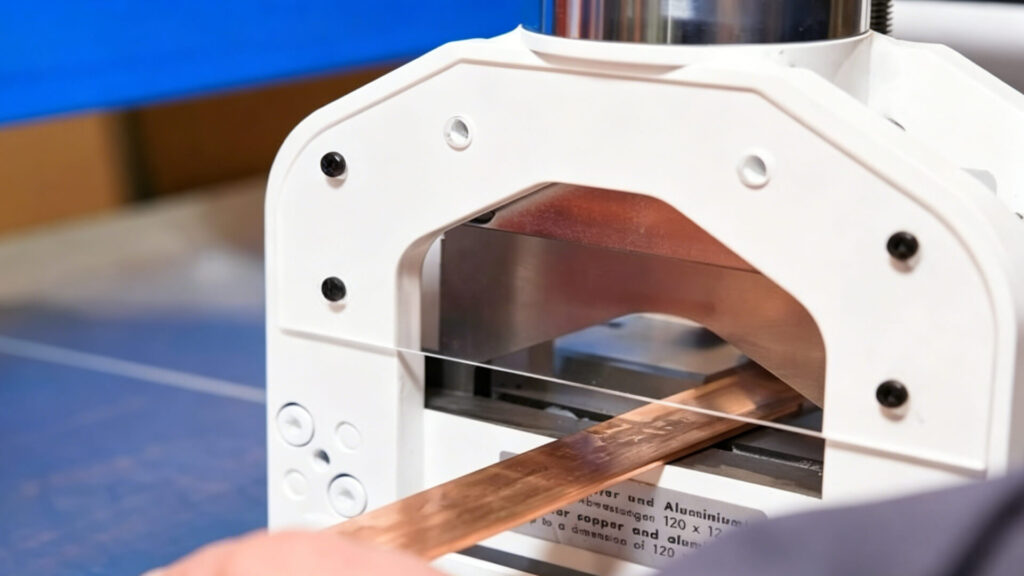
If you run heavy machinery, density is a massive deal. Dense metals push back hard against your tooling. If you treat a heavy copper blank like soft aluminum, you are going to ruin expensive tools. Here is how knowing the density dictates our factory operations:
- Press Brake Tonnage: Because copper packs so much mass, bending it requires us to precisely calculate the force (tonnage) on our press brakes. If we misjudge the density and thickness, we risk cracking the material along the bend line or damaging our V-dies.
- Laser Cutting Realities: High density combined with copper’s thermal properties creates nightmares for standard lasers. Dense copper absorbs heat fast and reflects lasers back. Knowing exactly what we are cutting allows us to switch to specialized fiber lasers and adjust assist-gasses to get clean, dross-free edges.
- Machine Handling: Dense sheets require heavier-duty suction clamps to load onto the NCT (Numerical Control Turret) punching machines safely.
Electrical Components (Busbars & Enclosures)
Many of the parts we fabricate at ShincoFab are highly specific electrical components, like custom busbars. The denser and purer the copper sheet we source, the better the electricity flows for our clients.
- Less energy loss: Power travels efficiently through the tightly packed atomic structure.
- Thermal Management: Dense copper acts like a thermal sponge in custom electronic enclosures we build, quickly pulling heat away from sensitive circuit boards.
How to Calculate Copper Weight for Your Project
Before you buy materials or start cutting, you need to know exactly how heavy your copper part will be. You don’t need a fancy lab for this. Just use simple math.
The Basic Math Formula
If you are working with a regular sheet or block of copper, grab a measuring tape or caliper.
First, you need to find the total volume. Then, you multiply that volume by the density. Here is the exact formula:
- Step 1: Multiply Length × Width × Thickness to get your volume.
- Step 2: Multiply that Volume by Copper’s Density (8.96 g/cm³).
Let’s do a quick example. Imagine you have a solid copper block that is 10 cm long, 5 cm wide, and 2 cm thick. Multiply those together (10 x 5 x 2) to get a volume of 100 cubic centimeters. Next, multiply 100 by 8.96. You instantly know your block weighs exactly 896 grams.
3 Clever Ways We Use Copper Density on the Factory Floor
You don’t have to be a metallurgist to use density. Here are three highly practical ways we apply it on the shop floor to protect our margins and quality.
How We Spot Low-Quality Copper During Receiving Inspections
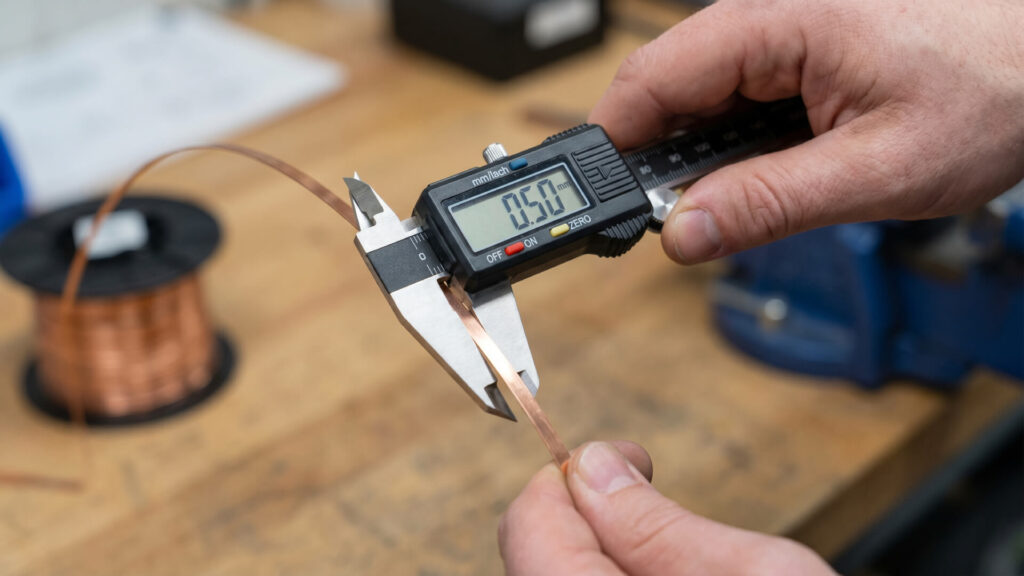
Sometimes, suppliers might try to pass off lower-grade copper alloys as pure C11000 Electrolytic Tough Pitch (ETP) copper. We don’t rely purely on trust; we use density checks.
By weighing a precise offcut sample from the new batch of sheet metal and comparing it against its exact volume (measured with digital calipers: Length × Width × Thickness), we calculate its actual density. If the number dips closer to 8.5 g/cm³ instead of 8.96 g/cm³, we immediately know there are excessive impurities or it’s a brass mix. This prevents us from fabricating sub-par electrical components for our clients.
Maximizing Payout on Punching Skeletons (Scrap Yard Hacks)
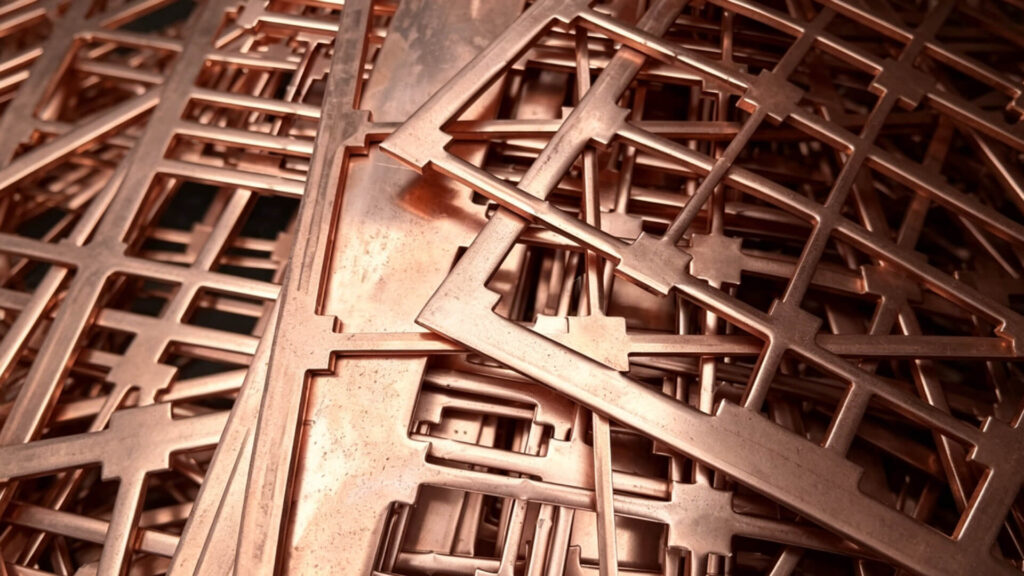
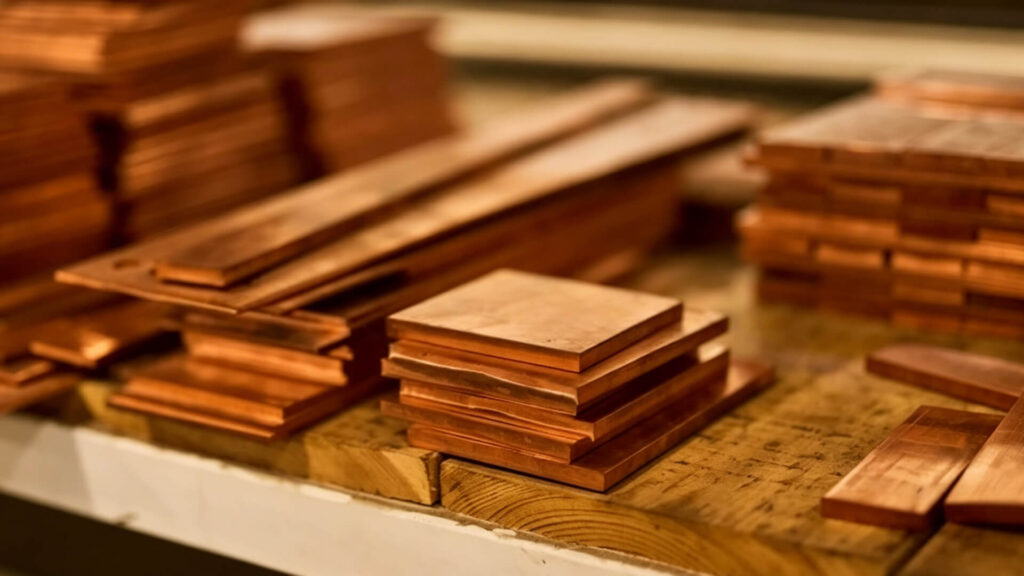
In sheet metal fabrication, once our CNC turret punches out the production parts, we are left with the residual sheet skeleton. Scrap yards pay top dollar for these pure copper skeletons. However, as copper and brass offcuts sit in the scrap bin, surface oxidation quickly makes these two very different metals look visually identical.
If we toss mixed metal skeletons into the same bin, the yard pays us the cheaper brass rate for everything. Because we know copper’s density is significantly higher, our operators can feel the difference when lifting identically sized offcuts. We rigidly sort our scrap bins by this weight disparity to ensure ShincoFab gets the maximum payout per pound.
How We Optimize Freight to Avoid Copper Logistics Nightmares
Shipping custom fabricated copper parts—like a pallet of stamped busbars—can be a financial nightmare. Because copper is highly dense, a very small box can easily pack thousands of pounds, rapidly maxing out weight limits and triggering steep density-based LTL (Less Than Truckload) freight costs.
We use the density math (Volume × 8.96) in our CAD software before we even quote the client for shipping. If we calculate that a seemingly small box of 100 copper brackets will weigh over 60 pounds, we know in advance to use reinforced packaging and quote for specialty shipping, avoiding nasty surprise fees and damaged pallets in transit.
Frequently Asked Questions
Let’s wrap up with a few common questions I hear all the time.
Is copper heavier than steel?
Yes, it absolutely is. A lot of people assume steel is the heaviest metal in the shop.
But copper is actually about 14% denser than standard carbon steel. If you hold a solid copper block and a steel block of the exact same size, the copper one will always feel noticeably heavier in your hand.
What is the density of copper in lb/in³?
The scientific world heavily relies on grams and centimeters. But if you work in the US, you probably track your material in pounds.
The density of pure copper is 0.324 pounds per cubic inch (lb/in³).
Here is how you use that:
- Measure your block in inches.
- Multiply Length × Width × Thickness to find cubic inches.
- Multiply that number by 0.324 to get your total pounds.
Does scraping or cutting copper change its density?
No, it does not. Density is a permanent, internal property of the metal.
If you cut a copper pipe in half, the piece obviously weighs less. But its density stays exactly at 8.96 g/cm³. The tight spacing of the atoms never changes just because you changed the shape.
The only exception? Heat. If your cutting tools create extreme friction, the metal gets hot and temporarily expands, throwing the density off by a tiny fraction.
Conclusion
You now have the exact tools to master the density of copper. It is no longer just a boring science fact. It is a practical skill that helps you verify materials, optimize machinery, and calculate tricky logistics in seconds.
At ShincoFab, we literally build our business on these metrics. Whenever we handle sheet metal fabrication, knowing the precise density of copper helps us set our press brakes accurately, prevents us from burning out laser cutting heads, and keeps our material estimates perfectly reliable. It takes all the guesswork out of the job.
Keep that 8.96 g/cm³ number in your back pocket. Whether you are sorting CNC scrap, calculating shipping for a custom enclosure, or designing a new part, you are ready to handle it like a factory pro.