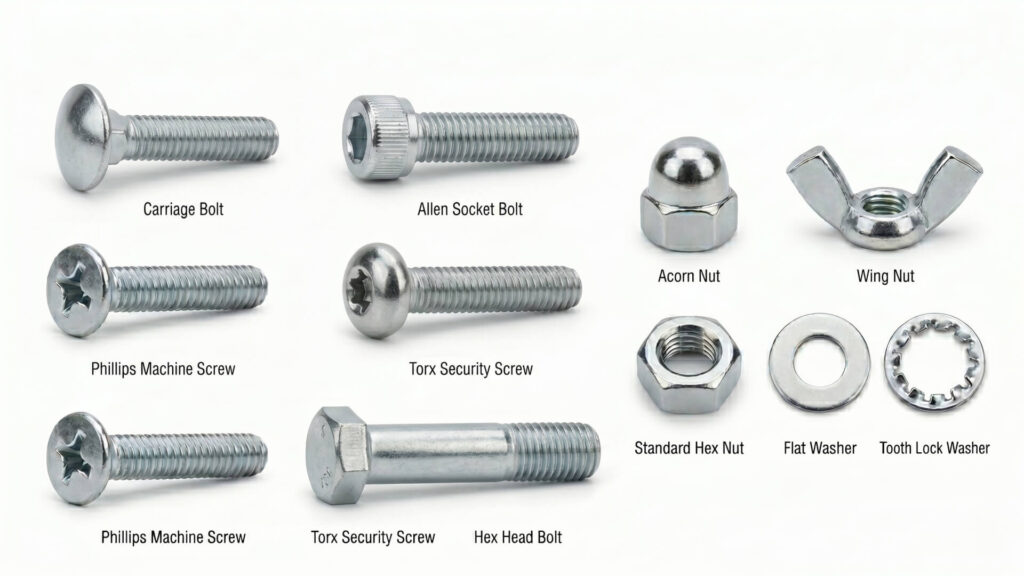
Choosing between bolts, nuts, and screws determines the structural integrity of your project. A bolt requires a pre-drilled hole and relies on a nut to squeeze materials together from both sides. A screw utilizes sharp threads to dig its own path into base materials, while a washer distributes the clamping load to protect the surface.
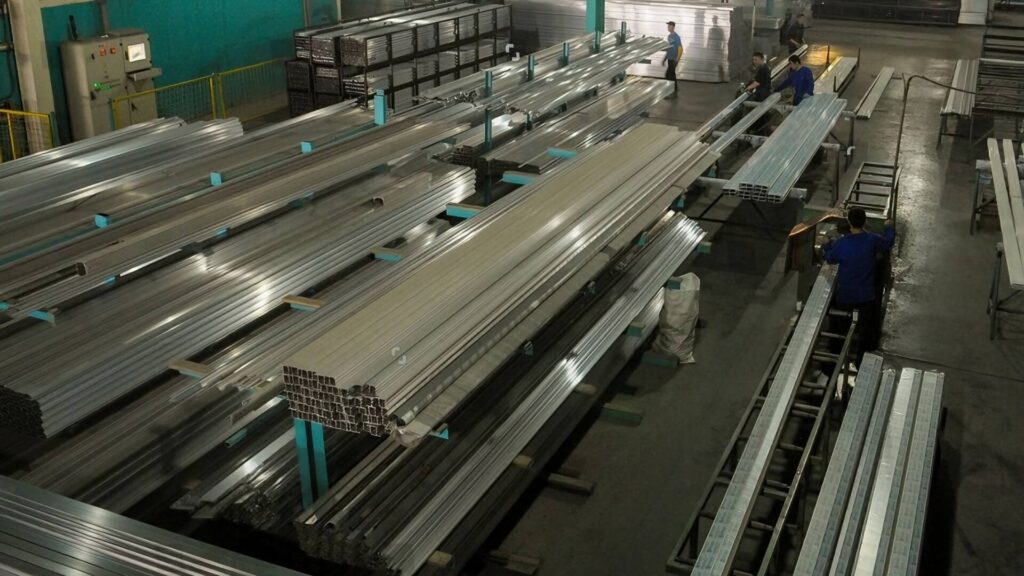
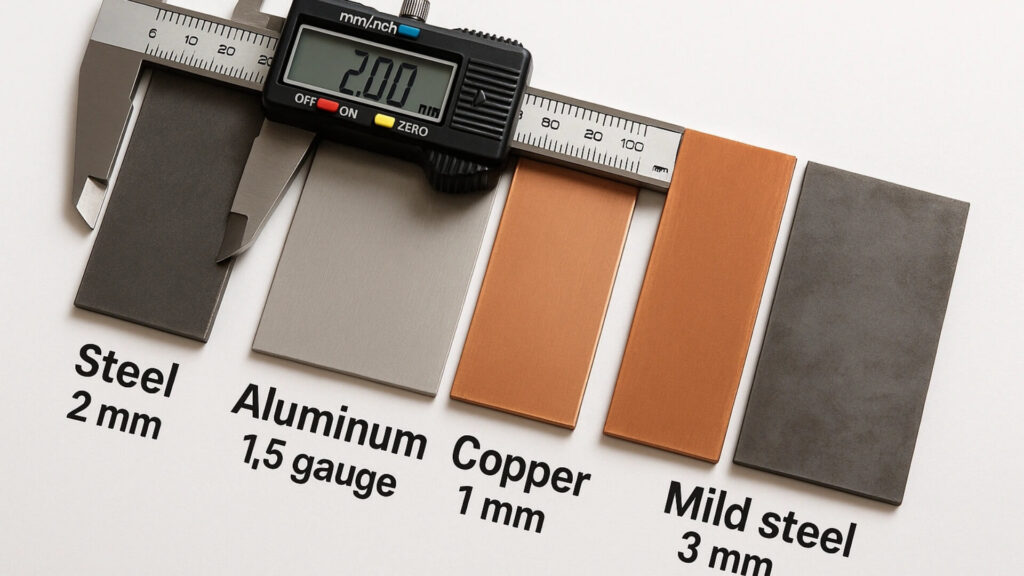
Incorrect hardware choices cause immediate structural failures. At our ShincoFab sheet metal fabrication floor, clients frequently present beautifully laser-cut enclosures destroyed by warped thin-gauge metal, stripped custom threads, or rapid galvanic corrosion. These expensive failures stem from basic fastener mismatches.
Drawing from years of managing industrial assembly lines, this guide delivers practical factory-floor applications. You will learn exactly which hardware to buy, how to decode standard SAE and metric box labels, and how to apply the correct fasteners so your projects remain locked together for decades. Let’s start by breaking down the mechanical differences
What’s the Real Difference Between Bolts, Nuts, and Screws?
Have you ever stared at a wall of shiny metal fasteners and felt unsure of what to choose? You are not alone. People mix up screws, bolts, and nuts all the time. Pick the wrong one, and your project might literally fall apart. Let’s clear up the confusion right now.
Bolts vs. Screws: A Quick Rule of Thumb
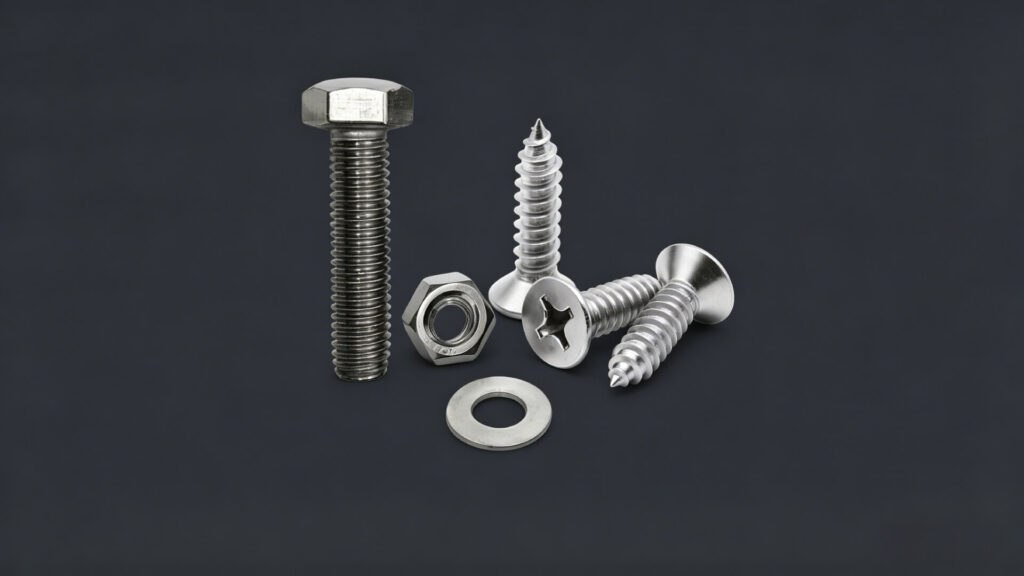
Here is the easiest way to remember the difference: Screws bite. Bolts squeeze.
- Screws usually have pointy ends and sharp threads. As you turn them, they dig their own path right into wood, drywall, or metal. You only need the screw itself to hold things in place.
- Bolts have flat ends. They do not dig. Instead, they slide right through a hole that is already drilled, laser-cut, or CNC-punched.
But a bolt cannot hold your project together on its own. It needs a partner on the other side. That is where the nut comes in.
Why Nuts and Bolts Work Better Together (Maximum Grip)
A bolt without a nut is just a metal stick. The nut is the small, hexagon-shaped piece with a threaded hole in the middle. You twist it onto the flat end of the bolt.
Using a nut and bolt combination instead of a single screw provides distinct mechanical advantages, primarily concerning grip strength and long-term maintenance. Screws only grab the inside of the hole. If that material gets stripped or rots, the screw pulls right out. Nuts and bolts work like a vice. They squeeze your materials together from both sides.
Here is why you want this combination:
- High tensile strength: They hold heavy structural loads safely without snapping.
- Easy disassembly: You can loosen a nut and take a project apart hundreds of times. A screw will eventually ruin the hole. We see this common issue when clients repeatedly open sheet metal access panels secured only by screws.
- Surface protection: Add a flat metal washer under the nut. This spreads the pressure out and stops the nut from crushing or denting your material.
What Are the Different Types of Bolts?
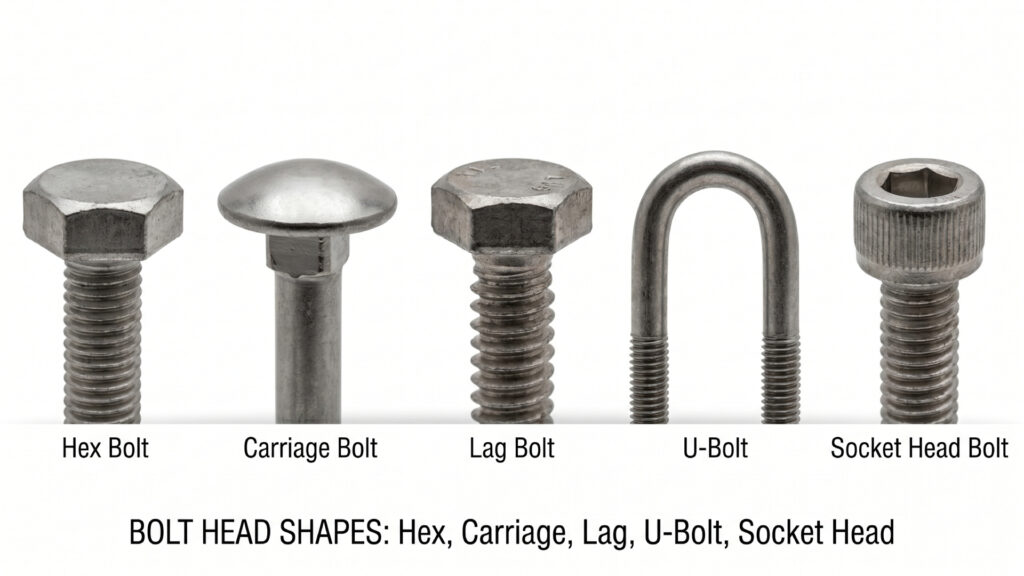
Hardware stores stock hundreds of different bolts. It is easy to get overwhelmed. But the truth? You will likely only ever need these five.
Fastener Overview: The 5 Essential Bolts
| Bolt Type | Head / Shape | Primary Mechanical Benefit | Common Application |
|---|---|---|---|
| Hex Bolt | Flat, six-sided head | Allows for maximum tightening torque | General machinery & structural steel |
| Carriage Bolt | Smooth dome with square neck | Tamper-resistant, auto-locking neck | Wood decks & security panels |
| Lag Bolt | Heavy-duty with pointed screw end | Exceptional holding power in solid materials | Mounting heavy loads into wood/studs |
| U-Bolt | U-shaped with two threaded ends | Clamps cylindrical objects securely | Plumbing pipes & cable mounting |
| Socket Head | Recessed hex drive (Allen key) | Saves space; can be countersunk flush | Tight motor assemblies & electronics |
Hex Bolts
A hex bolt features a flat, six-sided head. This head design allows wrenches to grip the fastener securely. The secure grip enables high-torque tightening.
- The Benefit: The six-sided head gives your wrench a maximum surface contact. You can apply optimal torque without the tool slipping off.
- Best For: Joining heavy metals. We use Grade 5 hex bolts almost exclusively when assembling the heavy structural frames of our large industrial enclosures at ShincoFab.**
Carriage Bolts
A carriage bolt utilizes a smooth, circular dome. Below the dome sits a square neck. This square neck locks into the base material to prevent rotation.
- The Benefit: The smooth front means nothing will snag on it. It also prevents thieves from unscrewing it from the outside.
- Best For: Wood decks, fences, and security panels. In sheet metal fab, we often design custom parts with square-punched holes specifically for carriage bolts. The square neck locks into our precise CNC-punched hole, allowing workers to tighten the nut from the inside without needing a wrench on the outside. This makes them perfect for tamper-proof electrical utility boxes.
Lag Bolts (For the Heaviest Loads)
Lag bolts are oversized, heavy-duty fasteners. Technically, they are screws because they have a pointy, threaded end and do not always require a nut. But everyone calls them bolts due to their size.
- The Benefit: Incredible holding power.
- Best For: Bearing intense, heavy loads. While we don’t use these to join sheet metal, we frequently supply lag bolts to our clients who need to safely mount our heavy steel electrical cabinets to wooden studs or warehouse walls.
U-Bolts (Perfect for Holding Pipes)
A U-bolt is an industrial clamping fastener shaped like the letter ‘U,’ featuring machine threads on both ends designed to accept a nut on each side.
- The Benefit: They make securing round or awkward objects incredibly simple.
- Best For: Holding plumbing pipes or securing cables. We frequently laser-cut custom backplates with precise hole spacing specifically designed to accept standard U-bolts for pipeline mounting projects.
Socket Head Bolts (When Space is Tight & Looks Matter)
A socket head bolt is a cylinder with a small hexagonal hole right in the center of the head. Instead of reaching around the outside with a wrench, you stick an Allen key directly into the center.
- The Benefit: They are huge space-savers. You can sink them deep into narrow holes.
- Best For: Tight spaces and motor assembly. In custom fabrication, aesthetics matter. We use socket head bolts (often countersunk) on high-end electronic faceplates so the fastener sits sits flush with the metal surface, giving a clean, modern look.
What Are the Different Types of Nuts?
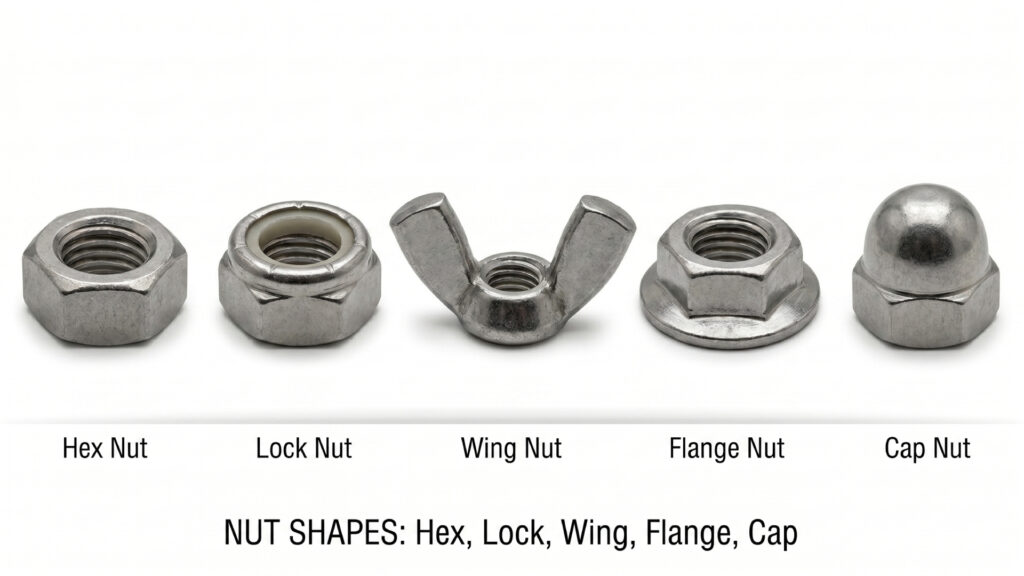
A bolt cannot do its job without a nut gripping the other side. But if you grab the wrong nut, your whole project could slowly rattle loose over time.
Fastener Overview: The 5 Essential Nuts
| Nut Type | Defining Feature | Primary Mechanical Benefit | Common Application |
|---|---|---|---|
| Hex Nut | Standard six flat sides | Straightforward, standard torque installation | Static assemblies (no movement) |
| Lock Nut | Internal nylon friction ring | Refuses to vibrate loose on its own | Engines, HVAC units, moving machinery |
| Wing Nut | Protruding metal tabs | Can be tightened and removed without tools | Frequently accessed filter covers |
| Flange Nut | Built-in wide metal base | Distributes clamping force; prevents surface damage | Thin sheet metal & assembly lines |
| Cap Nut | Closed, rounded dome top | Covers exposed threads to prevent injury | Handrails & hygienic food equipment |
Hex Nuts
A hex nut is a standard six-sided internally threaded mechanical fastener designed to mate with a similarly sized bolt.
- The Benefit: Fast, straightforward installation for standard jobs.
- Best For: Everyday fastening where there is no heavy shaking or movement.
Lock Nuts
Inside a lock nut, there is a tiny nylon ring. When you force the bolt through it, this ring molds into the threads and creates a high-friction lock.
- The Benefit: It simply refuses to loosen up on its own.
- Best For: Cars, machinery, or anything that moves. We strictly mandate nylon lock nuts when assembling generator housings or HVAC enclosures. The constant vibration of the motors will shake standard hex nuts right off the threads within weeks.
Wing Nuts (For Quick, Hand-Tightened Fixes)
Wing nuts have two metal tabs sticking out of the sides. You just pinch the wings and twist it on by hand.
- The Benefit: You can tighten and remove them in seconds without tools.
- Best For: Things you adjust or take apart all the time. We often integrate these on the inside of custom dust-collection bins or filter covers, allowing operators to change filters quickly.
Flange Nuts (The Built-In Washer & Sheet Metal Savior)
Flange nuts solve the issue of dropping tiny metal washers by building a wide metal base right into the nut itself.
- The Benefit: Speeds up your assembly time and prevents lost hardware.
- Best For: Assembly lines.
Fabricator’s Pro Tip: Flange nuts are our absolute favorite fastener in the sheet metal industry. When assembling 18-gauge or 20-gauge steel boxes, tightening a standard nut too hard will pucker and dent the thin metal. The wide base of a flange nut distributes that clamping force, saving the enclosure from warping.
Cap Nuts (Keep Things Safe and Looking Good)
Also known as acorn nuts, these have a smooth, rounded dome on top. They cover the sharp end of a bolt entirely.
- The Benefit: They hide ugly threads, prevent snagged clothing, and eliminate sharp contact points.
- Best For: Handrails or areas where people touch the hardware. If we are building custom stainless steel countertops or hygienic food equipment, cap nuts help cover exposed threads and support sanitary design.
Why Are Washers Necessary in Fastening?
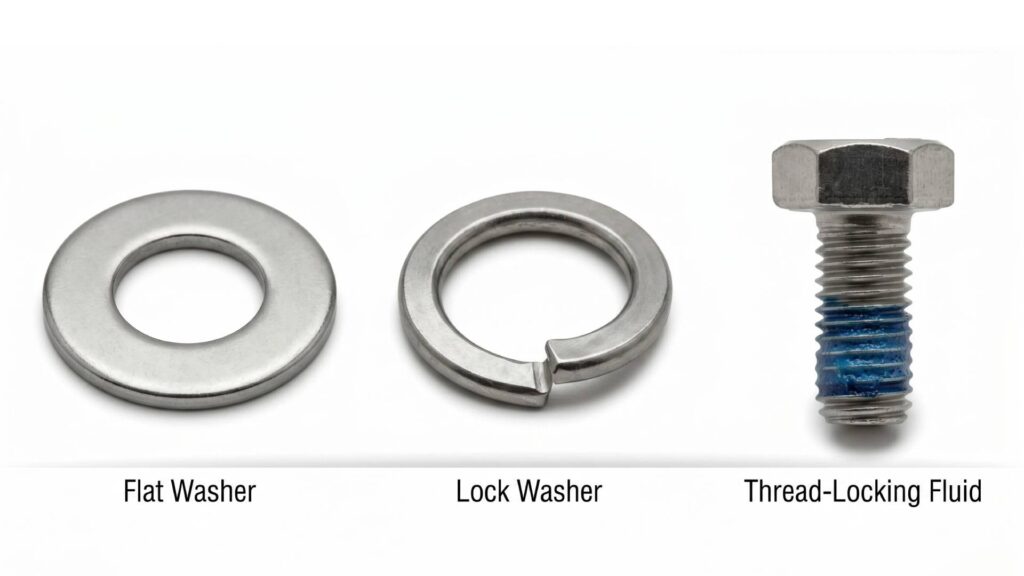
A bolt and a nut will secure a joint, but a complete fastening system requires a washer. Washers prevent your hardware from damaging the host material and stop assemblies from vibrating apart over time.
Flat Washers (Surface Protection)
A flat washer is a smooth metal ring that sits directly under the nut or bolt head.
- The Benefit: It increases the bearing surface area, distributing the clamping pressure (torque) over a wider section of your material.
- Best For: Thin or soft materials. When we assemble 18-gauge sheet metal enclosures, tightening a nut directly against the surface can dimple the metal. A flat washer spreads that force out, protecting the structural integrity and aesthetic finish.
Lock Washers (Vibration Resistance)
Lock washers typically look like a standard metal ring that has been snapped and slightly twisted (a split ring).
- The Benefit: As you tighten the nut and flatten the twisted ring, it creates continuous spring tension. The sharp edges physically bite into both the nut and the mounting surface.
- Best For: Machinery or environments with continuous low-frequency vibration. If you cannot use a nylon lock nut, a lock washer prevents standard hex nuts from slowly backing out of the threads over time.
Thread-Locking Fluid (The Chemical Alternative)
Thread-locking fluid is an anaerobic chemical adhesive applied directly to bolt threads to cure into a solid plastic, preventing vibration-induced loosening.
- The Benefit: It is an anaerobic chemical adhesive that cures in the absence of air, effectively gluing the threads together so they never vibrate loose under intense movement.
- Best For: High-vibration assemblies where traditional lock nuts or washers simply do not fit.
Fabricator’s Pro Tip: Always use “Blue” thread-locker for parts you may need to disassemble later with standard hand tools. Strictly reserve “Red” thread-locker for permanent installations, as it requires a blowtorch to melt the chemical bond for removal!
Which Bolt Material and Coating is Best to Prevent Rust?
You can buy the correct shape of bolt, but if you choose the wrong metal, it will fail. Pick a metal that is too weak, and it snaps. Pick the wrong finish, and it turns into a rusty mess.
Stainless Steel vs. Carbon Steel
Most hardware is made from steel, but they serve completely different engineering purposes.
- Carbon Steel: Carbon steel is a high-tensile strength metallic alloy that is incredibly cost-effective for heavy structural loads. However, it has a fatal flaw: without a protective zinc plating or galvanized coating, bare carbon steel will rapidly oxidize and rust when exposed to moisture.
- Stainless Steel: This is your primary defense against corrosion. It relies on a minimum of 10.5% chromium content to form a passive molecular layer that naturally resists oxidation. At ShincoFab, we primarily use 304 stainless steel hardware for standard outdoor enclosures, and mandate an upgrade to 316 stainless steel (which contains molybdenum) for coastal environments and severe salt exposure.
Brass and Bronze (Great for Water and Weather)
These metals do not contain iron, which means they physically cannot rust. They handle saltwater, constant rain, and harsh weather without breaking a sweat, though they are softer metals and shouldn’t be used for heavy structural loads.
Coatings That Matter (And The Powder Coating Catch)
To maintain the high tensile strength of carbon steel while preventing outdoor corrosion, manufacturers apply specific protective coatings:
- Zinc Plated: A thin, shiny layer of zinc. Cheap, and stops indoor hardware from rusting.
- Hot-Dip Galvanized: The ultimate outdoor armor. The steel gets fully dipped into boiling zinc, creating a thick shield.
The Fabricator’s Pro Tip: Clients often request thick powder coating or hot-dip galvanizing on their custom parts. What they forget is that these coatings add physical thickness to the metal. This includes the inside of threaded holes! If we powder coat a threaded hole, a standard bolt will no longer fit. You must order specialized oversized nuts or re-tap the holes after coating.
How Do You Choose the Right Nut and Bolt Combination?
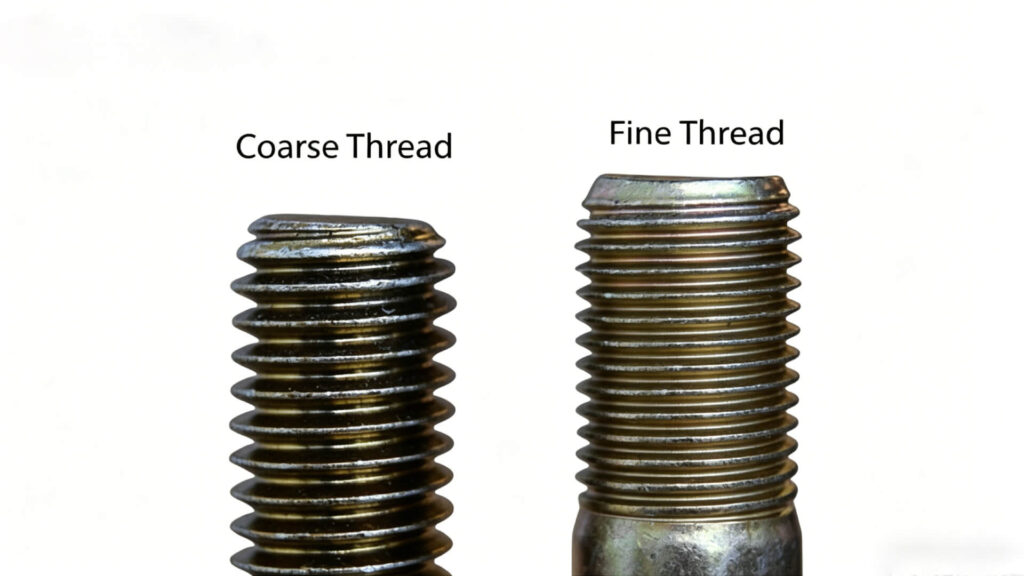
Mating incompatible fasteners compromises joint integrity. You must verify two critical specifications.
Match the Thread Type (Coarse vs. Fine)
If the nut and bolt threads do not match perfectly, they will jam.
- Coarse Threads: The grooves are spaced further apart. They thread together very quickly and are tougher to strip.
- Fine Threads: The grooves are packed tightly together. They take longer to tighten, but provide an superior clamping force for precision machines.
SAE Bolt Grades (Understanding Bolt Grades)
Look at the flat top of a standard hex bolt. You might see tiny lines pointing out from the center.
- Grade 2 (Zero Lines): Cheap, everyday hardware for light DIY projects.
- Grade 5 (Three Lines): Medium-strength steel. The ultimate workhorse for machinery.
- Grade 8 (Six Lines): High-strength alloy steel. Use this when failure is not an option.
How to Read a Bolt Box at the Hardware Store
If you guess what the label means, you will probably end up making a second trip to the store. Use these decoder tables when standing in the fastener aisle.
How to Read Standard SAE Labels (Inches)
Example Box Label: 1/4-20 x 2
| Code | What It Means | Translation for this Label |
|---|---|---|
| 1/4 | Diameter / Thickness | This bolt is a quarter of an inch thick. |
| -20 | Thread Pitch (TPI) | 20 threads per inch. (Your nut must also say “20”) |
| x 2 | Length | This bolt is 2 inches long. |
Decoding Metric Labels (Millimeters)
Example Box Label: M8-1.25 x 30
| Code | What It Means | Translation for this Label |
|---|---|---|
| M8 | Metric Diameter | This bolt is 8 millimeters thick. |
| 1.25 | Thread Gap | The distance between the threads is 1.25 millimeters. |
| x 30 | Length | This bolt is 30 millimeters long. |
What Are the Most Common Fastening Mistakes?
You made it home with the correct hardware. Avoid these three common mistakes so your project stays strong.
1. Cross-Threading
If you force a nut on at an angle, the threads cut into each other and grind flat. You will not be able to tighten or remove it.
Fabricator’s Pro Tip: On our assembly line, using a power drill immediately to start a nut is a strict violation. Always spin the nut on by hand for the first few turns. A power drill will cross-thread and ruin an expensive, custom-machined metal part in milliseconds.
2. Cranking Down Too Hard
Apply too much force, and you will strip the threads or snap the bolt head entirely.
The Fix: Tighten the nut until it feels very snug, or better yet, use the proper tool. If you over-tighten a bolt on a thin sheet metal enclosure, you will create an ugly dimple in the metal. This deformation completely ruins the cosmetic finish.
We use torque wrenches set to exact specifications to prevent this. Torque is a measure of rotational clamping force, typically measured in foot-pounds or Newton-meters. Checking your hardware’s specific torque rating ensures you apply the exact amount of force to secure the load. This keeps everything tight without crushing the underlying metal.
3. Mixing Metals (Instant Rust)
If you put a bare carbon steel bolt through an aluminum frame, you actually create a tiny battery. A fast chemical reaction happens, and the metals rust and weld together.
Fabricator’s Pro Tip: In the fabrication world, this is a cardinal sin called galvanic corrosion. Always keep metals with their own kind. If we must mix them (e.g., carbon steel bolts on a custom aluminum box), we mandate nylon or rubber isolation washers to prevent the two metals from physically touching.
How to Remove a Stuck or Rusted Nut
If you pull too hard on a rusty nut, you will snap the bolt right in half. Instead, use these three tricks:
- Soak It in Penetrating Oil: Spray a dedicated rust penetrating oil onto the threads and wait 15 minutes. It creeps into microscopic gaps and eats the rust.
- Apply Heat (Expand the Metal): If oil fails, point a propane torch directly at the nut for a minute. The heat makes the nut swell, cracking the rusty seal.
- Use a Breaker Bar (Leverage is Key): Slide a long metal pipe over your wrench handle. A long bar gives you massive twisting power to effortlessly pop a stuck nut loose.
Conclusion
You made it. You are no longer at the mercy of the hardware store aisle.
You know the difference between a hex bolt and a lag bolt. You know exactly what those confusing numbers on the box mean. Most importantly, you know how to safely lock your materials together without snapping a bolt, warping your material, or causing instant rust.
Choosing the right fastener is the secret to any solid build. It does not matter if you are fixing a wooden deck in your backyard, or assembling precision parts from a sheet metal fabrication shop like ShincoFab. The rules never change. Use the right metal, match your threads, and never over-tighten.
You have the perfect hardware and the right knowledge straight from the factory floor. Grab your wrench and go build something that lasts.