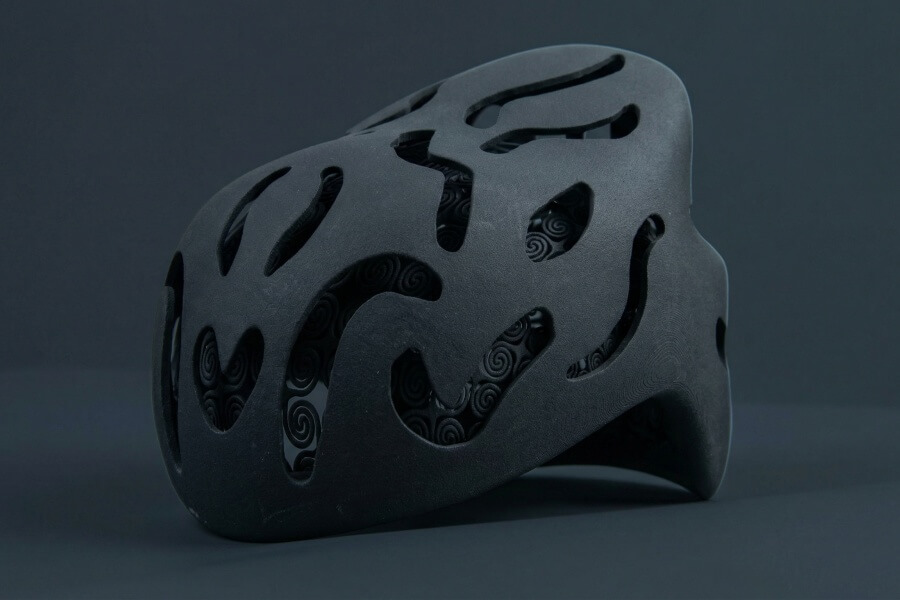

SLS Printing Service

Produce isotropic, production-grade components in PA12 and PA11. Tolerances held to ±0.2mm. Lead times as fast as 3 days.

Straight Answers About Our SLS Printing Service

At ShincoFab, we refuse to treat industrial 3D printing as just a rapid prototyping novelty. We utilize industrial-grade EOS P-Series systems for selective laser sintering to laser-sinter polymer powder into highly dense components ready for end-use applications.

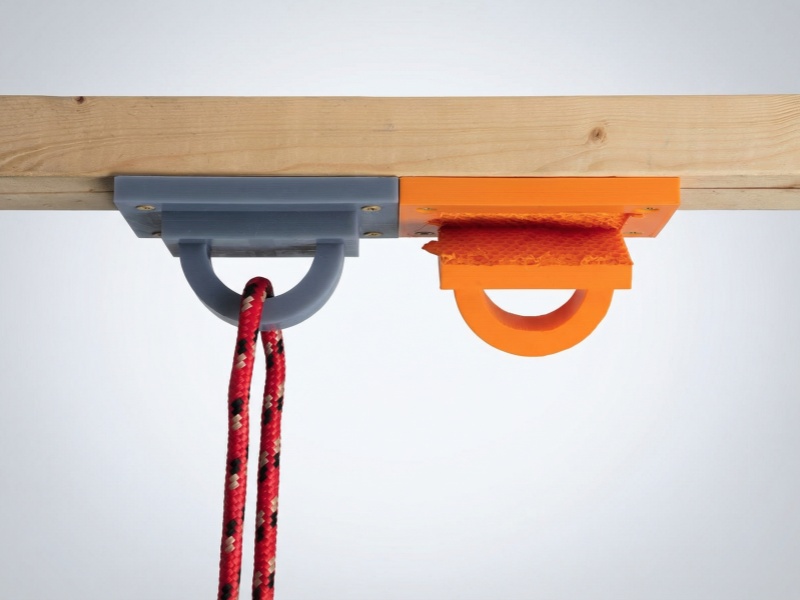
SLS vs FDM 3D printing strength test

True Isotropic Mechanical Properties

Unlike FDM, which suffers from weak interlayer bonding, our SLS process fuses material at the micro-level. This creates high strength 3D printed parts with uniform tensile strength across the X, Y, and Z axes.

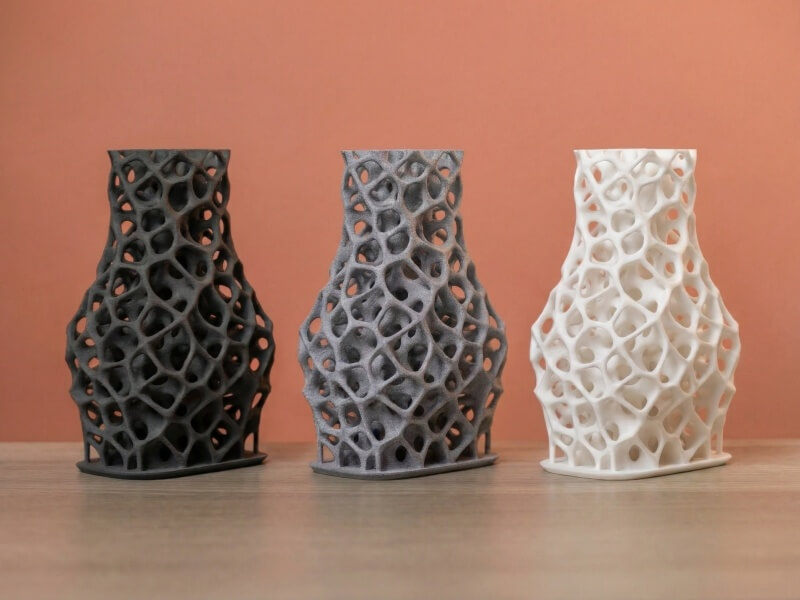
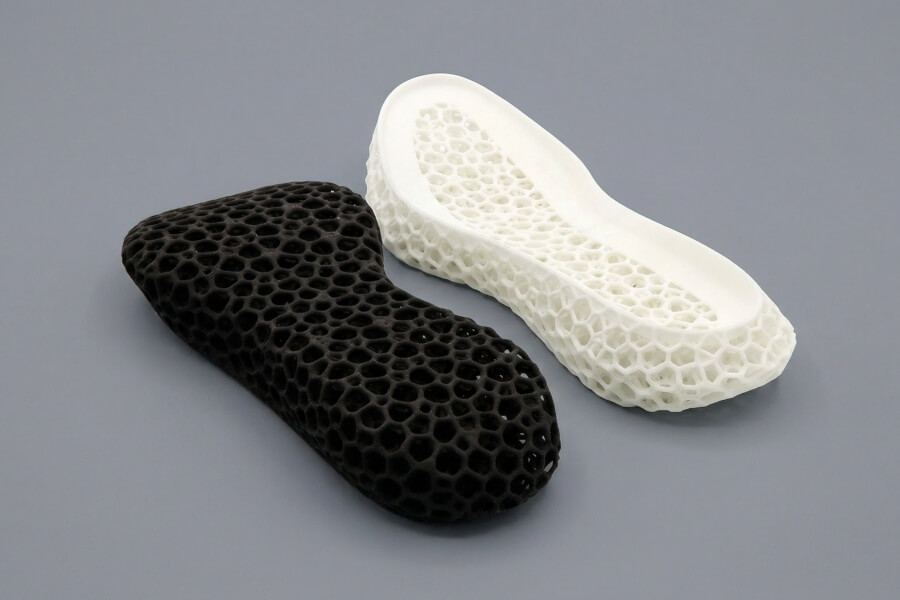
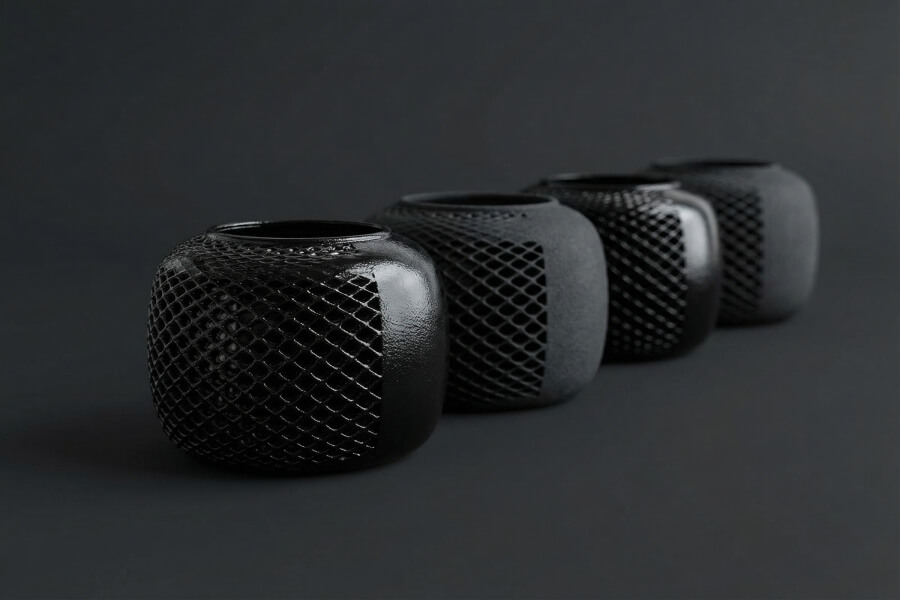
SLS 3D printed Voronoi lattice parts showcasing complex geometry

Zero Support Structures

In the SLS process, the surrounding unsintered powder acts as a natural support bed. This eliminates the need for breakaway or soluble supports, granting you absolute geometric freedom. You can effortlessly produce complex lattice structures for light-weighting, consolidate multi-part assemblies into a single print, and design internal fluid channels or negative drafts that are physically impossible to manufacture via CNC machining or injection molding.

Engineered SLS Materials for Specific Applications

Do not compromise on mechanical properties. Select from the best materials for SLS 3D printing that strictly match your environmental and structural requirements.

Nylon 12 (PA12): The Industrial Workhorse

  • Best For: General-purpose functional prototypes, complex enclosures, jigs and fixtures.
  • Engineering Reality: This is the industry standard for SLS. It delivers an excellent balance of strength, stiffness, and chemical resistance against alkalis and hydrocarbons.
  • Key Specs: Tensile Strength: ~48 MPa.
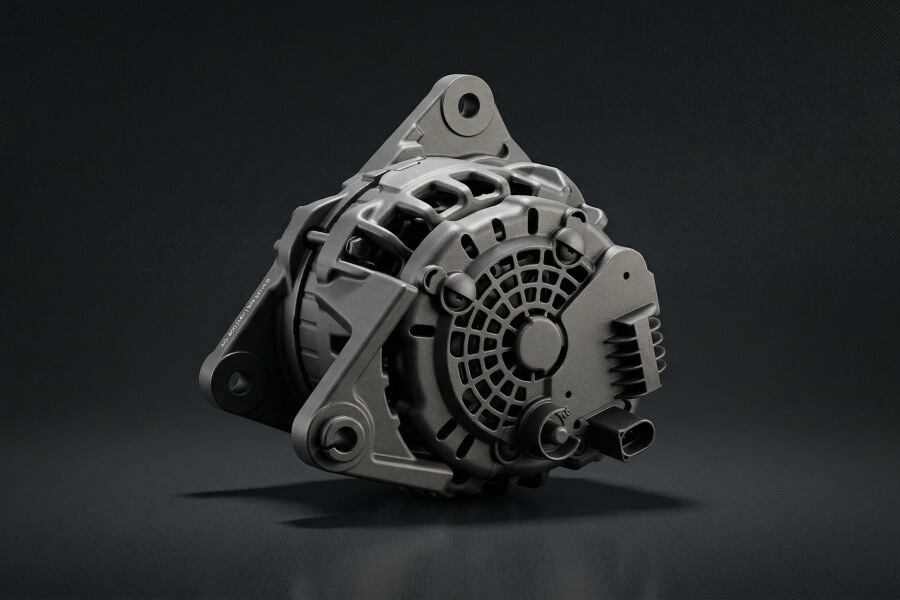
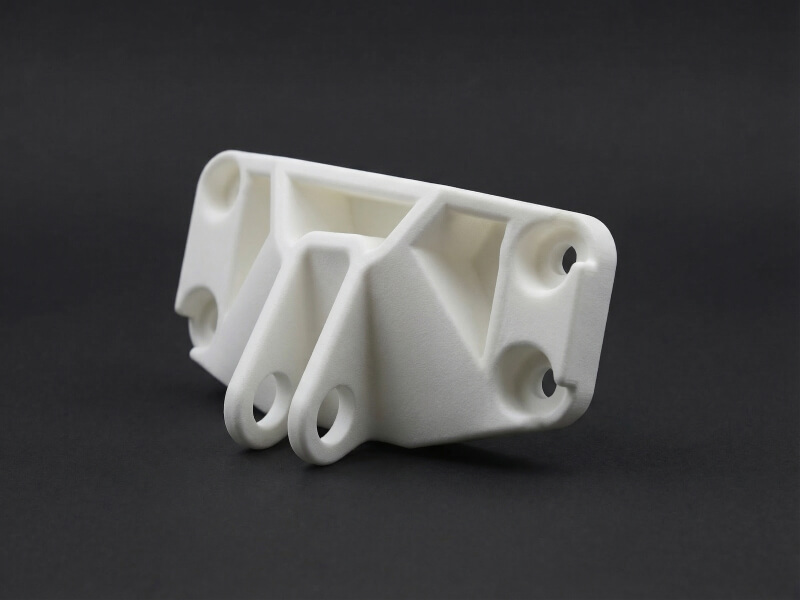
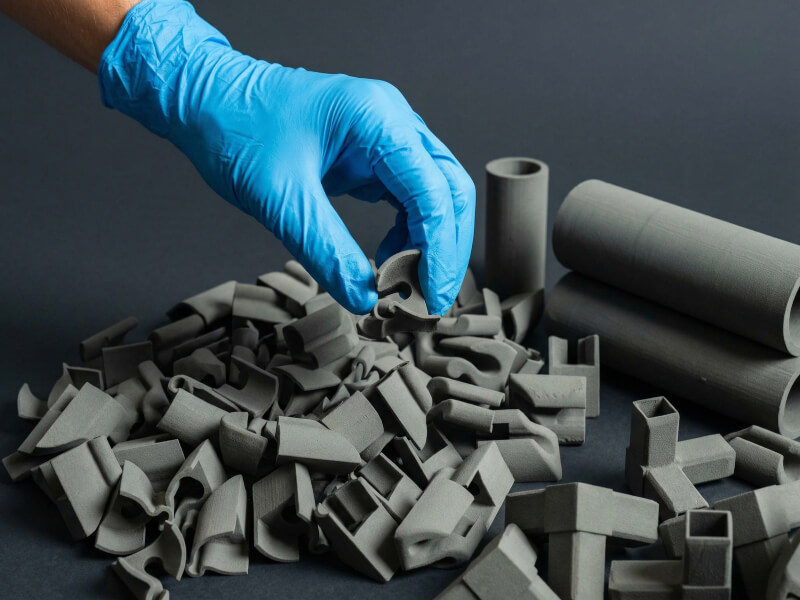
A robust dark grey 3D-printed PA12 mechanical part
Nylon 11 (PA11) printing parts

Nylon 11 (PA11): Superior Ductility & Impact Resistance

  • Best For: Living hinges, snap-fit joints, crash-test components, and thin-walled parts.
  • Engineering Reality: When PA12 is too brittle for your design, PA11 is the answer. It offers significantly higher elongation at break, meaning it will bend rather than snap under sudden impact or repeated stress.
  • Key Specs : High elongation at break (up to 50% in specific axes).

Glass-Filled Nylon (PA12-GF): High Stiffness & Thermal Stability

  • Best For : Parts under static mechanical load, engine bay components, high-temperature housings.
  • Engineering Reality : We blend glass beads into the PA12 matrix. This drastically increases the tensile modulus (stiffness) and thermal resistance, ensuring parts maintain dimensional stability in extreme environments.
  • Key Specs : Heat Deflection Temperature (HDT) of ~140–157°C at 0.45 MPa, depending on material grade and printing system.
High-stiffness PA12-GF glass-filled nylon 3D printed part

TPU (Thermoplastic Polyurethane): Flexible Elastomer

  • Best For: Custom gaskets, fluid seals, vibration dampeners, and ergonomic grips.
  • Engineering Reality: A rubber-like material that combines the flexibility of elastomers with the durability of SLS printing. It offers high tear resistance and excellent dynamic load capacity.
  • Key Specs : Shore Hardness 88A (or specify your exact Shore value).

SLS Design Guidelines & Process Constraints

We don’t believe in marketing magic. We respect physics. To ensure your parts print successfully, please review our design for manufacturability (DfAM) parameters below before you upload your 3D model.

Precision vernier caliper on engineering blueprint for accurate SLS printing services dimensional tolerances

Dimensional Tolerances

Expect standard tolerances of ± 0.3% (with a lower limit of ± 0.3 mm). Thermal shrinkage is a physical reality in polymer sintering. If your assembly requires tighter interference fits, plan for post-machining (such as CNC reaming for critical bearing holes).

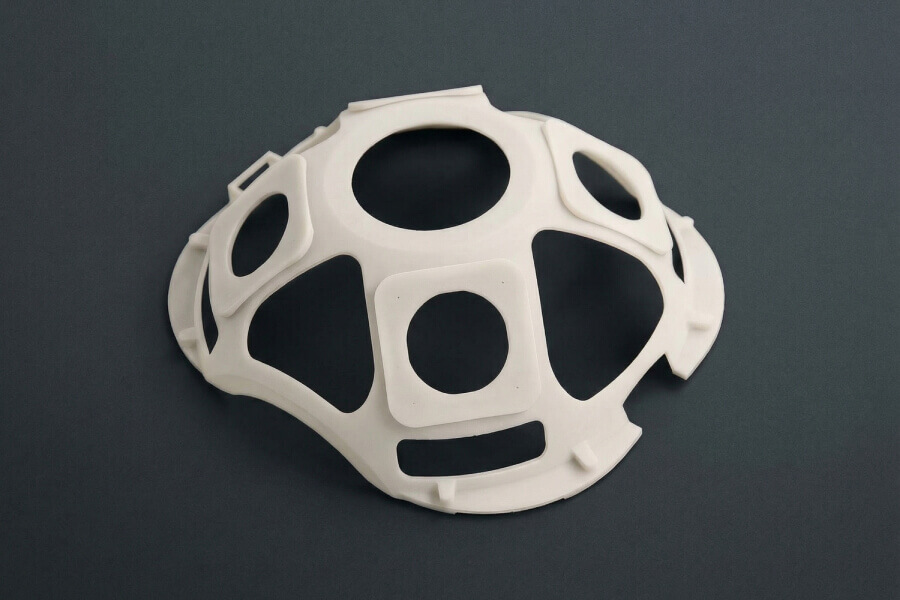
Durable functional part with thin-walled organic design manufactured using professional SLS printing services

Minimum Wall Thickness

For structural integrity and load-bearing applications, design walls at a minimum of 1.0 mm. We can push the machine to an absolute minimum of 0.8 mm for non-structural details, but anything thinner risks fracturing during the bead-blasting depowdering stage.
Raw part in powder bed during SLS printing services

Hollowing & Escape Holes

SLS is a powder-bed fusion process. If you hollow out your part to save weight and material cost, the interior will be filled with unsintered powder. You must include at least two escape holes (minimum diameter: 5.0 mm) in your design so we can blow the trapped powder out using compressed air.

Ribbed design mitigating warpage for SLS printing services

Mitigating Thermal Warpage

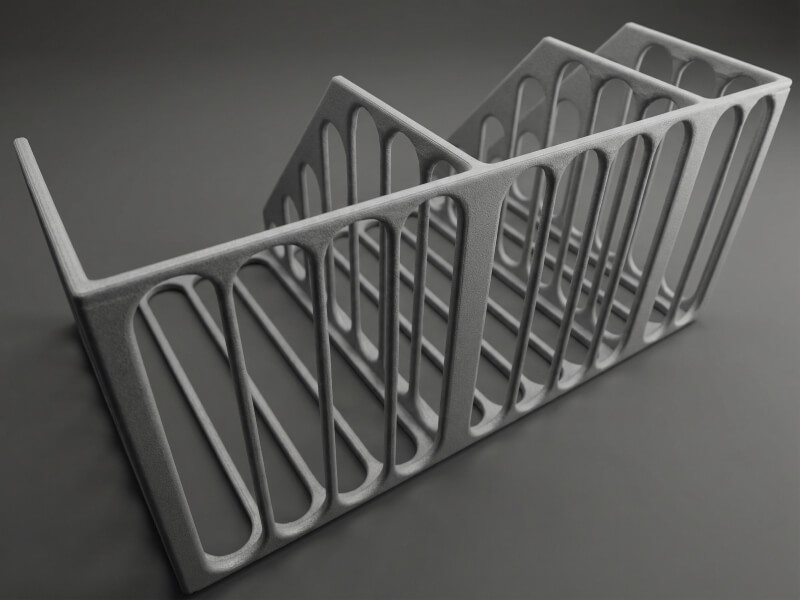
Cooling a large, flat polymer surface rapidly will cause warping. It is unavoidable. If your design features large, uninterrupted flat planes (like a plain box lid), incorporate structural ribbing or honeycomb patterns on the underside to mitigate thermal stress and maintain flatness.

SLS Surface Finishing for Porosity Elimination

Standard powder sintering naturally produces a matte, slightly porous, and fine-grained surface. If your application requires a premium cosmetic finish, our custom SLS post-processing solutions transform raw prints into sleek end-use components.

Standard Finish: Bead Blasting

Every part we ship undergoes rigorous bead blasting as standard. This removes all unsintered powder and loose particles, leaving a clean, uniform, matte finish with a typical surface roughness of Ra 10-15 µm. Suitable for internal mechanical components and functional testing.

Premium Upgrade: Vapor Smoothing

The ultimate solution for cosmetic and functional demanding applications. We expose the raw PA12/PA11 parts to a controlled chemical solvent vapor. This process melts and seals the outer microscopic layer, drastically reducing the surface roughness to Ra < 3 µm (comparable to injection molding). Crucially, vapor smoothing seals the surface porosity, making the component 100% watertight and significantly easier to clean.

Coloring Options: Dyeing vs. Painting

  • Penetration Dyeing (Standard Black/Custom Colors): We submerge the porous SLS parts in a heated dye bath. The color penetrates up to 0.2 mm below the surface. Unlike surface paint, dyed parts will not show white scratches when scuffed or chipped.
  • Spray Painting (Automotive Finish): For exact RAL color matching or a high-gloss finish, we apply industrial-grade automotive paints over a smoothed base layer.

Certified Quality Assurance for Production SLS

Prototyping allows for trial and error. End-use production does not. When you transition from a single functional test to a batch of 500 components, we lock down the machine parameters, powder refresh rates, and cooling cycles to guarantee absolute repeatability.

ISO 9001:2015 Certified Manufacturing

We don’t rely on operator guesswork. Every step of our additive manufacturing workflow from initial file preparation to final dispatch is strictly documented and controlled under our audited ISO 9001:2015 Quality Management System.

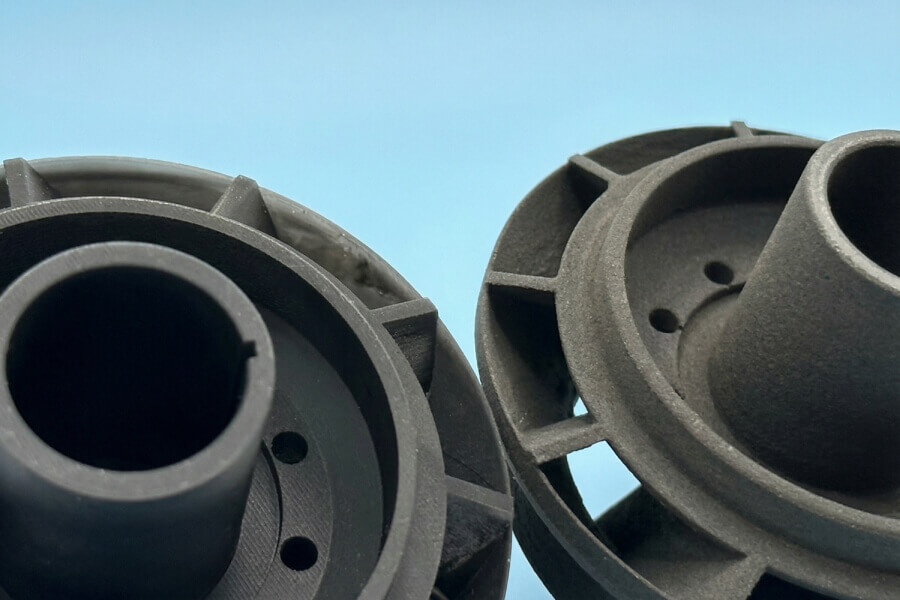
Complex turbine assembly via sls printing services

Full Material Traceability: CoC & MTR

For aerospace, medical, and defense applications, the documentation is just as critical as the physical part. Upon request, we provide comprehensive Certificates of Conformance (CoC) and Material Test Reports (MTR) tracing the exact polymer batch used in your specific build.

CMM Metrology & Verification

We don’t just promise tolerances; we prove them. For components with critical mating surfaces or precise bore requirements, our quality control facility utilizes Coordinate Measuring Machines (CMM) and precise optical scanners. We can provide First Article Inspection (FAI) reports before executing full-scale production runs.

Is SLS the Right Process for Your Part?

We don’t try to force every CAD file into our powder-bed machines. SLS is an industrial workhorse, but it is not a magic bullet for every manufacturing challenge. Before you request a quote, use this honest baseline to determine if our process aligns with your functional requirements.

When to Specify SLS

Choose our SLS service when your priority is mechanical performance and geometric complexity.

  • Functional Assemblies & Snap-Fits: When you need durable living hinges or snap-fits that won’t fracture under repeated stress (specify PA11).
  • Thermal & Chemical Resistance: For engine bay components, ducting, or housings exposed to hydrocarbons and high operating temperatures (specify PA12 or PA12-GF).
  • Impossible Geometries: When your design features internal fluid channels, conformal cooling, or complex lattice structures that simply cannot be machined via CNC.
  • Bridge-to-Production (10–500 units): When you need low-to-mid volume manufacturing right now, without amortizing a $15,000 upfront tooling cost for an injection mold.
Surface finish limitations of sls printing services

When NOT to Use SLS

If your design requires the following, do not use SLS. We recommend exploring SLA (Stereolithography), PolyJet, or CNC Machining instead.

  • Optical Clarity: SLS polymers are opaque. If you need a transparent lens, light guide, or clear fluid window, you must use SLA clear resin or CNC machined Polycarbonate/Acrylic.
  • Extremely High-Gloss/Cosmetic Finish: While we offer vapor smoothing, the native powder-bed process cannot match the out-of-the-box mirror finish of a polished injection mold or specific SLA resins.
  • Ultra-Fine Micro Details: The laser spot size and powder grain dictate our resolution. If your design features micro-channels or typography smaller than 0.5mm, the powder will fuse and obliterate the detail. Use Micro-SLA.

Real Engineers Review Your CAD Not Algorithms

Automated quoting algorithms can't predict thermal warpage or trapped powder. Upload your .STEP or .STL files today. Before you spend a dime, our manufacturing engineers will manually verify your wall thicknesses, escape holes, and tolerance limits to ensure a first-time-right print.

Frequently Asked Questions

Skip the marketing spin. Review the unvarnished engineering realities of SLS limits, assembly, and our supply chain below. If your specific design challenge isn’t answered, upload your CAD file for a confidential DfAM review.

How do the mechanical properties of your SLS nylon compare to injection-molded nylon?

SLS PA12 yields approximately 80% to 90% of the tensile strength of its injection-molded equivalent. The difference is due to the inherent micro-porosity of the powder-bed fusion process. However, because our SLS process creates true isotropic parts (uniform strength in X, Y, and Z), they are completely viable for end-use functional testing and low-volume production.

We strongly advise against printing internal threads smaller than M6. The powder grain resolution will result in rough, binding threads. For robust assembly, design your CAD with blank pilot holes. We highly recommend using brass heat-set inserts (which press beautifully into SLS nylon) or allowing us to CNC tap the holes post-print.
Zero. We are process-agnostic. Because SLS requires no hard tooling, we can dynamically nest a single prototype next to a batch of 500 production parts in the same build chamber. You pay only for the machine volume and powder your specific geometry consumes.

We treat your CAD data with military-grade strictness. All file uploads are encrypted. We routinely sign and execute strict Mutual Non-Disclosure Agreements (NDAs) with our aerospace, medical, and consumer electronics clients before they share a single .STEP file.

Our standard 3-day lead time covers DfAM review, machine setup, printing, cooling (which takes as long as the print itself), bead-blasting, and dispatch for parts under standard volumes.
Note: Advanced post-processing like Vapor Smoothing or Dyeing will add 1 to 2 business days to the schedule. We will provide a definitive, locked-in shipping date with your quote.

Get a Deterministic SLS Quote in 24 Hours

Bypass automated systems and generic sales reps. Upload your .STEP or .STL files directly to the ShincoFab engineering team. We will manually evaluate your geometry for manufacturability and return a locked-in price and exact lead time within one business day. All uploads are protected by our strict NDA protocols.

Whatsapp

+86 13392819510

Address

Building 1, No.8, Second Street, Huangjiang Town,
Dongguan City, Guangdong Province

Socials

Please enable JavaScript in your browser to complete this form.
Click or drag files to this area to upload. You can upload up to 3 files.
Scroll to Top

Let's Talk About Your Project