If you are planning a build, buying materials, or trying to figure out freight costs, you need to know how heavy your steel is. The standard density of steel is 7.85 g/cm³ (490 lb/ft³). Guessing doesn’t work.
I deal with steel weight calculations daily. As a lead fabricator at ShincoFab, a professional sheet metal fabrication facility, I know firsthand that one wrong number can blow a project’s budget. Last month alone, accurately calculating the density of a batch of 304 stainless steel sheets saved our client over $800 in unexpected freight overweight fees.
In this guide, I will give you the specific density numbers for the most common types of steel—from mild carbon to heavy tool steel. But I won’t stop at the basic math. I will also give you a mental shortcut for guessing steel weight on the fly, and a practical trick to estimate your shipping costs.
No confusing engineering jargon. Just the exact numbers and simple tips you need to get your project done right. Let’s dive in.
What is the Density of Steel?
Steel is commonly used with a standard density of about 7.85 g/cm³, which is equivalent to 7850 kg/m³, 490 lb/ft³, or 0.284 lb/in³. These values are widely recognized by materials databases like MatWeb as practical reference numbers for carbon steel in engineering and construction, although the exact density can vary slightly depending on the steel grade and alloy composition.
For most everyday calculations, this standard value is accurate enough to estimate weight, material usage, and structural loads.
What Density Actually Means
You hear people talk about density all the time. But what does it mean for you on the job site?
Think of density as how tightly packed a material is. It is the relationship between how much space an object takes up (volume) and how heavy it is (mass).
Picture a cardboard moving box. Imagine filling it to the brim with feathers. Now, imagine filling that same box with solid lead. The size of both boxes is the same, but the weight inside is different. The lead is much denser.
Steel is highly dense. Its atoms are packed tightly together, leaving very little empty space. This tight packing is what makes a steel beam heavy. It is also what makes it strong enough to hold up a skyscraper.
These numbers aren’t just trivia. Knowing the density of your steel changes how you plan, build, and pay for your work. Let’s look at why getting this math right matters for your next project.
Why Steel Density Matters for Your Project
Knowing a few numbers is great, but how does this help you build something?
Making Sure Your Build Doesn’t Collapse
You don’t want your project falling apart. Density directly affects how strong your steel is.
Because its atoms are packed so tightly, dense steel can handle massive weight without bending. It is great for load-bearing beams. But there is a catch: dense steel is heavy.
Every beam you add increases the total weight your foundation has to hold. Structural engineers calculate this based on design standards like the AISC Steel Construction Manual, referring to the weight of these permanent materials as the structure’s dead load. If you get the density wrong, your structure might fail just trying to hold itself up. You need accurate numbers to balance strength and weight.
Keeping Your Material Costs Down
Buying steel is not like buying 2x4s. You usually pay by the pound, not by the foot.
This means denser steel costs you more money. Heavier is not always better for your budget. If you overbuild with a high-density alloy when standard mild steel would do the job, you are throwing cash away.
Plus, heavier steel is harder to handle. It costs more to load onto a truck. It might even require renting a bigger crane on the job site. Knowing your density keeps you from buying more metal than you need.
Preventing Shop Floor Disasters (A Note from Our Factory)
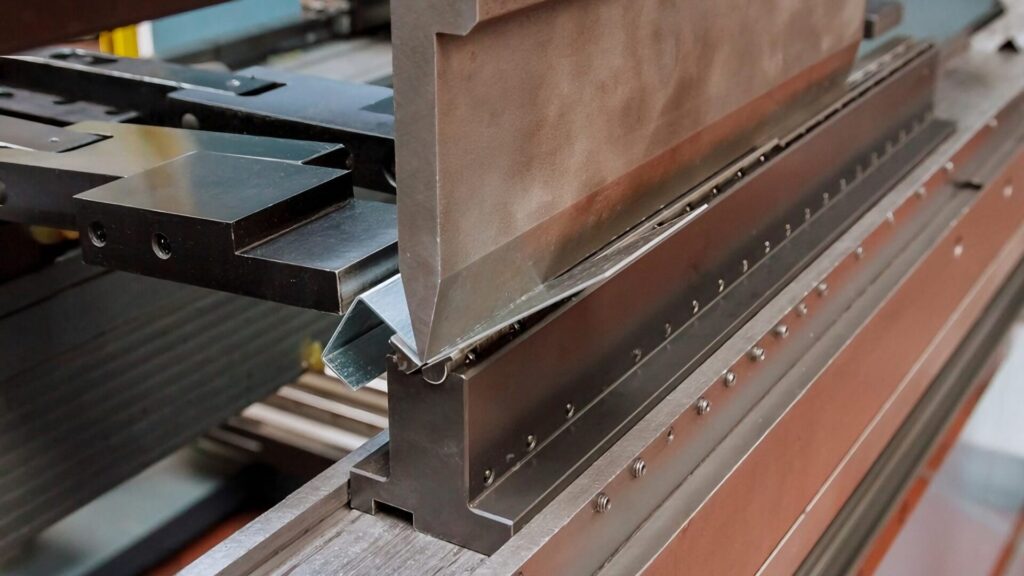
People often think density only matters for skyscrapers. But on our shop floor at ShincoFab, it affects our work daily.
If you miscalculate the density of a thick steel plate, that part might be too heavy for our machines to lift. We see this happen frequently. Clients will use the math for mild steel but order heavier stainless steel.
Suddenly, the part is 5% heavier. That extra weight changes how much force our machines need to bend the metal. Knowing the right density upfront stops these headaches before they start.
What Actually Changes the Density of Steel?
You might think all steel is the same. It isn’t.
Steel is a recipe. When you change the ingredients, you change the density. Let’s look at what makes one piece of metal heavier than another.
How Carbon Affects Weight
Steel is mostly iron mixed with a little bit of carbon. I often hear people guess that adding more carbon makes the steel heavier. Surprisingly, it doesn’t.
Carbon acts like a super-glue for the iron atoms. Pumping up the carbon gives you high-carbon steel, making the metal harder and tougher. But because carbon itself is a light element, it barely changes the overall weight. Whether you use low-carbon mild steel or rigid high-carbon steel, the density stays right around that 7.85 g/cm³ mark.
Adding Other Metals (Alloying)
The real weight changes happen when you mix in different metals. We call this alloying.
Think of it like baking. If you add heavy chocolate chips to your cookie dough, the whole batch gets heavier. When steelmakers add heavy metals like nickel or molybdenum to the mix, the steel gets denser.
For example, stainless steel is packed with chromium and nickel to stop it from rusting. Those heavy add-ins push its density up closer to 8.00 g/cm³. On the flip side, adding lighter elements like aluminum or silicon will drop the density down.
Because every recipe is slightly different, you can’t guess the weight of your materials. You need the specific numbers for the metal you are working with.
Steel Density Cheat Sheets (By Metal Type)
The density of steel varies based on its specific alloy composition. Carbon steel maintains a standard weight, while stainless and tool steels are heavier due to added heavy elements like chromium and tungsten. Below is a comparison table of common steel grades and their exact densities:
| Steel Category | Specific Grade | Metric Density (g/cm³) | Imperial Density (lb/ft³) |
|---|---|---|---|
| Carbon / Mild | Average Carbon Steel | 7.85 | 490 |
| Carbon / Mild | ASTM A36 (Structural) | 7.85 | 490 |
| Carbon / Mild | AISI 1045 (Medium) | 7.85 | 490 |
| Stainless | Standard (304 Grade) | 7.93 | 495 |
| Stainless | Marine Grade (316 Grade) | 7.98 | 498 |
| Stainless | Duplex Stainless | ~7.80 | ~487 |
| Alloy / Tool | Standard Low Alloy | 7.85 | 490 |
| Alloy / Tool | M2 Tool Steel | 8.16 | 509 |
| Alloy / Tool | High-Speed Steel (T1) | 8.50 | 531 |
Mild and Carbon Steel Density
If you are building a standard frame, pipe, or fence, you are probably using mild or carbon steel. It is the go-to metal for everyday projects. It is strong, affordable, and easy to weld.
Because carbon levels don’t affect weight significantly, the density stays consistent.
- Average Carbon Steel: 7.85 g/cm³ (490 lb/ft³)
- ASTM A36 (Common Structural): 7.85 g/cm³ (490 lb/ft³). Detailed in comprehensive material guides like AZoM’s ASTM A36 profile, this is widely recognized as the most common carbon steel used in structural applications.
- AISI 1045 (Medium Carbon): 7.87 g/cm³ (491 lb/ft³)
Stainless Steel Density
You use stainless steel when you need to fight off rust. It is perfect for outdoor structures, kitchens, and marine parts. But fighting rust comes with a weight penalty.
To make the metal stainless, makers add heavy metals like chromium and nickel, pushing the density higher than mild steel.
- Standard Stainless (304 Grade): 7.93 g/cm³ (495 lb/ft³)
- Marine Grade (316 Grade): 8.00 g/cm³ (499 lb/ft³)
- Duplex Stainless: 7.80 g/cm³ (486 lb/ft³)
Alloy and Tool Steel Density
Sometimes you need metal that survives extreme heat and crushing pressure. That is where alloy and tool steels come in.
We use these tough metals for drill bits, cutting blades, and heavy-duty gears. To make them nearly indestructible, steelmakers mix in heavy elements like tungsten, cobalt, and molybdenum. Because of these dense add-ins, tool steel is often the heaviest metal in the shop.
- Standard Low Alloy Steel: 7.85 g/cm³ (490 lb/ft³)
- M2 Tool Steel: 8.16 g/cm³ (509 lb/ft³)
- High-Speed Steel (T1): 8.50 g/cm³ (530 lb/ft³)
How Does Steel Compare to Other Metals?
Steel is strong, but it is heavy. Sometimes you cannot afford that extra weight. Let’s see how steel stacks up against two of its biggest rivals.
Steel vs. Aluminum
Aluminum is the go-to choice when weight is your biggest enemy. If you are building an airplane or a race car, every extra pound slows you down.
Aluminum has a density of about 2.70 g/cm³, making it nearly three times lighter than steel. You trade away some raw strength, but you gain a massive advantage in speed and handling.
Steel vs. Titanium
What if you need the strength of steel, but without the weight? You use titanium.
Titanium is the king of the strength-to-weight ratio. With a density of 4.50 g/cm³, it is roughly half the weight of steel, but just as strong. It is the ultimate metal for aerospace parts and medical implants.
The only catch? It is expensive. For most everyday projects, steel remains your best option.
The Simple Way to Calculate Steel Weight and Density
Let’s break down the math. You don’t need an engineering degree to figure this out.
The Basic Math Formula
The official formula is: Density = Mass ÷ Volume.
But realistically, you usually already know the density from the cheat sheets. What you want to know is how heavy the steel is before you try to lift it.
To find the weight, flip the formula: Weight = Volume × Density.
First, calculate the volume of your steel part (Length × Width × Thickness). Then, multiply that volume by the steel’s density.
Easy Unit Conversions
Math gets messy when you mix up your units. Here is a quick conversion guide:
- Grams to Kilograms: Multiply g/cm³ by 1,000. (Example: 7.85 g/cm³ = 7,850 kg/m³).
- Pounds per inch to Pounds per foot: Multiply lb/in³ by 1,728.
- Metric to Imperial: Multiply g/cm³ by 0.036 to get lb/in³.
Always make sure your units match. If you measure your steel’s volume in inches, you must use the density for cubic inches (0.284 lb/in³).
3 Common Mistakes People Make When Calculating Steel Weight
Even with the correct density formulas, calculating steel weight can easily go wrong on the job site. Contractors and fabricators often lose time and money by making a few highly preventable errors. Here are the three most common calculation mistakes you must avoid:
- Forgetting the Empty Space: This happens frequently. Recently, a client asked us to fabricate a frame using heavy-wall square tubing. They ran the math using the outside dimensions as if it were a solid block of steel. Their estimated weight was off by 300 pounds. Always calculate the whole shape and subtract the empty air inside the tube.
- Mixing Up Metric and Imperial Units: You measure your steel plate in inches, then multiply it by 7.85 (the metric density). Your final number will be useless. Pick one measurement system before you start and stick to it.
- Assuming All Steel Weighs the Same: Using the standard 490 lb/ft³ for every project is risky. If you are working with a large amount of stainless or tool steel, that tiny difference in density adds up fast, and you could easily overload your truck.
The Rule of Thumb for Guessing Steel Weight on the Fly
You are in the middle of a busy job site. You need to know if two guys can lift a steel plate, or if you need the forklift. You do not have time to calculate volume and density.
Instead, memorize this fact: A 1-foot square plate of 1-inch thick steel weighs 40.8 pounds.
Use this as your baseline to guess the weight of other pieces instantly. If that same 1-foot plate is half an inch thick, cut the weight in half (about 20 pounds). If that 1-inch thick plate is two feet long, double the weight (about 80 pounds).
The Sheet Metal Fabricator’s Shortcut
Since we specialize in sheet metal at ShincoFab, we don’t always deal with 1-inch thick blocks. We deal with gauges. Here is another mental shortcut my team uses: 1 square foot of 11-gauge mild steel (approx. 1/8″ thick) weighs 5.04 lbs. Keep that 5-pound rule in mind for every square foot of 11-gauge you use.
How to Use Density to Estimate Your Shipping Costs
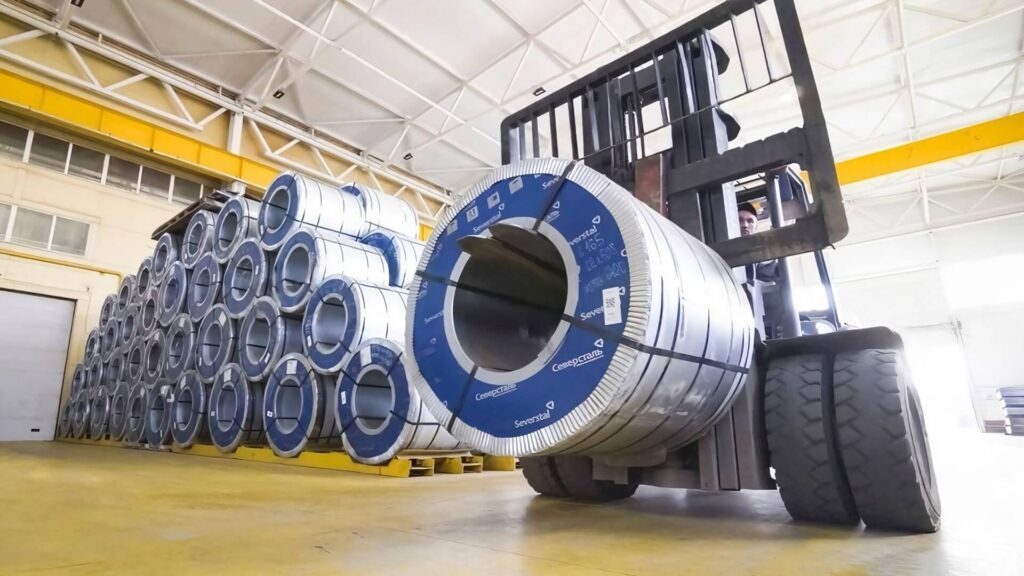
Other guides tell you that heavier steel costs more to ship. But they never tell you how to predict those costs.
Freight companies charge based on total weight and distance. First, use the density formulas to find your total shipment weight in pounds. Next, find out the average freight rate in your area. Let’s say a local trucking company charges $0.20 per pound.
Multiply your calculated weight by that rate. If your steel beams weigh 5,000 pounds, your shipping cost should be around $1,000. When a supplier hands you a quote for $2,500, you know they are overcharging you. Calculating this yourself gives you the power to negotiate.
Quick FAQs About Steel Density
What is the exact density of mild steel?
The standard density for mild steel is 7.85 g/cm³ (or 490 lb/ft³). Because it has very low carbon, it sits right at the baseline for steel weight. You can safely use this exact number for almost any standard framing or welding project.
Is steel heavier than concrete?
Yes, by a landslide. Steel is more than three times denser than regular concrete. Solid concrete sits around 2.40 g/cm³, while steel jumps all the way to 7.85 g/cm³. This is exactly why we use steel rebar to reinforce concrete buildings. It adds massive strength without taking up much extra space.
What is the heaviest type of steel?
Tool steels and high-speed steels take the crown. To make these metals tough enough to cut other metals, manufacturers mix in heavy elements like tungsten and cobalt. This pushes their density up to around 8.50 g/cm³ (530 lb/ft³). They are incredibly tough, and you will absolutely feel that extra weight when you pick them up.
Now that you understand exactly how much your steel weighs, you can avoid expensive mistakes and keep your budget in check. You have the numbers, the math, and the shortcuts. It is time to get out there and start building your next project with confidence!
Conclusion
You now have the numbers, the math, and the job site shortcuts. Steel density isn’t just a science term anymore. It is a practical tool you can use to save money, plan your shipping, and keep your structures standing strong.
When you know what your materials weigh, you take the guesswork out of building. We see this firsthand every day on the factory floor at ShincoFab. As a sheet metal fabrication shop, we know that getting the math right from day one makes the entire manufacturing process smooth.
Keep that 40.8-pound rule of thumb in your back pocket. Double-check your volume math, pick the right steel for the job, and tackle your next project with confidence.