
Custom Metal Clips
Stop compromising with off-the-shelf parts. From rapid wire EDM prototypes to high-volume progressive stamping, we strictly control grain direction and heat treatment to ensure your clips maintain tension after millions of cycles.
Custom Metal Clip Capabilities & Technical Specifications
Validated parameters for high-stress retention and fatigue resistance. If you don’t see your specific requirement, simply ask. ShincoFab routinely handles custom alloys.
| Specification Category | Capability Range & Details | Engineering Note (Why it matters) |
|---|---|---|
| Material Thickness | 0.05mm – 3.00mm (.002” – .118”) | Consistent thickness control for predictable spring force. |
| Precision Tolerances | Up to +/- 0.02mm (.0008”) | Critical for automated assembly lines and tight-fit housings. |
| Core Materials (Ferrous) |
Spring Steel: 1050, 1065, 1075, 1095 (Annealed or Tempered) Stainless Steel: 301 (1/4 Hard to Full Hard), 304, 316, 17-7 PH (Condition C) |
1095: Best for high fatigue life. 17-7 PH: Superior for high-temp & corrosion resistance. |
| Core Materials (Non-Ferrous) | Beryllium Copper (C17200) Phosphor Bronze (C51000) Brass (C26000, C26800) | BeCu: Ideal for battery contacts requiring high conductivity AND high elasticity. |
| Hardening & Heat Treatment |
In-house Austempering & Oil Quenching. Hardness Range: HRC 40-55 (Customizable). | Austempering minimizes distortion during hardening—solving the #1 cause of clip rejection. |
| Surface Finish & Plating | Zinc (Blue/Yellow/Black), Nickel, Tin, Silver, Gold, Electrophoresis (E-Coat), Passivation. | We guarantee 72h to 240h+ Salt Spray Test performance for outdoor/marine use. |
| Production Volume |
Prototype: 1-50 pcs (Laser Cut / Wire EDM / Soft Tooling) Production: 5,000 – 5,000,000+ pcs (Progressive Die Stamping) | Scalable solutions. Don’t pay for hard tooling until your design is validated. |
Engineered Solutions Beyond Bent Metal
We don’t stock catalog parts. We manufacture custom clips designed to meet specific load, conductivity, and corrosion-resistance requirements. Here is how we’ve solved fastening challenges for other industries.
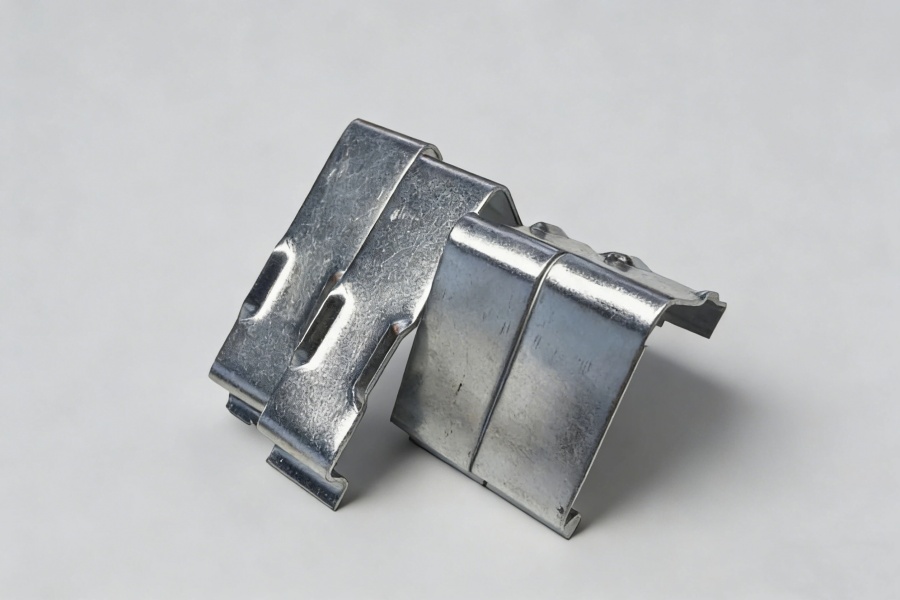
High-Fatigue Spring Steel
- The Component: Heavy-Duty Retaining Clip
- Material: SAE 1074 / 1095 High Carbon Steel.
- The Engineering Challenge: The client’s previous clips were losing tension after 50,000 cycles, causing assembly rattling.
- Our Solution: We optimized the Heat Treatment (Austempering) process to achieve a Bainite structure, increasing fatigue life to 500,000+ cycles without brittle fracture.
- Key Feature: Controlled springback tolerance to +/- 1 degree.

Corrosion-Resistant Stainless Steel
- The Component: Surgical Device Fastener
- Material: Stainless Steel 17-7 PH (Precipitation Hardening).
- The Engineering Challenge: Standard 304 clips were deforming under high load; the client needed high strength and sterilization capability.
- Our Solution: We utilized 17-7 PH stainless steel with Condition CH900 heat treatment. This provided the corrosion resistance of stainless with the high yield strength of carbon steel.
- Key Feature: Burr-free finish (tumble polished) to prevent glove snags.
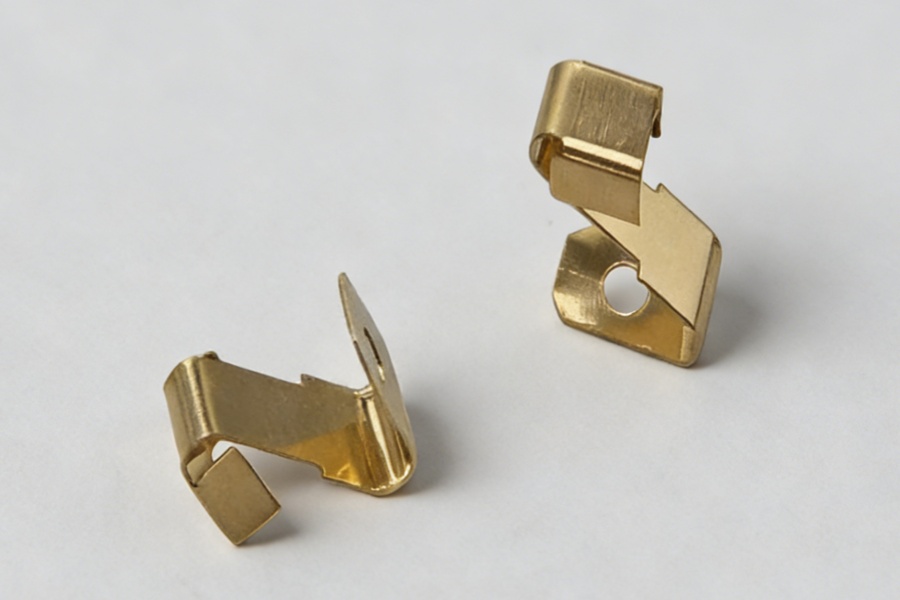
Electrical Contacts & Shielding
- The Component: PCB Grounding Clip & Battery Contact
- Material: Beryllium Copper (C17200) or Phosphor Bronze (C51900).
- The Engineering Challenge: The application required high electrical conductivity but also needed to maintain spring force at elevated temperatures (150°C).
- Our Solution: Beryllium Copper was selected for its superior stress relaxation resistance. Post-plating with Gold over Nickel ensured low contact resistance.
- Key Feature: Precision stamping of thin gauge material (0.10mm) without distortion.
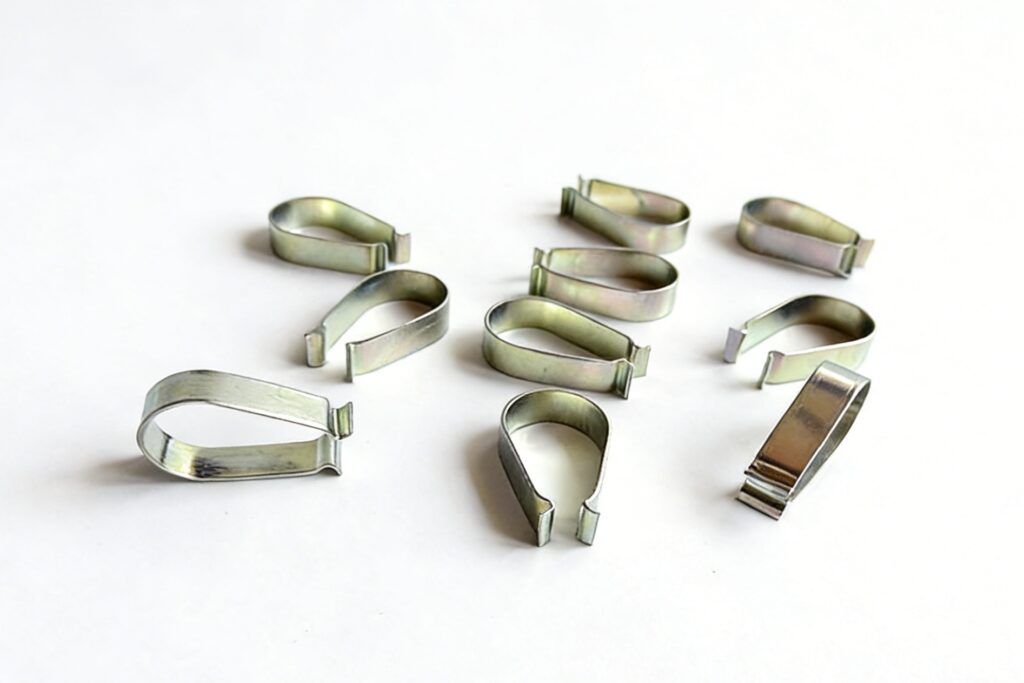
Complex Wire Forms & Round Clips
- The Component: Custom Spring Wire Form
- Material: Music Wire (ASTM A228) / 302 Stainless Wire.
- The Engineering Challenge: A complex 3D geometry that could not be achieved with standard flat stamping.
- Our Solution: Utilized CNC Wire Forming capabilities to create a multi-plane clip that snaps into place blindly during automotive assembly.
- Key Feature: Chamfered ends for easy insertion; Stress-relieved to prevent hydrogen embrittlement.
Material Science Meets Manufacturing Precision
Selecting the right alloy isn’t just about cost. It acts as the determining factor for fatigue life, conductivity, and surviving your operating environment.
High-Carbon Spring Steel
The Engineering Reality
Why We Use It
- Superior Fatigue Strength: Ideal for clips that must snap in and out repeatedly (e.g., retaining clips, access panel fasteners).
- High Yield Strength: Can withstand significant stress loads before taking a permanent set.
Ideal Applications
- Automotive interior clips (hidden from moisture).
- Appliance mounting brackets.
- Industrial spring washers.
The Corrosion Risk
- Warning: Unprotected carbon steel will rust instantly. We pair this with our Zinc or Black Oxide plating to ensure it survives the field.

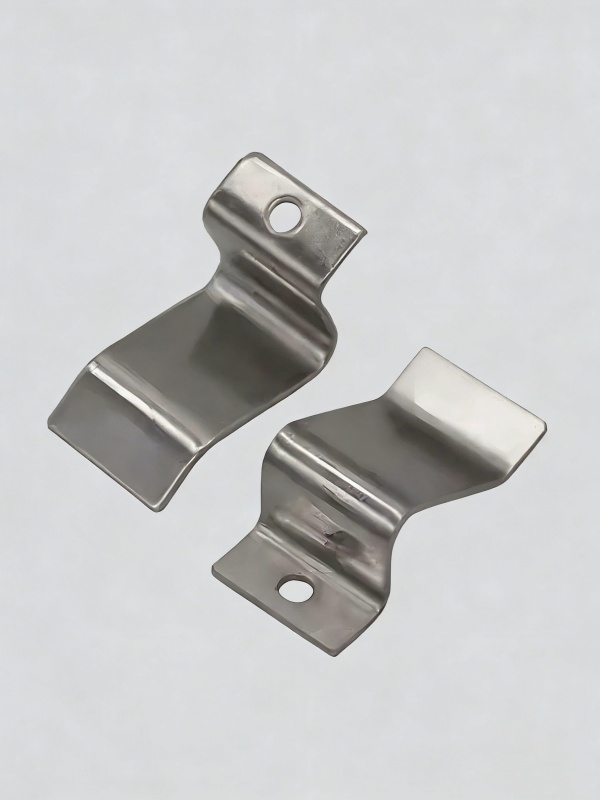
Stainless Steel Series
The Engineering Reality
When you can’t risk rust, or plating isn’t an option (e.g., medical devices or food contact), Stainless Series is the only choice. We specialize in work-hardening these alloys to achieve spring-temper properties without the need for post-forming heat treatment in many cases.
Our Core Alloys
- Type 301 (Full Hard): The industry standard for corrosion-resistant clips. It offers excellent tensile strength and is perfect for constant-load applications.
- 17-7 PH (Precipitation Hardening): The ultimate high-strength stainless option. When 301 is not strong enough or operating temperatures exceed 300°C (e.g., aerospace engines, ovens), 17-7 PH delivers performance comparable to carbon steel but with stainless corrosion resistance.
Ideal Applications
- Outdoor solar racking clips.
- Medical device components (Surgical/Dental).
- Marine hardware.
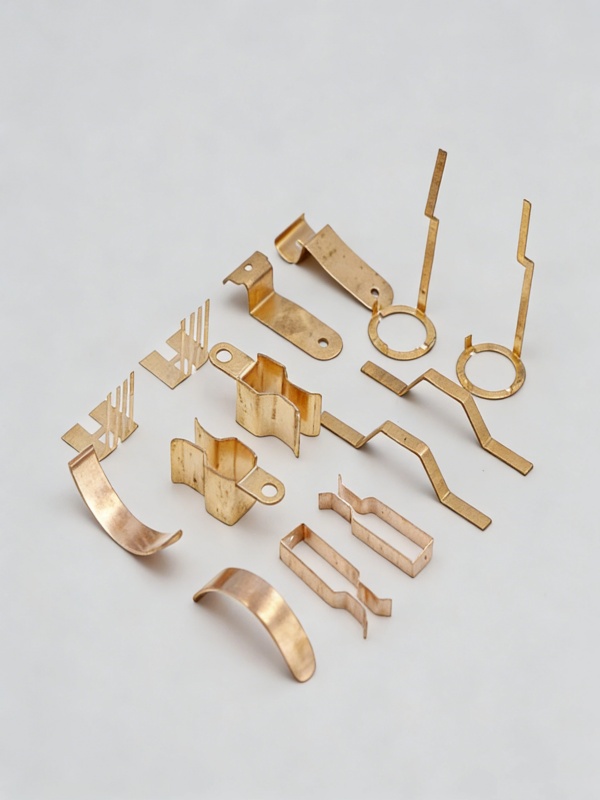
Copper Arrays
The Engineering Reality
Most excellent conductors like pure copper make terrible springs because they bend and stay bent. Beryllium Copper (BeCu) and Phosphor Bronze solve this specific problem. They provide the elasticity of a high-performance spring with the conductivity required for electronics.
Why We Use It
- Beryllium Copper (BeCu): The ultimate choice. It provides the highest strength and fatigue life of any copper alloy. It’s expensive, but necessary for critical battery contacts or miniature connectors.
- Phosphor Bronze: A cost-effective alternative for general purpose electrical contacts that don’t face extreme mechanical stress.
Ideal Applications
- Battery contacts and terminals.
- EMI/RFI Shielding fingers.
- Grounding clips on PCBs.
Surface Treatment
The Engineering Reality
Our Treatment Standards
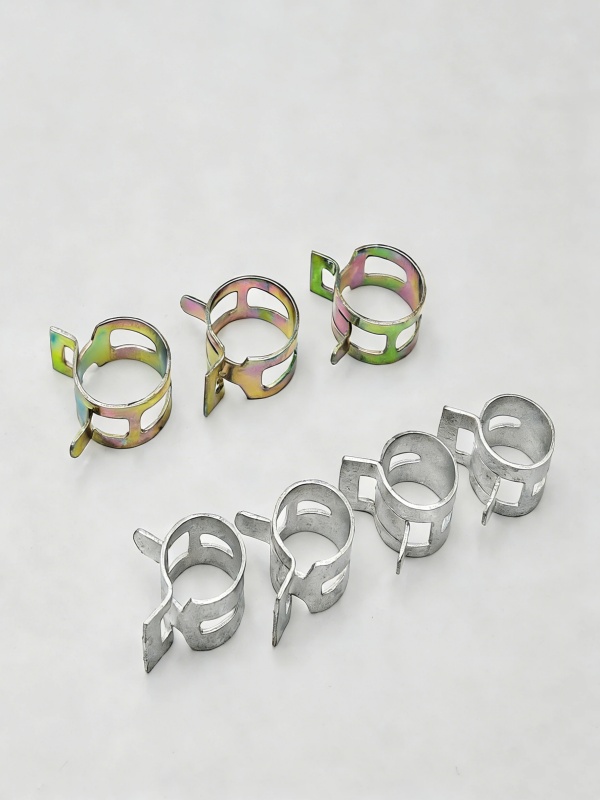
- Zinc Plating (Yellow/Blue/Clear): The standard economic protection. We certify to ASTM B633 standards.
- Nickel Plating: Provides excellent wear resistance and solderability. Critical for battery contacts to ensure low contact resistance.
- Passivation (for Stainless): Removes free iron from the surface, enhancing the natural oxide layer. Essential for medical and food-grade parts.
- Post-Plating Baking: For high-carbon steel parts stiffened above 32 HRC, we perform hydrogen embrittlement relief baking immediately after plating to prevent sudden brittle failure.
Mastering Springback & Fatigue Life
Sheet metal has memory. It wants to return to its original shape. Our job is to ensure it stays exactly where you need it from the first cycle to the millionth.
Precision Heat Treatment for Stress Relief
A stamped clip without heat treatment is a ticking time bomb. The internal stresses created during forming will eventually cause the part to relax, lose its grip, or fracture. We do not just bake parts. We engineer their microstructure.
- Austempering & Martensitic Hardening: For high-carbon steels (like C1075, C1095), we utilize precise austempering processes. This creates a bainitic structure that offers a superior combination of strength and toughness, significantly reducing the risk of hydrogen embrittlement compared to standard oil quenching.
- Stress Relieving for Stainless: Even for 301 or 17-7 PH stainless steel, we perform post-forming stress relief to stabilize dimensions and maximize fatigue life.
- The Result: A clip that maintains consistent clamping force (load) over years of service, not just days.

Smart Tooling Springback Compensation
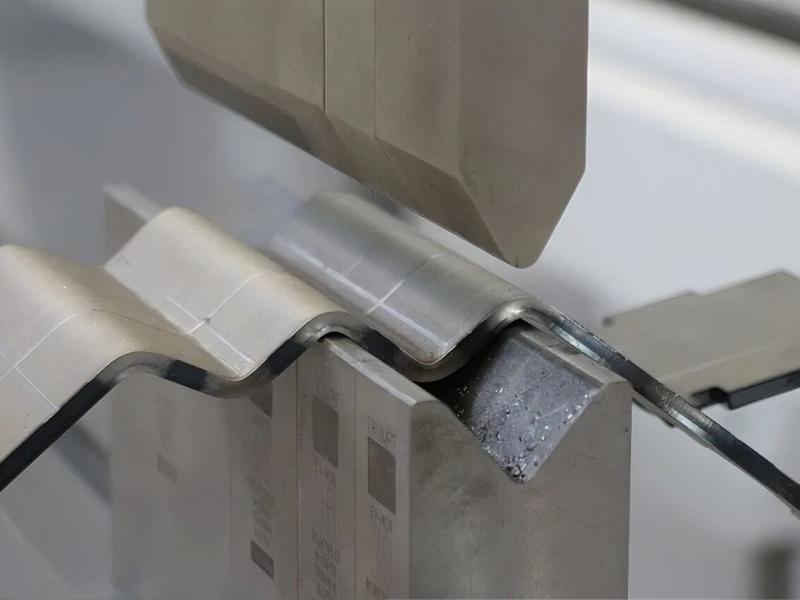
We know that a 90° bend in 304 Stainless Steel will spring back to 92° or 93°. Instead of fighting physics, we work with it.
- Springback Calculation: Our engineers calculate the specific springback factor for your chosen material grade and thickness before cutting steel for the die.
- Over-Bending Geometry: We design our progressive dies with precise over-bend features. If the material springs back 3°, we bend it to 87° so it naturally settles at a perfect 90°.
- Consistent Tonnage: Using high-precision servo presses, we control the ram speed and dwell time at the bottom of the stroke to set the bend, minimizing variation from part to part.
Quality Gates as Failure Insurance
Dimensional accuracy is important, but functional performance is everything. We verify that your clips work in the real world, not just on a drawing.
Load Testing
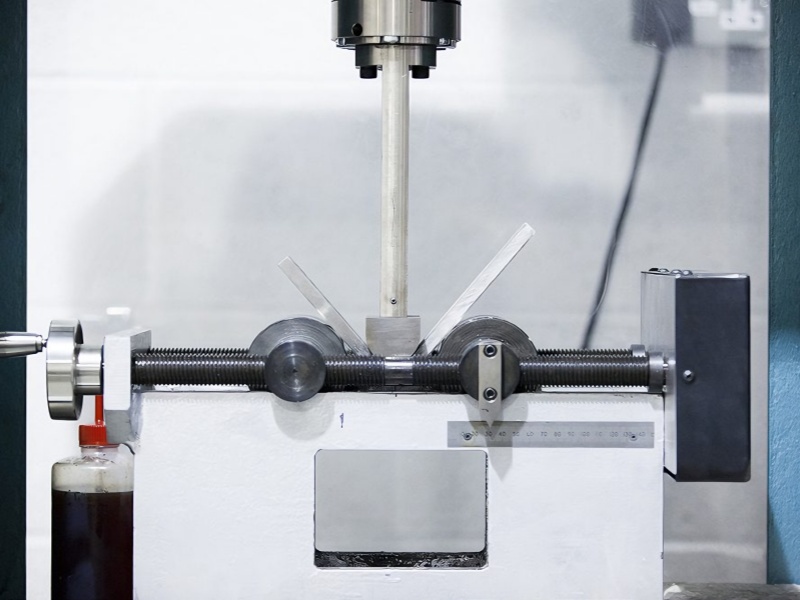
We do not just measure angles. We measure force. Using calibrated load testers, we verify the exact clamping force (in Newtons or Lbs) required to deflect the clip to its working position. This ensures the tactile feedback and function of your assembly remain consistent.
Life Cycle Testing
Will the clip break after 5,000 uses? We find out so you don’t have to. We simulate real-world usage with cycle testing rigs, pushing samples to 100,000+ or 1,000,000+ cycles to validate fatigue resistance and elastic limit.
Video Measurement System
For complex geometries and tight tolerances (+/- 0.02mm), we use automated vision systems (Keyence/OGP). This allows us to inspect 100% of critical dimensions non-contact, ensuring no burrs or deformations affect the measurement.
From 5 Prototypes to 5 Million Stampings
Validate your design with Wire EDM samples in days rather than weeks. Then scale seamlessly to high-speed progressive die production without changing suppliers.
Frequently Asked Questions
Get straight answers on tooling costs, lead times, and QC protocols before you request a quote. We believe in full transparency from day one.
Does prototyping require expensive hard tooling?
No. For high-fatigue prototypes, we recommend Wire EDM or Waterjet over Laser to avoid micro-cracks in the Heat Affected Zone (HAZ). This eliminates high upfront Non-Recurring Engineering (NRE) costs usually associated with progressive dies, allowing you to validate designs in days, not weeks.
How do you control springback on high-tolerance clips?
We don’t guess. Our engineering team performs springback calculations based on material temper and bend radius before cutting steel. We design our tooling with over-bend compensation. For critical dimensions, we require a functional fit check or a gauge inspection during the PPAP process.
Can you help select the right alloy for high-heat or corrosive environments?
Absolutely. If you are concerned about stress relaxation or corrosion, we routinely suggest alternatives to standard Carbon Steel. For example, we might recommend 17-7 PH Stainless Steel for high heat/strength balance, or Beryllium Copper for maximum conductivity and fatigue resistance. We review your environmental specs during the quoting phase.
What are your typical lead times?
- Prototypes / Soft Tooling: 3 – 7 working days.
- Initial Production Samples (T1): 15 – 25 days (depending on die complexity).
- Volume Production: 2 – 3 weeks after sample approval.
What is your Minimum Order Quantity (MOQ)?
We are flexible. While progressive die stamping is most economical for volumes of 5,000+, we routinely handle short runs of 100-500 pieces using our low-volume department. We grow with your product lifecycle.
Request for Quote (RFQ) & Engineering Consultation
Upload your drawing or 3D model. Our engineering team will review your part for manufacturability gaps, suggest material cost-downs, and provide a firm price.
